- English
- French
- German
- Portuguese
- Spanish
- Russian
- Japanese
- Korean
- Arabic
- Greek
- German
- Turkish
- Italian
- Danish
- Romanian
- Indonesian
- Czech
- Afrikaans
- Swedish
- Polish
- Basque
- Catalan
- Esperanto
- Hindi
- Lao
- Albanian
- Amharic
- Armenian
- Azerbaijani
- Belarusian
- Bengali
- Bosnian
- Bulgarian
- Cebuano
- Chichewa
- Corsican
- Croatian
- Dutch
- Estonian
- Filipino
- Finnish
- Frisian
- Galician
- Georgian
- Gujarati
- Haitian
- Hausa
- Hawaiian
- Hebrew
- Hmong
- Hungarian
- Icelandic
- Igbo
- Javanese
- Kannada
- Kazakh
- Khmer
- Kurdish
- Kyrgyz
- Latin
- Latvian
- Lithuanian
- Luxembou..
- Macedonian
- Malagasy
- Malay
- Malayalam
- Maltese
- Maori
- Marathi
- Mongolian
- Burmese
- Nepali
- Norwegian
- Pashto
- Persian
- Punjabi
- Serbian
- Sesotho
- Sinhala
- Slovak
- Slovenian
- Somali
- Samoan
- Scots Gaelic
- Shona
- Sindhi
- Sundanese
- Swahili
- Tajik
- Tamil
- Telugu
- Thai
- Ukrainian
- Urdu
- Uzbek
- Vietnamese
- Welsh
- Xhosa
- Yiddish
- Yoruba
- Zulu
JCM MRX Recycler Cost Benefits for Automated Cash Solutions
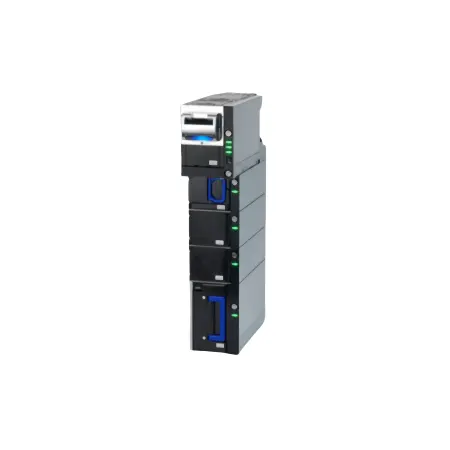
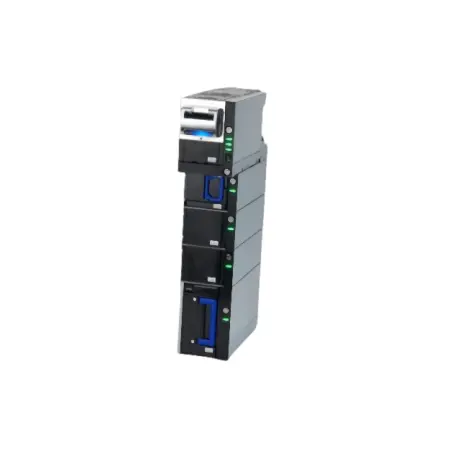
The JCM MRX recycler is a modular, roller-type banknote recycling module manufactured in Japan and built for demanding self-service environments. For system integrators deploying ATMs, kiosks, and cash-handling terminals across banks, casinos, hotels, and financial institutions, the device addresses two persistent problems at once: the high cost of cash-in-transit replenishment and the compliance burden of maintaining audit-ready transaction records. Available in both brand-new and refurbished condition, and backed by a 30-day warranty with online support, it gives procurement teams a concrete path toward lower operational expenditure and faster ROI.
Understanding the JCM MRX Recycler: Features and Technical Specifications
What the MRX Module Actually Does?
When you recycle bills with the JCM MRX recycler, they are kept on rollers instead of solid boxes because it is a roller-type module. Because of this design, notes can be given back to customers straight from the deposit pool. This is how returning real cash works. The MRX takes, stores, and re-dispenses money, so it handles the whole cash cycle in a single module. A bill validator only checks to see if the bill is valid.
Loading Options That Match Your Deployment
It can load both single notes and groups of notes at the same time. Single-note loading is good for kiosks that don't get used very often or hotel check-in desks where bills don't change hands very often. Bulk loading is useful in places with a lot of people, like gambling cages, store self-checkout lines, and bank teller-assist machines that need to be restocked quickly during short service windows. It can be used for different types of projects without having to change the hardware because it has two modes.
Technical Specifications at a Glance
The table below summarizes the core parameters procurement teams typically request during the solution design phase.
| Parameter | Specification |
|---|---|
| Product Name | JCM MRX Recycler |
| Origin | Japan |
| Stock Status | In Stock |
| Condition | Brand New or Refurbished |
| Warranty | 30-Day with Online Support |
| Technology Type | Modular Banknote Recycling |
| Loading Options | Single or Bulk Banknote Loading |
| Response Time | Within 24 hours for support inquiries |
| Delivery Lead Time | 15–20 working days |
Cost Benefits of Implementing the JCM MRX Recycler in Automated Cash Solutions
Reducing Cash-in-Transit Frequency
Cash-in-transit (CIT) services are a big cost that keeps coming up for any self-service cash usage. The ATM Industry Association (ATMIA) says that 35–50% of all ATM running costs are made up of CIT in many parts of North America. Most of the time, repair times are 30–50% longer because the JCM MRX recycler adds accepted notes back to the pool of notes that can be used. This cuts down on the number of monthly visits by armored cars.
Labor and Error Reduction
Cash that is counted by hand can be lost if the person counting and sorting the notes makes a mistake. The MRX checks each note that is accepted more than once to make sure it is real. Fake notes are marked before they are put into the recycling pool. This automated layer of verification saves time and money that would have been used for manual checks. It also lowers the chance of chargebacks because of sketchy notes being given out. This is great news for casino and hotel owners who have to follow strict audit rules set by the Gaming Commission.
ROI Across Deployment Scenarios
Costs and rewards change depending on where they happen. Take a look at this graph of saves for three popular tasks:
- Bank branch ATM: Reports show that lowering CIT for bank branch ATMs from once a week to twice a week saves between USD 3,000 and USD 6,000 per machine per year in North American markets. For a group of 100 ATMs, that saves $300,000 to $600,000 a year.
- Casino cash-redemption kiosk: When a casino automates 24-hour payment, it no longer needs a full-time cashier shift for each station every day. When you compare that drop to the yearly salary at a medium-sized casino with 20 reward points, it adds up fast.
- Hotel self-service check-in/out: When the front desk doesn't have to handle as much cash, lines are shorter. This can be seen by how happy guests are and how much money they spend on repeat bookings.
Once the prices are known, it's clear that all three choices will pay for themselves in 12 to 18 months for most medium-sized projects, and even faster for those with a lot of transactions.
Comparing the JCM MRX Recycler with Other Bill Recycling Solutions
Roller-Type vs. Cassette-Type Architecture
Solution builders are mostly arguing about whether recycling should be roller-type or cassette-type. Notes on a tape player are kept in hard boxes that are simple to switch out. But each cassette can only hold one type of money. Roller modules, like the JCM MRX recycler, use a flexible drum to store bills. Because of this, bills of different amounts can be recycled while taking up less room, which is important for fitting into small ATM cabinets or kiosk bodies.
How the MRX Compares to Standard Bill Validators
Most of the time, bill validators can only check people's names and pay money. They can't give money out. They work well in vending machines that don't need to cash out or make change. The MRX also closes the loop, which means that what goes in can come back out. This is a very important difference for ATMs, rooms where you can exchange money, and payout terminals in casinos. Their main job is to cash out customers.
The table below frames the key differences for procurement decision-makers.
| Feature | Standard Bill Validator | JCM MRX Recycler |
|---|---|---|
| Accept Banknotes | Yes | Yes |
| Dispense Banknotes | No | Yes |
| Multi-Pass Validation | Basic | Advanced multi-pass |
| Modular Replacement | Limited | Full modular design |
| Audit Log / Remote Diagnostics | Minimal | Supported |
| Suitable for Casino / Banking | No | Yes |
Modularity as a Long-Term Cost Factor
The MRX is made up of modules, so the recycling drum, the recognition unit, and the transport rail can all be changed separately. This helps you figure out the total cost of ownership. When one part breaks, you only change that part and not the whole section. Most of the time, the whole system has to be changed on competing combined units. This makes parts more expensive and takes more time for technicians to do the job.
Procurement Guide: How to Buy and Maintain Your JCM MRX Recycler
Where to Source the Module
RM (HONGKONG RONG MEI TECHNOLOGY CO., LIMITED), a company based in Shenzhen that has been in business since 2008, sells the JCM MRX recycler to OEM partners and integrators in the Middle East, North America, and Europe. Since more than 20 years ago, RM has sold ATM modules and spare parts. They are approved by ISO 9001:2008 and have both new and used units in stock. Once you confirm your order, the lead time is 15–20 working days, and we answer all help questions within 24 hours.
Maintenance Practices That Protect Your Investment
Roller-type modules last longer if they are regularly maintained, which is linked to how often they are recycled. These three tasks are the most important for field teams:
- Updates to the recognition engine and firmware: For multi-pass validation to work, note libraries must be kept up to date. By keeping the firmware up to date, you can avoid new note variations and fake patterns.
- Refurbished unit inspection protocol: If you use a used MRX unit, make sure you get a written record of how many cycles it has run. For all repaired units, RM gives installers status reports and records of the work that was done to fix them up. They can guess how long the units will last this way before committing to a fleet deployment.
Strategic Value of the JCM MRX Recycler for B2B Clients
Addressing the No-Teller Banking Strategy
The majority of transactions are now happening online instead of at counters staffed by people. The JCM MRX recycler is what makes this possible at the hardware level. It recycles cash and lets you use the same amount of bills to put and take money out of an ATM or self-service device. This feature really helps integrators stand out from others who only sell hardware for deposit machines when they're making branch-transformation solutions for credit unions or regional banks.
Meeting Casino and Gaming Compliance Requirements
There are rules that casinos must follow every time they take money out that are set by Gaming Laboratories International (GLI) or the Payment Card Industry (PCI). The MRX lets you log troubleshooting information and keep track of transactions from afar, which is what game commissions need for proof. During reviews of purchases, compliance officers often bring up the risk of a merger. This alignment lowers that risk, though.
Scaling Across Multi-Scenario Deployments
One module architecture makes it easier to train technicians and keep track of spare parts in places like hotel lobbies, self-checkouts, banks, and game rooms. For integrators with a wide range of verticals, using only one family of recycling units instead of keeping track of different part numbers for each use case is a great way to save money.
Conclusion
You can save money with the JCM MRX recycler because it lowers CIT, makes work easier, and lowers the total cost of ownership. It can be used in banks, shops, restaurants, and hotels. Because it supports both new and used setups and has a roller-type modular design, it's a good choice for integrators who need one hardware base for different types of projects. RM's experience in buying and ISO-certified supply chain make it easy for procurement teams to go from creating a solution to testing it in a small group.
FAQ
Q1: Is the JCM MRX recycler compatible with Diebold, NCR, or Wincor platforms?
A: The JCM MRX recycler can talk to other devices through standard serial and USB protocols. A lot of the time, work at the SDK level is needed to connect protocols to host platforms like Wincor Nixdorf, NCR, or Diebold Nixdorf. To find out what protocol extensions are out there for your host, email Tony@atm-part.com to RM's technical team.
Q2: Does RM supply refurbished units with cycle-count documentation?
A: Yes. RM gives integrators records of how the MRX units were refurbished and reports on their condition for all refurbished units. This lets them guess how long the service will last before they commit to a big order.
Q3: What warranty applies to the JCM MRX recycler?
A: For 30 days, you can return any unit that ships. Online technical support responds within 24 hours to questions about how to set up and fix problems.
Q4: Can the module handle multiple currency denominations?
A: The MRX can recycle bills of different denominations in the same drum. The version has new versions of the libraries that recognize different currencies. RM's team can help you figure out how to let your customers use more than one currency.
Q5: What is the typical delivery timeline?
A: If you place an order, the lead time is usually 15–20 working days. Depending on where the order is going and how quickly it needs to get there, it can be shipped by sea, land, or air.
Partner with RM for Your JCM MRX Recycler Supply
People from all over the world have bought ATM circuits and spare parts from RM for more than 20 years. RM is a trusted JCM MRX recycler provider, and they have both brand-new and used units in stock. They also have ISO 9001-certified quality control and customer service that is available 24 hours a day, seven days a week. Whether you need something for a test project or a full fleet launch, RM's team is ready to help you with the technical specs, price, and how it works. Email Tony@atm-part.com right away to get a quote.
References
1. ATM Industry Association (ATMIA). Global ATM Market and Forecasts to 2028. ATMIA, 2023.
2. Retail Banking Research (RBR). Global ATM Software and Services 2023. RBR London, 2023.
3. Cash Essentials. The True Cost of Cash: A Global Perspective. Cash Essentials Research Report, 2022.
4. Gaming Laboratories International (GLI). GLI-11: Standards for Gaming Devices. GLI, 2021.
5. Payments Cards & Mobile. Self-Service Cash Recycling: Operational and Financial Benefits for Retail and Banking. Payments Cards & Mobile, 2022.
6. Edgar, Dunn & Company. Cash Handling Automation: Cost Reduction Strategies for Financial Institutions. Edgar, Dunn & Company, 2023.
Learn about our latest products and discounts through SMS or email