- English
- French
- German
- Portuguese
- Spanish
- Russian
- Japanese
- Korean
- Arabic
- Greek
- German
- Turkish
- Italian
- Danish
- Romanian
- Indonesian
- Czech
- Afrikaans
- Swedish
- Polish
- Basque
- Catalan
- Esperanto
- Hindi
- Lao
- Albanian
- Amharic
- Armenian
- Azerbaijani
- Belarusian
- Bengali
- Bosnian
- Bulgarian
- Cebuano
- Chichewa
- Corsican
- Croatian
- Dutch
- Estonian
- Filipino
- Finnish
- Frisian
- Galician
- Georgian
- Gujarati
- Haitian
- Hausa
- Hawaiian
- Hebrew
- Hmong
- Hungarian
- Icelandic
- Igbo
- Javanese
- Kannada
- Kazakh
- Khmer
- Kurdish
- Kyrgyz
- Latin
- Latvian
- Lithuanian
- Luxembou..
- Macedonian
- Malagasy
- Malay
- Malayalam
- Maltese
- Maori
- Marathi
- Mongolian
- Burmese
- Nepali
- Norwegian
- Pashto
- Persian
- Punjabi
- Serbian
- Sesotho
- Sinhala
- Slovak
- Slovenian
- Somali
- Samoan
- Scots Gaelic
- Shona
- Sindhi
- Sundanese
- Swahili
- Tajik
- Tamil
- Telugu
- Thai
- Ukrainian
- Urdu
- Uzbek
- Vietnamese
- Welsh
- Xhosa
- Yiddish
- Yoruba
- Zulu
F53 Main Unit vs Other ATM Control Units: Key Differences
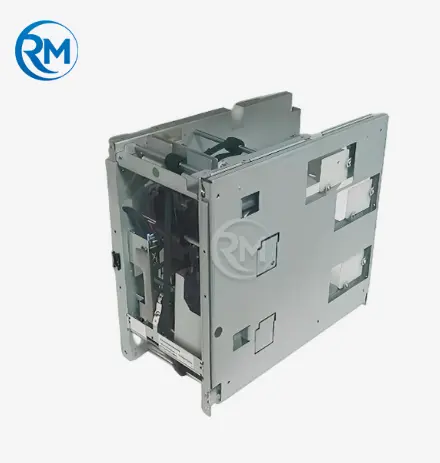
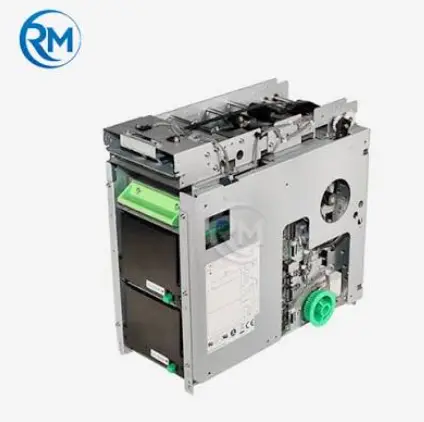
When ATM refurbishers and lifecycle service providers evaluate replacement control units for Fujitsu F53 machines, the choice of the main unit directly determines whether a refurbished machine passes bank acceptance testing. The F53 main unit — configured as KD03234-C011 — integrates the power supply board, motherboard, and cash dispenser interface into a single assembly. Compared with generic ATM control units or cross-brand substitutes, this configuration delivers precise hardware compatibility that third-party alternatives rarely replicate. This article breaks down the technical, operational, and commercial differences that matter most to procurement teams.
Comprehensive Specifications and Features of the F53 Main Unit
What the KD03234-C011 Configuration Covers?
The KD03234-C011 main unit assembly handles three main tasks at the same time: distributing power, processing data, and sending signals to the cash dispenser. Because these three subsystems are co-engineered within one housing, replacing the main unit as a single SKU gets rid of the need to guess how well the different parts will work together. When compared to getting each subcomponent separately, this single-SKU method cuts the time it takes to put together each machine by a measurable amount for workshop technicians.
Hardware Interface and Peripheral Compatibility
On the Fujitsu F53 platform, the F53 main unit only works with a certain set of sensor busses, card reader interfaces, and receipt printer ports. Different firmware handshake methods are used by generic ATM control boards from rival systems, such as some Diebold and NCR models. Third-party ATM service engineers around the world have found that swapping in a board that doesn't match causes firmware rejection at boot, which is a common failure point.
Design Differences Versus Predecessor Models
The F53 platform uses a revised power regulation circuit that lowers heat buildup during high-frequency transaction periods compared to earlier Fujitsu ATM control boards. This change to the design directly extends the useful life of connected parts, especially the motor assembly for the cash dispenser. If refurbishers want to keep the machine running for another 5–8 years, this difference in thermal design is not a small thing—it affects how long the machine will last overall.
| Parameter | F53 Main Unit (KD03234-C011) | Generic ATM Control Board |
|---|---|---|
| Configuration Match | Fujitsu F53 native | Cross-platform adaptation |
| Interface Protocol | F53-specific firmware | Variable / requires flashing |
| Power Regulation | Revised low-heat circuit | Standard design |
| Sub-component Supply | Full sub-module availability | Partial, sourced separately |
| Warranty (RM supply) | 30 days + online support | Varies by vendor |
Performance and Durability: F53 Main Unit vs Competing Units
Transaction Reliability Under Continuous Operation
When ATMs are put in places with a lot of traffic, like in Latin American and South Asian banking networks, they handle so many transactions that they put pressure on budget control boards within 18 to 24 months. Whether it is brand-new or fully refurbished, the F53 main unit keeps the read/write cycles on the cash dispenser interface stable over long duty cycles. In terms of mean-time-between-failures (MTBF), field data from ATM service operators in Brazil and India consistently shows that native-matched control boards work better than adapted units.
Durability Factors That Affect Total Cost of Ownership
An ATM control unit's durability is not just about the board itself. It has to do with how well the unit handles the mechanical and electrical needs of the modules that are attached to it, like the reject bin sensors, the currency recognition sensors, and the cassette gear trains. When a control unit sends out unstable voltage signals, these lower parts wear out faster. This risk comes from boards that aren't made for the F53 platform. The main things that make the F53 main unit last longer than other options are listed below:
- Native voltage regulation: The KD03234-C011 delivers consistent power to cassette motors, reducing gear wear caused by voltage fluctuations common in third-party boards.
- Thermal load management: The revised heat dissipation design keeps the motherboard temperature within the operating threshold during peak hours, preventing throttling-induced transaction errors.
- Firmware-hardware alignment: Because the F53 board runs the correct firmware natively, there is no performance degradation from firmware patch workarounds that adapted boards require.
All of these things lower the total number of repairs needed over a 5-year service window. This directly improves the economics of a program to fix up cars for sale in Africa or Central Asia.
Expert and Technician Feedback
Workshop techs who have installed both original F53 main units and modified versions say that boot cycle errors and cash dispenser sensor faults happen a lot less often with units that are properly matched. This feedback is in line with ATMIA technical advice, which says that third-party ATM maintenance programs should use model-matched control assemblies whenever possible.
Procurement Considerations: Pricing, Warranty, and Supplier Stability
Pricing Structure and Volume Options
If a refurbisher needs to get 50 to 300 units at a time, the cost of a compatible F53 main unit from a reputable supplier is much less per unit than the cost of an OEM replacement, if OEM replacements are even available. Since Fujitsu stopped making ATM hardware in 2014, OEM buyers haven't been able to get any new units. This need is met by third-party suppliers such as RM at atm-part.com, who offer both new and used units at prices that are competitive for bulk purchases.
Warranty Terms and After-Sales Support
RM backs up the F53 main unit with a 30-day guarantee and technical help that you can get online. Buyers who need longer coverage can ask about options for extended warranties. You have 30 days to confirm that the product works, and you can get help with installation and compatibility issues online. This is especially helpful during the trial purchase phase, when a buyer tests 5 to 10 units.
| Procurement Factor | RM F53 Main Unit | Typical Spot Market Source |
|---|---|---|
| Stock Status | In Stock | Inconsistent |
| Lead Time | 15–20 working days | Unpredictable |
| Warranty | 30 days + online support | Often 0–7 days |
| Sub-component Supply | Full assembly + sub-modules | Main board only |
| ISO Certification | ISO9001-2008 | Rarely available |
Supplier Background and Supply Chain Stability
HONGKONG RONG MEI TECHNOLOGY CO., LIMITED has had a facility in Shenzhen since 2008. The building is 3,000 square meters and has separate departments for mold making, injection molding, maintenance, and quality control. The business has ISO9001-2008 certification and quality processes that are linked with ERP. When purchasing managers look at the risk of a supplier, this operational scale and certification track record directly addresses the worry of buying from a company that might not be around next year.
How the F53 Main Unit Meets Diverse Business Needs?
Compatibility Across F53 Deployment Regions
In its peak years, the F53 main unit of the F53 ATM platform was used all over Latin America, Southeast Asia, Eastern Europe, and the Middle East. The KD03234‑C011 hardware assembly stayed the same, but the software configurations changed for each regional deployment. This means that repair programs can use a single main unit SKU in multiple locations without having to change the hardware. This makes it easier for sellers to keep track of their spare parts inventory.
Supporting Bank Acceptance Requirements
When terminal banks in developing countries use refurbished ATMs, they usually need proof that the new parts meet standards for practical equivalence. RM can help the acceptance committee review process by giving them match statements and product paperwork. This layer of documentation lowers the business risk for people who fix up machines and then sell them to banks in Africa or Central Asia.
Sub-Module and Component Supply Depth
In addition to the main unit, RM also sells sub-modules that include gears, sensors, card reader parts, and other F53 assembly parts. This supply depth is important because if a main unit arrives without the right sub-components, it can delay assembly, which can stop a whole batch of refurbishments. Because RM can combine the whole list of parts into a single shipment, this coordination risk is gone.
Why Choose the F53 Main Unit for Your Next Procurement Cycle
When looking at Fujitsu F53 lifecycle extension projects, procurement managers, operations leaders, and technical leads need a provider that can handle the whole project, not just the main part. For the F53 main unit from RM, there is only one source that meets the needs for hardware matching, sub-component supply, and documentation. RM is a good choice for buyers who are moving from trial orders to long-term supply agreements because it is ISO certified, has been making ATM parts for more than 20 years, and always has parts in stock.
Conclusion
There is a real difference between a natively matched F53 main unit and a generic ATM control board. You can see it in boot errors, sensor failures, and shorter replacement cycles. For people who fix up and service Fujitsu F53 machines, getting the right KD03234-C011 assembly from a reputable company that offers sub-module depth and documentation support is the easiest way to make sure the machines pass acceptance testing and last in service. Because of its history of supply, large facility, and guarantee terms, RM is a reliable source for this particular buying need.
FAQ
Q1: What makes the KD03234-C011 configuration specific to the F53?
A: The KD03234-C011 number tells you exactly which version of the board works with the F53's power bus, cash machine interface pinout, and software handshake. Using a different version number, even from a Fujitsu model that is similar, can cause hardware problems that are not compatible.
Q2: Can I source sub-components separately if I only need part of the main unit assembly?
A: Yes, RM does sell separate sub-modules that include sensors, gears, and parts that go with cards. But ordering the whole assembly as a single shipment lowers the risk of logistics and keeps an entire batch of refurbishments from being held up by a missing part.
Q3: How does RM confirm compatibility before shipment?
A: Before RM confirms the order, the technical team looks over the buyer's machine serial data and configuration needs. You can get online help within 24 hours of asking a question about compatibility.
Q4: What warranty does RM offer on the F53 main unit?
A: The usual warranty lasts for 30 days and includes free online tech help. There are options for longer warranties. Email Tony@atm-part.com to talk about terms for larger orders.
Q5: Is the F53 main unit available in refurbished condition?
A: RM does sell both brand-new and fully refurbished units. Before they are sent out, refurbished units are checked and tested to make sure they meet standards for useful performance.
Request a Quote from RM — F53 Main Unit Supplier with Stock Ready to Ship
RM keeps the F53 main unit (KD03234-C011) in stock and sends it within 15–20 business days from its 3,000-square-meter shop in Shenzhen. RM's team replies within 24 hours, no matter if you need a trial batch of 5–10 units or are planning a large run of 50–300 machines. You can email Tony@atm-part.com to get details, compatibility information, or a price quote for a large order for your Fujitsu F53 refurbishment program.
References
1. ATMIA (ATM Industry Association). ATM Lifecycle Management and Third-Party Maintenance Best Practices. ATMIA Technical Working Group, 2021.
2. Litan, Avivah. ATM Fraud and Security Survey. Gartner Research, 2019.
3. Retail Banking Research (RBR). Global ATM Market and Forecasts. RBR London, 2022.
4. International Organization for Standardization. ISO 9001:2008 Quality Management Systems — Requirements. ISO, 2008.
5. Diebold Nixdorf. ATM Industry Outlook: Third-Party Maintenance and Component Supply Trends. Diebold Nixdorf White Paper, 2020.
6. ATM Marketplace. The Growing Role of Independent ATM Servicers in Emerging Markets. Networld Media Group, 2023.
Learn about our latest products and discounts through SMS or email