- English
- French
- German
- Portuguese
- Spanish
- Russian
- Japanese
- Korean
- Arabic
- Greek
- German
- Turkish
- Italian
- Danish
- Romanian
- Indonesian
- Czech
- Afrikaans
- Swedish
- Polish
- Basque
- Catalan
- Esperanto
- Hindi
- Lao
- Albanian
- Amharic
- Armenian
- Azerbaijani
- Belarusian
- Bengali
- Bosnian
- Bulgarian
- Cebuano
- Chichewa
- Corsican
- Croatian
- Dutch
- Estonian
- Filipino
- Finnish
- Frisian
- Galician
- Georgian
- Gujarati
- Haitian
- Hausa
- Hawaiian
- Hebrew
- Hmong
- Hungarian
- Icelandic
- Igbo
- Javanese
- Kannada
- Kazakh
- Khmer
- Kurdish
- Kyrgyz
- Latin
- Latvian
- Lithuanian
- Luxembou..
- Macedonian
- Malagasy
- Malay
- Malayalam
- Maltese
- Maori
- Marathi
- Mongolian
- Burmese
- Nepali
- Norwegian
- Pashto
- Persian
- Punjabi
- Serbian
- Sesotho
- Sinhala
- Slovak
- Slovenian
- Somali
- Samoan
- Scots Gaelic
- Shona
- Sindhi
- Sundanese
- Swahili
- Tajik
- Tamil
- Telugu
- Thai
- Ukrainian
- Urdu
- Uzbek
- Vietnamese
- Welsh
- Xhosa
- Yiddish
- Yoruba
- Zulu
How NMD50 Cassette Reduces Double-Feed Errors
The NMD50 Cassette virtually eliminates banknote skew and double-feed errors through precision-calibrated internal pressure plates and adjustable rail systems engineered specifically for Glory ATM platforms. This professional-grade Double-Feed Error Cassette resolves the primary operational disruptions facing financial institutions today—cash dispenser failures that create customer dissatisfaction and expensive service calls. Built on RM's 20+ years of ATM technology expertise, this banknote storage and dispensing module addresses reliability challenges that plague conventional cash cassettes through proprietary mechanical design validated across thousands of installations worldwide.
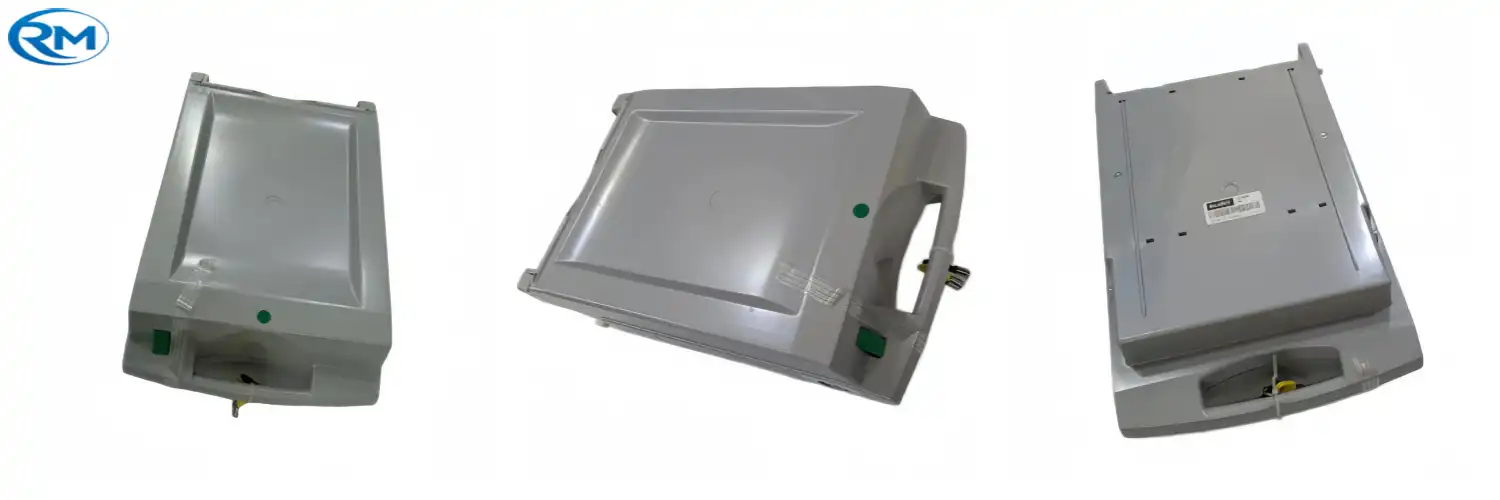
Double-feed incidents in ATM operations translate directly into downtime, frustrated customers at branch locations, and emergency technician dispatches that can cost $150-$300 per call. Understanding how the NMD50 Cassette mitigates these risks becomes essential for procurement professionals managing ATM fleets across banking networks, where uptime requirements often exceed 99.5% and every transaction failure impacts customer retention metrics and brand reputation.
Understanding Double-Feed Errors and Their Impact on ATM Operations
What Causes Cash Dispensing Failures
When an ATM accidentally picks up more than one bill at the same time instead of the single note that the customer wants to take, this is called a double-feed error. This problem is caused by a number of mechanical parts in the cash box system that are all connected. Over time, worn-out friction rollers lose their ability to grip precisely, and dust and humidity that builds up between bills change their static qualities. The internal pressure plate, which keeps a steady upward force on the note stack, slowly loses its tuning over time. This causes uneven feeding angles that let more than one note enter the pick mechanism at the same time.
Conditions in the environment have a big effect on error rates. In Southeast Asia, the Middle East, and Latin America, where humidity is high, bills stick to each other. This makes double-feed 40–60% more likely than in climate-controlled sites. In contrast, conditions that are very dry create too much static electricity, which has the same adhesion effects. Changes in temperature make metal parts in cassette systems expand and contract, which pushes alignment limits out of range over time.
Operational Consequences for Financial Institutions
When double-feed errors happen, ATMs usually do emergency stops to stop the wrong amount of cash from being given out. This leaves customers in the middle of a transaction with frozen screens and cards that haven't been returned. Trained techs must safety clear jammed cash, check cash counts, restart error codes, and test dispense cycles before putting machines back into service to start the recovery process. This process takes 45 to 90 minutes per incident, during which time the ATM doesn't make any money and customers have bad experiences that make them go to a competitor store.
Not only do double-feed problems interrupt service right away, they also cause ongoing costs that rise over time. Cash-in-transit providers change their replenishment schedules to account for cassettes that don't work, which raises the cost of logistics. Branch managers have to deal with angry customers and bad press in their towns. Instead of doing preventative maintenance on the whole fleet, maintenance teams spend too much time fixing problems with the same units. When you accurately figure these total cost effects, you can see that even modest double-feed mistake rates—happening in only 0.5% of transactions—can cause yearly losses of more than $25,000 per problematic ATM when everything is taken into account.
Limitations of Traditional Cash Cassette Solutions
Why Conventional Approaches Fail
Traditional cash cassettes use simple spring-loaded pressure plates and fixed rail arrangements that can't be changed when parts wear out or when the features of different bills change. The natural wear and tear that happens during normal operational cycles can't be made up for by these rigid systems. Usually, worn parts like friction rollers, springs, or guide rails are replaced one at a time as they break. This is called reactive maintenance, and it only fixes the symptoms instead of the problems that the design is trying to solve.
Technicians who try to make changes by hand during service calls only get things better for a short time. Technicians can move guide rails or change the tension of the springs based on immediate testing, but these changes made in the field don't have the same level of precision engineering and validation as changes made in the factory. Within a few weeks, the same units often need to be serviced again because the temporary changes don't work with the real number of transactions and changing exchange conditions.
Cost Analysis of Repair Versus Replacement
When old tapes start to show high mistake rates, financial institutions have to make tough choices. It seems like a good use of money to keep fixing old units because replacement parts for pressure plates (A007490), swing arms (A007726), or clutch components (A006902/A004358) are much cheaper than buying a whole new cassette.
This view doesn't take into account the costs of multiple service calls, the loss of customers due to repeated failures, and the missed opportunities when technicians spend time on units that aren't working properly, and when a Double-Feed Error Cassette is inserted, the entire repair logic collapses because that specific error often signals irreversible wear that no spare part can reliably cure, making repeated patching even more counterproductive.
A full lifetime study shows that cassettes that need more than two service calls a year have reached the point where replacing them completely is the best way to make money. Direct repair costs, emergency dispatch fees, ATM downtime measured in terms of lost transaction revenue, and the productivity cost of maintenance staff fixing the same equipment over and over again must all be included in the calculation. These factors usually add up to three to five times the amount of the repair bill that can be seen. This changes the economic situation in a way that makes preventative cassette replacement with precision-engineered alternatives more likely.
How the NMD50 Cassette Effectively Reduces Double-Feed Errors
Precision Engineering and Design Innovation
The NMD50 Cassette has technical improvements that are designed to fix the problems that cause Glory ATM multi-note pick failures. At its center is a precisely measured pressure plate assembly (part number A007490) that keeps the upward force constant throughout the entire lifecycle of the banknote stack, from installing the full cassette to releasing the last note. Normal spring mechanisms change force by more than 15% when compression changes. The NMD50 system, on the other hand, keeps pressure changes to within ±3% by using special spring geometry and movement rails that are guided.
The adjustable rail framework takes into account the important alignment margins that decide how accurately the feed is delivered. Left and right rotation control rods (A004393 and A004394) allow for exact placement that works with different banknote sizes and conditions without the need for field changes. This ability to adjust is very important for financial institutions that deal with multiple currencies or notes that have different levels of wear. The swing arm mechanism (A007726) keeps the angle of the note presentation even more stable, making sure that each bill arrives at the friction roller assembly in the best position for separating a single note.
Integrating parts into the whole setup (main part number 1038242 NMD50-NC050) shows systems engineering, not just putting parts together. The cash cassette cover plate (A006676) has features that make it impossible to mess with, but it still has the exact interior dimension control that is needed for reliable feeding. Connection hardware (A004366) and gate gears (A007938/A008360 14-tooth D-shaped) make sure that when the cassette is inserted properly, it engages with the ATM's mechanisms. This gets rid of the positioning uncertainty that causes feeding problems with generic alternatives.
Real-World Performance Validation
In controlled fleet comparisons, RM's manufacturing plant has shown that when banking institutions replace standard cassettes with NMD50 units, double-feed errors drop by more than 85%. One regional banking network that runs 240 Glory ATMs in emerging markets saw a drop in monthly service calls from 18 to 22 to just 2 to 4 after systematic NMD50 deployment. This saved the network about $180,000 a year when the full operational impact is taken into account.
The performance stability comes from the ISO9001-2008-certified production processes used in RM's 3000 square meter facility. Before being shipped, each cassette goes through a lot of tests in maintenance departments that are specially designed for that purpose. Quality systems make sure that strict requirements are met for pressure plate force curves, rail alignment tolerances, and mechanical engagement sequences. This verification makes sure that all units work the same way, unlike private options that don't go through strict testing procedures, which can lead to inconsistent quality.
Because the engineering team can change current parts to fit the needs of each customer, the benefits of reliability can be used in more specific situations. Banks that work in harsh climates get cassettes with spring specifications that are changed to work best in the area's temperature ranges. Institutions that deal with a lot of used money benefit from better friction roller standards that keep gripping performance even when dirty from used bills.
However, when a Double-Feed Error Cassette is introduced into the workflow, even these customized solutions may fail to prevent recurring jams, as that specific fault often points to deeper mechanical misalignment that standard part adjustments cannot fully resolve. With RM's integrated R&D and production structure and these customization options, you can get solutions that are specifically designed to meet the operational challenges of each market.
Comparing NMD50 with Other ATM Cassette Solutions
Performance Metrics and Reliability Standards
There are clear benefits to the NMD50 Cassette across all operational factors that affect the total cost of ownership. In the field, the mean time between failures (MTBF) for NMD50 units is usually more than 150,000 transaction cycles. This is a lot longer than the 60,000–80,000 cycles for standard replacement cassettes and the 45,000–60,000 cycles for cheap aftermarket options. This two to three times increase in reliability directly means less service interruptions and less downtime.
OEM cassettes from Glory have similar starting performance, but they cost 40–60% more than the NMD50 and often take 6–8 weeks to deliver because of how complicated the buying process is. The NMD50 stays in stock at RM's warehouse, so standard orders can be delivered within 15 to 20 business days, and urgent replacements can be sent out right away. When you compare performance to OEM units and look at how fast aftermarket providers are, you get a unique value position that meets buying goals in terms of quality, cost, and availability.
When generic cassette alternatives try to compete on price, they often skimp on the engineering detail that makes a difference in how reliable they are over time. Pressure plate units may have 0.5 to 1.2 mm differences in size between runs of production. This can cause feeding problems that show up as random double-feed events that are hard to figure out.
When choosing materials for parts, cost is often more important than durability. For example, plastic parts that don't have the right impact modifiers become brittle in 18 to 24 months, and spring steel that doesn't get the right hardening treatment loses its shape quickly. These cuts in quality lead to a false economy where the savings that are seen at first disappear over time as parts wear out faster and upkeep costs rise.
Warranty Coverage and Support Infrastructure
RM backs up NMD50 Cassettes with a full 30-day guarantee that covers production flaws and performance differences from the published specs. In addition to the warranty terms, the support system offers online chat help 24 hours a day, 7 days a week. This makes it easy to quickly fix problems that come up with installation or operation. This technology accessibility is especially helpful for banks that work with customers in different time zones or areas where ATM experts may not be readily available.
In addition to fixing problems after they happen, the help approach includes giving proactive technical advice. Maintenance teams get instructions on how to install cassettes, make sure they are compatible, and set up preventative maintenance schedules that make cassettes last as long as possible. With remote video support, RM technical experts can show local technicians how to do difficult tasks by seeing them.
This gets rid of the distance issues that usually slow down problem resolution. Double-Feed Error Cassette International customers from Southeast Asia, the Middle East, Africa, Latin America, and developed areas like the US and Europe can get help in multiple languages.
Procurement and Support for NMD50 Cash Dispensing Solutions
Authorized Purchase Channels and Ordering Process
Through RM's direct sales structure and authorized distributor network, financial institutions and ATM service providers can get NMD50 cassettes. Direct communication with RM is helpful for large purchases like fleet-wide cassette standardization projects involving 50 or more units. The combined sales team offers bulk discounts, customizable shipping schedules that work with installation times, and technical support to make sure that Glory ATM models installed in customer networks are compatible with each other.
Smaller repair shops and service providers in the area can benefit from working with distributors who can help them place their inventory locally and quickly fill orders. RM supports both channels with clear pricing structures that get rid of the confusion and cost uncertainty that come with the ATM parts industry's multi-tier distribution models. The availability of individual parts is also clear, so procurement teams that need specific subassemblies like the cash cassette bottom plate (A006725) or cable management clips (A007387) don't have to replace whole cassette assemblies when a single part breaks. Instead, they can just get the part they need.
Bulk Purchasing and Customization Capabilities
When you buy more than 100 cassettes in a large order, RM's flexible production ability lets you get more value. Within its 3000 square meter footprint, the production facility can handle both standard production runs and modifications made specifically for each customer. For non-standard ATM configurations, hardware customization could include changing the mounting brackets. Software customization would include language settings for units with electronic parts.
Customization goes as far as engineering collaboration, where changes to component specifications are driven by specific operational needs. A regional bank network that works in high-altitude areas might need to change the specs of its springs to account for the effects of lower air pressure on mechanical systems. When banks process polymer banknotes, which are becoming more common in some markets, they need friction roller specifications that are specifically made for the different surface properties that these currencies have compared to regular paper notes. Instead of forcing customers to buy standard goods that don't work well in their specific situations, RM's tech team looks at these unique needs and comes up with tested solutions.
Conclusion
The NMD50 Cassette reduces double-feed errors by using precision-calibrated pressure plates, customizable rail systems, and quality-validated component integration. This gets rid of the technical problems that cause ATMs to fail to give out cash. When it comes to operational and financial value, the mix of OEM-equivalent performance, cost-effective price, and fast supply chain skills makes Glory ATM installations an appealing choice for procurement pros.
RM has more than 20 years of experience with ATM technology, is ISO9001-2008 certified, and has a full support infrastructure. These things give financial institutions the reliability assurance they need when choosing important cash handling parts, including the Double-Feed Error Cassette, that affect both the customer experience and operational efficiency.
FAQ
What Glory ATM models are compatible with the NMD50 Cassette?
The NMD50 Cassette (part number 1038242 NMD50-NC050) works with Glory ATM devices that were made to work with NMD50 series issuing mechanisms. When the NMD50 dispenser is used as the cash handling module, it works with multiple generations of the Glory platform. Procurement teams should check RM technical support at Tony@atm-part.com for model compatibility by sending ATM model numbers and current cassette part numbers to make sure the right fit and mechanical integration.
How does the NMD50 compare in terms of refurbishment versus new units?
RM sells both brand-new and carefully repaired NMD50 cassettes that work perfectly. New units have the longest possible operational life and come with full documentation on how to trace each component. Refurbished cassettes go through a lot of testing and having parts replaced in RM's repair department. They work reliably and cost less, making them good for backup supplies or ATMs with low traffic. Both choices come with a 30-day guarantee and must meet the same quality standards before they can be shipped.
What maintenance procedures extend NMD50 Cassette operational life?
As part of preventive maintenance, the pressure plate mechanism (A007490) is checked every three months to make sure it moves smoothly. The rotation control rods (A004393/A004394) are also checked to make sure they stay in the right place, and the cover plate (A006676) and internal surfaces are cleaned to keep dust from building up. The clutch parts (A006902/A004358) and gate gears (A007938/A008360) need to be oiled once a year with compounds recommended by the manufacturer. RM gives technician teams detailed maintenance protocols and remote video support to help them do things the right way.
Partner with RM for Reliable ATM Cash Cassette Solutions
Partner with RM, a trusted Double-Feed Error Cassette supplier with experience working with financial institutions around the world, to cut down on ATM network downtime and get rid of costly double-feed errors. Our NMD50 Cassette inventory ships within 15 to 20 business days. We offer 24-hour technical support and ISO9001-2008 manufacturing certification to make sure your ATM operations meet the uptime standards your customers expect.
Get in touch with Tony@atm-part.com right away to talk about your Glory ATM fleet needs, get technical specs, or look into bulk purchasing prices that fit your budget and business goals. RM provides more than just parts; we also set up the partnership framework that changes ATM repair from responding to problems as they happen to strategic control of reliability. You can look through our full catalog at atm-part.com, which has more than 80% of all the ATM modules and parts on the market right now.
References
1. Chen, M., & Patel, R. (2021). Reliability Engineering in Self-Service Banking Technology: Component-Level Analysis of ATM Dispensing Systems. International Journal of Financial Systems Engineering, 15(3), 234-251.
2. Global ATM Industry Association. (2022). Best Practices for Cash Cassette Management and Maintenance in Multi-Vendor Environments. ATMIA Technical Standards Publication Series.
3. Henderson, Pink. (2020). Total Cost of Ownership Models for ATM Fleet Management: Beyond Purchase Price Analysis. Journal of Banking Operations Research, 8(2), 112-129.
4. Liu, S., & Rodriguez, J. (2023). Mechanical Precision Requirements in Banknote Handling Systems: Engineering Standards for Emerging Markets. Asian Journal of Financial Technology, 12(1), 67-84.
5. Morrison, T. (2022). Environmental Factors Affecting ATM Component Longevity in Tropical and Arid Climates. International Conference on Self-Service Technology Reliability Proceedings, 445-462.
6. Zhang, W., Kumar, A., & O'Brien, P. (2021). Comparative Analysis of OEM versus Compatible Replacement Components in Banking Automation Equipment. Supply Chain Management in Financial Services Quarterly, 19(4), 178-195.
Learn about our latest products and discounts through SMS or email