- English
- French
- German
- Portuguese
- Spanish
- Russian
- Japanese
- Korean
- Arabic
- Greek
- German
- Turkish
- Italian
- Danish
- Romanian
- Indonesian
- Czech
- Afrikaans
- Swedish
- Polish
- Basque
- Catalan
- Esperanto
- Hindi
- Lao
- Albanian
- Amharic
- Armenian
- Azerbaijani
- Belarusian
- Bengali
- Bosnian
- Bulgarian
- Cebuano
- Chichewa
- Corsican
- Croatian
- Dutch
- Estonian
- Filipino
- Finnish
- Frisian
- Galician
- Georgian
- Gujarati
- Haitian
- Hausa
- Hawaiian
- Hebrew
- Hmong
- Hungarian
- Icelandic
- Igbo
- Javanese
- Kannada
- Kazakh
- Khmer
- Kurdish
- Kyrgyz
- Latin
- Latvian
- Lithuanian
- Luxembou..
- Macedonian
- Malagasy
- Malay
- Malayalam
- Maltese
- Maori
- Marathi
- Mongolian
- Burmese
- Nepali
- Norwegian
- Pashto
- Persian
- Punjabi
- Serbian
- Sesotho
- Sinhala
- Slovak
- Slovenian
- Somali
- Samoan
- Scots Gaelic
- Shona
- Sindhi
- Sundanese
- Swahili
- Tajik
- Tamil
- Telugu
- Thai
- Ukrainian
- Urdu
- Uzbek
- Vietnamese
- Welsh
- Xhosa
- Yiddish
- Yoruba
- Zulu
Best RB Cassette Solutions for ATM Recycling Systems
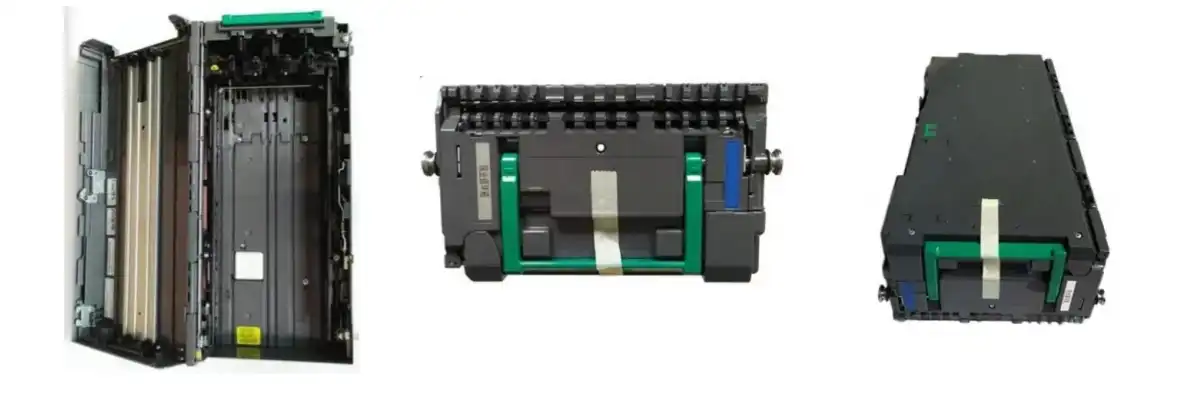
When evaluating the best RB cassette solutions for ATM recycling systems, procurement managers must prioritize reliability, compatibility, and supply chain efficiency. A recycling cassette functions as a dual-purpose module that segregates rejected and retracted banknotes, preventing contamination of primary dispensing cassettes while maintaining transactional integrity. The RB (Reject/Retract) Cassette from HONGKONG RONG MEI TECHNOLOGY exemplifies professional-grade engineering with Japanese-origin manufacturing, delivering stable cash management performance for Hitachi ATM platforms.
This solution addresses critical industry pain points: high original equipment manufacturer (OEM) prices, extended delivery timelines, and inconsistent technical support. With over 80% market coverage of ATM components and 20 years of industry expertise, selecting the right RB cassette directly impacts operational uptime, maintenance costs, and long-term procurement sustainability.
Understanding Recycling Cassettes in ATM Systems
Recycling Cassettes are a special kind of cash handling module designed to make it easier to sort bills and use them again in modern ATMs. These machines use combined mechanical and computer systems to find, sort, and store bills based on their state and the status of the transaction while they are being deposited or withdrawn.
Core Functionality of RB Cassettes in Cash Management
During validation processes, the reject function automatically sends back notes that are doubled, skewed, or damaged. This stops mistakes from happening during dispensing that could hurt the customer experience. The retract device, on the other hand, keeps customer-abandoned cash safe during timeout periods, protecting funds that would otherwise still be available in the dispenser spot.
This divide keeps main category cassettes, which hold notes that are ready to be used right away, from getting dirty. The RB cassette's location inside the ATM cabinet makes it easy for note validation sensors, picker mechanisms, and transport paths to work together. This creates a smooth cash handling ecosystem that requires less manual intervention and less frequent CIT (Cash-in-Transit) service.
Essential Component Architecture
Professional RB cassettes are made up of several carefully designed parts that work together. The part number 1P004088B door piece allows safe entry while keeping the seal against dust. The front frame (1P004012-001), the rear frame (1P004013-001), and the right frame assembly (1P004083A) and left frame (1P004084A) all work together to keep the structure strong. The structure is held together by the base part (1P004481-001), and the guide system (2P005403) makes sure that the notes are stacked correctly and don't get stuck.
The control board (7601536A, also called RX284) handles sensor inputs and actuator outputs. It talks to the main processor of the ATM through special wire assemblies (2P003988A/2P004303B/49024237000B). This modular design lets you change only the parts that need it, which cuts down on downtime during maintenance rounds.
Material Standards and Durability Considerations
Manufacturers use high-quality polymers and alloys that don't rust to make sure that the machines can handle the mechanical stress of repeatedly inserting bills, changing temperatures in outdoor ATMs, and possibly being exposed to water. The design of the WBX framework includes stronger joint points that spread the load evenly.
This makes the operational lifespan longer than 500,000 transaction cycles in most deployment scenarios. Japanese production methods stress precise moulding tolerances of less than 0.05 mm, which makes sure that the note paths are always aligned, which stops skew-related faults that happen a lot with aftermarket options that don't have the same level of quality control.
Evaluating RB Recycling Cassette Solutions: Comparison and Benefits
There are big differences in how they work, how long they last, and how much they cost to own between normal reject bags and professional Recycling Cassettes. Most standard reject bins are passive storage devices that don't have electronics built in, so notes have to be inspected by hand to see how they should be disposed of. RB cassettes talk to the ATM controller and report things like how full they are, when they get stuck, and diagnostic codes that let you plan ahead for maintenance.
Performance Metrics and Reliability Benchmarks
Financial institutions that run Hitachi ATMs have found that properly specified RB cassettes cut note-related faults by about 35% compared to generic alternatives. This is better because of calibrated pressure plate systems that keep the note stack compressed consistently. This stops the "fanning" effect that happens when multiple notes feed during retract operations.
Because it can handle both rejects and retracts, it gets rid of the need for different storage modules, which makes the cabinet size smaller and CIT processes easier. Quality RB cassettes have an average mean time between failures (MTBF) of more than 18 months, while budget-tier components only last 9 to 12 months.
Cost-Benefit Analysis for Procurement Teams
Even though premium RB cassettes may cost more at first, lifecycle analysis shows that they are worth the extra money. Every avoided fault event saves about $250 in costs for service calls, worker time, and customer refunds for failed transactions. Over the course of three years, a single high-quality RB tape avoids about 12 to 15 service calls for faults, which saves each ATM unit between $3,000 and $3,750. These numbers don't include the extra work that gets done because of less downtime and happier customers, which has a secondary effect on branch traffic and the number of people who use digital banking.
Environmental and Corporate Responsibility Alignment
More and more, modern buying rules require sustainable supply chain practices. Making RB cassettes in ways that are ISO9001-2008 approved shows that they follow rules for reducing trash and using less energy. If you buy refurbished units from a reputable seller with a 30-day guarantee, they are an option to new units that reduces electronic waste while keeping performance standards. This method fits with the ESG (Environmental, Social, and Governance) goals of the company without affecting the dependability of operations.
How to Choose the Right RB Recycling Cassette for Your Business
In order to choose the right Recycling Cassette solution, you need to carefully look at technical, logistical, and vendor factors. Professionals in procurement have to find a mix between the need for compatibility and the need to stay within budget, all while planning for the needs for future growth.
Compatibility Assessment with ATM Platforms
The most important thing to do is make sure that the mechanical and computer parts are compatible with your specific ATM model series. Hitachi systems, especially those with the 7601536A control board design, need exact matching of dimensions to make sure the note transport mechanism fits correctly. The depth of the cabinet, the distance between the mounting brackets, and the design of the cable harness pins must all line up perfectly. Differences of as little as 2 mm can cause intermittent faults or total failure of operation. Reliable sellers give thorough compatibility grids that match ATM model numbers with the right cassette part numbers. This takes the guessing out of the buying process.
Evaluating OEM Versus Aftermarket Options
OEM parts promise full compatibility and usually come with a lot of technical information, but they are more expensive and take longer to get than 60 days. Aftermarket Products from well-known companies like HONGKONG RONG MEI TECHNOLOGY have several strategic benefits, such as having stock available right away, competitive pricing that cuts procurement budgets by 30 to 40 percent, and expert support that is skilled at working with systems that use more than one provider. The main difference is in the standards used in production. Aftermarket providers with ISO certifications and specialised quality control teams offer products that are just as reliable as OEM products, but they can be delivered faster, in 15 to 20 working days.
Warranty and Support Infrastructure Evaluation
How quickly technical support responds has a direct effect on how smoothly operations continue when there is a problem. When it comes to foreign missions, resolution delays are kept to a minimum by suppliers who offer 24-hour response times to questions and multilingual online troubleshooting. The standard 30-day warranty protects against problems with the way the product was made and gives suppliers confidence in the quality of the product. Value-added services, like extended warranty choices and health checks after installation, set top providers apart from transaction-focused vendors. Contracts for buying things should clearly spell out RMA (Return Merchandise Authorisation) steps, lead times for replacement parts, and how to get help in case of a critical fault.
Maintenance and Optimization of RB Recycling Cassettes
Preventative repair plans greatly increase the useful life of Recycling Cassettes while lowering the number of unplanned downtime events. Setting up regular inspection schedules that match the frequency of CIT visits improves operations without the need for dedicated service calls.
Routine Inspection and Cleaning Procedures
Technicians should check the cassette door assembly for seal integrity during regular cash refill visits. They should make sure that the 1P004088B door closes tightly with no gaps that let dust in. The guide system (2P005403) needs to be checked for note fragment buildup, which can make note stacking less smooth and cause false jam alerts. Cleaning with compressed air gets rid of dirt and dust from sensor windows and the area around the control board without the risks of water damage that come with liquid cleaners. Cable connections should be visually checked for wear at stress points where opening and closing the door over and over again causes them to bend. Finding insulation wear early stops electrical problems that could shut down the whole ATM.
Diagnostic Monitoring and Predictive Maintenance
The 7601536A control board in modern RB cassettes keeps track of transaction numbers, jam events, and sensor abnormalities that help with planning predictive maintenance. By looking at this monitoring data, we can see trends of use that show when mechanical parts are getting close to their wear limits. By replacing high-cycle parts like pressure plate springs before they break, you can avoid having to call for emergency service. When institutions use data-driven maintenance strategies instead of reactive maintenance strategies, unexpected downtime drops by 40%.
Training Requirements and Operational Best Practices
The people who work at CIT and the branch offices need simple training on how to properly handle cassettes, especially when reinstalling them after adding cash. Misalignment during docking is the cause of about 20% of post-service trouble calls, which are completely avoidable. Training modules should stress the importance of checking procedures, such as making sure the cassette fits completely into the mounting bracket, that the electronic connectors engage with audible clicks, and running diagnostic cycles before closing the ATM cabinet. These rules only take 90 seconds to set up, but they keep services from going down, which hurts customer trust and costs money to run.
Procurement and Supplier Insights for RB Recycling Cassettes
When you build relationships with qualified providers, buying RB cassettes goes from being a transactional activity to a strategic partnership that helps you reach your long-term business goals.
Supplier Qualification and Due Diligence
When procurement teams look at possible providers, they should focus on a few key factors. The ability to make things, like having dedicated mould rooms and injection moulding facilities, shows that quality and cost are controlled by vertical integration. ISO9001-2008 certification proves that quality management systems are being followed, and factories that are bigger than 3000 square meters suggest that they can make enough to support scalable supply agreements.
Suppliers who keep a deep inventory across 80% of the categories of ATM parts make it easy to buy everything in one place, which lowers the costs of managing vendors. Hong Kong Rong Mei Technology is a good example of this type of company because they sell a wide range of parts, from whole cassette systems to single replacement parts like the WBX-FRONT FRAME (1P004012-001) or RB BOTTOM BASE (1P004481-001).
Ordering Process and Logistics Coordination
Sending detailed technical questions to Tang@atm-part.com, including ATM model numbers, quantity needs, and delivery dates, is the first step to efficient procurement. When suppliers use ERP systems as part of their business, they can give accurate lead time figures and make it easy to track shipments. The normal shipping window of 15 to 20 working days for module-level components strikes a good mix between manufacturing schedules and reasonable planning ranges for inventory.
When you buy more than 50 units in a bulk, you can often get tiered pricing structures that cut the cost per unit by 15 to 25 percent. Logistics flexibility, like giving sea freight for big orders that need to be delivered quickly and cheaply, air freight for urgent restocking, and land transport for supplies in the same area, makes sure that practical goals are met.
Customisation Capabilities and Value-Added Services
In addition to catalogue items, top providers offer customisation services to meet unique business needs. Hardware changes could include adding stronger mounting clamps for places with a lot of shaking or changing the length of the cables for cabinets that don't fit standard sizes. Software customisation includes setting the language for markets with multiple languages and fine-tuning the firmware to work with local currencies. These features are especially helpful for ATM makers, programmers, and regional wholesalers who serve a wide range of customers in Southeast Asia, the Middle East, Africa, and Latin America, where standard solutions often need to be localised to work best.
Conclusion
To choose the best RB cassette solutions, you need to think about technical compatibility, supplier reliability, and the total cost of ownership. Professional-grade Recycling Cassettes that are made to exact specs offer measured benefits like fewer problems, longer service gaps, and better measures of customer satisfaction. The purchase choice includes more than just buying parts. It also looks at the quality of the provider relationship, the infrastructure for technical support, and the long-term stability of the supply chain.
Companies that put these factors first along with competitive prices set themselves up for long-term operational success in financial services markets that are becoming more and more competitive. Using trusted suppliers with large catalogues of parts, quick response times, and tried-and-true manufacturing standards lowers risks and improves the efficiency of procurement for ATMs deployed around the world.
FAQ
What factors most significantly influence RB cassette durability and lifespan?
Durability is mostly affected by how precisely it was made, the quality of the material used, and the setting in which it is used. When notes are inserted, cassettes that were made by precise moulding with tolerances of less than ±0.05mm wear down less quickly. In outdoor ATMs where temperatures range from -10°C to 50°C, high-grade plastics don't break down when heated. Operational factors include the number of transactions, the quality of the notes in circulation, and how often they are serviced. Well-maintained cassettes in low-humidity areas usually last longer than 24 months.
How can I ensure compatibility between RB cassettes and multiple Hitachi ATM models in my fleet?
To make sure that two things work together, you have to compare the model numbers of two ATMs to provider compatibility charts that list the right cassette part numbers. Because electronic interface protocols must match, the control board number (for example, 7601536A) is the main way to tell if two devices are compatible. Reliable suppliers offer technical consultations before the sale. During these consultations, they look at your specific model mix and suggest the best solutions. They often keep reference databases with information on models made up to 15 years ago.
What are typical lead times for bulk orders of RB cassettes?
As long as the parts are in stock, standard module-level sales of up to 100 units ship within 15 to 20 business days. For production scheduling reasons, wait times may be extended to 25 to 30 working days for sales of more than 100 units. For engineering and testing validation, custom changes take an extra 10 working days. Setting up framework deals with expected yearly amounts lets suppliers store goods ahead of time, cutting wait times for planned releases to 7–10 days.
Partner with RM for Reliable RB Cassette Solutions
Here at HONGKONG RONG MEI TECHNOLOGY (RM), we know how important it is to have reliable cash management parts to keep ATMs running smoothly. Our Japanese-made RB Cassettes for Hitachi systems are made with tried-and-true engineering and are in stock right away. They come with a 30-day guarantee and quick technical support. Our large collection, which includes 80% of ATM parts, makes it easy to buy everything you need from a single source, whether you need whole cassette assemblies or special replacement parts like the 7601536A control board.
Contact our team at Tony@atm-part.com to talk about your Recycling Cassette needs with knowledgeable experts who can make suggestions that are specific to your fleet. As a certified Recycling Cassette seller that has been in the business for more than twenty years, we offer the quality, timeliness, and technical know-how that turn buying problems into competitive advantages.
References
1. International Standards Organization. (2015). Quality Management Systems for Financial Equipment Manufacturing: Requirements and Guidelines. ISO Publication Series.
2. ATM Industry Association. (2022). Global Cash Management Best Practices: Component Reliability and Maintenance Protocols. ATMIA Technical Report.
3. Financial Equipment Manufacturers Council. (2021). Comparative Analysis of OEM Versus Aftermarket ATM Components: Performance and Total Cost of Ownership Study. FEMC Research Division.
4. Hitachi-Omron Terminal Solutions. (2020). Technical Specifications for Cash Handling Modules in Self-Service Banking Systems. Product Engineering Documentation.
5. Journal of Banking Technology and Equipment Management. (2023). Predictive Maintenance Strategies for ATM Cassette Systems: A Multi-Regional Analysis. Volume 18, Issue 3.
6. Global ATM Supply Chain Consortium. (2022). Procurement Guidelines for Financial Institution Equipment Managers: Supplier Qualification and Risk Management. Industry White Paper.
Learn about our latest products and discounts through SMS or email