- English
- French
- German
- Portuguese
- Spanish
- Russian
- Japanese
- Korean
- Arabic
- Greek
- German
- Turkish
- Italian
- Danish
- Romanian
- Indonesian
- Czech
- Afrikaans
- Swedish
- Polish
- Basque
- Catalan
- Esperanto
- Hindi
- Lao
- Albanian
- Amharic
- Armenian
- Azerbaijani
- Belarusian
- Bengali
- Bosnian
- Bulgarian
- Cebuano
- Chichewa
- Corsican
- Croatian
- Dutch
- Estonian
- Filipino
- Finnish
- Frisian
- Galician
- Georgian
- Gujarati
- Haitian
- Hausa
- Hawaiian
- Hebrew
- Hmong
- Hungarian
- Icelandic
- Igbo
- Javanese
- Kannada
- Kazakh
- Khmer
- Kurdish
- Kyrgyz
- Latin
- Latvian
- Lithuanian
- Luxembou..
- Macedonian
- Malagasy
- Malay
- Malayalam
- Maltese
- Maori
- Marathi
- Mongolian
- Burmese
- Nepali
- Norwegian
- Pashto
- Persian
- Punjabi
- Serbian
- Sesotho
- Sinhala
- Slovak
- Slovenian
- Somali
- Samoan
- Scots Gaelic
- Shona
- Sindhi
- Sundanese
- Swahili
- Tajik
- Tamil
- Telugu
- Thai
- Ukrainian
- Urdu
- Uzbek
- Vietnamese
- Welsh
- Xhosa
- Yiddish
- Yoruba
- Zulu
How MRX Recycler Supports Automated Cash Recycling Operations
An MRX recycler supports automated cash recycling operations by accepting banknotes, validating them, storing them in recycling modules, and paying them out again for later transactions. The JCM MRX Recycler, made in Japan, uses roller-type collection and accepts single or bulk loading. Integrators can build cash recycling into ATMs, kiosks, and self-service payment machines. Because validated notes stay on-site, staff handle less cash by hand and may need fewer replenishment runs. In this article, I explain how the unit works, where it fits, and how to specify, test, and buy one with confidence.
What Is the JCM MRX Recycler and How Does It Work?
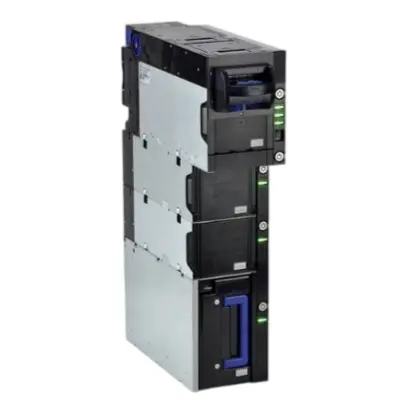
What Is an MRX Recycler?
An MRX recycler is an automatic tool for handling cash that takes it in, checks it, sorts it, saves it, and then gives it out again. This is all done in a controlled way. A simple bank box is only for putting down bills to be picked up later. Another thing a recycler does is use verified notes to take money out or make changes. Its main jobs are to identify bills of different amounts, sort rejected notes into different piles, keep track of stock, and connect to the host computer.
The JCM MRX recycler is a modular machine that can be used to recover money in food stores, banks, gambling, hotel, and other places. Cash is still useful in the US. A report from the Federal Reserve Bank of San Francisco in 2023 showed that people paid for things with cash 16% of the time. It was less than 18% in 2022. Stores and banks will still have to deal with cash every day with that much of a share.
How an MRX Recycler Works
Cash-in is where you start when you want to put money in. It is checked by sensors to see what kind of note it is, if it is real, if it works, and which way it is facing. After that, rollers and belts send notes that have been accepted to the right part for destruction and notes that have been rejected to a different area. Making sure that the right notes are ready for the next cash-out, the software keeps its digital inventory up to date.
Rollers on the JCM MRX recycler pick up bills and check each one more than once. This helps keep cash from going to fake bills. Embedded software and the computer interface take care of transactions, reporting, and reconciliation. Before the design freeze, I suggest that installers talk to our team about the protocol and SDK details, the currencies that will work, the speed, and any environmental limits.
JCM MRX Recycler Product Snapshot
Here are some tips for solution architects that will help them make sure the product works before they ask for plans. The product name and model is JCM MRX recycler (MRX), and it comes from Japan. The item is currently in stock, and it can be bought as brand new or refurbished.
| Parameter | Specification |
|---|---|
| Product Name / Model | JCM MRX Recycler (MRX) |
| Origin | Japan |
| Stock Status | In Stock |
| Condition | Brand New or Refurbished |
| Technology Type | Modular Banknote Recycling |
| Collection Method | Roller-type Technology |
| Loading Options | Single or Bulk Banknote Loading |
| Warranty | 30-Day with Online Support |
| Support Response | Within 24 hours |
| Delivery Time | 15-20 working days |
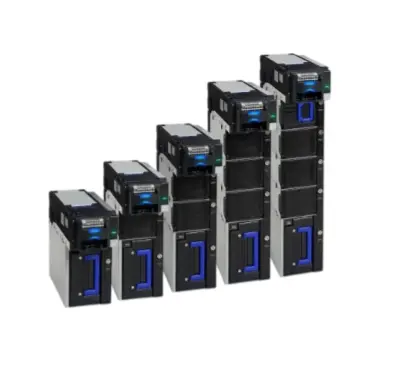
Because the MRX recycler is modular, it can be changed to fit different cash-handling needs. As long as there is both single and bulk loading, operators can choose between small and large restockings.
How an MRX Recycler Supports Automated Cash Operations Day to Day
Less Counting, Sorting, and Reconciliation
Handling cash by hand is work that needs to be done over and over. The staff has to count the deposits, sort the bills by value, make sure the drawers are balanced, and put new money in the dispensers. Those steps are taken by an MRX recycler inside the machine, and the inventory record is changed right away. It's easier for managers to see the amounts of different denominations, the past of transactions, shortages, and exceptions.
It's also less likely that mistakes will happen when there are fewer steps to take by hand and only certain people are allowed to touch the cash. For projects in casinos and banks, you may need full audit trails. Check your host software to see what kinds of records it keeps. When a store or branch has the same unit, staff only need to learn one way to load and balance it. This makes training easier for operators who have more than one location.
Cash Reuse and Fewer Replenishment Runs
Using real notes that are already there makes cash more accessible. A $20 bill from one customer can be used as change for another, so the machine doesn't need as much cash. This might lower the number of trips to refill, hours worked, and stops for cash-in-transit. The real cut depends on the type of business, the carrier's capacity, and the terms of your contract. I tell developers to make a model of how payments and withdrawals work before I give them a percentage to a client. It's also important to know how much money is in each denomination because a recycler can only pay out what it has in each module.
Core Advantages for Integrators
When integrators look at different ways to recycle cash, these are the main benefits they usually look at first:
- Modular design: Engineers can use the same platform for projects in a bank, a store, or a game because the unit can be changed to work in different places and with different amounts of cash. Ask our team which parts they can fix or change on their own, as this affects your maintenance budget.
- Multi-pass validation: The collector looks over each bill more than once, which helps stop fake bills from getting into circulation. A single bad note used as change can cause a dispute and audit questions that need to be answered later, which is critical in casinos and banks.
- Roller-type collection with flexible loading: Roller-type technology helps keep jams and repair breaks to a minimum, and workers can choose the best way to restock by adding one item at a time or in bulk. Before you buy a lot, you should use a sample note to try both ways of adding.
These benefits fix problems like unclear upgrade paths, weak validation, and slow replenishment. They make it easy for a product manager to compare a roller-type recycler to other cash modules.
MRX Recycler Applications Across Business Environments

Banks and Financial Institutions
An MRX recycler at a bank branch lets tellers aid with payments and withdrawals while reducing back-office headcount. It may also be utilized in self-service banks where clients handle cash without a clerk. Integrators that create ATMs or cash recyclers for bank employees may reuse the same versatile platform. First, the host platform must support it. If your higher-level software, like NCR or Diebold Nixdorf, requires protocol development, get interface documents immediately. Installing hardware takes longer than integrating protocols, therefore discussing it during design will save time.
Supermarkets, Casinos, Hotels, and Gaming Machines
Stores may automate change distribution and till balance using an MRX recycler. This cuts money-counting time. Self-service and booth cash machines are needed in hotel casinos and other slot machine venues. Cash may be taken and returned at the same machine when checking in or out. US gambling laws are determined by the states. gambling Laboratories International tests gambling equipment for safety. Prior to a pilot, compliance officers should get the necessary licenses. I don't trust anybody to certify a unit, therefore seek formal confirmation for your project.
OEMs, Integrators, and Kiosk Builders
OEM initiatives need documentation. Before choosing, consider SDK access, customizable options, replacement parts, and the provider's long-term commitment. RM, located in Shenzhen since 2008, supplies over 80% of ATM modules and parts. Whole machinery to little bits. Online or via video chat, we may alter the language and system settings to your liking. An integrator may acquire the recycler and modules from the same manufacturer in that price range. It simplifies purchasing coordination.
Capacity, Compatibility, Maintenance, and Traditional Comparison
Capacity Planning for MRX Recycler Projects
Maximum notes held does not indicate space. The recycling module's capacity, reject pockets, daily deposits and withdrawals, and peak-hour throughput should be checked. A crowded grocery shop on Friday afternoon is different from a hotel booth used a few times an hour. Ask RM to match transaction logs from live sites with a setup. Traffic figures fluctuate often, therefore I won't provide them. Verify numbers in writing before finishing a plan. Real demand and configuration must match for an MRX recycler project.
Currency Testing and Maintenance Requirements
Test the money using real money since the model, sensors, and software affect its performance. Include worn, partially damaged, alternative denomination, and turned-over notes. Use your own till notes for US dollar projects. Site conditions including temperature, humidity, dust, electricity, network access, and service clearance affect results. Regular maintenance includes sensor cleaning, transport inspection, software update, calibration, and worn part replacement. If you wish to add currencies later, prepare additional pieces and learn how to update the program.
MRX Recycler vs. Traditional Cash Handling
Here is a table that compares recyclers to other cash-handling tools based on the most important factors.
| Feature | Manual drawer or deposit-only unit | MRX recycler |
|---|---|---|
| Note validation | Staff check, or deposit only | Automated, multi-pass validation |
| Reuse of deposited notes | No | Yes |
| Inventory record | Manual count | Digital inventory |
| Manual intervention | Higher | Lower |
| Upfront cost | Lower | Higher |
| Integration effort | Minimal | Required |
A recycler costs more up front, and you need to plan for how to set it up and keep it running. Compare the amount of time saved, the amount of money moving, the throughput, the error rate, the uptime, the cost of service, and the likely length of time the service will last. It's more accurate to look at how much the tools cost all together than just how much they cost.
Choosing, Implementing, and Requesting an MRX Recycler
How to Choose the Right MRX Recycler
Explain the application, business aim, transaction profile, and setting first. List the certs, currencies, quantities, storage space, security features, software interfaces, and cash-out speed. The JCM MRX recycler is available new or secondhand. Get test and inspection reports before buying a secondhand device, since these are commonly missing. You should evaluate a supplier based on their documentation, quality control, shipping experience, warranty terms, spare part availability, and response time. Our customer care staff responds in 24 hours, and the equipment comes with assistance and a 30-day guaranty.
Implementation Steps for Automated Cash Recycling
First, list the existing money-in-and-out, balancing, restocking, and exceptions actions. Next, plan the system. This strategy should connect to tellers, ATMs, POS, ERP, and cash tracking software. Installation should include site preparation, network testing, currency verification, speed tests, and recovery stages. Train your staff to load, balance, handle jams and denied notes, and improve. After launch, monitor uptime, interventions, inconsistencies, and transaction performance. Before buying several, your team should test one or two units at a reference location.
How to Prepare an RFQ
A detailed RFQ helps the vendor set up. Name the country, currency, denominations, usage, daily and peak volumes, necessary capacity, integration environment, delivery location, certifications, warranty expectations, and training. Ask vendors how the equipment is maintained, how frequently it has to be repaired, whether there are replacement parts, remote assistance, customization options, and if it can be seen in operation. Model, modules, accessories, unit price, shipment, setup, commissioning, warranty, service terms, delivery schedule, payment conditions, and validity duration should be included in the quotation. Most RM shipments are by sea, land, or air and require 15–20 working days.
Conclusion
Modular MRX recyclers accept banknotes, verify them many times, store them, distribute them, and balance them. This lets you utilize checked cash immediately. This strategy reduces the need to count and classify commodities, making it simpler for operators to monitor them. It may also reduce restocking and cash-in-transit. If capacity, currency compatibility, host interfaces, and local compliance permissions are reviewed, it may be utilized in banks, grocery shops, fruit machines, casinos, hotels, and OEM kiosk projects. Establishing an MRX recycler costs more and requires more time than a hand box or deposit-only machine. The cost to own, maintain, and replace components should determine the choice. A aircraft with genuine notes and a full RFP are still optimal for fit testing.
FAQ
Is the JCM MRX recycler available new or refurbished?
Yes. We have both new and used JCM MRX recyclers in stock. If you buy a used unit, make sure you get test records because the information about the cycle life might not be saved.
What warranty and support come with the unit?
There is online help for the machine and a 30-day guaranty. If you ask RM a question, he will answer it within 24 hours.
How long does delivery take?
Most of the time, delivery takes 15 to 20 working days. You can fly, drive, or go by sea to get there.
What loading options does it offer?
It can hold one or more bills at once. Test a few of your own notes first before using them because the model, sensors, and software all affect how well they work with money.
What affects MRX recycler price?
The price changes based on the system's size, configuration, the work that needs to be done for certification, installation, and service coverage. With a more detailed RFQ, you can get a better price.
Contact RM About Your MRX Recycler Project
Are you going to test something or place a big order? If you have questions about the SDK, connection, or delivery, RM can answer them within 24 hours. They can also give you a price on a new or used JCM MRX recycler. We are an MRX recycler company that has been in business since 2008 and has ISO9001-2008 certification. We can also make modules fit your needs and provide online or video support. You can email Tony@atm-part.com or visit atm-part.com and tell them about your currency, amount, and use.
References
1. Federal Reserve Bank of San Francisco, 2024 Findings from the Diary of Consumer Payment Choice (2024)
2. Federal Reserve Bank of San Francisco, 2023 Findings from the Diary of Consumer Payment Choice (2023)
3. PCI Security Standards Council, Payment Card Industry Data Security Standard v4.0 (2022)
4. European Central Bank, Study on the Payment Attitudes of Consumers in the Euro Area (SPACE) (2022)
5. International Organization for Standardization, ISO 9001: Quality Management Systems – Requirements (2015)
6. Bank for International Settlements, Statistics on Payment, Clearing and Settlement Systems in the CPMI Countries (2023)
Learn about our latest products and discounts through SMS or email