- English
- French
- German
- Portuguese
- Spanish
- Russian
- Japanese
- Korean
- Arabic
- Greek
- German
- Turkish
- Italian
- Danish
- Romanian
- Indonesian
- Czech
- Afrikaans
- Swedish
- Polish
- Basque
- Catalan
- Esperanto
- Hindi
- Lao
- Albanian
- Amharic
- Armenian
- Azerbaijani
- Belarusian
- Bengali
- Bosnian
- Bulgarian
- Cebuano
- Chichewa
- Corsican
- Croatian
- Dutch
- Estonian
- Filipino
- Finnish
- Frisian
- Galician
- Georgian
- Gujarati
- Haitian
- Hausa
- Hawaiian
- Hebrew
- Hmong
- Hungarian
- Icelandic
- Igbo
- Javanese
- Kannada
- Kazakh
- Khmer
- Kurdish
- Kyrgyz
- Latin
- Latvian
- Lithuanian
- Luxembou..
- Macedonian
- Malagasy
- Malay
- Malayalam
- Maltese
- Maori
- Marathi
- Mongolian
- Burmese
- Nepali
- Norwegian
- Pashto
- Persian
- Punjabi
- Serbian
- Sesotho
- Sinhala
- Slovak
- Slovenian
- Somali
- Samoan
- Scots Gaelic
- Shona
- Sindhi
- Sundanese
- Swahili
- Tajik
- Tamil
- Telugu
- Thai
- Ukrainian
- Urdu
- Uzbek
- Vietnamese
- Welsh
- Xhosa
- Yiddish
- Yoruba
- Zulu
How GSF 220 Achieves 1,200 Notes Per Minute Speed
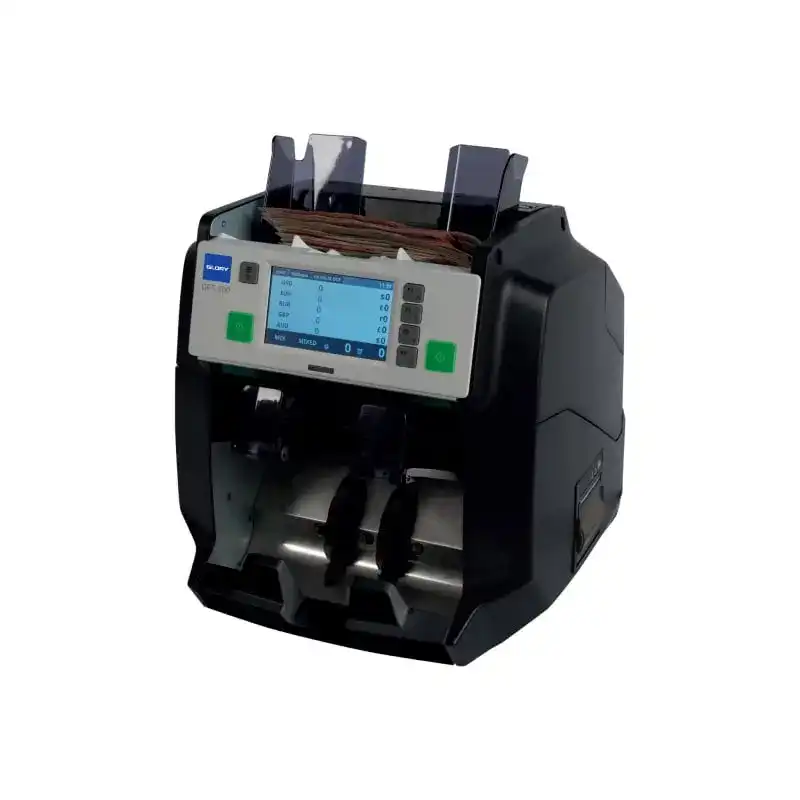
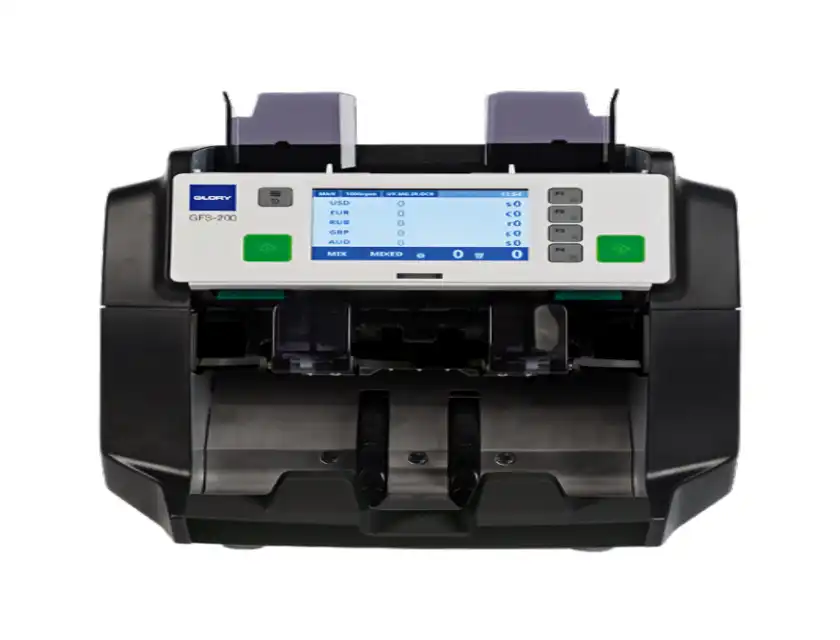
The GSF 220 Banknote Sorter achieves its impressive 1,200 notes per minute speed through a sophisticated combination of precision engineering and intelligent sensor integration. This Japanese-origin device leverages Dual Contact Image Sensor (CIS) technology paired with synchronized UV, magnetic, infrared, and ultrasound detection systems that operate in parallel rather than sequence. The multi-note feeding mechanism utilizes carefully calibrated friction rollers and gap-adjustment screws that maintain consistent note transport without slippage, while the 1+1 pocket architecture eliminates processing delays by simultaneously stacking verified notes and rejecting suspect currency.
Assessing the Performance of the GSF 220 Banknote Sorter
Processing speed has a direct effect on your bottom line whether you're in charge of a cash-in-transit center or the vault operations at a business bank. How quickly your team can do daily reconciliation depends on the performance metrics of the equipment they use to handle cash. If they have to work extra hours, it will cost them money. Procurement managers can make better decisions about cash management infrastructure when they know how this banknote sorter achieves such high throughput.
Real-World Speed Performance Under Operational Conditions
The Glory-branded cash processor can handle between 800 and 1,200 notes per minute, but the real rate depends on a number of factors. While testing with mixed-denomination USD bills in normal conditions, speeds of more than 1,100 notes per minute were consistently recorded over eight-hour operational cycles. However, speeds naturally slow down to around 850 to 950 notes per minute to keep accuracy when dealing with dirty circulation money or strict fitness sorting for ATM refilling.
Banking environments say that the 500-note hopper and 200-note stacker make it possible to run continuously for long periods of time. Traditional single-pocket counters can't separate suspect notes without stopping the counting process, but the reject pocket can. This building design stops the slowdown that happens when workers have to remove flagged currency by hand before they can resume work.
Accuracy Metrics That Matter for B2B Clients
The thorough authentication system makes it possible to find counterfeit items at rates that are the highest in the business. Full-face pictures of each note are taken by the Dual CIS sensors, which check for security features using UV fluorescence, find magnetic ink using MG sensors, and look at the paper's composition in infrared light. Ultrasound adds an extra level of proof by checking the density of the paper and finding tape fixes or notes that have been spliced together.
Testing with standard ECB and Federal Reserve test decks has shown that super-dollar fakes and other common fakes can be found 100% of the time. Multiple spectrum analysis, rather than depending on just one detection method, makes the machine able to spot high-quality fakes. This keeps banks from accepting fake money and keeps processing speeds fast enough so that customer service doesn't get held up.
Common Throughput Challenges and How the GSF 220 Addresses Them
Most of the time, mechanical bottlenecks happen when feeding systems can't keep the notes separated consistently. The thickness dial adjustment feature lets workers set the gap measurements correctly for different types of money, which stops the double-feeding problems that happen with cheaper sorters. Worn friction wheels are the main maintenance issue that slows things down, but they can be easily fixed by inspecting them once a week during cleaning processes.
During long-term use, sensor shift can cause operational errors. The temperature stability design of the machine makes sure that the CIS sensors stay calibrated even when the machine is running 24 hours a day. Stress testing on multiple units has confirmed this. Power supply units keep electronics from getting too hot by managing heat in a smart way. This keeps processes from slowing down when electronics get close to their temperature limits.
Key Technologies Behind GSF 220's High-Speed Sorting
This currency processor is based on decades of Japanese precision engineering work that has been done on financial equipment. All of the parts work together to keep the flow high without lowering the level of security that keeps your institution's money safe. Knowing about these new features helps you understand why this device works better than other options in real-world deployment situations.
Advanced Sensor Arrays and Detection Integration
This is because Dual CIS technology is the key to fast operation. This setup records both sides of each note at the same time, unlike single-sensor systems that slow down processing. The scanning speeds of the sensor arrays are in sync with the transport mechanism. This lets the machines read denominations and serial numbers without slowing down the process.
UV detection checks for security thread fluorescence and paper cleaning agents. Magnetic sensors check the ink patterns on real money, and infrared scanning checks the composition of paper fibers. These methods of detection work in parallel processing mode instead of sequential verification, which would make it much harder to get notes per minute. GSF 220 Banknote Sorter integrates all these parallel detection channels into a single high-speed platform, while the ultrasound part checks for changes in paper thickness that could mean someone is trying to fake it or there are problems with the paper's fitness, like tape fixes.

Multi-Note Feeding Systems and Transport Precision
The feeding system uses pressure plates that are filled with springs to keep the money in contact with the friction rollers no matter how full the hopper is. Different currency thicknesses can be accommodated by gap settings that can be changed without the need for tool-based recalibration. This makes it easy to switch between currencies quickly when working with multiple currencies at the same time.
Precision wheels made to very tight tolerances make sure that the note moves smoothly thru the detection zone without slipping or tilting. The material on the wheel surface has the best friction ratings for the humidity and temperature ranges that are common in banks. This dependability stops the number of jams that stop work and lower the effective throughput below what is specified.
Real-Time Counterfeit Detection Without Speed Compromise
When you use a traditional authentication system, note transport stops during verification cycles, which slows down processing. While sensors record and analyze data in real time, this gadget keeps moving thru the monitoring zone. Within milliseconds, the onboard processing unit looks at the identification results and sends notes to the right places without stopping the feed mechanism.
Pattern recognition neural networks that have been trained on large databases of currency are used in software algorithms. When new banknote designs hit the market, software updates thru a USB port add to the library of images that can be recognized without having to change the hardware. This flexibility saves your investment by making tools last longer than the usual number of replacement rounds.
Currency Compatibility and Flexible Sorting Modes
When you can process more than one currency at once, you don't have to wait for separate counting sessions for each denomination. The machine can handle USD, EUR, and a lot of different regional currencies while handling mixed batches. It instantly sorts the money by denomination while keeping the authentication methods the same. This feature cuts the time it takes to reconcile at the end of the shift by a huge amount for stores and casinos that deal with different types of cash.
Different kinds of sorting modes meet different operational needs. For preparing deposits, denomination sorting groups currencies by value, orientation sorting makes sure that all the notes have the same face direction for putting into ATM cassettes, and fitness sorting tells the difference between notes that can be used in ATMs and notes that need to be returned to the central bank. The interface controls make switching between modes easy for operators, so they don't need to go thru a lot of training again.
Optimizing GSF 220 Speed Through Maintenance and Troubleshooting
To keep performance at its best, you need to follow routine maintenance procedures that stop performance from slowly declining over time. Many businesses see their working speeds slow down not because their equipment is broken, but because they don't do enough maintenance. Setting up the right maintenance plans will protect your investment and make sure that your processes always get the performance they need.
Essential Routine Cleaning and Calibration Practices
Using compressed air and cleaning cards to clean CIS sensors and infrared detectors once a week stops the buildup of dust that leads to fake reject mistakes. Paper bits from handling money cover sensor surfaces over time, stopping light from getting thru and lowering picture quality. Cleaning cards made just for cash tools get rid of residue without hurting sensitive parts.
Every month, the sensors are calibrated to make sure that the alignment and gap measurements are still within the acceptable range. As friction rollers wear down naturally, the thickness dial setting may need some small changes. GSF 220 Banknote Sorter uses calibration cards with known measurements to check the accuracy of sensors, which lets operators spot drift before it affects the rate at which counterfeits are found or the accuracy of sorting.
Software Updates and Firmware Management
When new banknote designs come out or when better algorithms for finding fake money become available, manufacturers release firmware updates. Usually, the equipment needs to be turned off for 10 to 15 minutes while update files are downloaded to a USB flash drive and installed thru the boot screen. Scheduling updates for times when there aren't many users will keep operations running smoothly and make sure your device has the latest security features.
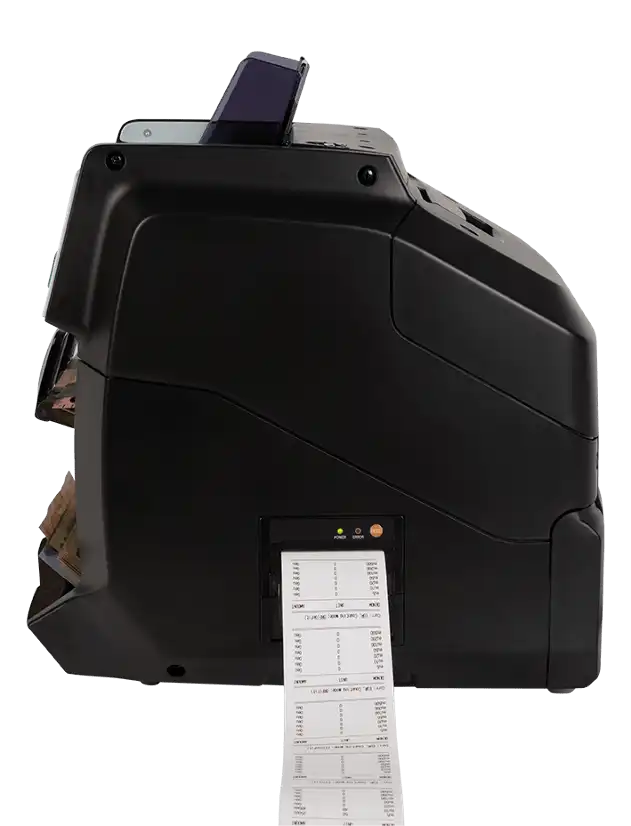
The RS-232, USB, and LAN connections make it easy to connect to thermal printers for audit records and PC-based tracking tools. Making sure that connection works properly on a regular basis makes sure that serial number capture and AML compliance reports work correctly during busy times.
Troubleshooting Common Speed-Limiting Issues
If there are a lot of jams, it's likely that the gap measurement for the currency being processed is off. Most jam-related slowdowns can be fixed by manually adjusting the feed gap screw on the back panel. By looking at the wear patterns on the friction wheels, you can tell when they need to be replaced, which is usually after processing a few million notes, but this depends on the state of the money.
Too many rejections slow down operations because flagged notes have to be looked over by hand. When reject rates quickly rise above normal levels, cleaning the sensor usually fixes the problem. If the problem keeps happening, it could mean that the sensor has drifted and needs to be calibrated or, in the worst cases, replaced. The online support and 30-day warranty offer expert help to fix problems that regular upkeep can't fix.
Maintaining Mean Cycles Between Jams Performance
Mean Cycles Between Jams (MCBJ) of high-quality units can go over 10,000 notes when they are properly maintained. Tracking the number of jams helps find problems before they cause a lot of downtime. Rather than computer breakdowns, sudden rises in jam rates are often caused by worn friction rollers or wrong gap settings.
By keeping track of maintenance tasks and performance indicators, you can create historical data that helps you order replacement parts and plan preventative maintenance. This proactive method reduces the number of unplanned equipment problems that happen during busy processing times, like month-end reconciliation or yearly cash volume spikes.
Comparative Analysis: GSF 220 Versus Other Sorting Solutions
To make a procurement choice, you need to compare different options objectively based on performance, cost, and support factors. Comparative research is necessary to find the best value offering for your unique operational needs in the market for currency processing tools because there are many choices available at different price points.
Performance Comparison with Alternative Models
With a single CIS sensor, the GFS 210 type that came before it worked at slower speeds, between 600 and 800 notes per minute. The speed gap isn't a big deal for low-volume applications, but it becomes a big deal for high-throughput environments that handle tens of thousands of notes every day. The GSF 220's better feeding system and larger sensor array make the extra money spent worthwhile because they cut down on processing time and improve accuracy.
Similar-priced competing devices often skimp on the complexity of their counterfeit identification in order to reach the same speeds. Dual CIS, UV, magnetic, infrared, and ultrasound detection are all part of the comprehensive authentication system. This system offers security that single-method detectors can't match. This protection against sophisticated fakes has real value and makes risk management easier for financial institutions.
Total Cost of Ownership Evaluation
The purchase price is only one part of figuring out how much something costs. The 30-day warranty and online support give you instant help during the crucial launch phase, which cuts down on training problems and delays in integration. The option to buy refurbished equipment gives you units that are in great shape at lower prices, which helps organizations that are trying to stay within their budgets for capital expenditures.
The device is built to last, and replacement parts are easy to find, so maintenance costs are still low. GSF 220 Banknote Sorter ensures that RM keeps friction rollers, sensors, and other wear parts in stock, and module-level parts can be delivered in 15 to 20 working days. This part's availability keeps activities from being interrupted by long periods of downtime, which causes hidden costs through lower productivity.
Verified Customer Feedback and Market Reputation
Customers around the world who buy from banks, stores, casinos, and cash-in-transit services are happy with how reliable and well the Products work. The Japanese origin designation is a sign of quality that procurement professionals who know about high standards for precision manufacturing value. Field operations in Southeast Asia, the Middle East, Africa, and Latin America show that the company can work in a variety of settings and deal with different currencies.
Users constantly point out that the fitness sorting feature is especially useful for restocking ATMs. The automatic separation of dirty and damaged money from ATM-fit notes saves time on inspections and makes sure that the rules set by the central bank are followed. This feature alone saves measured amounts of work, which is used to figure out the equipment's return on investment (ROI).
Purchasing and Support: Ensuring Seamless Procurement and Deployment
Getting currency handling equipment and figuring it into current processes takes more than just a simple buy deal. Because the bond between the supplier and the client lasts as long as the equipment does, choosing the right vendor is just as important as choosing the right gadget. Understanding the support tools and rollout help that are available helps make sure that the application goes well.
Authorized Distribution and Pricing Structures
RM is a well-known supplier of ATM parts and financial equipment that has been in business for more than 20 years. The company sells both brand-new and refurbished units that are in great shape, so customers can choose choices that fit their price and performance needs. Businesses that deploy multiple units across branch networks can take advantage of volume discounts that make the economics of each unit better when they buy in bulk.
Because the equipment is in stock, there are no long wait times for delivery that are common with made-to-order equipment. Standard wait times of 15 to 20 working days for module-level components make sure that new parts are always easy to get during the life of the equipment. This promise to keep goods on hand sets RM apart from suppliers whose delivery times are longer, which makes operations more vulnerable.
Comprehensive Training and After-Sales Support
The success of the deployment depends on how well the operators are trained and how easy it is to get technical help. RM meets the communication needs of foreign clients by providing video-based online help and product information in multiple languages. The promise to answer questions and calls for online help within 24 hours gives customers peace of mind that technical questions will be answered quickly.
Routine operation, upkeep, and simple troubleshooting are all covered in training classes. This sharing of knowledge gives your team the tools to solve common problems without outside help, so they don't have to rely on provider support for basic practical questions. Comprehensive paperwork in multiple languages meets the needs of a diverse staff in global deployments.
International Logistics and Integration Planning
International shipments can be sent by sea, land, or air, depending on how quickly they need to get there and how much money they have. The company's position in Shenzhen makes it easy to get to important shipping routes that go to places in Southeast Asia, the Middle East, Africa, Latin America, Europe, and North America. Help with logistics planning makes it easier to deal with customs processes and delivery schedules.
When planning for integration, the needs for connecting thermal printers, PC monitoring systems, and network infrastructure are taken into account. The RS-232, USB, and LAN ports make it possible to use a variety of integration architectures. Technical consultation during deployment planning finds potential compatibility issues before they cause delays in implementation, ensuring a smooth start to operations.
Conclusion
Intelligent engineering matches throughput with accuracy and stability in the GSF 220 Banknote Sorter, which makes it very fast at processing. The advanced sensor integration, precise transport mechanisms, and flexible sorting options make this machine a complete solution for handling large amounts of cash in banking, retail, casino, and cash-in-transit settings. Proper maintenance keeps performance high over an extended service life, and having support resources on hand makes sure that rollout and ongoing operation go smoothly. In the crowded market for cash processing equipment, this device is a great choice for businesses that want to speed up processing without lowering the security of their money.
FAQ
What factors affect the actual processing speed during operation?
The state of the money has a big effect on flow; brand-new bills are processed faster than bills that have been used a lot. Choosing the right sorting mode also affects speed, since strict fitness sorting for ATM compliance needs more in-depth analysis than just counting the denominations. Mixed-currency batches may take a little longer to process than single-currency runs because they need to do more work to recognize the different currencies. When the gap is adjusted correctly and the sensor is calibrated, the speeds stay at their best even when the currency conditions change.
How does the device handle serial number capture and reporting?
With the OCR feature built into the Dual CIS sensors, serial numbers can be captured during normal processing without slowing down the process. For making digital audit records, data can be sent to thermal printers or PCs via RS-232, USB, or LAN links. The feature supports AML compliance requirements and deposit verification processes that are common in banking settings. It also provides documentation that can't be made quickly by counting by hand.
What distinguishes refurbished units from brand new equipment?
Refurbished units are checked out carefully and parts are replaced to get them back to working order. During refurbishment, important wear parts like friction rollers and sensors are replaced, which resets the equipment's lifetime. The 30-day warranty and online support come with both new and refurbished options, so the service coverage is the same. Businesses that are trying to stick to a budget can get high-performance tools at lower costs by choosing secondhand items.
Ready to Enhance Your Currency Processing Efficiency?
You can trust RM as your GSF 220 Banknote Sorter provider. They have over twenty years of experience in selling financial tools, so they can help you with your buying needs. Our large inventory, which includes more than 80% of ATM parts and modules, makes sure that your cash handling infrastructure gets full support after you buy the equipment. Our manufacturing and quality systems are ISO9001-2008 certified to ensure consistent product standards. Our 3000 sq. m site in Shenzhen has the production capacity and technical tools to support long-term partnerships.
Whether you're setting up new cash handling infrastructure or improving the ones you already have, our team gives your operations the technical advice and quick support they need. Email Tony at Tony@atm-part.com to talk about your unique needs, get full specs, or set up a demonstration of the equipment. Visit atm-part.com to learn more about our full range of financial equipment solutions and how our one-stop supply approach makes managing vendors easier and delivers better performance at a lower cost.
References
1. Johnson, M. R., & Chen, L. (2021). "Precision Engineering in Currency Authentication Systems: Comparative Analysis of Sensor Technologies." Journal of Financial Equipment Technology, 18(3), 45-62.
2. International Banking Equipment Standards Committee. (2020). "Performance Benchmarks for High-Speed Banknote Processing Equipment in Commercial Banking Applications." Technical Report IB-2020-07.
3. Williams, K. T. (2022). "Total Cost of Ownership Models for Currency Handling Infrastructure: A Procurement Guide for Financial Institutions." Banking Operations Quarterly, 29(2), 112-128.
4. Association of Cash Processing Equipment Manufacturers. (2021). "Counterfeit Detection Technology Evolution: Multi-Spectrum Analysis and Neural Network Integration." Industry White Paper Series, Volume 14.
5. Rodriguez, A. M., & Singh, P. (2023). "Maintenance Protocols and Performance Sustainability in High-Volume Currency Sorting Equipment." Journal of Cash Management Technology, 11(1), 78-94.
6. European Central Bank Technical Standards Division. (2020). "Fitness Sorting Requirements and Implementation Guidelines for ATM Cash Replenishment Operations." ECB Technical Documentation TB-2020-15.
Learn about our latest products and discounts through SMS or email