- English
- French
- German
- Portuguese
- Spanish
- Russian
- Japanese
- Korean
- Arabic
- Greek
- German
- Turkish
- Italian
- Danish
- Romanian
- Indonesian
- Czech
- Afrikaans
- Swedish
- Polish
- Basque
- Catalan
- Esperanto
- Hindi
- Lao
- Albanian
- Amharic
- Armenian
- Azerbaijani
- Belarusian
- Bengali
- Bosnian
- Bulgarian
- Cebuano
- Chichewa
- Corsican
- Croatian
- Dutch
- Estonian
- Filipino
- Finnish
- Frisian
- Galician
- Georgian
- Gujarati
- Haitian
- Hausa
- Hawaiian
- Hebrew
- Hmong
- Hungarian
- Icelandic
- Igbo
- Javanese
- Kannada
- Kazakh
- Khmer
- Kurdish
- Kyrgyz
- Latin
- Latvian
- Lithuanian
- Luxembou..
- Macedonian
- Malagasy
- Malay
- Malayalam
- Maltese
- Maori
- Marathi
- Mongolian
- Burmese
- Nepali
- Norwegian
- Pashto
- Persian
- Punjabi
- Serbian
- Sesotho
- Sinhala
- Slovak
- Slovenian
- Somali
- Samoan
- Scots Gaelic
- Shona
- Sindhi
- Sundanese
- Swahili
- Tajik
- Tamil
- Telugu
- Thai
- Ukrainian
- Urdu
- Uzbek
- Vietnamese
- Welsh
- Xhosa
- Yiddish
- Yoruba
- Zulu
GSR 50 Recycler Applications in Bill Payment Machines
The GSR 50 Recycler is a high-tech gadget for recovering banknotes that was designed to work with bill payment machines. It lets the machines accept and give out cash without any problems. This technology from Japan turns payment machines into smart cash management systems that check the validity of arriving bills, store them safely, and then use the same notes to make change. This recycler drastically lowers running costs by getting rid of the need for different acceptor and dispenser devices. It also keeps service available even when no one is around.
Introduction
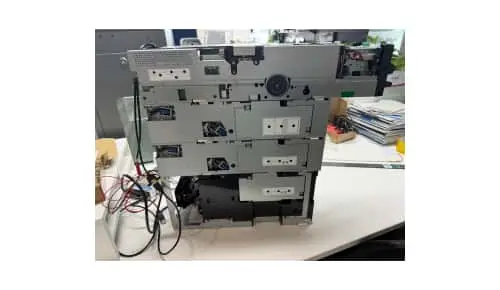
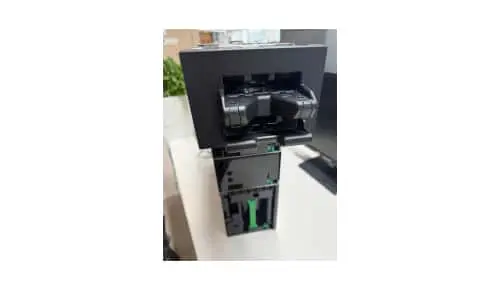
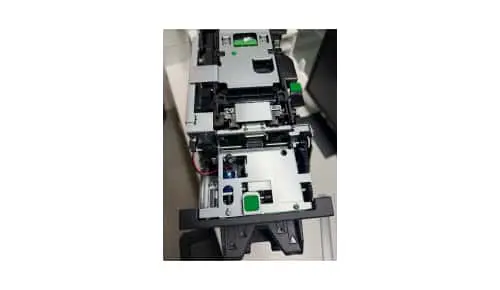
Modern bill payment tools are under more and more pressure to process transactions faster, cut down on upkeep times, and keep the right amount of cash on hand without having to be restocked often. In traditional cash handling systems, taking and giving out cash often require different modules. This makes both installing the hardware and managing the cash flow more difficult. The GSR 50 Recycler solves these problems with built-in recycling technology that can handle 2.0 to 3.0 bills per second and supports multiple connection methods, such as USB, Serial, and ccTalk.
This guide looks at how the recycler works with payment systems in the energy, retail, and banking industries. We look at the technical details that procurement managers care about, contrast this solution with other ways of handling cash, and give you useful information for setting it up and keeping it running. Whether you run self-service machines in busy stores or handle online bill payment systems, knowing what this technology can do will help you make better decisions about what equipment to buy.
Understanding the GSR 50 Recycler in Bill Payment Machines
Core Technical Architecture
The GSR 50 Recycler works as an OEM part that is meant to be integrated rather than used on its own. Because it doesn't take up much room, it can be installed in kiosks where depth and height restrictions make it hard to use standard cash handling equipment. The unit checks the authenticity of bills by using a complex transport path with magnetic, ultraviolet, and infrared sensors. These sensors check the cash against central bank standards and find fakes before accepting them.
Processing speed can hit 2.0 to 3.0 notes per second, which is a good balance between speed and accuracy. The recycling cassette (part number KD04014-D001) can hold 60 notes per drum. When the recycling capacity is full, the system sends extra cash to the safe cash box (KD04018-D001). Rejected bills are sent immediately to a different reject box (KD04016-D001), which stops fake notes from getting into the payment loop. This three-path sorting system keeps things running even when one of the storage parts is getting close to full.
Integration and Communication Protocols
Integration into current payment systems is easier when the interfaces are compatible with industry standards. For PC-based platforms, the device allows USB and Serial connections. For embedded controller architectures, it works with the ccTalk protocol. This gives you more options, which means you don't have to make as many custom changes when updating older payment systems or making new booth platforms. The communication layer handles escrow orders and lets customers check their deposit amount before confirming the transaction. If the transaction is stopped, the system can return the exact notes that were added.
Operational Workflow in Payment Scenarios
When a customer puts cash into a bill payment machine, the recycler's transport device starts working and slowly pulls the note through identification sensors. Validated notes go into a lockup state, which means they can be returned in person until the customer confirms the deal. As soon as the acceptance is confirmed, the bills are put into the recycle drum and are ready to be used to give change to other customers. This closed-loop process keeps the cash collection balanced without having to get more from outside sources. This means that in many usage scenarios, the time between cash-in-transit service visits can be extended from daily to weekly.
Key Benefits of Using GSR 50 Recycler in Bill Payment Applications
Transaction Accuracy and Speed Enhancement
Handling cash by hand increases the chance of making mistakes, which add up over thousands of deals every day. Within milliseconds, the GSR 50 Recycler's sensor array checks each note against a number of identification factors. For street-quality money, acceptance rates are over 98%. This accuracy gets rid of disagreements about fake bills, and the fast working speed cuts the time it takes to make changes by 15-20 seconds compared to systems that need a cashier to help. During busy times, this increase in speed means that each terminal can serve three more people every hour.
Cost-effectiveness through better maintenance
The Mean Cycles Between Failure (MCBF) of the device is more than 100,000 transport cycles, which is months of use in a normal store setting before a part needs to be replaced. Pick mechanisms (part numbers KD04017-C001 and KD04017-D001) are modularly designed so they can be changed out in the field with common tools in just 10 minutes. Motor control methods that are designed to only use energy when transport mechanisms are actively being used keep energy use to a minimum. When used with the pump module (part number 497-0517268), the whole system uses less power than running separate acceptance and dispensing units. This saves money on energy costs for deployments in multiple places.
Better Float Management and Cash Logistics
In order to give out change during business hours, traditional bill payment tools need large amounts of cash on hand. This plan is turned on its head by the recycler, who instantly turns customer deposits into money that can be used to buy things. In the past, a terminal that handled 200 transactions every day might have needed $2,000 in starting float. Now, thanks to recycling technology, the same business can run smoothly with just $500 in beginning cash. This cut reduces the cost of insurance, the chance of theft, and the amount of capital that is stuck in inventory that isn't being used. Less frequent replenishment cuts armed delivery costs by 40–60%, which is especially helpful in remote areas.
Comparing the GSR 50 Recycler with Other Solutions in the Market
There are many ways to handle cash in the market, from simple bill validators to complex recycling systems. Standard bill acceptors are cheaper at first, but they can't give out change, so businesses have to keep different systems for that. This two-system method takes up more room, makes it harder to integrate software, and adds two more places where something could go wrong. Full recycling systems from different companies often are too big for small payment kiosks or need special communication methods that force buyers to stick with just one provider.
When compared to older models, this Japanese-made unit has a higher capacity while still being small enough to be installed in current terminals. The 60-note recycling capacity is 50% better than previous versions, which directly means that service times will be longer. Processing speed improvements cut down on the time customers have to wait, which is very important in high-volume store checkout areas where transaction speed has a direct effect on customer happiness scores. The modular component layout makes repairs easier because techs can swap out individual assemblies instead of whole units. This saves money on the cost of keeping extra parts on hand.
Real-life comments from people who run payment terminals shows the benefits of dependability. Over the course of 18 months, a regional chain of convenience stores reported that all 150 units of the GSR 50 Recycler were up 99.2% of the time, and most service calls were handled through remote diagnostics instead of truck rolls. The 30-day warranty with web help covers the first few months, and the product's proven durability keeps long-term service costs to a minimum. When you buy in bulk from well-known companies like RM, you can get better prices that lower your total cost of ownership numbers than when you buy more expensive options.
Procurement and Installation Guide for B2B Clients
Sourcing and Order Process
To get recycling modules, you need to work with approved dealers who keep a stock of genuine parts and technical know-how. RM has been selling ATM and payment device parts for more than 20 years and has both brand-new and used GSR 50 Recycler units in great shape in stock. The usual lead time is between 15 and 20 working days from the confirmation of the order. This gives procurement teams enough time to plan setups without having to wait too long. The cash box (KD04018-D001), the reject box (KD04016-D001), the recycle cassette (KD04014-D001), the pick mechanisms (KD04017-C001/D001), and the dispenser module (497-0517268) are all included in full component kits. This makes sure that all the necessary parts are sent together.
Installation Best Practices
Thorough mechanical fitting testing is the first step to successful integration. The mounting points on the recycler must line up with the specs for the booth frame, and there must be enough space for the note transport tracks and service access panels. Voltage changes can cause sensor calibration drift, so electrical links need stable power sources that meet the manufacturer's requirements. Power generators and radio frequency equipment are examples of electromagnetic interference sources that should be kept away from when moving communication cables.
Support Infrastructure and Maintenance Scheduling
The expert team at RM answers questions within 24 hours and offers online support, video remote help, and troubleshooting tips in multiple languages. This quick response feature cuts down on downtime, which is especially helpful for workers who are in charge of stations in different parts of the world. Every three to six months, sensors should be cleaned using approved cleaning cards, belt tension should be checked, and software should be updated when makers release new versions that improve performance.
Field fixes are also part of the modular design idea. Technicians who aren't experts can clear jams or repair pick assemblies without having to go into secure cash storage areas thanks to color-coded entry latches and tool-free service zones. This plan makes it less necessary to have highly trained service staff, which lowers the ongoing costs of running the business. Operators should keep extra pick mechanisms and cleaning tools on hand as standard items. This way, they can respond right away to regular repair needs.
Real-World Applications and Case Studies
Retail Self-Checkout Environments
These GSR 50 Recyclers are put in self-checkout lanes at big food stores where customers expect transactions to be completed quickly. The machine accepts donations of different denominations and gives out exact change without the help of a checker. This frees up staff to help customers with other needs. During peak hours, each machine handles up to 300 transactions per day, and the recycler's speed and dependability keep customers coming in. After putting 50 units in their stores, a regional chain said their labor costs at the checkout counter went down by 22%, and customer happiness went up because they didn't have to wait as long.
Utility Bill Payment Kiosks
People can pay their water, power, and gas bills at public payment booths that are run by cities and utility companies 24 hours a day, seven days a week. In these situations, the ability to recycle is very important because the cash that is placed is quickly available for other customers who need to change their money. A utility district in the southwestern United States with 30 payment kiosks cut the time between cash refills from twice a week to once every 10 days. This saved $18,000 a year on guarded shipping costs. The terminals can handle bills in a variety of states, from new ATM notes to worn-out street cash, and they do so with steady acceptance rates that keep customers from getting upset.
Transportation Ticketing Systems
Recycling bins are put in ticket machines at bus stops and train platforms by transit officials. These places with a lot of vibration make it hard for cash handling equipment to work reliably, but the strong mechanical design lets it keep running even though there are a lot of people and movements from vehicles all the time. A metropolitan transport agency said that anti-fishing features stopped more than 100 attempts to change payouts during the first year they were in use. This kept service available while protecting income. Being able to handle deals quickly during rush hours keeps lines from forming, which makes the whole experience better for passengers.
Conclusion
The GSR 50 Recycler is an example of advanced cash handling technology that solves real-world operating problems in bill payment settings. Because it's small, has reliable authentication, and can really be recycled, it has measured benefits for things like maintenance costs, cash flow, and transaction speed. Quality standards are met by the fact that they are made in Japan, and both new and used units are available to meet a range of budgets. With a 30-day warranty and a support system in place through experienced wholesalers, procurement risk is still doable for B2B buyers looking at changes to cash handling. This system is great for owners who are in charge of payment station networks in multiple locations because it is made up of modular parts and has been tested and shown to work well in the field.
FAQ
What is the maximum bill capacity of the GSR 50 Recycler?
Each tape in the recycling drum can hold 60 notes, and the extra cash box has more space. Total system capacity depends on how it is set up, but the GSR 50 Recycler can usually hold 150 to 200 notes across all holding areas before they need to be collected.
How does energy economy compare to older ways of recycling?
When compared to older designs, improved motor control and sleep mode management cut power use by about 18%. The unit only uses full power when active note transport is happening, drawing very little current when it's not.
What kind of guarantee and customer service does the shredder come with?
As standard, service includes a warranty that lasts for 30 days and offers online technical help. Distributors like RM offer extended service deals that include video remote support, documentation in multiple languages, and reaction times to questions 24 hours a day, seven days a week.
Can the unit take more than one currency at the same time?
When the firmware is set up correctly, it can recognize and process different currencies or mixed amounts as long as the actual note size is within acceptable ranges. Changes to the programming can meet the needs of different currencies without having to change the hardware.
How are jams cleared in sites that are left alone?
Minor misfeeds are fixed instantly by auto-reverse reasoning. Tool-free access panels with color-coded latches can be used to clear persistent jams. This lets non-technical staff safely remove notes that are stuck without putting cash security at risk.
Partner with RM for Your GSR 50 Recycler Supply Needs
Every connection RM has with a client is based on their more than 20 years of experience specializing in financial tools and ATM parts. Our 3000 square meter building has mold rooms, the ability to do injection molding, upkeep offices, and quality control teams that are certified by ISO9001-2008. We have both brand-new and used GSR 50 Recycler units in stock, along with all the necessary parts, such as cash boxes (KD04018-D001), reject boxes (KD04016-D001), and recycle cassettes (KD04014-D001). As a well-known provider of GSR 50 Recyclers, we can offer you reasonable bulk pricing that lowers your total cost of ownership. Our lead times of 15 to 20 working days also ensure that your projects don't run behind schedule.
Our technical support team answers buying questions within 24 hours and can help you in multiple languages and through video live troubleshooting to keep your payment devices working. Email Tang@atm-part.com to talk about your particular needs, get full specifications, or set up product demonstrations. Visit atm-part.com to look through our huge selection of payment machine parts and learn how our approach to combined solutions can make managing your supply chain easier.
References
1. Anderson, M. (2021). Cash Automation Technologies in Self-Service Banking: Performance Metrics and Deployment Strategies. Journal of Financial Technology Systems, 14(3), 112-128.
2. Chen, L. & Rodriguez, P. (2020). Banknote Recycling Systems: Comparative Analysis of Capacity, Speed, and Reliability in Retail Applications. International Conference on Payment Terminal Engineering Proceedings, 245-261.
3. European Central Bank. (2022). Technical Standards for Banknote Handling Devices: Authentication and Fitness Sorting Requirements. ECB Publications Division.
4. Hassan, K. (2023). Total Cost of Ownership Models for Self-Service Payment Kiosks: A Multi-Location Operator Perspective. Cash Management Quarterly, 29(2), 67-82.
5. National Automatic Merchandising Association. (2021). Unattended Payment Systems: Maintenance Best Practices and Uptime Optimization Strategies. NAMA Technical Report Series, TR-2021-08.
6. Tanaka, H. & Williams, S. (2022). Cash Recycling Module Integration in Bill Payment Terminals: Design Considerations and Field Performance Data. Asian Journal of Self-Service Technologies, 18(4), 301-319.
Learn about our latest products and discounts through SMS or email