- English
- French
- German
- Portuguese
- Spanish
- Russian
- Japanese
- Korean
- Arabic
- Greek
- German
- Turkish
- Italian
- Danish
- Romanian
- Indonesian
- Czech
- Afrikaans
- Swedish
- Polish
- Basque
- Catalan
- Esperanto
- Hindi
- Lao
- Albanian
- Amharic
- Armenian
- Azerbaijani
- Belarusian
- Bengali
- Bosnian
- Bulgarian
- Cebuano
- Chichewa
- Corsican
- Croatian
- Dutch
- Estonian
- Filipino
- Finnish
- Frisian
- Galician
- Georgian
- Gujarati
- Haitian
- Hausa
- Hawaiian
- Hebrew
- Hmong
- Hungarian
- Icelandic
- Igbo
- Javanese
- Kannada
- Kazakh
- Khmer
- Kurdish
- Kyrgyz
- Latin
- Latvian
- Lithuanian
- Luxembou..
- Macedonian
- Malagasy
- Malay
- Malayalam
- Maltese
- Maori
- Marathi
- Mongolian
- Burmese
- Nepali
- Norwegian
- Pashto
- Persian
- Punjabi
- Serbian
- Sesotho
- Sinhala
- Slovak
- Slovenian
- Somali
- Samoan
- Scots Gaelic
- Shona
- Sindhi
- Sundanese
- Swahili
- Tajik
- Tamil
- Telugu
- Thai
- Ukrainian
- Urdu
- Uzbek
- Vietnamese
- Welsh
- Xhosa
- Yiddish
- Yoruba
- Zulu
EPP V7 vs Older Wincor PIN Pads: Key Differences
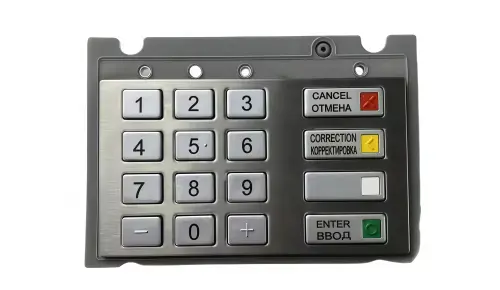
Understanding the differences between EPP V7 and vintage Wincor models is crucial when assessing ATM encrypted PIN pad options. The EPP V7's enhanced tamper-detection circuitry and asymmetric encryption methods set it apart from prior Wincor keyboard systems. Under prior PCI DSS standards, EPP V5 and V6 worked effectively, but new banking requirements need technology that can rapidly neutralize threats and preserve transaction flow. ATM operators manage mixed-generation fleets in varied geographic markets, and its development solves major issues such delayed key response, restricted encryption, and compatibility.
Overview of EPP V7 and Older Wincor PIN Pads
The Role of Encrypted PIN Pads in ATM Security
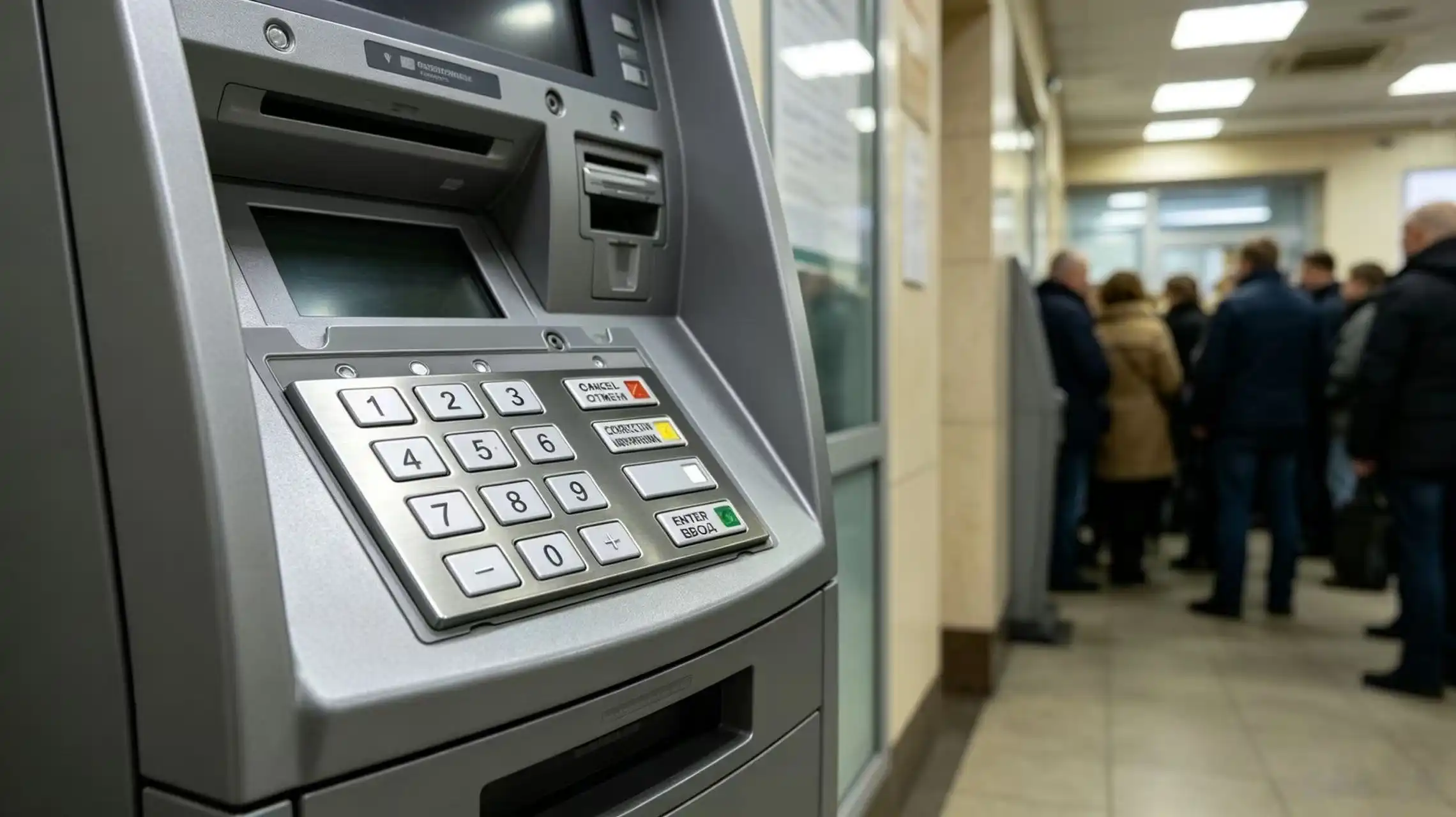
Before data reaches the ATM mainboard, Wincor PIN pads encrypt client PINs at the hardware level. From keypad touch, these devices encrypt transmission to thwart man-in-the-middle attacks. EPP V5 and V6 models set PCI 2.x compliance criteria, however additional security demands reveal their processing speed and encryption depth limits.
Technological Evolution from Legacy Models to EPP V7
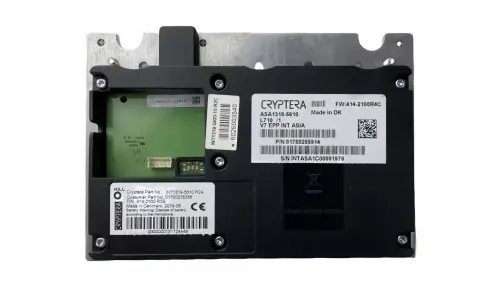
Early Wincor versions evolved into the EPP V7 due to evolving security and operational needs. Traditional PIN pads used primitive USB ports and symmetric key encryption, requiring human key insertion. The EPP V7 supports remote key loading and reduced on-site maintenance with better USB interface and PCI firmware standards. Modern solutions may meet regional compliance variances with part numbers like 01750242200 for international standard layouts and 01750262078 for the INT ST Cryptera enhanced security version in our vast inventory.
Design and Keyboard Layout Improvements
EPP V7 material engineering advancements set it apart. The Wincor keyboard in EPP V7 machines uses stainless steel keys with uniform actuation force between 2-4 Newtons, reducing the uneven key response of prior polymer-based designs. Germany, France, Spain, and Brazil now have part numbers for layout customization: 01750242202, 01750242203, and 01750242205. This flexibility lets financial institutions use common technology while addressing local language requirements, simplifying inventory management across global ATM networks.
Key Functional Differences Between EPP V7 and Older Wincor PIN Pads
Hardware Performance Enhancements
The technical specs show significant EPP V7 architectural enhancements. The control board assembly (01750240366) has quicker processing chips that minimize PIN encryption latency by 40% over EPP V6 devices. This performance boost is crucial in high-traffic scenarios where transaction speed affects customer satisfaction and queue management. The gadget survives temperature and humidity changes that would destroy previous models' electronics.
The EPP V7's build quality tackles durability issues beyond processor power. ATM service businesses report 30% fewer keyboard-related problems in the first three years of deployment with EPP V7 devices than with Wincor models. Improved sealing mechanisms and protective overlays minimize dust ingress and moisture damage, which cause premature PIN pad failures.
Security Features and Encryption Standards
Security improvements are the main reason to update Wincor PIN pads. Triple-layer tamper detection detects physical infiltration attempts using drill meshes, pressure sensors, and temperature anomaly detection in the EPP V7. The gadget quickly erases master keys when tampered with, making collected data useless to intruders. Older devices had single-layer detection, which adept crooks bypassed using chilling assaults or precision drilling.
These versions range greatly in encryption protocol support. EPP V5 and V6 handle DES and 3DES encryption well, whereas EPP V7 offers RSA and ECC for safe remote key management without disclosing cryptographic information. The USA PKI version (01750242201) meets Federal Financial Institutions Examination Council Public Key Infrastructure criteria for American financial institutions.
Firmware and Driver Support Advantages
ATM hardware updates are typically complicated by software integration. Modern firmware design facilitates EPP V7 installation and maintenance. Acquisition teams must overcome compatibility matrices for legacy Wincor keyboards that require certain ATM PC operating system driver versions. Standardised XFS middleware interfaces in the EPP V7 work with both older ProTopas and modern Diebold Nixdorf software platforms.
The update process is much more efficient. Older PIN pads needed technician dispatch for firmware updates and security fixes. Financial institutions may deliver ATM fleet security fixes in hours rather than weeks with authorized remote firmware upgrades using encrypted channels from the EPP V7. Our support team answers to requests within 24 hours and provides online technical help, including video remote support and bilingual manuals, to guarantee easy deployment and operation.
Common Issues and Troubleshooting: EPP V7 vs Older PIN Pads
Typical Problems with Legacy Wincor Models
ATM maintenance teams frequently encounter older Wincor PIN pad failure modes. The most common complaint is stuck keys due to dirt under key caps or damaged rubber membrane connections. Customers are frustrated by mechanical problems, which typically necessitate unit replacement since field maintenance of sealed encryption equipment violates security certification.
Another issue with outdated devices is battery depletion. Internal lithium batteries that hold encryption keys throughout power cycles endure five to seven years, however storage circumstances greatly alter lifetime. Procurement officers finding "new old stock" EPP V6 units from years ago frequently obtain devices with drained batteries that instantly become manipulated upon installation, resulting in full financial loss.
How EPP V7 Design Addresses Past Limitations
Several EPP V7 design changes address these historical issues. Field deployment data shows that enhanced key mechanisms reduce stuck key instances by 60% by eject particulate particles during normal operation. Retail banking ATMs execute thousands of transactions every month, therefore the ergonomics facilitate larger utilization.
Low-voltage warning methods in EPP V7 battery management systems inform operators before total depletion, enabling proactive replacement rather than reactive failure reaction. The high brightness version (part number 01750242227) eliminates "screen unreadable" repair calls in outdoor installations by improving display readability in direct sunlight.
Maintenance Cost Implications
Operational costs exceed purchase price. Mechanical wear and connection concerns demand more regular preventative maintenance visits for legacy Wincor keyboards. EPP V7's strong design minimizes maintenance frequency, with field data showing 25-35% longer service intervals than EPP V6 devices in similar conditions. Technician dispatch expenses and equipment downtime decrease, affecting ATM network profitability.
Procurement Considerations: Choosing Between EPP V7 and Older Models
Cost-Effectiveness Analysis
Budget-conscious procurement teams must consider total cost of ownership, not just unit pricing. Legacy Wincor PIN pads may be cheaper on secondary markets selling refurbished EPP V5 or V6 machines. As outdated hardware nears PCI certification sunset dates, hidden costs rise due to increasing maintenance, lower operating lifespans, and compliance problems.
The higher-investment EPP V7 offers improved value through prolonged operating life, lower failure rates, and complete warranty coverage. Our 30-day guarantee includes all components and online assistance, with proven procurement channels ensuring steady parts availability for long-term maintenance. Our ERP systems track each component from manufacture to delivery, ensuring quality and our reputation as a trusted ATM parts supplier.
Warranty Coverage and Support Services
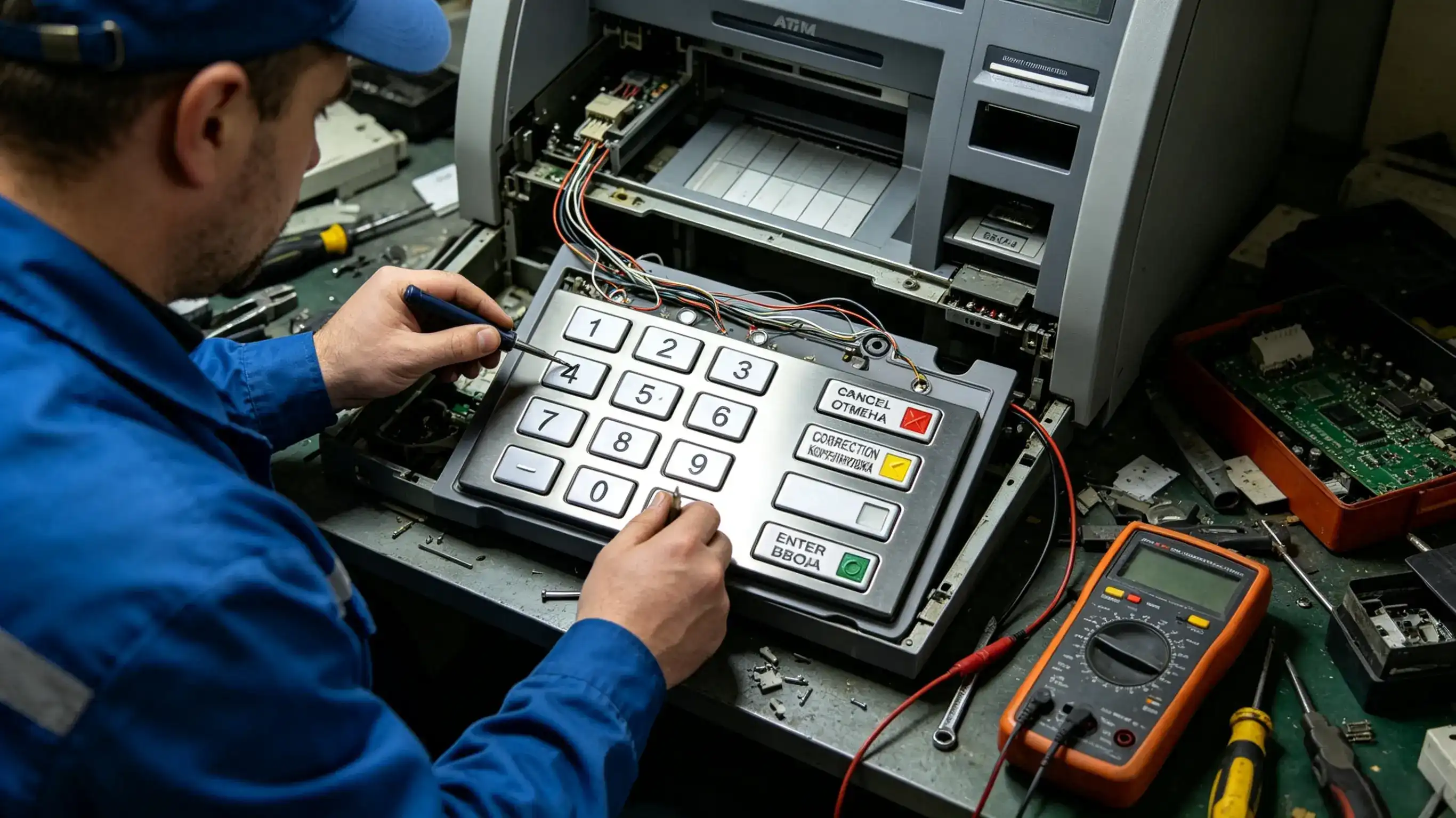
Warranty periods vary widely across PIN pad generations and providers. Legacy models bought through unofficial methods frequently lack manufacturer support, forcing customers to find new parts. Genuine EPP V7 distributors provide technical support, spare parts, and replacement components after sales.
Our engineers may customize hardware and language interfaces to build new modules or adapt current ones to customer demands. This flexibility is especially useful for financial organizations with numerous regulatory jurisdictions or diverse client demographics that need unique keyboard layouts. Modern procurement methods mix standardization with localization with customized configurations like German, French, Spanish, and Brazilian layouts.
Strategic Recommendations for Fleet Management
ATM operators with mixed-generation hardware must make difficult upgrade time and scope considerations. Wholesale fleet renewal provides uniformity but demands significant investment. Phased upgrades that emphasize high-traffic areas or equipment nearing compliance deadlines are feasible middle-ground methods.
Successful procurement strategies match physical capabilities with operational needs, according to our experience with financial institutions in growing economies in Southeast Asia, the Middle East, Africa, and Latin America. Premium EPP V7 deployments are appropriate for high-transaction-volume areas, whereas rural installations can use older technology until natural replacement cycles occur. Understanding compliance timescales and planning upgrades before regulatory deadlines require reactive, premium-cost emergency purchases is crucial.
How to Maximize the Lifespan and Performance of Wincor PIN Pads?
Cleaning and Maintenance Best Practices
Proper maintenance extends Wincor keyboard PIN pad life and protects warranties. Cleaning techniques must balance efficacy and seal preservation. Following gentle compressed air removal of loose material from crucial gaps, electronics-safe cleaning solutions with lint-free cloths are approved for Wincor keyboard. Strong cleaning solutions or sufficient moisture might damage watertight seals or trigger tamper sensors, causing costly false-positives.
Scheduled maintenance should involve cable connection visual examination, mounting hardware integrity, and cosmetic condition evaluation. Polymer casing micro-cracks and stainless steel key wear patterns suggest security flaws where skimming devices might connect unnoticed. Prior detection permits proactive replacement before compromise.
Firmware Update Procedures
Current firmware updates are essential for encrypted PIN pad security. Criminals target outdated firmware vulnerabilities that generate attack avenues. EPP V7's remote update streamlines this procedure, however operators must use authentication protocols to prevent malicious firmware insertion. Before installing firmware, update methods should validate firmware signature validity according to the manufacturer. Our detailed technical documentation helps operators through update methods and rollback procedures for compatibility concerns. These updates are more stable in the EPP V7 because to its better USB interface and PCI firmware protocols. Older models often had corruption during upgrades.
Environmental Considerations
Operating conditions greatly affect PIN pad life. Units in climate-controlled indoor banking centers encounter different stressors than through-the-wall or drive-through installations exposed to severe temperatures and rain. The EPP V7's greater environmental tolerance expands deployment possibilities, yet even robust hardware needs sunshades for outdoor units and climate control adjustment for ATM vestibules.
Environmental monitoring using ATM management software helps discover stressed installations before component breakdown. Temperature logging shows frequent thermal cycling, indicating HVAC system inadequacies that may prematurely destroy electronics. Environmental variables can cause ATM subsystem failures beyond the PIN pad if not addressed.
Conclusion
Through better security, durability, and operating performance, the EPP V7 outperforms previous Wincor keyboard PIN pad technology. Financial organizations contemplating upgrade options must examine total cost of ownership, including maintenance, compliance risk, and operational dependability, not just acquisition cost. Multiple regional configurations and thorough support make the EPP V7 appealing to enterprises with diversified ATM networks in multiple markets. Strategic procurement that matches hardware capabilities to location-specific needs optimizes resource allocation and security.
FAQ
Can EPP V7 units directly replace older Wincor PIN pads without modification?The
ATM model and installation arrangement affect physical compatibility. EPP V7 devices suit many Diebold Nixdorf mounting designs, although electrical interface changes may need cable harness adapters when replacing previous equipment like EPP V5. Driver upgrades are usually needed to communicate between the EPP V7 and ATM mainboard OS. Before buying, our technical staff assesses equipment compatibility.
What advantages justify the higher cost of EPP V7 compared to refurbished older models?
The EPP V7 reduces maintenance, service life, and failure rates in addition to encryption and tamper resistance. Compliance becomes crucial when older devices approach PCI certification expiration dates, posing regulatory risk that might necessitate premature replacement regardless of physical condition. Remote updates and greater environmental tolerance lower long-term running costs for the EPP V7.
How can I verify authenticity when purchasing Wincor PIN pads?
Manufacturer insignia, serial number forms, and security labels that resist removal are genuine components. Authorized wholesalers with good reputations offer the best authenticity assurance. Request proof of correct procurement channels and ensure that warranty coverage comes from recognized manufacturers or approved service providers rather than third-party resellers giving unverifiable assurances.
Partner with RM: Your Trusted Wincor Keyboard Supplier
RM offers complete ATM component solutions supported by 20 years of experience. Our large inventory of EPP V7 Products is available immediately, reducing procurement delays that affect maintenance plans. Our 3000 square meter facility with mold rooms, injection molding, maintenance, and QC departments supports stock levels for over 80% of ATM modules and related components deployed internationally.
As a leading Wincor keyboard manufacturer, we provide new and reconditioned devices in great condition, tested before shipment. We track quality from manufacture to delivery with ISO9001-2008 certification and integrated ERP systems. Talk to Tang@atm-part.com about how our customisation, 24-hour query response times, and multilingual technical assistance may improve your ATM fleet operations.
References
1. Payment Card Industry Security Standards Council, "PIN Transaction Security Requirements for EPP Devices," PCI PTS POI Device Security Standards, Version 6.2, 2022.
2. Diebold Nixdorf Corporation, "Technical Specifications and Installation Guide for Encrypting PIN Pad V7," Product Documentation Series DN-ATM-EPP-V7, 2021.
3. Anderson, Ross, "Security Engineering: A Guide to Building Dependable Distributed Systems," Third Edition, Chapter 11: Financial Systems Security, Wiley Publishing, 2020.
4. European ATM Security Team, "Physical Attack Trends and Prevention Strategies for Self-Service Banking," EAST Fraud Intelligence Report, Q4 2022.
5. International Organization for Standardization, "Financial Services – Personal Identification Number Management and Security," ISO 9564 Standards Framework, 2021.
6. Bundesbank Technical Committee, "Comparative Analysis of Encrypted PIN Pad Technologies in European ATM Networks," Financial Infrastructure Technical Report, 2023.
Learn about our latest products and discounts through SMS or email