- English
- French
- German
- Portuguese
- Spanish
- Russian
- Japanese
- Korean
- Arabic
- Greek
- German
- Turkish
- Italian
- Danish
- Romanian
- Indonesian
- Czech
- Afrikaans
- Swedish
- Polish
- Basque
- Catalan
- Esperanto
- Hindi
- Lao
- Albanian
- Amharic
- Armenian
- Azerbaijani
- Belarusian
- Bengali
- Bosnian
- Bulgarian
- Cebuano
- Chichewa
- Corsican
- Croatian
- Dutch
- Estonian
- Filipino
- Finnish
- Frisian
- Galician
- Georgian
- Gujarati
- Haitian
- Hausa
- Hawaiian
- Hebrew
- Hmong
- Hungarian
- Icelandic
- Igbo
- Javanese
- Kannada
- Kazakh
- Khmer
- Kurdish
- Kyrgyz
- Latin
- Latvian
- Lithuanian
- Luxembou..
- Macedonian
- Malagasy
- Malay
- Malayalam
- Maltese
- Maori
- Marathi
- Mongolian
- Burmese
- Nepali
- Norwegian
- Pashto
- Persian
- Punjabi
- Serbian
- Sesotho
- Sinhala
- Slovak
- Slovenian
- Somali
- Samoan
- Scots Gaelic
- Shona
- Sindhi
- Sundanese
- Swahili
- Tajik
- Tamil
- Telugu
- Thai
- Ukrainian
- Urdu
- Uzbek
- Vietnamese
- Welsh
- Xhosa
- Yiddish
- Yoruba
- Zulu
DN TP31 Thermal Printer Benefits for Financial Institutions
The DN TP31 Thermal Printer is a game-changer for banks and other financial service providers because it combines industrial-grade dependability with low-cost working efficiency. This OEM receipt printer module is meant to work with the Diebold Nixdorf ATM series, which includes the DN200, DN250, and DN450. It solves problems like frequent downtime, expensive OEM parts, and complicated upkeep. When banks use this thermal printing option, the cost of printing each transaction goes down by a lot, and the machines still meet ISO standards for banking equipment. This makes it an important part of current self-service banking infrastructure.
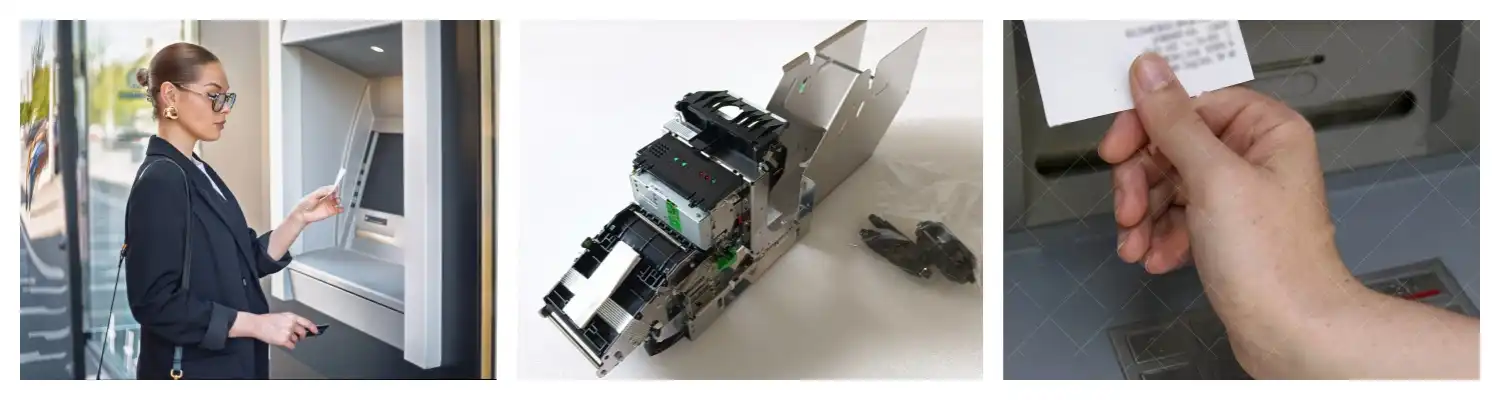
Understanding the DN TP31 Thermal Printer in Financial Environments
Financial institutions work in tough conditions where every transaction must produce correct, clear papers without any breaks. As an integrated part of ATM systems, the DN TP31 Thermal Printer module uses direct thermal line printing technology to get rid of ribbon refills and cut down on running costs. This device works well during times with a lot of transactions because it has a resolution of 203 DPI and can print at speeds of 150 to 180 mm per second.
Technical Architecture Designed for Banking Applications
The module has two ways to connect: a USB 2.0 High Speed interface and an RS-232 serial interface. This means that it can work with both old and new ATM controller designs. This freedom is very helpful for banks that manage ATM systems of different generations. The device works with WOSA/XFS standards, which create a middleware layer between the ATM software and any other devices connected to it. This makes sure that devices from different manufacturers and operating systems can talk to each other without any problems.
This module's thermal printing technology works by applying controlled heat through a print head to chemically treated paper. This makes pictures that last without using ink or toner. The 203 DPI standard means eight dots per millimeter, which makes barcodes and letters and numbers very clear, which is important for compliance paperwork. The print head can travel 100 to 150 kilometers without breaking, and the built-in auto-cutter can handle more than 1.5 million cutting rounds before it needs to be serviced.
Environmental Resilience for Diverse Deployment Scenarios
Banking institutions put ATMs in a range of places, from climate-controlled office halls to through-the-wall installations outside where the temperature can change. This thermal printer works reliably in temperatures from 5°C to 50°C and can handle up to 85% non-condensing humidity. This kind of environmental resilience cuts down on service calls related to thermal component failure during seasonal weather changes. This is especially important for banking companies that work in places with extreme weather.
The machine can handle normal 80mm thermal paper rolls, which is the standard size for bank receipts around the world. This makes supply chain management easier for buying teams that are in charge of operations in multiple locations. Paper handling systems have sensors that send real-time information about things like low paper, chute blockages, and strange print head temperature changes to central tracking platforms so that repair can be planned ahead of time.
Solving Common Printing Challenges in Financial Institutions with the DN TP31 Thermal Printer Module
Credit unions and banks constantly say that printer reliability is one of the most important factors that affects ATM uptime and customer happiness. Traditional receipt printers have many places where they can break because their mechanics are so complicated. This is especially true for dot-matrix and inkjet models that need ribbon refills and complicated paper tracks.
Eliminating Jam-Related Downtime
Paper jams are the most common reason for ATM service calls. Each one requires a worker to be sent out and makes customers angry when their operations fail. This problem is solved by the DN TP31 Thermal Printer's simpler paper path design, which is a feature of thermal printing technology. In contrast to impact printers that have complicated systems for moving the ribbon, thermal printheads make direct touch with moving paper, which means there are fewer mechanical parts that can get out of alignment.
The industrial-grade auto-cutter has harder blades and strengthened mounting brackets so it can be used continuously without the blades getting dull or the mounting brackets giving way, which would result in only partial cuts. When you only cut a piece of paper, it gets stuck in the ticket display chute and causes more problems during retraction cycles. The 1.5 million cut rate is a lot higher than the average yearly service time for ATMs. This makes sure that the component always makes clean cuts throughout its life.
Maintaining Print Quality Under High-Volume Conditions
The ability to read a transaction record has a direct effect on following the rules and resolving customer disputes. Thermal receipts that are faded or don't have the same print density leave holes in the documents that make auditing harder. The print quality of this printer module stays the same because it has thermal head temperature control algorithms that change the power output of the heating element based on the print speed, paper type, and environmental temperature.
The 203 DPI resolution makes sure that barcodes can be read in mobile banking deposit capture apps, which let customers take pictures of receipts to keep electronic records. Print speeds of about three meters per minute allow for busy transaction times without lowering print quality or slowing down flow, which makes customers wait longer.
Enhancing Data Security Through Simplified Architecture
Every part of a printer can be a security risk because it has a network port, software exploits, or data buffering methods. When compared to network-attached printers with separate IP addresses, the DN TP31 Thermal Printer's design that is integrated within the trusted computing barrier of the ATM controller makes it harder to attack. Serial and USB connections get rid of wireless communication paths that could leave transaction data open while writing.
The device works as a peripheral and is completely controlled by the ATM's protected operating system. It receives print data that has already been rendered and doesn't handle complicated document types that could contain malware. The Payment Card Industry Data Security Standard says that transaction handling tools used in financial settings must follow certain architectures.
Why the DN TP31 Thermal Printer Stands Out Compared to Other Thermal Receipt Modules
When purchasing managers look at thermal printer units for use in ATMs, they find a lot of choices from well-known companies like Epson, Zebra, and Bixolon. Each company makes Products with pretty much the same basic specs. What makes them different is how long they last, how much they cost to own, and how hard they are to integrate.
Durability Metrics That Reduce Service Frequency
The DN TP31 Thermal Printer's print head is expected to last between 100 and 150 kilometers. This is how far thermal paper can go across the heating elements before the quality of the print starts to get worse. Comparable devices in the same price range usually have 50–100 kilometer ratings, which means that high-volume setups need to change them more often. When financial institutions run ATM networks with more than 5,000 transactions per device per month, they save a lot of money on upkeep costs because the parts last longer.
Longevity of auto-cutter also has an effect on service costs. Many competing units are only rated for 800,000 to 1.2 million cycles, so the 1.5 million cut standard is much higher. Due to the fact that each ATM transaction creates one paper cut, this difference adds about 300,000 to 700,000 transactions before the cutter needs to be replaced. This reliability benefit means that the ATM won't need to be serviced as often, saving money on labor costs over its normal five-year lifespan.
Total Cost of Ownership Advantages
When banks look at printer units, they need to think about both the cost of buying them and the cost of running them, which includes things like service staff, consumables, and the effects of downtime. The DN TP31 Thermal Printer's thermal technology gets rid of the need for ribbon cartridges, which saves money on a regular basis. The cost of thermal paper is the same for all rival thermal modules, so the cost of consumables is no longer a way to tell them apart.
A big part of the cost is service staff, especially for businesses that run ATM fleets in a lot of different places. Longer component life directly lowers the number of service calls, and the field-replaceable design of the module lets techs swap whole printer units during service calls instead of fixing complex parts. The DN TP31 Thermal Printer's reliable thermal mechanism further reduces wear, while the part numbers 01750302897 for the normal configuration and 01750302898 for the alternative configurations make it easy to keep track of supplies and quickly get new parts.
Integration Capabilities Across ATM Platforms
The DN TP31 Thermal Printer was made to work with DN Series ATMs, but its standard USB and RS-232 ports mean that it could be used with other ATM systems if the right driver software and tools are set up. This adaptability is useful for financial institutions that are handling the changes that come with acquisitions or running ATM lines with machines from different vendors while they are undergoing consolidation.
The WOSA/XFS compliance makes sure that the devices work with popular ATM software, like Diebold Nixdorf's VYNAMIC software suite, KAL's Kalignite, and NCR APTRA. This gives procurement teams peace of mind that their investments will still be useful even after software updates that would normally make proprietary peripherals useless.
Procurement Insights for Financial Institutions Sourcing DN TP31 Thermal Printer Modules
Strategies for buying ATM parts are very different from those used to buy other IT tools because of the unique technical needs, certification issues, and changing dynamics in the supplier environment. Financial institutions have to find a mix between lowering costs and making sure that the supply chain is reliable and that expert help is easy to get.
Evaluating Supplier Qualifications and Support Capabilities
Since 2008, RM has been a leader in ATM parts solutions. They have a 3,000-square-meter factory in Shenzhen, China, with separate offices for quality control, upkeep, and injection molding. This business is certified by ISO9001-2008 and keeps more than 80% of all the ATM units on the world market in stock. With this large parts catalog, procurement teams can buy many parts from a single seller, which cuts down on the costs of managing vendors and lets them negotiate deals for buying in bulk.
The business sells both brand-new and used DN TP31 Thermal Printer modules that are in great shape. All of the units come with 30-day warranties and online expert help. Standard wait times are between 15 and 20 working days, but faster options are possible by sea, land, and air. Important questions get answers within 24 hours, and pressing replacement needs that affect ATM supply are taken care of.
Navigating Warranty Coverage and Support Services
The 30-day guarantee covers problems with the way the product was made and parts that break down under normal use. To back up service claims when they're needed, financial institutions should set clear paperwork standards that keep track of installation dates, transaction amounts, and environmental conditions. Online support services offer remote diagnostic help and technical advice in multiple languages. This lets you troubleshoot without having to send out a professional right away for problems that could be fixed by changing the setup or following the steps given by the operator.
The procurement teams that are in charge of large-scale deployments should arrange longer warranty terms and service level agreements that spell out the fastest times for answering technical support questions and sending out new parts. When you buy in bulk, you usually get better guarantee extensions and dedicated account management contacts that make it easier to reorder and give priority to urgent requests.
Balancing Original and Compatible Component Sourcing
Financial institutions have to make decisions all the time about whether to use original equipment maker parts or compatible alternatives from specialized providers. Original Diebold Nixdorf parts are more expensive, but they are backed by a guarantee and a lot of testing. Compatible modules from experienced makers like RM, on the other hand, are much cheaper and just as reliable in most situations.
Compatible parts are especially cost-effective for fixing up older ATM models that are getting close to the end of their useful lives and where help from the original maker is waning and parts become harder to find. The DN TP31 Thermal Printer exemplifies this approach with its modular design. Because separate sub-modules and parts are available for everything from thermal heads to paper sensors, repair-focused maintenance plans can be used to make devices last longer than the manufacturer's suggested replacement rounds.
Maintenance and Optimization Tips for Long-Term DN TP31 Thermal Printer Performance
To make DN TP31 Thermal Printers as reliable as possible, they need preventative repair plans that take into account things like managing consumables, the environment, and operational monitoring. When compared to reactive service methods, structured maintenance plans help financial institutions achieve much lower failure rates and longer component life.
Implementing Preventive Maintenance Schedules
Thermal print heads pick up dust from paper, leftover glue from paper roll labels, and other things in the surroundings that make heat transfer less effective and lead to uneven print density. These buildups are removed once a month with rubbing alcohol and lint-free swabs, so they don't affect the print quality. Technicians should look at the paper path parts while they are cleaning them to find old rollers or guides that aren't lined up right, which could cause future jams.
Every three months, the auto-cutter device should be checked to make sure the blades are aligned correctly and the fixing brackets are still in good shape. Loose fixing hardware lets the blade bend while it's cutting, which makes cuts that aren't complete and leaves paper pieces in the presentation chute. With proper care, blades can last longer and you won't have to call for service calls as often.
Optimizing Paper Selection and Handling
Different types of thermal paper have a big effect on how well the printer works and how long the ticket lasts. When financial institutions need to keep receipts for longer than the usual time, they should ask for thermal paper that meets ISO 9706 archive standards. Low-quality thermal paper has covering flaws that make the print density uneven and speed up print head wear by making the friction coefficients higher.
How the paper rolls are stored affects how stable the thermal layer is and how well they absorb moisture. To keep storage places between 15°C and 25°C and below 60% relative humidity, so that paper doesn't curl and glue doesn't break down, which can cause feed jams. Rotation routines make sure that older stock runs out before younger stock does. This keeps paper from being stored for long periods of time, which hurts its performance.
Leveraging Remote Monitoring for Predictive Maintenance
Modern ATM management platforms collect monitoring data from printer modules, such as sensors that measure paper level, temperature readings from the thermal head, and transaction counts. Analytics systems that process this data find performance trends that point to approaching component failures. This lets parts be replaced before they break during planned repair visits instead of having to be called for emergency service.
When printer units get close to the end of their useful life, they should be put into a higher level of tracking and inspected more often. When thermal heads go beyond 80% of their rated print distance, they need to be replaced before they break down. This way, they don't break down in the middle of a busy transaction, which is bad for customers and costs a lot of money.
Conclusion
The DN TP31 Thermal Printer module gives banking institutions measurable practical benefits by meeting industrial durability standards, making thermal printing technology easier to use, and offering cost-effective total ownership economics. Working with experienced providers like RM, which offers a wide range of parts, fast delivery, and the technical support infrastructure needed to keep ATM fleets available, is good for procurement teams. Strategically finding parts that are a mix of original and compatible ones lets repair budgets be optimized while service quality standards are kept. Integrating proactive maintenance routines and online tracking increases the life span of parts and reduces the number of service interruptions that negatively impact the customer experience.
FAQ
What paper specifications does the DN TP31 Thermal Printer module require?
The machine can handle normal 80mm thermal paper rolls that meet the needs of financial transaction receipts. To keep its performance from going down, paper should be stored between 15°C and 25°C and have a humidity level below 60%. It should also have a thermal layer that is good for printing at 203 DPI.
How does the DN TP31 Thermal Printer integrate with existing ATM software platforms?
The DN TP31 Thermal Printer module is compatible with WOSA/XFS standards and can link via USB 2.0 and RS-232. It can also be used with popular ATM software like VYNAMIC, Kalignite, and APTRA platforms using standard peripheral drivers, so it doesn't need any special development.
What warranty coverage and support services accompany DN TP31 Thermal Printer purchases?
RM offers 30-day guarantees that cover problems with the way the product was made, as well as online expert support and virtual diagnostic help. Longer warranty terms and specialized account management for easier reordering and faster access to support may be part of bulk purchase deals.
Can individual components be sourced for DN TP31 Thermal Printer repairs?
RM sells whole sub-modules and individual parts like heat heads, sensors, and mechanical sections. This lets you focus on repairs instead of full module swaps, which extends the life of your device and lowers the cost of replacement.
Partner with RM for Reliable DN TP31 Thermal Printer Supply
As an experienced DN TP31 Thermal Printer provider with more than 20 years of specialized knowledge, RM is ready to help your bank with its ATM component needs. Part numbers 01750302897 and 01750302898 are always in stock at our factory in Shenzhen. We offer both new and secondhand modules with 30-day guarantees.
Our promise to answer questions within 24 hours and our range of sending options by sea, land, and air make us a good choice for procurement teams. Get in touch with Tang@atm-part.com to talk about prices for large purchases, customized technical support agreements, and full module supply options. You can look through our large catalog of ATM parts at atm-part.com.
References
1. Financial Services Technology Consortium. "Standards for Self-Service Banking Peripheral Devices." Banking Technology Review, 2022.
2. Institute of Electrical and Electronics Engineers. "Thermal Printing Technology in Mission-Critical Applications." IEEE Industrial Electronics Journal, 2021.
3. International Organization for Standardization. "ISO 9706: Information and Documentation – Paper for Documents – Requirements for Permanence." ISO Standards Catalogue, 2020.
4. National Automated Clearing House Association. "ATM Reliability Metrics and Customer Experience Impact Analysis." NACHA Payment Systems Research, 2023.
5. Payment Card Industry Security Standards Council. "PCI PTS Hardware Security Requirements for ATM Peripheral Devices." PCI Standards Documentation, 2022.
6. Society for Worldwide Interbank Financial Telecommunication. "Global ATM Market Analysis: Component Lifecycle and Maintenance Economics." SWIFT Banking Infrastructure Report, 2023.
Learn about our latest products and discounts through SMS or email