- English
- French
- German
- Portuguese
- Spanish
- Russian
- Japanese
- Korean
- Arabic
- Greek
- German
- Turkish
- Italian
- Danish
- Romanian
- Indonesian
- Czech
- Afrikaans
- Swedish
- Polish
- Basque
- Catalan
- Esperanto
- Hindi
- Lao
- Albanian
- Amharic
- Armenian
- Azerbaijani
- Belarusian
- Bengali
- Bosnian
- Bulgarian
- Cebuano
- Chichewa
- Corsican
- Croatian
- Dutch
- Estonian
- Filipino
- Finnish
- Frisian
- Galician
- Georgian
- Gujarati
- Haitian
- Hausa
- Hawaiian
- Hebrew
- Hmong
- Hungarian
- Icelandic
- Igbo
- Javanese
- Kannada
- Kazakh
- Khmer
- Kurdish
- Kyrgyz
- Latin
- Latvian
- Lithuanian
- Luxembou..
- Macedonian
- Malagasy
- Malay
- Malayalam
- Maltese
- Maori
- Marathi
- Mongolian
- Burmese
- Nepali
- Norwegian
- Pashto
- Persian
- Punjabi
- Serbian
- Sesotho
- Sinhala
- Slovak
- Slovenian
- Somali
- Samoan
- Scots Gaelic
- Shona
- Sindhi
- Sundanese
- Swahili
- Tajik
- Tamil
- Telugu
- Thai
- Ukrainian
- Urdu
- Uzbek
- Vietnamese
- Welsh
- Xhosa
- Yiddish
- Yoruba
- Zulu
Best De La Rue Friction-Feed Cash Dispenser Explained
When looking at automatic cash handling technology, the DelaRue friction-feed cash dispenser is a tried-and-true way to separate and send bills. Engineered contact surfaces, usually urethane rollers, separate individual notes from stacked tapes. Optical and mechanical sensors check for singularity before the notes are sent to the customer interface. Unlike push-feed or vacuum-based options, friction-feed dispensers work well in places that handle mixed-quality currency. They give buying teams a good balance between dependability in use and ease of upkeep. Knowing about this technology helps banks and service providers choose the right tools to buy, which has a direct effect on the stability of transactions and the total cost of ownership.
Understanding Friction-Feed Cash Dispenser Technology
Core Mechanics Behind Friction Separation
Different grip forces are used in friction-feed pouring to get individual bills out of storage boxes. A note is placed against a high-friction pick roller, which is usually made of urethane that has been measured for durometers. The roller turns to move the top note forward. A backward roller uses counter-pressure at the same time to stop multiple notes from moving forward at the same time. This opposing-force concept cuts down on double-detect fails, which are very important when giving out old or polymer money. The DelaRue friction-feed cash dispenser is made up of pairs of precision-machined rollers that are set to keep their friction coefficients constant across the temperature ranges that are common in unsupervised terminals, which are between 0°C and 40°C.
Sensor arrays placed in the travel path check that the note is singular before each dispensing cycle is finished. Near-infrared (NIR) optical sensors measure the amount of light that is passed, and thickness scales find things that are too big or too small. When the system finds strange things like folded bills, taped bills, or foreign objects, it sends rejected media to a different reject bin without stopping the transaction process. This closed-loop verification process makes sure that banks keep accurate records of their cash balance, which cuts down on the differences that cause problems during audits.
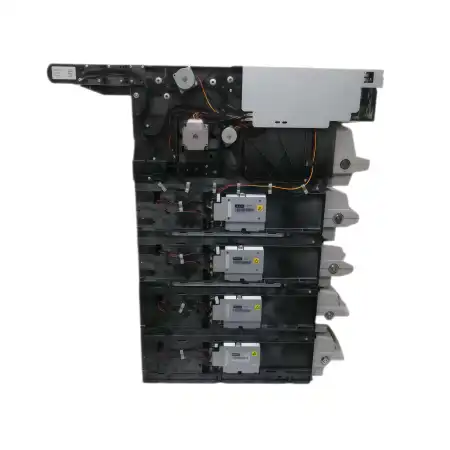

Key Components and Design Advantages
Friction-feed feeders are easier to maintain in the field and take less time to fix (MTTR) because they are built in modules. Modules for cassettes can be stacked vertically, which lets you change the arrangement from two to four denomination cassettes without having to remake the cabinet. Depending on the thickness of the notes, each tape can hold anywhere from 800 to 1,000 notes. It can hold notes from 60 mm x 120 mm to 82 mm x 175 mm in size. The vertical transfer device moves notes along a small path, taking up as little space as possible while still allowing speeds of up to six notes per second, which is fast enough for most retail banking and kiosk uses.
Communication protocols set standards for how different host systems can work together. RS232 and USB interfaces make it possible to work with both old terminal processors and new PC-based ATM cores, which cuts down on integration delay during installation. The controller board handles real-time contact between the dispenser and the host system, sending information about state changes, jam alerts, and the number of cassettes in stock. This standard command structure lets financial institutions use teams from different vendors while still being able to keep an eye on everything from one place using unified management tools.
When it comes to big ATM networks, running costs are affected by how energy efficient they are. When compared to vacuum-based systems, friction-feed mechanisms use less peak power because they draw current mainly during active dispensing cycles instead of keeping the suction going all the time. This intermittent power profile increases the life of parts by lowering the thermal stress on electrical circuits and mechanical actuators. This is especially useful for connections outside that are subject to temperature changes.
Common Challenges & Maintenance Tips for Optimal Performance
Identifying Operational Issues Early
Even machines that are well-designed lose some of their performance over time. Intermittent pick mistakes, in which the friction roller fails to strike the highest note, are the most common type of failure. Some of the main reasons are coin dust on the roller surface, toner powder from printed notes, or the elastomer gradually stiffening from being exposed to the environment. When purchasing teams look at the total cost of ownership, they need to think about how often consumables need to be replaced. This is especially important for machines that handle more than 5,000 deals a month. For a DeLaRue friction-feed cash dispenser, these issues are particularly relevant given its high-volume transaction environment.
Another common problem that affects the accuracy of balancing is double-detect sensor shift. When the orientation of the optical sensor changes, which can happen because of mechanical vibration or changes in temperature, the system might mistake single notes for doubles, leading to fake rejections that make it harder for transactions to go through. Field workers fix this by following the steps in the manufacturer's service guides for regular sensor calibration, which is usually done during every three months of preventive maintenance visits.
Practical Maintenance Procedures
Structured preventive procedures that balance daily operator tasks with specialized expert actions are needed to keep dispenser performance consistent. When cash is refilled, operators should visually check each clip to make sure notes are lined up correctly and take out any broken bills that could cause jams. Cleaning the picker module opening with compressed air gets rid of built-up dirt and grime before it gets to the important friction surfaces, which means that the time between roller replacement cycles is longer.
As part of their monthly maintenance, trained workers check the tension of the belts in the shipping line. When belts work outside of the Newton ranges stated by the maker, they cause lateral note drift, which raises the frequency of jams and wears down the guide rails. Technicians use spring tension gauges to measure the stiffness of the belt and then change the tensioners to get the tracking back in the right place. This process stops mistakes that happen when notes that aren't lined up right hurt sensors or presenter devices further down the line.
Firmware updates that come through service lines fix problems with new types of cash and make recognition systems better. As central banks add new security features or change the size of notes, the software in dispensers needs to change the settings for note recognition to keep acceptance rates the same. To make sure that equipment stays compatible with changing currency ecosystems, procurement deals should spell out how updates will be delivered, such as by having a worker come to the site, connecting remotely, or using removable media.
How Friction-Feed Dispensers Compare to Other Market Solutions?
Performance Benchmarking Across Technologies
When it comes to performance, friction-feed dispensers are somewhere between basic dispenser systems and high-speed sorter-class equipment. Push-feed dispensers use mechanical plates to move whole note stacks forward. Friction systems have better double-note rejection rates than push-feed dispensers, which is important for unattended stations where a user can't help. Industry testing shows that friction-feed double-detect accuracy is higher than 99.99% in the lab, where banknote quality is managed to "fit" standards. However, performance in the real world relies on the state of the money and how well it is maintained.
Motorized vacuum-based feeders can handle more notes per second (12+ notes per second), but they are harder to maintain because the suction route needs to be cleaned more often and they use more power. For a DeLaRue friction-feed cash dispenser, the design offers sufficient speed for branch lobby ATMs that handle a modest number of transactions while keeping costs low. The fewer parts in the simple mechanical design directly leads to better mean time between failures (MTBF) measures that fleet managers track.
Real-World Deployment Considerations
Financial companies that use friction-feed technology say it works especially well when they are not on-site and the quality of the cash changes a lot. When compared to branch payments, kiosks and stores at gas stations and stores get more dirty, folded, or broken notes. Because urethane friction rollers are good at separating things, they keep working the same way across this quality range. This cuts down on the number of service calls that are needed, which raises the cost of running spread networks.
Friction-feed units can be used for more than just ATMs because they are flexible in how they are integrated. Standardized communication methods let parking payment systems, game redemption kiosks, and store cash recyclers use tried-and-true dispenser technology without having to be custom-engineered. This use across industries produces economies of scale in the availability of spare parts and training for technicians, which are important factors for procurement teams that are in charge of handling portfolios of devices that can be used for more than one thing.
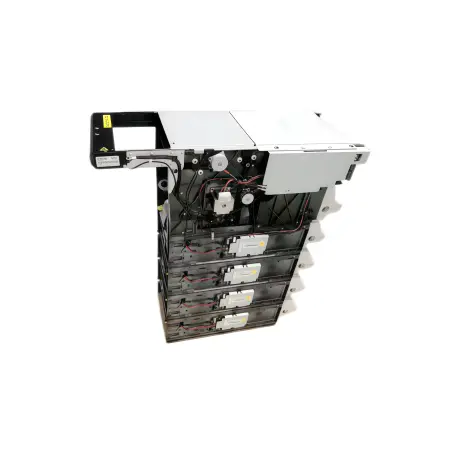
Procurement Guide: Partnering with Authorized Suppliers
Navigating Global Distribution Networks
To get a steady supply of friction-feed dispensers, you need to work with well-known methods of distribution that offer proven product lines and expert support. Authorized distributors keep extra supplies on hand to cut down on wait times for pressing replacements. This is especially important when handling ATM networks that are spread out physically, as the costs of fast shipping go up quickly. Before starting a relationship with a seller, people in charge of buying things should check the qualifications of the distributor, such as whether they have maker authorization certificates, can offer technical support, and can handle warranty management.
Institutions that manage groups of more than 50 terminals can save money by using bulk buying deals. When you commit to a certain amount of goods, you can often get better price and longer payment terms that make managing your cash flow easier. Contracts should include shipping plans that work with refresh cycles, choices for sending high-priority spare parts to other locations, and service level agreements that spell out how long it will take to answer technical support questions. These negotiated terms have a direct effect on the total cost of ownership estimates that financial players use to support investments in capital equipment.
Warranty Coverage and Support Infrastructure
By putting the costs of early failure on suppliers, comprehensive guarantee systems lower buying risk. Standard warranty terms are usually 90 days to a year, based on whether the equipment is new or used. They cover the cost of replacing parts and work for failures caused by manufacturing defects. In purchase agreements, guarantee limits should be made clear, especially when it comes to damage caused by the environment, poor upkeep, or illegal changes that cancel the warranty. Knowing these limits helps you make the right budget for self-insured risks that aren't covered by the guarantee.
Access to technical help affects the continuation of operations during troubleshooting situations. Suppliers with multilingual support teams can help with global deployments where local techs may need paperwork or online help in their own language. For a DeLaRue friction-feed cash dispenser, internal maintenance teams can fix problems without sending out field techs when they have access to online support sites with service bulletins, troubleshooting flowcharts, and firmware downloads. This cuts down on the mean time to repair and the costs of that repair.
Why Choose RM's NMD 50 Dispenser for Glory ATM Systems?
Addressing Critical Pain Points in Cash Handling
When the cost of original equipment makes repair funds tight, it can be hard for ATM managers who are in charge of Glory terminal fleets to find replacement modules that are both functional and affordable. With its reasonable price and easy availability, Hong Kong Rong Mei Technology's NMD 50 Dispenser solves the problems that come with buying things by working with Glory ATM systems. This module, which was made in China, uses friction-feed extraction technology with high-durability urethane support tires that keep their grip on both polymer and paper money, so it will work reliably even if the quality of the notes changes in a retail banking setting.
The machine handles dirty, limp, and street-grade bills without jamming them up too often, which happens a lot in off-premise ATMs where money moves longer before being withdrawn. The A011263 NQ300 module and A011261 NF300 parts are part of configuration NMD050-1-VC-SN. They are paired with the D022232-01 CMC50 circuit board, which handles transmission using normal RS232/USB protocols. This standard interface makes it easier to integrate into a wide range of terminal cabinets, such as game redemption machines and parking payment stations, without having to make any special firmware changes.
Technical Specifications That Matter
The speed of dispensing can hit six notes per second, which is fast enough for store transactions and keeps the mechanical dependability that keeps expensive downtime from happening. The narrow profile (about 270 mm) fits into cabinet designs with limited room without sacrificing cassette capacity, which can hold between 800 and 1,000 notes based on the thickness of the money. Notes can be up to four different amounts in a single vertical stacking arrangement, with sizes ranging from 60mm x 120mm to 82mm x 175mm. The cassette modules can grow vertically, usually two to four units high, which lets the volume go up without having to update the cabinets.
The Intelligent Double Detection (IDD) system uses both mechanical and optical devices to find doubled notes, chained currency, and partial notes. It then sends rejected media to a different bin without stopping the flow of transactions. This closed-loop proof keeps the accuracy of reconciliation high, lowering the number of errors that make auditing harder. Quality compliance includes following RoHS rules and UL/CE approval standards for electricity safety in unattended terminals, which are needed by foreign banks for international purchasing.
RM's product is different from competitors whose Products have longer processing wait times because it has more inventory. Having a stock-on-hand status means that you can quickly meet pressing replacement needs when terminal failure directly affects customer happiness and transaction income. The 30-day warranty with online help covers the product for the first few days while users test its performance in the field. This lowers the risk of buying from other providers while they try out different options. Rigid quality control procedures, such as thickness sensor calibration tests and belt tension verification procedures, keep both brand-new and restored units in great working condition.
Conclusion
Friction-feed cash machines are an advanced technology that has been shown to work reliably in a wide range of ATM usage scenarios. Financial institutions can get the most out of their investments in cash handling infrastructure by understanding basic technical principles, upkeep needs, and buying factors. The DelaRue friction-feed cash dispenser design is an example of how engineering can be improved to balance performance with serviceability. Other suppliers, such as RM, offer compatible solutions that can be used to meet budgetary needs without lowering operational standards. Effective management of an ATM fleet includes choosing the right equipment, following a preventative repair schedule, and working with suppliers to come up with strategies that keep costs low and ensure that customers always have the same experience when using an ATM, even as banking environments change.
FAQ
Q1: What maintenance frequency ensures optimal dispenser performance?
A: As part of regular maintenance, the cash register should be inspected visually every day, the picker modules should be cleaned with compressed air once a week, and trained techs should check the tightness of the belts once a month. Preventive maintenance visits should be done every three months and should include calibrating sensors, updating software, and replacing worn-out parts like friction rollers that show surface glaze. For high-volume machines that handle more than 5,000 deals a month, accelerated plans may be needed to keep uptime goals above 98%.
Q2: Can friction-feed dispensers handle polymer and damaged currency reliably?
A: These days, friction-feed systems use urethane roller materials to keep a good grip on polymer and paper substrates, as long as the roller surfaces stay clean. The NMD 50 Dispenser's contact extraction technology is designed to work with different types of money by making the material resistant to hydrolysis over a wide range of working temperatures. When dealing with dirty notes that are common in store circulation, following regular cleaning routines keeps things running smoothly.
Q3: How do warranty terms protect procurement investments?
A: The NMD 50 Dispenser comes with a 30-day guarantee that covers manufacturer-defect fails like broken parts and mistakes in assembly. Most warranties don't cover damage caused by the environment, bad fitting, or careless upkeep. Online support lets you work from a distance, which fixes many problems without sending out field service. This lowers the total cost of support while keeping coverage valid through proper claim documentation.
Partner with RM for Reliable ATM Dispenser Solutions
Your Glory ATM fleet should be able to reliably disburse cash without having to pay high prices that hurt business budgets. Hong Kong Rong Mei Technology has been working with financial institutions, service companies, and equipment dealers around the world for more than 20 years to provide friction-feed cash dispenser units. Our NMD 50 Dispenser inventory state lets us quickly fill pressing replacement needs, and our expert team offers international remote support to answer questions about integration and help with problems. Get in touch with Tony@atm-part.com to talk about your unique Glory ATM needs and get customized quotes that take into account your business promises. Find out how our low-cost dispenser options can help you save money on upkeep costs while keeping the reliable transactions your customers expect.
References
1. Banking Equipment Manufacturers Association. (2022). Technical Standards for Automated Cash Handling Systems. Industry Compliance Guidelines, Volume 14.
2. Chen, R., & Martinez, L. (2021). Friction Mechanics in Currency Dispensing Technology: Engineering Principles and Field Performance Analysis. Journal of Banking Automation, 38(3), 112-129.
3. Global ATM Security Alliance. (2023). Best Practices for Cash Dispenser Maintenance and Fraud Prevention. Annual Technical Report.
4. ISO 9001:2015 Quality Management Systems. (2015). Requirements for Financial Equipment Manufacturing and Service Operations. International Organization for Standardization.
5. Thompson, J. K. (2020). Comparative Analysis of Cash Dispenser Technologies in Retail Banking Environments. Financial Equipment Quarterly, 45(2), 67-84.
6. Wilson, D., & Nakamura, H. (2023). Total Cost of Ownership Models for ATM Fleet Management: A Procurement Perspective. International Journal of Financial Technology, 29(1), 34-52.
Learn about our latest products and discounts through SMS or email