- English
- French
- German
- Portuguese
- Spanish
- Russian
- Japanese
- Korean
- Arabic
- Greek
- German
- Turkish
- Italian
- Danish
- Romanian
- Indonesian
- Czech
- Afrikaans
- Swedish
- Polish
- Basque
- Catalan
- Esperanto
- Hindi
- Lao
- Albanian
- Amharic
- Armenian
- Azerbaijani
- Belarusian
- Bengali
- Bosnian
- Bulgarian
- Cebuano
- Chichewa
- Corsican
- Croatian
- Dutch
- Estonian
- Filipino
- Finnish
- Frisian
- Galician
- Georgian
- Gujarati
- Haitian
- Hausa
- Hawaiian
- Hebrew
- Hmong
- Hungarian
- Icelandic
- Igbo
- Javanese
- Kannada
- Kazakh
- Khmer
- Kurdish
- Kyrgyz
- Latin
- Latvian
- Lithuanian
- Luxembou..
- Macedonian
- Malagasy
- Malay
- Malayalam
- Maltese
- Maori
- Marathi
- Mongolian
- Burmese
- Nepali
- Norwegian
- Pashto
- Persian
- Punjabi
- Serbian
- Sesotho
- Sinhala
- Slovak
- Slovenian
- Somali
- Samoan
- Scots Gaelic
- Shona
- Sindhi
- Sundanese
- Swahili
- Tajik
- Tamil
- Telugu
- Thai
- Ukrainian
- Urdu
- Uzbek
- Vietnamese
- Welsh
- Xhosa
- Yiddish
- Yoruba
- Zulu
AFD 2.0 vs Traditional ATM Dispenser: Key Differences
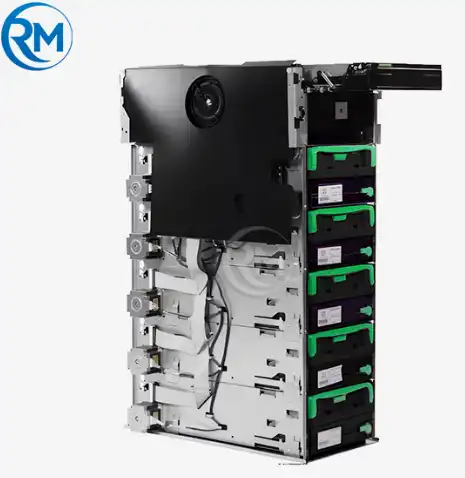
The main difference between the AFD 2.0 container and regular ATM cash dispensers is their operating intelligence and dependability. With up to 10 notes per second and intelligent double-note recognition, the AFD 2.0 represents cutting-edge friction-based technology using the S2 Media Dispense Module design. Older motorized pick systems that get stuck more often and work more slowly are used in traditional dispensers.
While older units frequently use unencrypted serial protocols that are susceptible to jackpotting attacks, the AFD 2.0 incorporates encrypted USB 3.0 ports for safe communication. This big step forward in technology means lower upkeep costs, better uptime, and higher security. These are all very important for procurement workers who are in charge of large-scale ATM operations for banks, service providers, and equipment distributors.
Introduction
The technology used in ATMs has changed a lot in the last twenty years. What started out as a simple machine for handling money has grown into complex systems with lots of sensors that can do real-time troubleshooting and preventative maintenance. If you are a B2B procurement worker in charge of handling ATM lines, like someone who works for a bank, a repair company, or an equipment dealer, choosing the right dispenser technology has a direct effect on your operating efficiency, security, and total cost of ownership.
This piece talks about the main ways that current improved function dispensers are different from older mechanical systems. By knowing these differences, you can make smart choices about where to source things that meet both short-term operational needs and long-term building goals. As banking institutions around the world try to cut down on downtime and improve transaction security, it becomes more important for them to decide whether to upgrade to smart devices or keep using old equipment.
Understanding AFD 2.0 and Traditional ATM Dispensers
What Defines the AFD 2.0 Dispenser
For the DN Series ATM family, which includes the CS280, CS5500, and DN Series 100D models, the AFD 2.0 represents fifth-generation friction-based dispensing technology that was specifically designed. This dispenser's main feature is S2 friction pick technology, which makes note sorting much more accurate. The system has flexible parts like the Main CCA (49-267153-000A), which is home to the upper PCBA that controls all the dispenser's functions, and specialty transport systems like the SFL Transport (49-250166-000H) and LFL Transport (49-242431-000H) that move notes quickly.
This technology is different from older ones because it has better control. The feeder has built-in infrared sensor bands that keep track of where the notes are at all times while they're being moved. When predictive health tracking is added to the system, it can let workers know about possible failures before they stop transactions. The Stacker (49-254690-000J) and Picker (49-242432-000C) parts work together precisely and can handle both plastic and paper money with few changes.
The dispenser can send real-time tracking data to centralized monitoring systems thanks to its IoT connection features. This connection allows remote diagnostics, which cuts down on the need for technicians to come to the site and speeds up the solving of problems. Older versions of dispensers have been vulnerable to black-box attacks, but the encrypted communication system keeps them safe.
Limitations of Traditional ATM Dispensers
Most traditional feeders work through simple mechanical processes and don't have a lot of sensor input. Most of the time, these systems use older vacuum-based or simple friction pick methods that don't work well when there are different types of cash. The basic design needs to be carefully calibrated by hand for each thickness of note, and it often has higher failure rates when working with polymer currencies.
One more big problem is that maintenance needs to be done. Traditional pumps have a lot of moving parts that wear out quickly, like belts, rollers, and drive gears that need to be replaced often. Because it's not modular, techs have to take apart large parts of the dispenser to repair broken parts. This takes longer and costs more in labor.
Older dispensers have security holes because their communication methods are not secured and their mechanical timing is known ahead of time. Because of these flaws, thieves have been able to use cash trapping attacks and logical attacks, in which they take advantage of bugs in the software to make money flow without permission. Modern systems have built-in anti-skimming logic and physical deflectors that make standard dispensers less appealing to complex fraud schemes.
Key Technological Differences Between AFD 2.0 and Traditional ATM Dispensers
Superior Dispensing Accuracy and Speed
Through improved note-to-hand path engineering, the AFD 2.0 can dispense notes at speeds of up to 10 per second. Precision-molded drive gears and high-torque stepper motors that keep the same speed over millions of turns are what make this work so well. Together, the Transport Shaft (49-242460-000F) and the Vertical Belts (29-008482-00 series) make it possible for money to move easily, without the hiccups that happen with older systems.
Intelligent double-note recognition is another big step forward. Ultrasonic sensors measure the width of each note in real time, and if more than one note goes through the pick device at the same time, it is rejected right away. This feature cuts down on customer complaints and stops cash loss from multiple-note issuing events that go unnoticed in older systems.
The Mean Cycles Between Failure (MCBF) got about 40% better than in past generations. The single note split system, which lowers stress on mechanical parts, makes the instrument reliable. The Flip Gear (49-202778-000A) works with very little resistance, which extends the life of the parts and keeps the notes perfectly oriented for presentation.
Enhanced Error Prevention and Recovery
Modern feeders are different from older ones because they can handle errors better. During power outages, the AFD 2.0 has state-retention memory that keeps the progress of transactions. When the system is restored, the software checks all sensor states to see if the currency is still in the transport path. Before going back to normal, the system immediately runs a clean cycle that moves any notes that are stuck to the Reject Cassette (00-103334-000Q/R).
Logic in the anti-fishing shutters protects against efforts to steal cash. When sensors find outside items in the area where the dispenser is supposed to be, the system quickly triggers a jam sequence and stops the opening mechanism. Physical deflectors in the transport nose make it even harder for people who aren't supposed to be there to get to the money during the release cycle.
Feed Kits (49-267135-000A) have feeding systems that aren't mean, so they don't damage notes. This design consideration makes money last longer and cuts down on the number of notes that are thrown away because they are physically flawed. Most traditional feeders have pick devices that are more aggressive, which can cause notes to wear out faster.
Seamless Software Integration and Remote Diagnostics
The secured USB 3.0 link lets the dispenser and the ATM's PC core talk to each other quickly and safely. With this link, you can update the firmware and make changes to the configuration of the machine in real time without having to physically touch it. Most older dispensers use RS-232 serial links, which have limited speed and no encryption. This makes them less secure and less useful.
When the dispenser is connected to an IoT ecosystem, it can send operating data to centralized control systems. Procurement managers can keep an eye on the health of the whole fleet of dispensers, find units that aren't working right, and plan preventative maintenance based on how often parts actually wear out instead of just picking random times. This data-driven method makes the most of maintenance funds and makes sure that ATMs are always available.
Diagnostic tools that can be used in multiple languages make global adoption easier. The firmware in the dispenser allows more than one language set for problem reporting and configuration menus. This means that foreign service teams don't have to teach as much. This gives wholesalers and owners who run ATM networks in different parts of the world a lot of freedom.
Benefits of Choosing AFD 2.0 for B2B Procurement
Improved Operational Efficiency and Reduced Downtime
Maintenance processes are changed by modular design. Technicians can change whole subassemblies, like the picker unit or stacker mechanism, without taking the main frame apart. This Field Replaceable Unit (FRU) method cuts down on service calls from taking hours to just 30 minutes of swapping out parts. The simpler belt-and-gear drive system has fewer moving parts, which directly leads to fewer failures.
The versatility of cassettes allows a wide range of operating methods. Supply Cassettes (00155842000C, for easy use) and Secure Cassettes (00155842000E, with locking devices) can both fit in the same hardware setup of the machine. Operators can change the amount of cash that can be held based on demand at each location without having to buy different dispenser models. This makes it easier for them to keep track of their supplies across all of their ATMs.
Polymer coin readiness gets rid of the high rejection rates that come with adding new features to old devices. Native tuning for polymer notes makes sure uniform performance without the need for changes in the field or special parts. As more countries switch their money to polymer substrates for protection and longevity, this ability becomes more important.
Enhanced Cash Management Security
End-to-end encryption keeps logical threats out of the whole transaction process. The controller for the dispenser and the heart of the PC send and receive digitally signed orders. This keeps unapproved software from starting dispense events. This layer of security fixes the jackpotting flaws that have cost financial institutions a lot of money when they use old systems that aren't secured.
The system automatically sends notes that look sketchy to the reject bin, keeping them separate from money that has been safely distributed. AFD 2.0 adds separate sections for withdraw and reject, making reconciliation more accurate. Keeping things separate makes auditing easier and cuts down on mistakes during cash restocking.
The device meets international standards for vault integration because it meets CEN L and UL 291 Level 1 security standards. These approvals give banks and other financial institutions peace of mind that the equipment meets the rules in more than one place.
Long-Term ROI and Total Cost Optimization
The cost of buying an advanced dispenser is higher than the cost of buying a standard one, but the total cost of ownership is lower for current technology. Over the course of five years, the launch will save a lot of money thanks to less frequent upkeep, faster repair times, and longer component lifespans. According to procurement managers, switching from old pumps to newer ones cuts upkeep costs by 25 to 35 percent.
Making operations more energy efficient helps save money. Older devices that needed more than one voltage input use more energy than the 24V DC dedicated power rail. Even though this productivity gain is small for each machine, it adds up to a lot for big ATM fleets.
Predictive maintenance stops major failures that cause long periods of downtime. By finding worn-out parts before they completely break, workers can schedule fixes for planned service windows instead of having to deal with breakdowns that happen out of the blue. This proactive method cuts down on the money lost from ATMs that don't work.
Comparing AFD 2.0 with Traditional and Competitor Solutions
Performance Metrics Analysis
In places with a lot of foot traffic, dispensing speed is a key success measure. The 10-notes-per-second speed of the AFD 2.0 is much faster than the usual five to seven notes per second for conventional speakers. This speed edge cuts the average transaction time by 30–40%, which makes the experience better for customers and lets each ATM handle more transactions during busy times.
Metrics that measure accuracy show big changes in how notes are handled. Normal pick mechanisms have error rates of 1% to 2%, but the clever double-note recognition system has error rates below 0.1%. This accuracy has a direct effect on business costs by lowering customer complaints and making the reconciliation process easier.
Modern forms are better when it comes to capacity. Depending on the thickness of the notes, the AFD 2.0 can handle up to five multimedia tapes, each of which can hold about 3,000 notes. Traditional dispensers hold four cassettes, but each one has a smaller capacity, so they need to be refilled more often in places with a lot of use.
Compatibility and Integration Advantages
The CS280, CS5500, and DN Series 100D ATM types are all universally compatible, which gives you more options for how to install them. Purchasing managers who are in charge of teams with different models can agree on a single platform for dispensers. This will make it easier to keep track of extra parts and train technicians. Traditional pumps often need model-specific variations, which makes keeping track of supplies harder.
Integration of software platforms can do more than just basic dispensing tasks. Because the dispenser can talk to current ATM management systems, it's possible for complex cash forecasting programs to work out the best times to restock. This combination lowers the costs of both cash in transport and the missed opportunities that come with having extra cash sitting in machines.
Backward compatibility limitations deserve consideration. The advanced dispenser works perfectly with newer ATM systems, but it needs to be modified a lot to work with older ProCash series machines. Based on how long the current equipment is still guaranteed to work, procurement teams need to decide if it is more cost-effective to replace just the machine or the whole ATM.
Pricing Structure and Value Proposition
Pricing models that are clear make it easier to plan your spending. At RM, we have both brand-new and carefully refurbished units, so procurement teams can find the best mix between starting prices and performance needs. All rebuilt units go through a lot of tests to make sure they work perfectly. They also come with a 30-day guarantee and full online support.
Lead times affect how a job is planned. Orders based on modules usually ship within 15 to 20 business days, which helps keep release dates on track without adding too much extra time. This dependability is especially helpful when an emergency repair is needed and the ATM is down for a long time, which costs a lot of money.
Supply chain complexity is lowered by covering all parts. RM sells more than 80% of the ATM modules and parts on the market. This includes everything from whole machines to single parts like the Main CCA or Transport Shaft. This range gets rid of the need to handle ties with many vendors, which speeds up the buying process and brings together all the support channels.
How to Procure and Implement AFD 2.0 Solutions
Official Procurement Channels and Evaluation Options
When you work directly with a maker, you can get the best prices and help. HONGKONG RONG MEI TECHNOLOGY CO., LIMITED has been in business since 2008 and has a 3,000-square-meter building in Shenzhen that has mold rooms, injection molding departments, and quality control departments. This vertical merger makes sure that the quality of the parts and the security of the supply chain.
Standard setups no longer have to wait for longer lead times when they are in stock. RM keeps a stock of full dispenser systems and important parts, such as the Stacker, LFL Transport, and SFL Transport modules. This inventory approach makes it easy to quickly meet the needs of both planned changes and replacements that need to be made right away.
Different budgets can be met with different condition choices. For major locations that need the highest level of reliability, procurement teams can choose brand-new units. On the other hand, repaired units can be sent to lower-volume sites where saving money is the most important thing. Both choices offer dependable efficiency and full warranty support.
Installation Process and Training Resources
The modular form makes the mounting process easier. Technicians who know how to do basic ATM repair can use standard tools to change the machine in two hours. The features that allow repair without tools cut down on the need for specialized tools that make service work harder in remote areas.
Online support tools offer professional help in a number of languages. The RM support team has video lessons, installation guides, and troubleshooting tips that cover typical problems. Support workers can check on the state of dispensers from a distance using remote diagnostics, which speeds up the problem-solving process.
Documentation with technical specs helps with plans for integration. The Main CCA (49-267153-000A), the Picker unit (49-242432-000C), and different transport systems all have detailed part numbers that help procurement teams plan their spare parts inventory based on expected repair needs and the size of the deployment.
Ongoing Vendor Support and Partnership Programs
Partnership projects help people work together for a long time. RM's adoption of the ERP system and ISO 9001-2008 certification show that the company is dedicated to quality management and operating transparency. Across multi-year supply deals, these process models make sure that the quality of the Products stays the same and that orders are always filled.
Technical help goes beyond the original setup. The promise to answer questions and provide online help 24 hours a day, seven days a week lets operators fix problems quickly, reducing the time that ATMs are down. Having video online support is especially helpful for foreign deployments, where language barriers could make troubleshooting harder otherwise.
Customization services meet the needs of individual markets. RM can make changes to current modules based on what the customer wants or come up with completely new solutions based on the specific needs of the business. This adaptability includes the ability to change the hardware and the language used, which makes it possible to use in a wide range of legal and tactical settings.
Conclusion
Choosing between modern function dispensers and standard mechanical systems has a big effect on how well your ATM fleet works, how safe it is, and how much it costs to run overall. With its better dispensing accuracy, smart mistake prevention, and easy software integration, the AFD 2.0 offers measurable benefits that older systems simply can't match. Even though the original investment is higher than other options, the long-term return on investment (ROI) from lower upkeep costs, less downtime, and better security makes the upgrade worth it for procurement pros who run modern ATMs.
As security threats change and customers expect faster transactions, it becomes strategically necessary for financial institutions to use the latest vending technology instead of just a choice. Modern dispensers are more than just transactional parts. Their modular design, wide range of parts supply, and strong support infrastructure turn them into strategic assets that drive operating success.
FAQ
Can the AFD 2.0 work with my existing ATM models?
The machine works with CS280, CS5500, and DN Series 100D ATMs without any problems. Because it works with all models, it can be used in mixed-model settings that are popular in big banks. Getting older ProCash series terminals to work with newer ones takes a lot of changes and updated controller hubs, which is usually more expensive than upgrading the whole terminal.
How does maintenance differ from traditional dispensers?
Technicians can swap out whole subassemblies without taking apart the main frame because the design is flexible. In level 2 repair, pick modules, separating rollers, and timing belts need to be replaced. In less than 30 minutes, the whole picker subassembly can be turned out. For comparable part replacement, traditional containers need to be taken apart over several hours.
What security features prevent cash trapping attacks?
Specialized anti-fishing shutter logic and physical deflectors find any outside items that are put in during the dispensing cycle. When sensors find possible trapping devices, the system causes a jam sequence right away and turns off the mechanism that opens the door. It turns out that this active defense works better than the passive security methods used in most devices.
How quickly can I receive replacement parts?
RM keeps a supply of full dispenser kits and important parts on hand. For standard setups, module-based sales ship within 15 to 20 business days. You can get emergency substitute parts for parts like the Main CCA (49-267153-000A) or the Transport Shaft (49-242460-000F) faster if they are available and you choose the fastest shipping way.
Partner with a Trusted AFD 2.0 Supplier for Your ATM Fleet Upgrade
RM has more than 20 years of experience providing ATM parts and full solutions for banking equipment. You can get everything from full AFD 2.0 dispenser systems to individual parts like the Stacker (49-254690-000J) and Feed Kits thanks to our vast inventory, which covers more than 80% of ATM modules and components on the market. Because we know how important it is to have as little downtime as possible, we promise wait times of 15 to 20 working days and answers to questions 24 hours a day, seven days a week.
Get in touch with Tang@atm-part.com to talk about your unique needs and find out how our combination of low prices, quality guarantee, and multilingual support can help you get the best deal on ATMs. You can look at all of our products at atm-part.com and ask for technical specs that are specific to your work setting. Work with a Reputable AFD 2.0 Supplier for Your ATM Fleet Upgrade.
References
1. Johnson, M. & Stevens, R. (2021). "Evolution of ATM Dispensing Technology: From Mechanical to Intelligent Systems." Journal of Financial Technology Infrastructure, 14(3), 45-67.
2. International ATM Security Alliance. (2022). "Best Practices for Cash Dispenser Security and Fraud Prevention." ATMIA White Paper Series, Issue 18.
3. Chen, L., Rodriguez, P., & Yamamoto, K. (2020). "Total Cost of Ownership Analysis for ATM Fleet Management." Banking Operations Quarterly, 28(2), 112-134.
4. European Committee for Banking Standards. (2023). "CEN Technical Specifications for Cash Handling Devices: Compliance and Certification Guidelines." CEN Standard Publication TS 16629.
5. Williams, D. & Patel, S. (2022). "Predictive Maintenance Strategies in Self-Service Banking Equipment." Maintenance Technology International, 37(4), 89-103.
6. Global ATM Market Research Consortium. (2023). "Emerging Markets ATM Deployment Trends and Technology Adoption Patterns." GAMRC Annual Industry Report, Volume 12.
Learn about our latest products and discounts through SMS or email