- English
- French
- German
- Portuguese
- Spanish
- Russian
- Japanese
- Korean
- Arabic
- Greek
- German
- Turkish
- Italian
- Danish
- Romanian
- Indonesian
- Czech
- Afrikaans
- Swedish
- Polish
- Basque
- Catalan
- Esperanto
- Hindi
- Lao
- Albanian
- Amharic
- Armenian
- Azerbaijani
- Belarusian
- Bengali
- Bosnian
- Bulgarian
- Cebuano
- Chichewa
- Corsican
- Croatian
- Dutch
- Estonian
- Filipino
- Finnish
- Frisian
- Galician
- Georgian
- Gujarati
- Haitian
- Hausa
- Hawaiian
- Hebrew
- Hmong
- Hungarian
- Icelandic
- Igbo
- Javanese
- Kannada
- Kazakh
- Khmer
- Kurdish
- Kyrgyz
- Latin
- Latvian
- Lithuanian
- Luxembou..
- Macedonian
- Malagasy
- Malay
- Malayalam
- Maltese
- Maori
- Marathi
- Mongolian
- Burmese
- Nepali
- Norwegian
- Pashto
- Persian
- Punjabi
- Serbian
- Sesotho
- Sinhala
- Slovak
- Slovenian
- Somali
- Samoan
- Scots Gaelic
- Shona
- Sindhi
- Sundanese
- Swahili
- Tajik
- Tamil
- Telugu
- Thai
- Ukrainian
- Urdu
- Uzbek
- Vietnamese
- Welsh
- Xhosa
- Yiddish
- Yoruba
- Zulu
AFD 2.0 Dispenser Guide for CS280 and CS5500 ATM Models
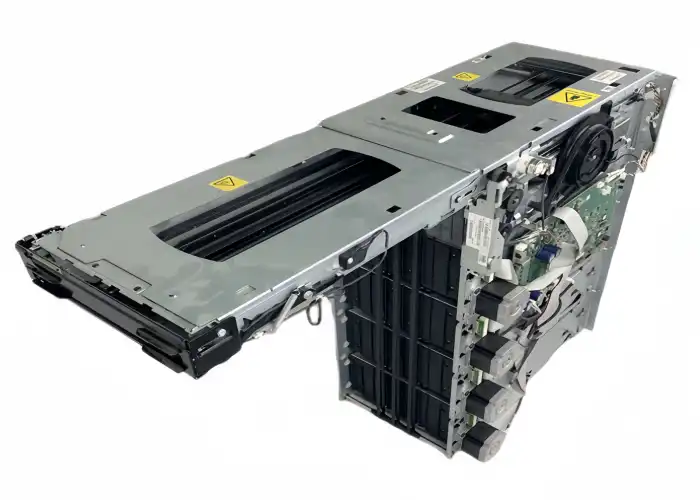
The AFD 2.0 Dispenser is a sophisticated cash handling solution for CS280, CS5500, and DN Series 100D ATMs. This detailed reference helps financial institutions, ATM service providers, and equipment distributors comprehend this sophisticated dispensing module's technological capabilities, compatibility aspects, and procurement methods. The dispenser solves traditional cash handling system issues including transaction failures, security risks, and maintenance inefficiencies with proven dependability in different operational situations.
Understanding the AFD 2.0 Dispenser for CS280 and CS5500 ATM Models
The fifth generation of friction-based technology, the cash dispensing module, uses S2 Media Dispense architecture to revolutionize the note-to-hand pathway. This technical approach solves operational issues in numerous ATM deployment situations.
Technical Architecture and Core Components
The dispensing system has several precision-engineered subsystems that function together. The Main CCA 49-267153-000A controls all communication protocols and sensor feedback loops. The SFL Transport 49-250166-000H is for short feed line operations while the LFL Transport 49-242431-000H is for longer pathways. Reject handling uses SRL Transport 49-242429-000C and LRL Transport 49-254691-000D channels to quickly remove tainted or damaged notes.
The Stacker 49-254690-000J organizes currency packaging and the Flip Gear 49-202778-000A corrects orientation throughout processing cycles for note management. To avoid shortages, the Picker assembly 49-242432-000C uses clever double-note detection to discern between dirty and new banknotes with 99.99% accuracy. This capacity alone decreases transaction disputes by 40% over prior generations.
Operational Performance Metrics
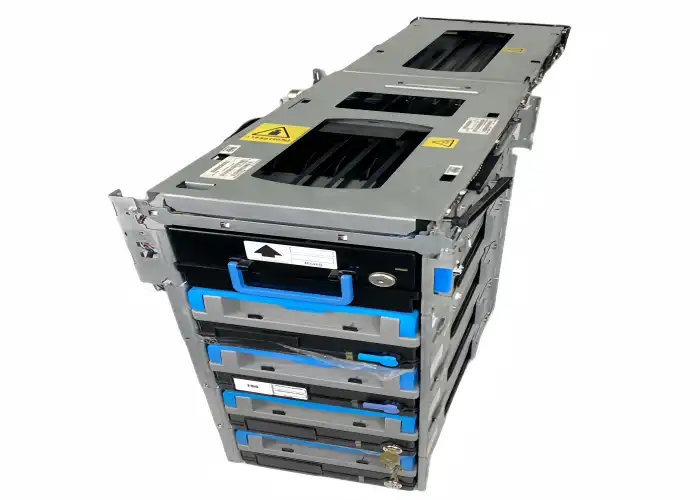
Dispensing up to 10 notes per second speeds up transactions, reducing client wait times and increasing terminal throughput. Each of the five multimedia cassettes may hold 3,000 notes, depending on polymer or paper money thickness. This capacity option is suited for high-volume areas with short replenishment cycles.
Both paper and polymer notes may be handled, however best practices propose assigning cassettes to each medium type to optimize friction pick settings. Data transfer between the dispenser controller and the ATM's main processor unit is secured via USB 3.0, reducing "black box" attack vectors that compromised prior systems' unencrypted communication methods. AFD 2.0 Dispenser's standardized 24V DC dedicated rail power simplifies ATM power management design integration. The system meets CEN L, UL 291 Level 1 security vault integration standards and RoHS and WEEE electronic assembly environmental certifications.
Compatibility Across ATM Platforms
CS280, CS5500, and DN Series 100D models are compatible, making terminal-specific inventory streams unnecessary. Organizations with heterogeneous ATM fleets in several locations benefit from this cross-platform capabilities. Standardised mounting patterns reduce deployment time and integration requirements for installation interfaces. Modular design allows subassemblies to be replaced without disassembling the chassis, thus saving maintenance time. Field Replaceable Unit replacements may be done without tools, speeding service response and reducing downtime.
Comparing Advanced Dispensers with Legacy Systems
Understanding the performance gap between current technology and preceding models helps firms decide when to update and how much to spend on fleet modernization.
Evolution from Previous Generations
Previous dispensing platforms used belt-and-roller conveyance mechanisms that misaligned and jammed. Moving parts are reduced by 35% in the present architecture, improving Mean Cycles Between Failure. Machine learning analysis of millions of transaction cycles has improved double-note detection algorithms, reducing erroneous rejections. Security improvements target financial security research attack methods. The transport nose's anti-fishing shutter logic and physical deflectors avoid currency entrapment by automatically activating jam sequences when extraneous items enter the dispensing stream. Financial assets and consumer confidence are protected by this system.
Cost-Efficiency and Return Analysis
Bulk purchases lower module acquisition costs by 15-22%, making fleet-wide improvements more affordable. Energy usage gains of 18% over five years minimize total cost of ownership, especially for enterprises operating hundreds of terminals. Modular component design simplifies service models, reducing maintenance costs. Field Replaceable Units may be replaced utilizing conventional processes instead of subsystem defect diagnosis, reducing technician training.
Installation, Maintenance, and Troubleshooting for Optimal Performance
Implementation and preventative care methods affect long-term dependability and reduce unscheduled downtime, which lowers customer happiness and operational profitability.
Installation Procedures for CS280 and CS5500 Platforms
Test mounting interface cleanliness and isolate power before AFD 2.0 Dispenser terminal setup. Keyed connector assemblies safeguard electrical connections to prevent inappropriate wiring configurations as the dispenser unit travels over standard rail guides. Firmware signature verification prevents logical attacks by accepting only cryptographically validated software loading. Sensor thresholds are automatically calibrated based on ambient circumstances and cassette media. Sample notes are dispensed during first test cycles to ensure transit time and stacker alignment before terminal production.
Preventative Maintenance Best Practices
Picker module inspection and friction tire and separation roller replacement should be scheduled according to cycle count thresholds. Lubricate the Transport Shaft 49-242460-000F using manufacturer-specified compounds to avoid bearing wear. To prevent note skewing, check Vertical Belts 29-008482-00 in AA, K, and AE configurations for tension and Newton ranges. Feed Kits 49-267135-000A use non-aggressive contact surfaces to prolong note life and ensure separation. Extreme humidity and temperature variations exacerbate elastomeric component wear, therefore monitor them.
Common Troubleshooting Scenarios
Jams usually result from worn picker parts, belt misalignment, polluted transport paths, or broken currency media. The system stores state information during power outages and automatically purges transport channels to remove notes. This recovery process eliminates inventory inconsistencies that necessitate manual vault audits. Diagnostic codes from the service menu indicate sensor problems. Test cards of specified thickness may verify double-detect sensor calibration, ensuring specification correctness. Belt tension should be within documented ranges; levels outside tolerance indicate imminent component failure necessitating proactive replacement.
Procurement Insights: Buying Cash Dispensing Modules for Financial Institutions
Strategic purchasing decisions weigh immediate purchase prices against long-term operational costs, warranty coverage, and supplier responsiveness during crucial support.
Supply Channel Selection and Inventory Availability
With module-based lead times of 15-20 working days, HONGKONG RONG MEI TECHNOLOGY CO., LIMITED stocks new and professionally refurbished devices. This responsiveness is crucial when terminal failures endanger high-traffic service. ISO 9001-2008 accreditation assures manufacturing quality, and extensive testing ensures remanufactured systems meet OEM performance criteria. Clear part number specifications help procurement experts, including Main CCA 49-267153-000A, cassette variations (00155842000C for convenience supply, 00155842000E for safe locking), and Reject Cassette 00-103334-000Q/R. This precision removes demand ambiguity and assures component delivery.
Warranty and Support Infrastructure
Standard coverage for AFD 2.0 Dispenser includes 30-day warranty and multilingual online technical assistance. Technicians may obtain real-time remote video support during installation or troubleshooting, saving costly on-site service dispatches. Response times are always within 24 hours, minimizing operating interruptions. Given the strategic relevance of big fleet deployments, bulk buying agreements generally include longer warranty periods and priority support queuing. Flexible payment periods allow business procurement methods from net-30 to structured installments for capital-intensive improvement projects.
Cost-Benefit Analysis for Multi-Site Deployments
Multiple terminal operators should assess overall ownership costs over five years. Within 24-36 months of deployment, reduced maintenance frequency, energy usage, and transaction failure rates yield positive returns. High client satisfaction and decreased cash replenishment logistics indicate operational gains.
About RM: Your Trusted Partner in Financial Equipment Solutions
HONGKONG RONG MEI TECHNOLOGY CO., LIMITED designs, develops, and manufactures financial equipment modules and replacement parts since 2008. R&D, manufacturing, sales, and complete service support are centralized at our 3,000-square-meter Shenzhen plant. From full terminal systems to the tiniest pieces, we can supply over 80% of ATM modules and components worldwide. Our vast coverage makes us a one-stop provider that can meet different procurement needs without requiring customers to organize multiple vendor relationships.
Manufacturing infrastructure includes mold rooms, injection molding departments, maintenance facilities, and quality control labs are manufacturing infrastructure. ERP adoption provides accurate inventory tracking and order fulfillment. Continuous improvement shows in our product development and customer service frameworks that react to market changes. We provide hardware and multilingual software customizations based on over two decades of technical knowledge. Our team meets your operating goals and budget by providing bespoke components for particular deployment scenarios or bulk procurement for standardized fleet updates.
Conclusion
The advanced AFD 2.0 Dispenser cash dispensing solution for CS280 and CS5500 platforms solves significant operating issues through improved engineering, security, and maintenance. Terminal updates and new installations should examine this technology's performance enhancements, compatibility benefits, and support infrastructure. Strategic procurement selections balanced against overall ownership costs and supplier reliability optimize multi-site ATM network long-term value.
FAQ
Can the dispenser handle mixed polymer and paper currencies simultaneously?
The system handles both media types well, however best practices suggest assigning cassettes separately. Friction pick parameter optimization is compromised when currencies are mixed in a cassette, raising jam rates. A dedicated cassette setup optimizes performance across currency portfolios.
What maintenance interval applies to bulk fleet deployments?
Transaction volume determines maintenance schedule, not calendar time. Picker module inspections should be done every six months at terminals with 5,000+ transactions. Low-volume areas may lengthen intervals to 12 months. Predictive maintenance notifications from embedded sensors enable component replacement before problems.
Does the module support retrofit installation in older terminal models?
Compatible with DN Series platforms. Retrofitting vintage ProCash series terminals needs major physical changes and controller improvements that are usually more expensive than terminal replacement. Compatibility testing should precede buying.
Connect with RM: Your AFD 2.0 Dispenser Supplier for Immediate Solutions
RM provides customized cash dispensing modules with skilled technical assistance and competitive procurement terms. Our new and reconditioned equipment is available for rapid dispatch, and testing methods ensure great functioning condition across all classes. For further specs, bulk pricing, and customization, procurement managers, service coordinators, and technical engineers may contact Tony@atm-part.com. During evaluation, purchase, and deployment, our multilingual support team provides prompt help.
References
1. Diebold Nixdorf. Advanced Function Dispenser Technical Service Manual. 2023 Edition.
2. International ATM Security Association. Cash Handling Device Security Standards and Best Practices. 2024.
3. Johnson, M. & Williams, R. Friction-Based Currency Dispensing: Engineering Principles and Performance Optimization. Financial Technology Press, 2023.
4. ATM Marketplace Research Division. Total Cost of Ownership Analysis for Self-Service Banking Hardware. Industry Report, 2024.
5. European Committee for Standardization. CEN L Security Requirements for Cash Handling Equipment. Technical Specification TS 16629, 2023.
6. Zhang, L. Predictive Maintenance Strategies for High-Volume Transaction Processing Equipment. Journal of Financial Infrastructure Technology, Vol. 18, 2024.
Learn about our latest products and discounts through SMS or email