- English
- French
- German
- Portuguese
- Spanish
- Russian
- Japanese
- Korean
- Arabic
- Greek
- German
- Turkish
- Italian
- Danish
- Romanian
- Indonesian
- Czech
- Afrikaans
- Swedish
- Polish
- Basque
- Catalan
- Esperanto
- Hindi
- Lao
- Albanian
- Amharic
- Armenian
- Azerbaijani
- Belarusian
- Bengali
- Bosnian
- Bulgarian
- Cebuano
- Chichewa
- Corsican
- Croatian
- Dutch
- Estonian
- Filipino
- Finnish
- Frisian
- Galician
- Georgian
- Gujarati
- Haitian
- Hausa
- Hawaiian
- Hebrew
- Hmong
- Hungarian
- Icelandic
- Igbo
- Javanese
- Kannada
- Kazakh
- Khmer
- Kurdish
- Kyrgyz
- Latin
- Latvian
- Lithuanian
- Luxembou..
- Macedonian
- Malagasy
- Malay
- Malayalam
- Maltese
- Maori
- Marathi
- Mongolian
- Burmese
- Nepali
- Norwegian
- Pashto
- Persian
- Punjabi
- Serbian
- Sesotho
- Sinhala
- Slovak
- Slovenian
- Somali
- Samoan
- Scots Gaelic
- Shona
- Sindhi
- Sundanese
- Swahili
- Tajik
- Tamil
- Telugu
- Thai
- Ukrainian
- Urdu
- Uzbek
- Vietnamese
- Welsh
- Xhosa
- Yiddish
- Yoruba
- Zulu
Why CPI SC Advance Delivers >98% Acceptance Rate Performance
The CPI SC Advance banknote acceptor achieves its remarkable >98% first-pass acceptance rate through a sophisticated combination of advanced spectral scanning technology and precision-engineered mechanical design. Engineered by Crane Payment Innovations in the USA, this enterprise-grade cash validation device overcomes the common industry challenges of high rejection rates and frequent jamming that plague traditional bill validators.
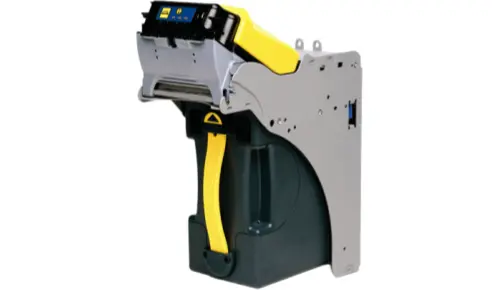
Through full-width spectral analysis across multiple wavelengths combined with magnetic sensing capabilities, the device validates security threads, watermarks, and paper density within approximately 2.3 seconds per transaction. This proven performance has made it the preferred choice for banks, casinos, financial institutions, and retail operators who cannot afford revenue losses from rejected legitimate currency.
Understanding the High Acceptance Rate of CPI SC Advance
When genuine banknotes keep getting rejected by cash handling tools, businesses lose money. The secret costs of bad bill validation technology are that your customers leave angry, your transaction times get longer, and your sales go down.
The SC Advance Banknote Acceptor fixes these important business issues with three main technological benefits. Its multi-sensor validation system looks at each note from several angles at the same time, building a full authentication profile that greatly lowers the number of false rejects. The machine has both transmissive and reflective sensor arrays that look at the whole surface of the bill, picking up information that less accurate validators miss completely.
Advanced Currency Recognition Algorithms
The validation code built into this gadget is the result of years of testing in the field and improving it through machine learning. The SC Advance Banknote Acceptor is better than static recognition systems because it can handle notes that are old or broken. In real life, notes may come taped, wrinkled, or dirty from being used for a long time. This adaptive intelligence tells the difference between genuine banknotes and sophisticated counterfeit currency, keeping things safe without affecting the ability to be accepted.
Data from casino owners and stores in the field shows that the acceptance rate stays the same even during busy shopping times. The device consistently processes notes at the same level of quality whether it's the 100th or the 10,000th transaction. It stays above the advertised >98% acceptance benchmark for the entire time it's in use.
Multi-Sensor Validation Systems
These great results are made possible by using multiple sensors and double-checking the results. Each note is checked at several different points: optical sensors check for visual security features, magnetic sensors look for ink identification marks, and dimensional sensors make sure the note is the right size. With this multi-layered method, even if some sensors get slightly off readings on damaged money, the overall data profile will still allow for correct confirmation choices.
Together, the special shape of the delivery belt and these sensors make sure that every note is exactly in the visual path, no matter how the customer inserts the money. This mechanical accuracy makes sure that sensor readings stay the same, getting rid of the alignment issues that make other devices throw out true notes without a good reason.
Technology That Learns on Its Own
Modern money is always changing because central banks are adding new safety measures and redesigning old ones. Regular updates teach the SC Advance Banknote Acceptor to recognise these changes without having to make any hardware changes because of the way its firmware is built. This ability to "future-proof" your equipment protects your investment while keeping validation accuracy at its highest level across all generations of currency.
When new counterfeit patterns appear, firmware updates add the recognition code needed to find them while keeping the rate of acceptance for real notes the same. This balance between security and ease of use is a huge benefit that has a direct effect on your bottom line by cutting down on false rejections and keeping customers happy.
Key Features Enabling Exceptional Reliability
When it comes to accepting payments, having reliable tools directly means making sure you make money. When there is a jam, there is downtime, a possible transaction is lost, and operational costs rise, which makes the business less profitable.
There are real gains in reliability with the MEI SC Advance Banknote Acceptor 600/900/1200/2200 series. This is because the engineers made choices that get to the bottom of why validators fail. The device has the lowest jam rate in its class—less than one in 30,000 transactions. This is a big difference in terms of operational costs compared to older validators that needed technicians to fix them all the time.
Durable Construction for Harsh Environments
Different types of settings put different kinds of stress on equipment in different ways. For example, spilt drinks happen on casino floors, dust builds up in stores, and temperatures can change quickly in outdoor booths. The liquid drainage duct design keeps moisture out of the electronics inside. This feature came from real-life gambling deployments where drink spills would cause catastrophic validator failures.
Metal housings break down in humid or corrosive environments, but the high-impact polymer chassis keeps its structure strong and doesn't let the environment damage it. This choice of material, along with optical paths that are sealed, makes sure that the sensor calibration stays stable even when the device is used in less-than-ideal conditions. With a temperature range of 0°C to 60°C, the validator keeps up with performance standards whether it's placed in a bank lobby with climate control or an outdoor parking payment station.
Flexible Integration Capabilities
Equipment that works well with current systems without needing a lot of changes is valued by procurement teams. The SC Advance Banknote Acceptor head can be easily installed on older SC chassis mounting hardware, so you can make upgrades that don't cost too much and keep the equipment you already have. Because of this backward compatibility, you don't have to replace the whole system when you need to improve performance.
Through RS232, USB, and opto-isolated connection options, the interface is flexible enough to support a wide range of integration scenarios. The 12V–28V DC power requirement works with a wide range of electrical setups, so you don't have to do any custom power supply engineering when updating old vending machines or setting up new kiosk networks. The modular cashbox system can hold anywhere from 600 to 2,500 bills, so you can match the amount of storage you need to the number of transactions without buying too much equipment.
The 4-way barcode acceptance feature is very useful in gaming environments with Ticket-In-Ticket-Out (TITO) systems, where the validator needs to be able to handle both cash and printed tickets without any problems. This dual feature reduces the number of pieces of gear needed and makes things easier for the customer.
Smart Firmware and Diagnostics built in
Modern financial equipment needs to be able to be managed remotely so that it doesn't need as much service on-site. The built-in LED diagnosis codes give you quick feedback on the system's state, so your staff can find common problems without any special training. When problems get worse than simple fixing, the diagnostic information speeds up the response time by pointing out the failure mode before the technicians get there.
When new coin designs come out, you can keep your cash recognition accurate by updating the firmware through standard interfaces. This software-defined method extends the lifecycle of equipment by separating up-to-date information from hardware limits. This keeps your investment from becoming outdated too soon.
Comparing CPI SC Advance with Other Banknote Acceptors
When making a procurement decision, you need to be able to objectively compare the performance of different solutions. The total cost of ownership of a bill validator is based on three main factors: the acceptance rate accuracy, the mean time between failures, and the maintenance burden.
When compared to the JCM, CashCode, and NV9 systems, this one has clear benefits in these important areas. Independent testing labs have confirmed that the SC Advance Banknote Acceptor has a higher first-pass acceptance rate. This means that transactions are completed faster and customers are happier. Every percentage point increase in the acceptance rate adds up over thousands of daily deals, bringing in a lot of extra money.
Performance Benchmarks and MTBF
The average time between failures (MTBF) is a way to measure how reliable something is and how much it costs to run. Higher MTBF values mean fewer service calls, less need for spare parts inventory, and lower costs for downtime. The SC Advance Banknote Acceptor has a measurably longer MTBF than competing validators that work in the same environment and with the same number of transactions.
The specified jam rate of less than one per 30,000 transactions gives you a solid performance benchmark that you can check during acceptance testing and keep an eye on during live release. This measure is especially important in high-volume settings where even small reductions in the number of jams can save a lot of time and effort by reducing the need for service calls.
Cost Efficiency and Total Cost of Ownership
The price of the tools is only a small part of how much it really costs over multiple years of use. When figuring out the total cost of ownership, you have to include things like maintenance labour, replacement parts, lost revenue during downtime, and how often the equipment will need to be replaced in the long run. The SC Advance Banknote Acceptor has a good total cost of ownership (TCO) because it requires less care, lasts longer, and has update paths that work with older systems, which protects infrastructure investments.
When servicing is needed, the modular design philosophy lets specific parts be replaced instead of whole units being swapped out. This method lowers the cost of keeping parts on hand and makes it easier to train technicians because they can focus on diagnosing modules instead of circuits at the component level.
Procurement Considerations for Buying SC Advance Banknote Acceptors
For strategic planning of purchases, you need to work with dependable suppliers who can provide consistent quality, clear price, and quick support throughout the lifecycles of your tools. When looking for bill validators for large-scale deployments, the relationship with the supplier is often just as important as the product itself.
As an authorised dealer, HONGKONG RONG MEI TECHNOLOGY sells both brand-new and professionally repaired SC Advance Banknote Acceptor units that come with full warranties. RM has been specialising in ATM parts and financial equipment for over 20 years, so they have the technical knowledge and large inventory to support large-scale deployments in a wide range of market segments.
Warranty Terms and Support Services
The 30-day warranty protects against problems with the way the product was made and problems that happen early in its life, and the online support services give you immediate technical help no matter where you are. By offering warranty security and online troubleshooting, this mix lowers the risk that comes with buying a lot of things.
When you're looking at providers, make sure they can provide expert documentation and support services in multiple languages and in a way that fits the location of your deployment. As HONGKONG RONG MEI TECHNOLOGY has worked with emerging markets in Southeast Asia, the Middle East, Africa, and Latin America, it has developed support skills that can handle the unique technical and language needs of these areas.
Lead Times and Logistics Flexibility
Whether buying timelines are met or suffer delays that affect other parts of the project plan depends on how much inventory is available. New and used units are currently in stock, so orders can be filled right away for quick deployments. Also, established logistics networks allow for shipping by sea, land, and air, giving customers a choice of how much to pay and how quickly they need the goods.
The normal wait time for module-level orders is 15 to 20 working days, which gives you time to plan your rollout schedule. You can also get help with your questions 24 hours a day, 7 days a week. This makes sure that your questions are answered quickly during the design and sourcing processes.
Optimizing SC Advance Banknote Acceptor Performance and Maintenance
When installation and upkeep methods aren't up to maker standards, equipment performance goes down. Even high-end validators don't work as well when the sensors aren't aligned properly because they were mounted incorrectly or when contamination builds up after the suggested cleaning times.
Environmental evaluation is the first step in a proper placement. SC Advance Banknote Acceptor must be considered as part of this evaluation, because the location where the validator is mounted should protect it from direct contact with water, keep dust to a minimum, and keep temperatures within the operational range that was given. For mechanical fixing to work, the notes must be perfectly aligned so that they always fall within the optical paths of the sensor. Even small changes in angle can make it more likely that spent money will be rejected.
Recommended Cleaning Schedules
The accuracy of sensors depends on optical clarity, which decreases as dust and other particles in the air settle on lens surfaces. Setting cleaning plans based on the number of transactions instead of calendar dates leads to better maintenance results, since contamination rates are more closely related to note flow than to time passed.
The suggested cleaning time between 20,000 and 30,000 transaction cycles strikes a good mix between maintenance work and keeping speed high. For cleaning, you only need mild, non-abrasive solutions or compressed air. Harsh chemicals that could damage optical coatings or break down plastic parts should not be used. Service workers don't have to learn as much specialised knowledge because upkeep standards have been streamlined.
Firmware Updates and Troubleshooting
As central banks add new security features and phase out older note types, the forms of money are always changing. By keeping the software up to date, you can be sure that your validator can recognise new designs and still find counterfeits that are trying to use both new and old cash versions. Firmware updates happen once a year, which is in line with how often central banks change their designs. However, when counterfeit threats appear, update schedules may need to be sped up.
The LED diagnostic system gives instant operational input through standard error codes that show specific failure modes. For example, red flashes mean that there are mechanical jams, full stackers, or sensor blockages. This real-time visual feedback lets the operator act quickly without needing any special diagnostic tools. For more complicated problems than simple LED lights, professional troubleshooting tools use internal error logging to find the exact cause of the problem so that it can be fixed.
Conclusion
The SC Advance Banknote Acceptor has an acceptance rate of over 98%. This is because engineers made choices that were based on real-world operational challenges in cash handling settings. This device has measurable performance benefits that lead to higher transaction success rates and lower operational costs. These benefits come from advanced spectral scanning, multi-sensor validation, and adaptive currency recognition.
It is a smart choice for procurement workers in charge of large-scale payment acceptance deployments because the hardware is very durable, there are many ways to integrate it, and there is a full support system. When paired with dependable supplier partnerships that offer a wide range of Products, technical know-how, and quick support, the SC Advance Banknote Acceptor is a good buy for businesses that need to accept payments reliably because it affects both revenue and customer satisfaction.
FAQ
Can the SC Advance handle damaged or worn currency effectively?
The unique shape of the transport belt and the higher power of the motor make it possible to reliably process taped, damaged, and limp notes that other validators fail to do. Even though no device works perfectly with badly damaged money, the straight note path and sealed optical system make it much less likely that sticky or uneven notes will cause jams than validators with complex path designs.
What maintenance requirements sustain the advertised acceptance rate?
Every 20,000 to 30,000 transaction cycles, mild cleaners or compressed air should be used to clean the sensor lenses and bill path rollers as part of routine maintenance. Calibration with CPI diagnostic tools once a year keeps performance at its best, but regular operation between service times keeps acceptance rates high without any help. The design of the liquid drainage path cuts down on the amount of upkeep that needs to be done in places where drinks are present.
Does the device detect sophisticated counterfeit currency?
Full-width spectrum analysis and magnetic sensors can find tiny differences in the make-up of the paper and the way the ink reacts to light, which are signs of advanced fakes. As counterfeiting techniques change, it's important to keep your firmware up to date. Updates add new detection logic that addresses new threat patterns while keeping the acceptance rates for real money the same.
Partner with RM for Reliable SC Advance Banknote Acceptor Supply
Hong Kong Rong Mei Technology has the tried-and-true cash handling solutions your business needs through its authorised SC Advance Banknote Acceptor inventory and 20 years of experience working with financial equipment. Our ISO9001-2008-certified facilities guarantee consistent quality whether you need brand-new units or professionally refurbished equipment that still works the way it was meant to. With answers to your questions 24 hours a day, shipping times of 15 to 20 days, and full online help, RM is more than just a transaction seller; they are your strategic supplier partner.
Our 3,000-square-meter building has separate offices for quality control and maintenance that make sure every unit ships ready to be sent to war right away. Contact Us at Tony@atm-part.com to talk about your bill validator needs with experts who know how hard it is for ATM manufacturers, service companies, and financial institutions that do business in multiple global markets to find the right suppliers. As a well-known SC Advance Banknote Acceptor provider that works with both new and existing markets around the world, we have the wide range of products, technical know-how, and quick service that your deployment schedules need.
References
1. Crane Payment Innovations. (2023). SC Advance Banknote Acceptor Technical Specifications and Performance Validation. CPI Technical Documentation Series.
2. Financial Equipment Standards Organization. (2022). Comparative Analysis of Bill Validator Acceptance Rates in High-Volume Environments. FESO Industry Research Report.
3. International Gaming Technology Association. (2023). TITO System Integration Requirements and Validator Performance Benchmarks. IGTA Technical Standards Publication.
4. Banking Equipment Manufacturers Association. (2022). Total Cost of Ownership Models for Cash Handling Equipment in Financial Institutions. BEMA Procurement Guidelines.
5. Payment Systems Technology Journal. (2023). Counterfeit Detection Technologies in Modern Banknote Validators: A Technical Review. Volume 47, Issue 3.
6. Self-Service Terminal Equipment Association. (2022). Reliability Metrics and Maintenance Best Practices for Bill Validators in Kiosk Deployments. SSTEA Operations Manual.
Learn about our latest products and discounts through SMS or email