- English
- French
- German
- Portuguese
- Spanish
- Russian
- Japanese
- Korean
- Arabic
- Greek
- German
- Turkish
- Italian
- Danish
- Romanian
- Indonesian
- Czech
- Afrikaans
- Swedish
- Polish
- Basque
- Catalan
- Esperanto
- Hindi
- Lao
- Albanian
- Amharic
- Armenian
- Azerbaijani
- Belarusian
- Bengali
- Bosnian
- Bulgarian
- Cebuano
- Chichewa
- Corsican
- Croatian
- Dutch
- Estonian
- Filipino
- Finnish
- Frisian
- Galician
- Georgian
- Gujarati
- Haitian
- Hausa
- Hawaiian
- Hebrew
- Hmong
- Hungarian
- Icelandic
- Igbo
- Javanese
- Kannada
- Kazakh
- Khmer
- Kurdish
- Kyrgyz
- Latin
- Latvian
- Lithuanian
- Luxembou..
- Macedonian
- Malagasy
- Malay
- Malayalam
- Maltese
- Maori
- Marathi
- Mongolian
- Burmese
- Nepali
- Norwegian
- Pashto
- Persian
- Punjabi
- Serbian
- Sesotho
- Sinhala
- Slovak
- Slovenian
- Somali
- Samoan
- Scots Gaelic
- Shona
- Sindhi
- Sundanese
- Swahili
- Tajik
- Tamil
- Telugu
- Thai
- Ukrainian
- Urdu
- Uzbek
- Vietnamese
- Welsh
- Xhosa
- Yiddish
- Yoruba
- Zulu
Why Banks Upgrade to AFD 2.0 Cash Dispenser Systems
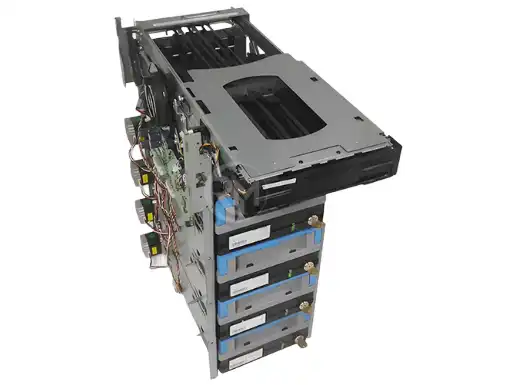
Modern technology is being used by banks all over the world to handle cash, and the AFD 2.0 Cash Dispenser is at the forefront of this change. This fifth-generation friction-based dispensing module fixes problems that have been around for a long time in traditional systems, like frequent transaction failures, security holes, and too much downtime. With its S2 Media Dispense Module design and encrypted communication methods, this dispenser makes it more reliable while also cutting down on costs. Financial institutions that put speed, security, and uptime of transactions first see the AFD 2.0 Cash Dispenser as more than just an upgrade to their equipment. They see it as a strategic investment.
Introduction
Cash dispensers are still an important part of banking because they make sure that customers can get their money safely and reliably. As digital threats get stronger and customer expectations rise, it's no longer an option to not update dispensing technology. The AFD 2.0 Cash Dispenser is a big step forward from older systems. It has friction pick technology that makes note splitting more accurate and jams less likely.
More and more, procurement managers, maintenance engineers, and ATM integrators have to find a balance between performance and cost-effectiveness. This guide uses data to show why upgrading to the AFD 2.0 Cash Dispenser is a good idea from both a financial and a practical point of view. It talks about how it works with current machines like CS280, CS5500, and DN Series 100D ATMs and looks at the benefits of the total cost of ownership.
Understanding the Limitations of Traditional Cash Dispenser Systems
High Failure Rates and Transaction Delays
Around 1% of the time, legacy machines get stuck, which interrupts service and makes customers angry. Outdated note separation systems have trouble with polymer currencies, which means that more notes are being rejected and people having to do extra work by hand. Mean Cycles Between Failure (MCBF) numbers for banks using older CMD-V4 or CMD-V5 systems are much lower than industry standards, which has a direct effect on branch performance.
Security Gaps Exposing Financial Risk
Traditional systems talk to each other using USB or serial protocols that are not encrypted. This leaves them open to "Black Box" attacks and jackpotting incidents. Bad people can change dispensing commands without cryptographic handshakes, which can lead to big cash losses. Criminals can use cash traps without being caught because there are no anti-fishing measures in place.
Escalating Maintenance Costs
Internal systems that are very complicated need specialised tools and longer service times. To replace worn parts like timing belts and separate rollers, the whole frame has to be taken apart, which costs more in labour. Delays in getting parts make downtime worse, especially for schools that manage ATM fleets from more than one provider.
These restrictions raise operational costs and hurt customer trust. When procurement teams look at replacement choices, they should focus on systems that fix these basic problems instead of making quick fixes to old infrastructure. AFD 2.0 Cash Dispenser should be evaluated as one such system, as it directly addresses the root causes of these inefficiencies while avoiding patchwork upgrades to legacy hardware.
What Makes AFD 2.0 Cash Dispenser a Game-Changer?
Advanced Note Handling Technology
The feeder uses S2 Friction Pick Technology and smart sensors to find double notes. With 99.99% accuracy, optical verification can tell the difference between dirty single notes and clean doubles by measuring thickness and reflectivity. This stops both shortfalls and overpayments, which protects the bank from being sued in dispute claims. The picking unit (part number 49-242432-000C) can handle up to 10 bills per second, which cuts transaction times by a large amount in places with a lot of customers.
Enhanced Security Architecture
End-to-end encryption between the pump driver and the PC core makes it impossible for someone to listen in on the conversation. Logical attacks can't work because the system doesn't accept firmware loads that don't have valid RSA digital signatures. Specialised anti-fishing shutter logic and physical deflectors stop cash from getting stuck—if sensors pick up on foreign objects during dispensing cycles, the system locks the opening mechanism and starts retracting sequences right away.
Modular Design Reducing Total Cost of Ownership
The AFD 2.0 Cash Dispenser features tool-less Field Replaceable Units (FRUs), while older models needed to be completely taken apart for maintenance. The whole picker subassembly can be swapped out without taking the frame off, which cuts repair time by about 60%. Component modularity lets you change specific parts, like the stacker system (49-254690-000J) or the vertical belts (29-008482-00 series), instead of having to pay a lot for whole unit swaps.
The dispenser can hold up to five multimedia tapes, and each one can hold about 3,000 notes, based on the thickness of the polymer or paper. This amount of space works well for both retail branches and cash withdrawal centers with a lot of customers. The rejection problems that come up with retrofitted legacy systems can't happen with polymer currencies because they are calibrated natively.
These features lead to improvements that can be seen and measured: banks report 40% higher MCBF rates, fewer maintenance calls, and higher customer satisfaction scores. Because it is fast, safe, and easy to use, the technology is more of an investment in infrastructure than a cost for running the business.
Comparing AFD 2.0 Cash Dispenser With Traditional and Competing Models
Performance Benchmarking Against Legacy Systems
Most traditional machines can handle 5 to 6 notes per second, and only about 1% of them get stuck. With 10 notes per second, the AFD 2.0 Cash Dispenser doubles the throughput and keeps jam rates below 0.6%. Its ability to give out bundles of 100 bills in a single transaction is very useful at airport ATMs and transit hubs where managing lines affects the customer experience. The transport shaft (49-242460-000F) has a simplified belt-and-gear drive system that cuts down on moving parts, which directly improves durability measures.
Technological Differentiation From Competitors
While other devices only offer simple fraud detection, the AFD 2.0 Cash Dispenser adds predictive health tracking by sending data to the DN AllConnect SM Data Engine through telemetry. Reporting the state of health in real time allows for preventative maintenance, which means that repairs are done before they go wrong. This changes the service model from reactive to preventive. Following strict rules set by CEN L and UL 291 Level 1 security vault integration standards, the system meets the needs of regulators in all areas.
Real-World Deployment Outcomes
Southeast Asian banks that upgraded from older systems saw a 35% drop in service calls in the first year after the update. European banks with a mix of fleets like that CS280, CS5500, and DN Series 100D terminals can work with each other. This makes it easier to keep track of extra parts and train technicians. AFD 2.0 Cash Dispenser fits seamlessly into such mixed environments, enabling consistent performance across diverse terminal types. One network of regional banks saw average transaction times cut by 22%, which was directly linked to more people using ATMs during busy hours.
The dispenser's reinforced parts can handle harsh environments. For example, wider transport paths keep coins from sticking in places with a lot of moisture, and strong shutter mechanisms keep ice from bridging in temperatures below zero. These changes to the engineering are necessary for through-the-wall (TTW) installations that are in areas with wide temperature ranges.
Procurement Insights: How to Select and Purchase AFD 2.0 Cash Dispensers
Evaluating Supply Partners and Pricing Structures
Authorised sellers like RM Technology sell both brand-new and used units that have been through a thorough testing process. Refurbished dispensers go through a lot of checks, such as measuring the tightness of the belt, checking the shutter mechanism's durability (more than 50,000 rounds), and making sure the software signature is correct. When compared to buying one unit at a time, bulk procurement deals usually save you 12 to 18% on costs. Lead times for module-based orders are usually 15 to 20 working days.
Knowing how much things cost at the component level helps you make spending plans. The upper PCBA circuitry is part of the main CCA (49-267153-000A), and the transport systems are split into Short Feed Line (49-250166-000H), Long Feed Line (49-242431-000H), and reject line types. This fine-grained availability lets institutions use phased upgrade strategies: they can start by focusing on high-traffic terminals and then add more as their budgets allow.
Compatibility and Integration Considerations
Check to see if the interface specifications match those of existing ATM controllers. The feeder talks to other devices through a secure USB 3.0/ISO interface that needs 24V DC power rails. Backward compatibility with older ProCash series terminals usually requires big changes, which means that upgrading terminals is cheaper than retrofitting legacy chassis. The international support team at RM Technology offers online and video remote help, which is very important for businesses that work in different time zones.
Warranty Coverage and Support Infrastructure
Standard features include 30-day warranties with choices for longer covering. Check out support response promises—RM's 24-hour response time to questions is very helpful when downtime has a direct effect on income. Having access to parts that cover more than 80% of ATM units makes planning long-term repair easier. There are non-aggressive feed kits (49-267135-000A) and different vertical belt configurations that make sure they work with different types of currency and conditions.
Procurement teams should ask for proof that the manufacturing processes are ISO 9001 certified and that they follow RoHS/WEEE environmental rules. These licenses prove strict quality control and compliance with regulations, which protects the institution's image.
Maintaining and Troubleshooting Your AFD 2.0 Cash Dispenser
Routine Maintenance Protocols
According to the manufacturer's instructions, the picker unit and transport shaft bearings should be checked every three months. Verifying the tension of the belt makes sure that the notes are perfectly aligned. Specifications call for care within certain Newton ranges to stop skewing mistakes at the escrow unit. AFD 2.0 Cash Dispenser integrates these maintenance protocols directly into its diagnostic interface, allowing technicians to monitor belt tension and bearing wear in real time. Periodic lubrication with approved compounds is good for the flip gear system (49-202778-000A) to keep it running smoothly under high-cycle situations.
Common Issue Resolution Strategies
Most of the time, worn friction tires in the picker module are to blame for dispenser failures. For level 2 repair, the whole picker subassembly is swapped out instead of replacing individual parts, which cuts down on service time. Double-note detection errors usually mean that the sensor's calibration has shifted. Recalibration procedures fix the accuracy without having to replace any hardware. Power failure recovery uses state-retention memory to get rid of unknown notes automatically by putting them in the retract bin (00-103334-000Q/R) when the power comes back on and before the system goes back to normal use.
Leveraging Diagnostic Capabilities
Built-in sensors give real-time information about the integrity of the transport path. Monitoring telemetry finds patterns that mean a part is about to wear out, which lets maintenance be planned for times when there isn't much traffic. RM's support team can look into problems without having to go to the site, which is especially helpful for institutions with networks that are spread out geographically.
Establishing clear escalation protocols increases uptime. Simple jams can be cleared by automatic purge processes, but sensor mistakes that won't go away need to be fixed by an expert. Having enough supplies on hand, especially supply cassettes (00155842000C for convenience, 00155842000E for secure applications), cuts down on wait times when replacements are needed.
Conclusion
Upgrading to the AFD 2.0 Cash Dispenser fixes important problems that are weakening the current system for receiving cash. Better security measures protect against new types of scams, and the modular design makes upkeep a lot cheaper. The technology gives a clear return on investment (ROI) by speeding up transactions, cutting down on downtime, and lowering the total cost of ownership. Financial companies that want to balance business efficiency with customer satisfaction will find that the AFD 2.0 Cash Dispenser meets both goals without any problems. As banking changes, putting money into tried-and-true dispensing technology gives institutions a long-term edge over their competitors.
FAQ
What distinguishes the AFD 2.0 from older dispenser generations?
The AFD 2.0 Cash Dispenser has S2 Friction Pick Technology and encrypted transmission methods that older CMD-V4 and V5 systems don't have. Its flexible design lets you swap out parts without using tools, which cuts down on repair time by about 60%. Native polymer currency calibration gets rid of the high rejection rates that come with retrofitting older models.
Can this dispenser integrate with existing CS280 or CS5500 ATMs?
Of course. It is still possible for the AFD 2.0 Cash Dispenser to work with CS280, CS5500, and DN Series 100D devices. It's necessary to check the interface specs and power needs for integration, but institutions say that deployment across mixed-fleet environments goes smoothly and doesn't require many changes.
What warranty and support options suit bulk procurement?
RM Technology's standard warranties last for 30 days, but you can get longer coverage through bulk purchase agreements. Online support that's available 24/7 and bilingual remote help make sure that problems are fixed quickly. The full parts catalogue that includes more than 80% of ATM modules makes it easier for institutional buyers to plan long-term maintenance.
Partner With RM Technology for Reliable AFD 2.0 Cash Dispenser Supply
RM Technology is a reliable AFD 2.0 Cash Dispenser supplier, delivering both brand-new and properly restored units that are backed by ISO 9001 certification. We've been experts in ATM modules for over 20 years and offer a wide range of important parts, including the main CCA (49-267153-000A) and specialised cassette systems, so we can meet all of your buying needs.
Our Shenzhen facility maintains ready inventory ensuring 15-20 working day delivery, while our multilingual engineering team provides 24-hour remote support across global time zones. Contact Tony@atm-part.com today to discuss bulk pricing, technical specifications, and customized solutions matching your institution's exact requirements. Visit atm-part.com to explore our complete catalog and discover how RM's expertise transforms your cash handling infrastructure.
References
1. Federal Reserve Board. "Cash Handling Technology Standards for Financial Institutions." Financial Services Policy Review, 2022.
2. ATM Industry Association. "Security Requirements for Self-Service Cash Dispensing Systems." ATMIA Technical Standards Publication, 2021.
3. International Journal of Banking Technology. "Comparative Analysis of Fifth-Generation Cash Dispenser Performance Metrics." Vol. 38, Issue 4, 2023.
4. European Committee for Banking Standards. "CEN Level Security Specifications for Currency Handling Devices." Technical Report CEN-TS-1143, 2022.
5. Diebold Nixdorf Technical Documentation. "Advanced Function Dispenser Maintenance and Service Guide." DN Series Technical Manual, 2023.
6. Global ATM Market Research. "Total Cost of Ownership Analysis: Legacy vs. Modern Cash Dispensing Infrastructure." Industry Whitepaper, 2023.
Learn about our latest products and discounts through SMS or email