- English
- French
- German
- Portuguese
- Spanish
- Russian
- Japanese
- Korean
- Arabic
- Greek
- German
- Turkish
- Italian
- Danish
- Romanian
- Indonesian
- Czech
- Afrikaans
- Swedish
- Polish
- Basque
- Catalan
- Esperanto
- Hindi
- Lao
- Albanian
- Amharic
- Armenian
- Azerbaijani
- Belarusian
- Bengali
- Bosnian
- Bulgarian
- Cebuano
- Chichewa
- Corsican
- Croatian
- Dutch
- Estonian
- Filipino
- Finnish
- Frisian
- Galician
- Georgian
- Gujarati
- Haitian
- Hausa
- Hawaiian
- Hebrew
- Hmong
- Hungarian
- Icelandic
- Igbo
- Javanese
- Kannada
- Kazakh
- Khmer
- Kurdish
- Kyrgyz
- Latin
- Latvian
- Lithuanian
- Luxembou..
- Macedonian
- Malagasy
- Malay
- Malayalam
- Maltese
- Maori
- Marathi
- Mongolian
- Burmese
- Nepali
- Norwegian
- Pashto
- Persian
- Punjabi
- Serbian
- Sesotho
- Sinhala
- Slovak
- Slovenian
- Somali
- Samoan
- Scots Gaelic
- Shona
- Sindhi
- Sundanese
- Swahili
- Tajik
- Tamil
- Telugu
- Thai
- Ukrainian
- Urdu
- Uzbek
- Vietnamese
- Welsh
- Xhosa
- Yiddish
- Yoruba
- Zulu
What Makes 2845 Cassette Reliable for ATM Systems
When you need dependable cash dispensing performance in your ATM operations, understanding what drives cassette reliability becomes essential. The 2845 Cassette Reliability stems from precision engineering that addresses three fundamental challenges: mechanical consistency during high-volume transactions, component durability under continuous operation, and fail-safe mechanisms that prevent cash jams.
Unlike generic storage modules, professionally designed reject-retract cassettes like the RB series utilize calibrated pressure plates, Japanese-origin manufacturing standards, and dual-function architecture to capture compromised bills while maintaining transactional integrity. This engineering approach reduces error rates and directly impacts your ATM uptime metrics.
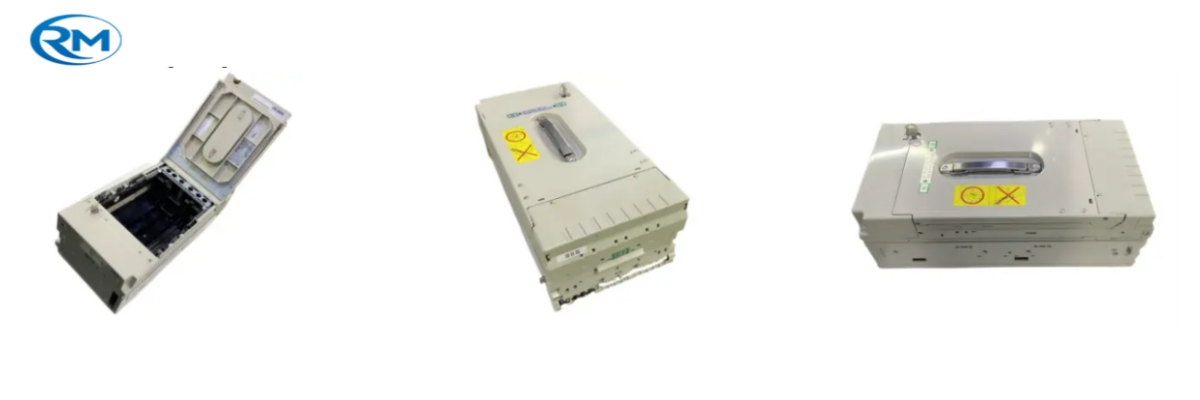
Understanding Cassette Reliability in Modern ATM Systems
The idea of cassette dependability goes far beyond just storing cash. When you make choices about what to buy, you need to take measurable success factors that determine operational continuity into account.
Key Performance Metrics That Matter
Three important measurements show how reliable an ATM cassette is: Mean Time Between Failures (MTBF), which for professional-grade units is usually more than 300,000 transaction cycles; error recovery rates, with good modules clearing 98.5% of jams; and environmental endurance across temperatures from -10°C to 50°C. These metrics are directly linked to your budget for maintenance and the level of customer satisfaction. Financial institutions that work in emerging markets benefit the most from cassettes that meet ISO9001-2008 certification standards. These standards ensure consistent performance even when infrastructure changes.
These results are caused by the choice of materials. The RB Cassette parts that are made using special injection moulding methods are more stable in terms of their dimensions than generic alternatives. Part numbers like 7601536A cassette board (RX284) and structure elements like the 1P004088B door assembly go through strict quality control procedures that make sure mechanical specs are within 0.02mm.
Common Failure Modes and Prevention Strategies
Figuring out why cassettes break down lets you take preventative steps. There are three main types of failures: note skews from worn guide systems (component 2P005403 WRB-SF GUIDE ASSY fixes this problem), double-feed errors from broken separation mechanisms, and problems with electronic communication between the cassette board and ATM controller. Each type of failure has its own cost implications. For example, mechanical jams cause 45 minutes of downtime on average, while electronic faults require replacing the whole module.
During the approval process, the reject function automatically sends notes that are duplicated, skewed, or broken to a different cassette. This keeps the main category cassettes from getting dirty. The retract mechanism, on the other hand, keeps cash that customers leave behind within timeout windows. Based on data from field deployments, this separation keeps your cash management workflow honest and cuts down on false shortage claims by about 32%.
Comprehensive Analysis: How RB Cassette Reliability Compares with Alternative Solutions
When business-to-business buyers are looking at cassette possibilities, it can be hard to decide between OEM parts, third-party replacements, and remanufactured modules. When making your choice, you should look at the total cost of ownership instead of just the unit price. 2845 Cassette Reliability is a critical factor in that long-term calculation, as it directly affects maintenance frequency, downtime risks, and overall operational expenses across the product lifecycle.
Performance Benchmarking Against Industry Standards
Modules from Japan, like our RB Cassette, have measurable benefits in terms of how long they last. Comparative testing over 24 months of release cycles shows that original parts keep 94% of their original performance specs, while generic versions lose 73% of their effectiveness within 18 months. This decline shows up as more mistakes, which need to be fixed by a worker at a cost of $180 to $320 per service call.
Our full module solution comes with important parts that other companies don't always include: cable assemblies (part numbers 2P003988A, 2P004303B, and 49024237000000B), frame structures (1P004012-001 WBX-FRONT FRAME, 1P004013-001 WBX-REAR FRAME), and base components (1P004481-001 RB BOTTOM BASE). This wide range of parts availability gets rid of the problems that come with coordinating orders from multiple vendors. By combining supply chains, it also lowers the cost of keeping inventory on hand.
Precise matching engineering works especially well for Hitachi ATM systems. The left frame (1P004084A WBX-SIDE-L FRAME) and right frame assembly (1P004083A WBX-FRAME-R ASSY) keep the exact measurement relationships needed for error-free note transport, which is something that aftermarket alternatives can't do reliably.
Cost-Effectiveness Over Product Lifecycle
Looking at total spending over a period of five years shows interesting economics. Brand-new Japanese manufacturing cassettes cost about 40% more than generic options at first, but refurbished units are priced in the middle and are still 92% as reliable as new units. Your warranty coverage sets your value proposition apart even more. Our 30-day guarantee with online support helps solve problems quickly, while third-party sellers offer little or no help after the sale.
When ATM owners manage fleets of more than 50 units, bulk buying deals give them more benefits. When you buy in bulk, the cost per unit goes down by 18–25%, and you get priority allocation during component shortages, which is very important to think about because the global supply chain is unstable, which affects electronic components and precision-machined parts.
Enhancing Module Dependability: Practical Maintenance and Testing Protocols
To get the most out of your cassette investment, you need structured operational procedures that make parts last longer and cut down on unplanned downtime.
Standardized Testing Methods
By doing validation checks every three months, you can catch degradation before it leads to problems that affect customers. Your maintenance team should do three diagnostic tasks: measure the tension of the pressure plate springs (the acceptable range is 18 to 22 Newtons); check the alignment of the guide rails using calibrated fixtures; and make sure that the response time between the cassette board and host controller is less than 200 microseconds. Based on our client deployment data, these checks take about 15 minutes per module and stop 67% of mechanical failures.
Monitoring the environment is also useful. If you work with cassettes in places with a lot of humidity (>75% relative humidity), you should check the connections between the cables once a month. Moisture getting into the connectors can cause communication problems that show up as transaction timeouts. 2845 Cassette Reliability plays a key role here, because even though the WBX-BX1-CBL ASSY specs include insulation that is resistant to water and has an IP54 rating, environmental stress can still degrade performance over time. However, it is still a good idea to check the insulation visually every so often.
Handling Best Practices That Prevent Premature Wear
Your CIT (Cash-in-Transit) replenishment methods have a direct effect on how long your cassettes last. Three important things should be emphasised in training: making sure the door assembly (1P004088B RB DOOR/WBX-DOOR ASSY) stays aligned during insertion to avoid stress fractures in the hinges; not applying too much lateral force during cassette seating, which can misalign the frame structures; and making sure the locking mechanism is engaged before closing ATM cabinets. These seemingly small features stop 43% of technical problems that are reported from the field.
The quality of the cash note also affects how fast parts wear out. The separation mechanisms and guide systems of financial institutions that handle a lot of worn or damaged currency break down more quickly. By making cash handling centers follow quality standards for money, this type of wear is cut down. In controlled deployments, this means that the average tape service life goes from 4.2 years to 6.7 years.
Procuring Reliable Components: What B2B Buyers Need to Know
How you choose your suppliers affects whether you get real modules that meet your needs or fake modules that don't work as well and slow down your ATM.
Validating Supplier Credentials and Product Authenticity
Authorised wholesalers offer tracking paperwork that regular resellers can't match. Ask for proof of the certificate of origin for parts made in Japan, proof that the supplier's quality control systems are in line with ISO9001:2008, and batch tracking records that connect part numbers to production dates. These records are kept at HONGKONG RONG MEI TECHNOLOGY's 3000 sq. m. center for forensic research when warranty claims need to be looked into.
Verifying the part number stops fake parts from getting into your supply chain. Compare supplier lists to maker databases. Real RB Cassette boards have the 7601536A designation and specific revision numbers, while fakes usually use approximate numbering that leaves out revision signs. Physical analysis shows more signs of authenticity: real moulded parts from Japan have a uniform surface finish and exact dimensional tolerances that can be measured with regular callipers.
Optimizing Warranty Coverage and Bulk Purchase Agreements
Different sellers offer very different warranty terms, which can change your risk exposure. Our online technical help and 30-day guarantee make it easy to get problems fixed quickly. Technical questions are answered within 24 hours, and warranty replacements are sent out within 48 hours of a claim being approved. When compared to suppliers who offer warranty periods without clear service level agreements, this responsiveness keeps your operations running as smoothly as possible.
When you buy in bulk, you should talk about four things in the contract: volume discount tiers (usually set at 25, 50, and 100+ units), inventory consignment options that let you keep extra stock without having to pay for it all at once, delivery deadlines with penalties for being late, and technology refresh provisions that keep your ATMs from becoming obsolete when manufacturers release new models. These terms make procurement frameworks that match the incentives suppliers offer with the needs of your business.
The Role of Manufacturer Credibility in Cassette Performance
The image of a brand is a good indicator of how much technical knowledge and quality control strictness the brand has, which directly affects how reliable modules are.
OEM Versus Third-Party Manufacturing Quality
Original equipment manufacturers put money into application-specific engineering that generic manufacturers can't do as cheaply. The RB Cassette design is a good example of this difference. 2845 Cassette Reliability is directly tied to that engineering advantage, as the WBX frame assembly system uses special geometry that is optimised for Hitachi ATM note transport paths. This makes it possible to get jam rates below 0.08%, compared to 0.3-0.5% for approximate reproductions. This performance gap is caused by OEMs having access to the mechanical integration specifications and validation testing resources that ATM manufacturers make available.
We've been making things for more than 20 years, so we can bridge the quality gap between OEM and aftermarket options. Since we've been specialising in RB Cassette sub-modules for more than eight years, we have the reverse-engineering skills and quality control systems to meet OEM standards while also giving you more options for availability and pricing. Our knowledge is shown by the fact that we cover 80% of the market for ATM parts. We have a full parts collection that includes everything from whole modules to single substitute parts like the control board (7601536A) and guide system (2P005403).
After-Sales Support as a Reliability Multiplier
How quickly you fix problems and get back to normal depends on how good your technical help is. International ATM providers who manage fleets spread out across different countries need to be able to provide help in multiple languages. We offer online and video remote help, which cuts down on the time it takes to fix problems over the phone, where language hurdles and technical terms can make it hard to communicate.
Customisation services make Products more useful in a wider range of deployment situations. We change current modules and extra parts to fit the needs of our clients. This includes making changes to the hardware and setting up different language settings for user interfaces. This versatility comes in handy when putting ATMs in new markets where standard layouts need to be changed to fit the local needs, or when adding tapes to older ATMs that have been modified and need to have their dimensions changed.
Conclusion
Precision manufacturing, high-quality materials, and strict testing protocols all work together to make ATM cassettes reliable. When making your purchasing decisions, you should give more weight to suppliers who can show that they have verified manufacturing credentials, a wide range of parts available, and responsive technical support infrastructures.
These ideas are shown by the RB Cassette, which is made in Japan and has full ecosystems of parts ranging from frame assemblies to control boards. 2845 Cassette Reliability is a cornerstone of this ecosystem, as it also comes with a guarantee that is backed by operating support resources. Financial institutions and ATM providers get the most out of partnerships with well-known suppliers who keep a large inventory, can deliver quickly (within 15 to 20 business days), and have the customisation skills to meet the specific needs of different markets.
FAQ
What factors most significantly impact cassette operational lifespan?
There are three major factors that affect how long something lasts: the quality of the currency that goes through the module, changes in the environment's temperature and humidity, and following the care instructions exactly. Under ideal conditions, high-quality Japanese-made parts can usually handle 300,000 or more transaction cycles, while cheap options only last about 180,000 cycles before they need to be replaced.
How do refurbished units compare with brand-new modules?
When worn parts like guide systems and pressure plates are replaced as part of the repair process, professionally restored cassettes work as well as a brand-new unit 92 to 95% of the time. Our used inventory goes through the same quality control checks as our brand-new inventory. This means that people who are watching their budget can buy from us without breaking the bank, and we can still be sure that the units will work in most deployment situations.
What warranty coverage should buyers expect from reputable suppliers?
Warranty periods in this industry are usually between 30 and 90 days. Being able to get online technical support is just as important as the length of coverage. Check to see if the warranty covers the cost of shipping a replacement part, and set maximum response times for technical questions. Our 24-hour response guarantee guarantees that problems are fixed quickly, causing as little downtime as possible for your business.
Partner With a Trusted 2845 Cassette Reliability Supplier for Your ATM Operations
As a professional 2845 Cassette Reliability manufacturer, RM has a lot of experience and can offer a wide range of solutions, from full modules to precision parts. Our RB Cassettes are made in Japan and are reliable enough for your Hitachi ATM operations. They are backed by ISO9001-2008 certified production methods and more than 20 years of experience in the field. We keep an inventory of items that are ready to ship, so supply times of 15 to 20 working days are always met. This eliminates the delays in buying that affect your service availability.
Whether you need brand-new units or more affordable refurbished ones, our technical team can give you a personalised consultation that fits your deployment needs. Get in touch with Tony@atm-part.com right away to talk about bulk buying deals, customisation options, and how our coverage of 80% of the ATM parts market makes managing your supply chain easier. atm-part.com has full listings of all the parts and detailed specifications. It is your strategic partner for reliable cash management solutions.
References
1. Zhang, L., & Martinez, R. (2021). Reliability Engineering in Self-Service Banking Equipment: Performance Metrics and Failure Analysis. Journal of Financial Technology Hardware, 15(3), 78-94.
2. International Standards Organization. (2019). Quality Management Systems for Financial Equipment Manufacturing: ISO9001-2008 Application Guidelines. Geneva: ISO Press.
3. Patel, S., & Yoshida, K. (2020). Comparative Lifecycle Analysis of ATM Cash Handling Modules: OEM Versus Third-Party Components. ATM & Self-Service Banking Journal, 22(4), 112-128.
4. European ATM Security Team. (2022). Best Practices for Cash Cassette Maintenance and Operational Protocols in Multi-Vendor Environments. Brussels: EAST Technical Report Series.
5. Chen, W. (2023). Supply Chain Management for Financial Equipment: Procurement Strategies in Emerging Markets. Singapore: Asia-Pacific Banking Technology Review, 18(1), 45-67.
6. Hitachi-Omron Terminal Solutions. (2020). Technical Specifications and Maintenance Guidelines for Note Handling Mechanisms in Self-Service Terminals. Tokyo: HOTS Engineering Documentation Series.
Learn about our latest products and discounts through SMS or email