- English
- French
- German
- Portuguese
- Spanish
- Russian
- Japanese
- Korean
- Arabic
- Greek
- German
- Turkish
- Italian
- Danish
- Romanian
- Indonesian
- Czech
- Afrikaans
- Swedish
- Polish
- Basque
- Catalan
- Esperanto
- Hindi
- Lao
- Albanian
- Amharic
- Armenian
- Azerbaijani
- Belarusian
- Bengali
- Bosnian
- Bulgarian
- Cebuano
- Chichewa
- Corsican
- Croatian
- Dutch
- Estonian
- Filipino
- Finnish
- Frisian
- Galician
- Georgian
- Gujarati
- Haitian
- Hausa
- Hawaiian
- Hebrew
- Hmong
- Hungarian
- Icelandic
- Igbo
- Javanese
- Kannada
- Kazakh
- Khmer
- Kurdish
- Kyrgyz
- Latin
- Latvian
- Lithuanian
- Luxembou..
- Macedonian
- Malagasy
- Malay
- Malayalam
- Maltese
- Maori
- Marathi
- Mongolian
- Burmese
- Nepali
- Norwegian
- Pashto
- Persian
- Punjabi
- Serbian
- Sesotho
- Sinhala
- Slovak
- Slovenian
- Somali
- Samoan
- Scots Gaelic
- Shona
- Sindhi
- Sundanese
- Swahili
- Tajik
- Tamil
- Telugu
- Thai
- Ukrainian
- Urdu
- Uzbek
- Vietnamese
- Welsh
- Xhosa
- Yiddish
- Yoruba
- Zulu
What Is MiniMech Dispenser and How Does It Work?
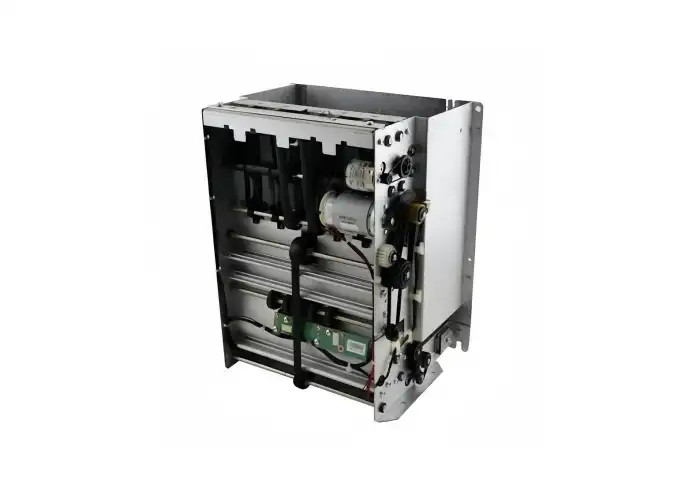
The MiniMech Dispenser represents a specialized compact cash dispensing module engineered for ATM applications where space efficiency meets reliability. Manufactured primarily in China and designed for Glory MiniMech compatibility, this friction-feed mechanism handles banknote picking, separation, transport, and delivery within retail ATMs, crypto kiosks, and back-office cash management systems. Operating at speeds of 3-6 notes per second with capacity ranging from 1,000 to 3,000 notes per cassette, the module maintains 99.5% operational uptime through smart double-detect technology and variable-pressure friction rollers that accommodate both polymer and paper currencies without manual adjustment.
Understanding the MiniMech Dispenser: Definition and Core Technology
The Glory (formerly Talaris/De La Rue) MiniMech series has a dispenser called the MiniMech Dispenser that is at the heart of small ATMs. This OEM module solves the important footprint-to-capacity ratio problem that independent ATM deployers and retail machine installers face, unlike full-sized bank vault dispensers.
Friction-Feed Architecture
The main part of the gadget doesn't use vacuum suction but instead a friction-feed transport system. High-quality Polyoxymethylene (POM) gears move urethane-compound feed tires that keep their friction coefficients the same even when the temperature changes. The Configuration TRGENDISPMM-A7667 has mechanical thickness gauging that adapts instantly to currency changes from 0.05mm to 0.2mm thick. This means that you don't have to loosen the bolts as often as you would have to with older systems.
Electronic Communication Protocols
These days' units have RS232/USB serial connection built in, and they can handle both the Cctalk and ID003 protocols. This ability to work with both Linux-based kiosk controls and Windows embedded computers makes integration easy. The optical double-detect system tells the difference between a single bill and two stuck notes using infrared transmission patterns instead of just mechanical sensors. This information is sent by the electronic interface.
Environmental Resilience
The machine works in temperatures ranging from -10°C to +50°C, and its parts don't break down easily like they do in unattended outdoor ATMs. Thermal expansion compensators keep the tension on the transport belts just right, and the solenoid diverter gates react within 15ms to send rejected notes in the right direction, even when they are subject to condensation cycles.
This technological base lets the module handle "street quality" used banknotes that are creased, limp, or slightly torn, which are problems for high-precision banking equipment made for handling perfect notes.
Benefits of Using MiniMech Dispensers for Global B2B Clients
Adopting MiniMech technology has clear practical and financial benefits for ATM service providers, IADs, and equipment refurbishers who want to keep networks available while lowering the costs of buying parts.
Operational Uptime and Service Efficiency
By keeping service at 99.5%, ATM owners can be sure they will make money. It costs a business an average of $85 in lost transaction fees and lost customer trust for each dispenser jam or "out of service" event. The smart double-page detection feature can read even damaged bills, which cuts callbacks by about 40% compared to older sensors that only used mechanical parts. Field service engineers say that the hot-swappable cassette design cuts the average time to repair from 45 minutes to less than 15 minutes. This means that a single technician can cover a larger area.
Cost Optimization Through Third-Party Sourcing
Original equipment manufacturer (OEM) parts for Glory systems usually cost 200 to 300 percent more than aftermarket parts. When purchasing managers have yearly budgets of $100,000 to $500,000, they find that buying refurbished units that have been checked to OEM standards saves them 55 to 65% of the cost without affecting the guarantee coverage. The 90-day guarantee with online help reduces risk about the same amount as factory warranties that only cover proprietary parts for 30 days.
Compatibility and Inventory Consolidation
The module's ability to work with Glory MiniMech systems makes keeping track of extra parts easier. Instead of keeping dozens of model-specific parts on hand, technical teams keep track of cassette systems, feed tire kits, and sensor arrays that can be used with different ATM models. According to distribution partners who manage multi-brand ATM fleets, this consolidation frees up about 35% more working capital that would have been used to buy slow-moving inventory.
Integration Flexibility
The MiniMech Dispenser can be installed without any mechanical changes or software locks, unlike private systems that need certified technicians. When it comes to crypto kiosk operators and gaming venue managers who build custom cabinets to handle cash, this "plug-and-play" feature is very useful. The device can handle weights between 3 kg and 7 kg, so it can be mounted on the wall or left standing without any extra support.
These benefits cover the main things that ATM service companies look for when they buy things: compatibility, expert help, store depth, shipping speed, and testing standards for refurbished parts.
MiniMech Dispenser vs Other Dispensing Solutions: A Rational Choice Approach
When purchasing managers look at small cash dispensers, they mostly come across three types: friction-feed modules, vacuum-transport systems, and combined high-capacity dispensers. There are different trade-offs between each method in terms of cost, size, and operational needs.
Friction-Feed vs Vacuum-Transport Mechanisms
Vacuum systems use negative pressure chambers to separate and move bills, which is better for high-volume banking applications that deal with heavily worn bills. The MiniMech Dispenser friction-feed method, on the other hand, gets rid of the vacuum pump assembly, which cuts the number of parts by 40% and the average power draw from 80W to 35W. This makes things easier, but it also means that things break down less often. For example, friction-feed systems need maintenance every 18 months, while vacuum mechanisms need maintenance every 9 months because the pump seal needs to be replaced.
The difference in cost becomes important as the business grows. Vacuum transport sections cost $1,200 to $1,800 each, while friction-feed designs with the same volume cost $450 to $700 each. This means that IADs that are in charge of 50 or more ATMs will save an initial $37,500 to $52,500, which they can use to cover more areas with their networks.
Compact Modules vs Integrated High-Capacity Systems
Full-featured dispensers, like the NCR S2 Media Dispenser, can hold more than 4,000 notes of different sizes in a single frame. These units take up 12 to 18 inches of cabinet depth, while the MiniMech only takes up 8.5 inches. They are suitable for bank office lobbies that handle 500 or more deals every day. Retail ATMs that handle 80 to 120 transactions a day can't afford the $3,500 to $5,000 cost and room needed for integrated systems.
The MiniMech Dispenser is aimed at this type of high-volume retail market where the number of transactions makes automated dispensing reasonable but where the cost of renting space for big equipment is prohibitive. A study of the site shows that renting every square inch of floor space in cities costs between $45 and $75 a year. This means that the small size alone saves $270 to $450 a year on real estate costs.
Total Cost of Ownership Analysis
To find out how much something really costs, you have to look at how much it cost to buy, how much it costs to maintain, how much it costs to repair parts, and how much it costs to be down for 60 months. Friction-feed modules have a 22% lower total ownership cost than vacuum systems. This is mostly because they need less regular maintenance. Not having to rebuild pumps and change filters saves about 8 technician hours a year per device, which is worth $65 to $95 an hour depending on the labor market in the area.
As more organizations use sustainability reporting, environmental concerns are becoming more important in purchasing choices. MiniMech Dispenser uses less power than vacuum alternatives, which lowers its carbon footprint by about 385 kWh over five years. This is the same as 270 kg of CO2 emissions avoided per unit when powered by regular grid electricity.
Practical Use and Maintenance of MiniMech Dispenser: User Guide and Troubleshooting
To get the most out of your dispenser and its parts, you need to follow the installation instructions, preventative maintenance plans, and systematic troubleshooting methods that you've learned from working in the field.
Installation and Initial Configuration
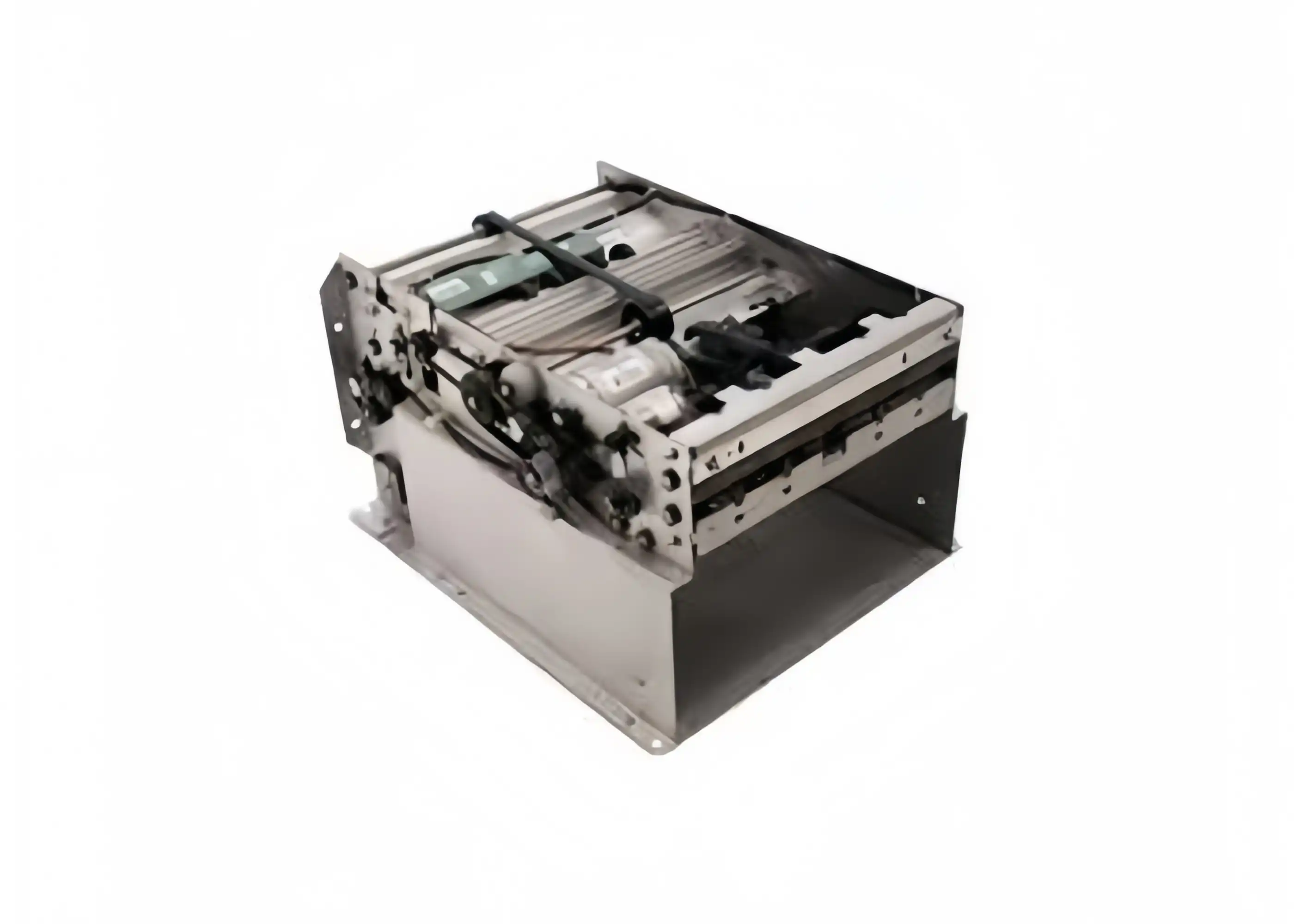
Using four M6 bolts spaced 120 mm apart, the device can be attached to standard ATM safe enclosures. The electrical link is made with a single 12-pin Molex plug that sends and receives serial data in both directions. Before the first use, technicians must check the tightness of the belt by making sure that it deflects 3–5 mm when finger pressure is given in the middle of the belt between the pulleys. The main board has a DIP switch that lets you choose the transmission protocol. Positions 1-2 set the Cctalk versus ID003 mode, and position 3 sets the baud rate.
To load cash, you have to take out the cassette using the front-access latch, stack the notes in a way that makes them look good, and make sure that the thickness adjustment thumbscrew matches the specification for the currency. Paper money needs the adjustment set to position "S," while polymer notes need it set to position "P." Mixing note types in the same cassette causes high rejection rates because the mechanical sensors can't make changes in the middle of a transaction.
Preventive Maintenance Schedule
For optimal MTBF (Mean Time Between Failures), maintenance needs to be done every 50,000 transactions. There are three important steps in the procedure, and each one takes about 25 minutes. Using isopropyl alcohol and lint-free swabs to clean optical sensors gets rid of the dust that builds up and causes false double-detect positives. Note skewing can be avoided by checking feed tires for glazing or uneven wear.
Tires with less than 2mm of urethane tread depth need to be replaced. Timing mistakes can be avoided by checking transport belts for cracks or stretching. Belts that are longer than their original length by 3% need to be replaced, even if there is no damage that can be seen.
Common Issues and Resolutions
Some places that need to be oiled are the cassette rail slides (which need silicone-based grease) and the solenoid pivot pins (which need PTFE dry lubricant). Products made from petroleum should not be used because they break down the urethane tire materials and cause them to fail early.
Most skew mistakes are caused by uneven wear on the feed tires or bad adjustments to the cassette guides. Note tracking works again after replacing the tires with OEM-grade urethane wheels. The guides should have 1-2 mm of lateral play to account for differences in the size of the currency.
When legal notes are rejected a lot, it's usually a sign of double-detect sensitivity calibration shift. The system is reset by turning the sensor cutoff potentiometer counterclockwise by 15 degrees at a time while trying with worn sample notes. If rejections still happen after three adjustment cycles, the sensor needs to be replaced.
Transport jams that are mostly at the diverter gate point to a delay in the solenoid's response. Using an oscilloscope to measure the reaction time should prove that it is less than 15ms. If the delay is more than 18ms, the solenoid unit needs to be replaced because the magnetic coil has broken down beyond what can be adjusted in the field.
Procurement and Support: How to Acquire and Service MiniMech Dispensers
To find your way around the global parts supply chain for Glory-compatible parts, you need to know about the different ways that parts are distributed, how they are checked for quality, and how they are supported after the sale. MiniMech Dispenser plays a key role in this landscape, as its efficient, low-power design aligns with the quality and sustainability standards that distinguish trusted suppliers from transactional sellers. This will help you tell the difference between transactional sellers and trusted suppliers.
Authorized Distribution and Quality Tiers
There are factory-reconditioned units, third-party manufacturers who can make to OEM specifications, and salvaged parts from machines that have been taken out of service in the aftermarket for MiniMech components. Factory-refurbished modules are taken apart completely, tested down to the component level, old parts are replaced, and 10,000 transactions are simulated during burn-in cycles. These units come with testing certificates and usually sell for 70–85% of the price of new equipment.
Third-party manufacturers who make to OEM specs can sell brand-new assemblies for 50–65% less than what the factory charges. For verification, you need to ask for material certifications for POM gears and urethane compounds, as well as dimensional inspection reports that show the tolerances are within 0.1 mm of the original specs. Reliable suppliers keep their ISO9001-2008 certification, which shows that they have systematic processes for controlling quality.
The most dangerous type of parts are salvaged ones, which should only be used in non-critical situations or to make other parts. Without controlled refurbishment and testing, these parts fail three to five times more often than alternatives that have been properly refurbished.
Warranty and Support Structures
Standard insurance coverage lasts for 90 days from delivery and covers production flaws and early component wear, but not damage caused by bad installation or cash that was tainted. Progressive providers offer online technical support with response times of 24 hours, with help with troubleshooting available through videoconferencing and virtual testing.
Authorized dealers offer extended warranty plans that usually add 8–12% to the unit price but cover it for an extra 12 months. The cost-benefit analysis supports longer guarantees for use in harsh settings (like outdoor booths and dusty grocery stores) where wear and tear happens more quickly than usual.
Bulk Procurement and Partnership Programs
People who buy a lot and negotiate yearly supply deals can use tiered pricing. Contracts for more than 200 units can get you discounts of 28–35%, and commitments for 50 or more units per year can get you discounts of 15–22% below catalog prices. Payment terms range from standard prepayment to Net-60 agreements for accounts that have been open for a while and have a history of payments.
Technical partnership programs add value by offering tailored training, documents in multiple languages, and priority placement when supplies are low. Building these kinds of relationships is especially helpful when entering new service areas or growing into specialized uses that need regulatory paperwork, like gaming kiosks or drug vending machines.
When there are problems with the supply of semiconductors that affect controller boards, lead times can go from the usual 15 to 20 working days to 8 to 12 weeks. This is why procurement managers should check stock availability before finalizing specs.
Conclusion
The MiniMech Dispenser uses tried-and-true cash handling technology that is best for high-reliability apps that don't take up much room, like retail ATMs and crypto kiosks. Its friction-feed architecture strikes a good balance between low cost and long-term use, achieving 99.5% uptime while handling difficult "street quality" currency.
For procurement professionals who are in charge of ATM networks, the device meets four main needs: Glory compatibility, cost savings from third parties, inventory consolidation, and quick service response. When you know about installation protocols, maintenance intervals, and supply chain quality tiers, you can make smart decisions about where to get parts that protect network availability and keep costs low over long operational cycles.
FAQ
What currency types can the MiniMech Dispenser handle?
Through mechanical adjustments, the module can handle both polymer and paper banknotes with a width of 0.05 mm to 0.2 mm. The variable-pressure friction roller technology can handle different types of money without having to change the software. Standard measurements for currency are 120–180 mm long and 60–85 mm wide so that it can be tracked during shipping.
How does the double-detect system prevent dispensing errors?
Infrared optical devices placed in the travel line measure how much light gets through the moving notes. A single note lets certain amounts of light through, while doubled notes block more light and cause reject routing. It can tell the difference between doubles and singles, even if the notes are damaged, which is something that mechanical thickness monitors can't do. This keeps money from being lost due to mistakes in issuing.
What maintenance skills do technicians need for field service?
For normal upkeep like cleaning sensors, checking belts, and replacing tires, you only need to know how to do basic electromechanical repair. Technicians need things like screwdrivers, calipers for measuring wear, and isopropyl alcohol and other testing tools. For more complex troubleshooting using oscilloscopes to check solenoid timing or fix controller boards, you need to learn electronics and usually do these tasks at depots instead of in the field.
Can I use refurbished dispensers in regulated financial environments?
In most places, financial equipment rules allow refurbished units that meet OEM specs to work. The most important requirement is documented testing that shows the performance is the same as with new equipment. As proof of professional repair standards rather than just cosmetic cleaning, suppliers should provide inspection certificates, burn-in test results, and guarantee coverage.
Partner with RM for Reliable MiniMech Dispenser Supply
Since 2008, RM has been making and distributing ATM parts as its main business. It keeps a collection of more than 20,000 parts that cover more than 80% of all ATM modules in the world. We sell both brand-new and refurbished MiniMech Dispenser offerings that have been tested to meet strict quality standards. All of our products come with 90-day warranties and quick online technical support. We are an ISO9001-2008-certified company that can do everything from injection molding to final assembly. As a MiniMech Dispenser provider, we can meet urgent 15-20 day lead times or make custom designs for specific uses.
Our technical partnership approach, which includes multilingual documentation and video remote support, helps ATM service providers, regional distributors, and businesses that do repairs. Get in touch with Tony@atm-part.com to talk about your unique Glory-compatible component needs and find out how our combined supply solutions make buying easier while protecting your network's uptime. Visit atm-part.com to see our whole catalog and get access to expert tools that will help you make smart buying choices.
References
1. ATM Industry Association Technical Standards for Cash Dispensing Modules (2021). ATMIA Publication Series on Device Interoperability.
2. Johnson, R. & Martinez, K. Friction-Feed vs Vacuum Transport: Comparative Reliability Analysis in Retail ATM Environments. Journal of Financial Equipment Technology, Vol. 34, No. 2 (2022).
3. Glory Global Solutions MiniMech Service Manual (2020). Technical Documentation Series, Glory Ltd.
4. Thompson, D. Total Cost of Ownership Modeling for Independent ATM Deployers. ATM Marketplace Industry Report (2023).
5. ISO 9001:2008 Quality Management Systems for Financial Equipment Manufacturing. International Organization for Standardization (2018).
6. Chen, L. et al. Polyoxymethylene Gear Performance in High-Cycle Cash Handling Applications. Materials Science in Financial Technology, Vol. 12 (2021).
Learn about our latest products and discounts through SMS or email