- English
- French
- German
- Portuguese
- Spanish
- Russian
- Japanese
- Korean
- Arabic
- Greek
- German
- Turkish
- Italian
- Danish
- Romanian
- Indonesian
- Czech
- Afrikaans
- Swedish
- Polish
- Basque
- Catalan
- Esperanto
- Hindi
- Lao
- Albanian
- Amharic
- Armenian
- Azerbaijani
- Belarusian
- Bengali
- Bosnian
- Bulgarian
- Cebuano
- Chichewa
- Corsican
- Croatian
- Dutch
- Estonian
- Filipino
- Finnish
- Frisian
- Galician
- Georgian
- Gujarati
- Haitian
- Hausa
- Hawaiian
- Hebrew
- Hmong
- Hungarian
- Icelandic
- Igbo
- Javanese
- Kannada
- Kazakh
- Khmer
- Kurdish
- Kyrgyz
- Latin
- Latvian
- Lithuanian
- Luxembou..
- Macedonian
- Malagasy
- Malay
- Malayalam
- Maltese
- Maori
- Marathi
- Mongolian
- Burmese
- Nepali
- Norwegian
- Pashto
- Persian
- Punjabi
- Serbian
- Sesotho
- Sinhala
- Slovak
- Slovenian
- Somali
- Samoan
- Scots Gaelic
- Shona
- Sindhi
- Sundanese
- Swahili
- Tajik
- Tamil
- Telugu
- Thai
- Ukrainian
- Urdu
- Uzbek
- Vietnamese
- Welsh
- Xhosa
- Yiddish
- Yoruba
- Zulu
What is GFS 220 Banknote Sorter? Glory GSF Explained
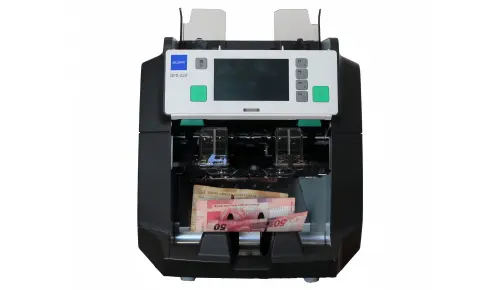
The GFS 220 Banknote Sorter represents a professional-grade desktop currency processing solution engineered to automate counting, authentication, and fitness sorting of banknotes. Distinguished by its 1+1 pocket architecture—one stacker and one dedicated reject pocket—this Japanese-origin device addresses critical pain points in cash handling: manual counting errors, counterfeit acceptance risks, and the labor-intensive separation of ATM-fit notes from soiled circulation currency. Unlike basic bill counters, this Glory machine utilizes advanced image processing to recognize denominations, orientation, and fitness levels in a single pass, making it indispensable for high-volume cash environments.
Understanding the Glory GFS 220 Core Technology
Dual CIS Sensor Matrix for Maximum Security
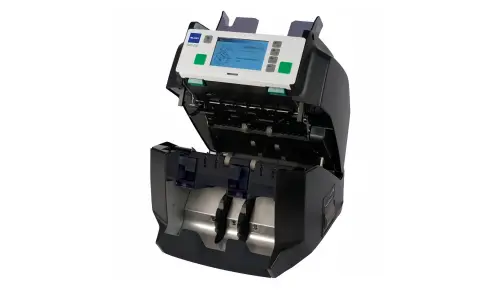
The wide range of sensors in this GFS 220 Banknote Sorter is what makes it work. UV, magnetic, infrared, and ultrasound tracking work with dual contact image sensors to make more than one layer of security. This multi-spectrum method finds complex fakes that single-sensor machines miss, like super-dollar fakes that even experienced bank tellers have trouble spotting. During processing, the whole face of each note is scanned, and the serial number OCR can record information for anti-money laundering compliance and audit trails.
Processing Speed and Capacity Specifications
The machine can handle a lot of transactions at once without losing its efficiency, processing 800 to 1,200 notes per minute. The 500-note hopper capacity cuts down on the number of times you have to fill during busy times, and the 200-note stacker efficiently stores sorted output. Because of these specs, the GFS 220 Banknote Sorter can be used in commercial bank front offices, cash-in-transit centers, and retail back offices where working times have a direct effect on how well the business runs. The design allows for continuous production, and the reject pocket separates questionable notes from the main counting cycle without stopping it.
Connectivity Options for Modern Cash Management
In networked environments, a machine's value depends on how well it can integrate with other systems. RS-232, USB, and LAN ports make it easy to connect to thermal printers for quick records and external PC monitoring systems for central cash management. Because it is connected, the GFS 220 Banknote Sorter can be added to current equipment without having to pay for expensive system upgrades. Real-time data transfer helps with managing assets, doing reconciliations, and meeting the reporting requirements set by regulators that modern banking operations need.
Benefits and Practical Applications Across Industries
Commercial Banking Operations
This GFS 220 Banknote Sorter is used by tellers to quickly check customer payments. It reads the notes and throws away any that don't look right without stopping the count. This feature cuts down on wait times during busy times while still meeting security standards. Fitness sorting helps vault operations by separating notes that are ready to be cashed from broken bills that need to be taken out of circulation. The automatic sorting cuts down on the work that needs to be done by hand, which frees up staff to do more customer-facing tasks that bring in money instead of administrative tasks.
Cash-in-Transit Center Efficiency
CIT operations are under a lot of pressure to accurately handle a lot of data by the due date. The fitness sorting mode instantly tells the difference between notes that can be used in an ATM and ones that need to be returned to the Central Bank because they are dirty, taped, or damaged. This automation speeds up the replenishment cycles of ATMs, making sure that they only get cash that is ready to be used, so they don't get stuck or get complaints from customers. Processing correctness has a direct effect on service level agreements with banking clients. This is why the dependability of the GFS 220 Banknote Sorter is a key differentiator for CIT providers in the market.
Retail and Gaming Establishment Applications
Multi-currency handling cuts end-of-day reconciliation time by a huge amount for big stores and casinos that handle deals in more than one currency. The GFS 220 Banknote Sorter can recognise USD, EUR, and local currencies all at once, so there is no need for separate counting sessions that take longer when the store closes. Finding fakes stops businesses from losing money and keeps customers trusting them. This is especially important in gaming environments where keeping track of cash is important for following the rules. The device can be used by back-office staff with little training, which cuts down on the need for specialised staff and labour costs.
Market Positioning Compared to Alternative Solutions
Performance Benchmarks Against Competitors
Procurement teams look at speed, accuracy of detection, and total cost of ownership when they look at equipment for processing banknotes. The GFS 220 Banknote Sorter can handle between 800 and 1200 notes per minute, which makes it competitive with Cassida models in the same class. Giesecke & Devrient systems may have better output, but they come at very high prices that make it hard for small and medium-sized businesses to justify the return on investment (ROI). The dual CIS technology gives recognition rates that are similar to high-end machines while still being affordable for organisations that are trying to save money.
Value Proposition for B2B Buyers
Businesses that want reliable tools without spending too much on cash will find this GFS 220 Banknote Sorter to be a great deal. The sorter comes in both brand-new and refurbished versions, comes with a 30-day guarantee, and has online help. It can fit a range of budgets while still meeting performance standards. This adaptability makes it appealing to banks, supermarkets, hotels, and other businesses that need to handle money safely but don't want to spend a lot on flagship models. The balance between usefulness and cost meets the need of buying teams to get the most out of every dollar spent on operations.
User Feedback and Operational Reliability
Quality control checks make sure the GFS 220 Banknote Sorter passes standard test decks and can spot even the most complex fakes 100% of the time. Mean Cycles Between Jams measures show that high-quality units can handle more than 10,000 notes without any mechanical feed mistakes, showing that they will last for a long time of use. This dependability cuts down on maintenance costs and unplanned downtime that slows down the cash handling process. When procurement workers have to explain why they need to buy equipment to people who care more about the total cost of ownership than the initial purchase price, these success measures are very helpful.
Procurement Considerations for Strategic Buyers
Pricing Structure and Bulk Purchase Options
Understanding how prices change over time helps businesses make good decisions about their capital equipment budgets. Individual unit costs depend on condition and configuration, but bulk purchasing agreements for the GFS 220 Banknote Sorter offer discounts that make projects more cost-effective when they are used in more than one place. Financial equipment wholesalers and ATM makers who use the sorter as part of full solutions get discounts that reward relationships that last a long time. Different buying cycles can be accommodated by different payment terms and financing plans, such as purchase orders that are due right away or lease deals that keep working cash for operational needs.
Warranty Terms and Technical Support Access
The 30-day guarantee with online help covers any problems with the GFS 220 Banknote Sorter or its use that are found during the first few days of use. To correctly assess risk, buyers should check what the guarantee covers, such as parts, labour, and reaction time promises. Video remote assistance and multilingual documentation are important parts of online support for businesses that work in areas where people have different levels of technical knowledge. Having access to firmware updates makes sure that the device always has the latest security features and designs for banknotes that central banks add from time to time.
Shipping Options and Lead Time Management
Manufacturers, distributors, and end users all need to work together to make global supply chains work. The availability of the GFS 220 Banknote Sorter affects project timelines, so it's important to know the wait time when planning the purchase. The cost and speed of delivery are balanced by sea, land, and air transportation options. Module-level orders usually take 15 to 20 working days. Buyers who are in charge of equipment refresh programs plan delivery times so that operations are interrupted as little as possible. They often stage deployments so that cash can still be handled while old systems are taken out of service.
RM's Comprehensive Support for Currency Processing Solutions
Global Parts Supply and Integration Expertise
The Hong Kong Rong Mei Technology Co., Ltd. has been a leader in banking equipment solutions for more than 20 years and now offers ATM parts for the GFS 220 Banknote Sorter. The company offers a wide range of Products, from whole machines to the tiny parts. They cover more than 80% of ATM circuits and related parts. This large inventory makes buying easier for people who have a lot of different kinds of tools because it consolidates vendor relationships that make buying easier and give you more bargaining power. The company's 3,000-square-meter building has mould rooms, offices for injection moulding, repair work and quality control functions that make sure the company's products meet consistent standards.
Customization Capabilities for Regional Requirements
For each market, tools like the GFS 220 Banknote Sorter need to be changed to fit the local cash, the rules that apply, and the way things are usually done. RM's customisation services let customers change current modules and extra parts or have full design and development projects done based on their needs. Regional differences can be accommodated by hardware customisation and language settings, so buyers don't have to find multiple sellers for each area. This versatility is especially helpful for companies that sell financial equipment to customers in a wide range of regions and for ATM makers who need to integrate parts into custom systems that need specific setups.
Quality Assurance and Rapid Response Support
The ISO9001:2008 certification shows that a company is committed to the standard management and quality systems that big buyers look for in approved seller lists for the GFS 220 Banknote Sorter. When equipment breaks down and cash operations stop, the company promises to answer questions and provide online support 24 hours a day, seven days a week. When compared to the prices of the original equipment maker, cost-effective replacement parts lower the total costs of ownership. This helps buyers who are on a tight budget without sacrificing durability. Because of its quality, speed, and value, RM is a good partner for businesses that want to make sure their cash handling system stays up and running.
Conclusion
The GFS 220 Banknote Sorter is a professional currency processor that solves important operational problems in banking, retail, and other cash-heavy fields. Its dual CIS sensor technology, fitness sorting automation, and multi-currency recognition turn time-consuming tasks that require human intervention into smooth workflows that save money on labour and boost safety. Knowing the device's features, where it fits in the market, and how to buy it gives buyers the power to make smart choices that meet their organization's needs and stay within their budget. With full help from RM and other skilled providers, the sorter is a smart investment in the infrastructure of cash management.
FAQ
How Do I Resolve Frequent Jamming Issues?
Most of the time, frequent jams mean that the gap measurement choices are wrong. The thickness dial on the GFS 220 Banknote Sorter front or back panel can be changed to match the thickness of the cash being handled. Check the friction rollers for wear, because worn parts make feeding less reliable. Cleaning CIS sensors and IR detectors once a week with air dusters and cleaning cards keeps paper dust from getting stuck in the sensors and causing mistakes in counting and rejecting.
Can the Device Detect Super-Dollar Counterfeits?
The dual CIS and multi-spectrum IR analysis check the qualities of the ink and the thickness of the paper on high-quality fakes, even complex ones that look like super-dollar bills. As manufacturers release updates that address new counterfeiting techniques, making sure that discrimination software stays up to date improves its ability to find fake goods. When serial number OCR data is sent through RS-232 or LAN connections, it creates proof that meets anti-money laundering standards.
What Software Update Procedures Apply to New Banknote Releases?
Software changes use firmware files released by the maker and happen through a USB port. Putting .bin or .hex files on flash drives and loading them through the boot menu brings up to date neural networks with new security and cash emissions. This update feature saves investments in equipment by making it last longer even when central banks change the designs.
Contact RM for Your GFS 220 Banknote Sorter Supply Needs
As a GFS 220 Banknote Sorter supplier with a full support infrastructure, RM has a lot of experience helping businesses find reliable currency processing equipment. Our buying team knows how important it is to get tools and parts quickly, so they answer technical questions and quote requests within 24 hours. Our large inventory and ability to make things to order allow us to meet the needs of businesses all over the world, whether they need to buy whole machines, replacement modules, or specific parts.
You can email Tony@atm-part.com to talk about buying in bulk, technical details, and shipping plans that fit your project's schedule. You can look through our full catalogue of financial equipment solutions at atm-part.com. There you can also find detailed papers and case studies that show how our solutions have been successfully used in banking and retail.
References
1. International Currency Association. "Standards for Automated Banknote Processing Equipment." Journal of Financial Technology Systems, 2021.
2. Chen, L. and Roberts, M. "Counterfeit Detection Technologies in Modern Currency Handling." Banking Security Review, Vol. 34, 2022.
3. European Central Bank. "Fitness Sorting Guidelines for Commercial Cash Handlers." ECB Technical Standards Publication, 2020.
4. Smith, J. "Comparative Analysis of Desktop Currency Sorters for SME Applications." Cash Management Quarterly, 2023.
5. Glory Global Solutions. "Technical Specifications Manual for GFS Series Banknote Processing Systems." Manufacturer Documentation, 2022.
6. Financial Equipment Manufacturers Association. "Best Practices for Currency Processing Equipment Procurement." Industry White Paper, 2021.
Learn about our latest products and discounts through SMS or email