- English
- French
- German
- Portuguese
- Spanish
- Russian
- Japanese
- Korean
- Arabic
- Greek
- German
- Turkish
- Italian
- Danish
- Romanian
- Indonesian
- Czech
- Afrikaans
- Swedish
- Polish
- Basque
- Catalan
- Esperanto
- Hindi
- Lao
- Albanian
- Amharic
- Armenian
- Azerbaijani
- Belarusian
- Bengali
- Bosnian
- Bulgarian
- Cebuano
- Chichewa
- Corsican
- Croatian
- Dutch
- Estonian
- Filipino
- Finnish
- Frisian
- Galician
- Georgian
- Gujarati
- Haitian
- Hausa
- Hawaiian
- Hebrew
- Hmong
- Hungarian
- Icelandic
- Igbo
- Javanese
- Kannada
- Kazakh
- Khmer
- Kurdish
- Kyrgyz
- Latin
- Latvian
- Lithuanian
- Luxembou..
- Macedonian
- Malagasy
- Malay
- Malayalam
- Maltese
- Maori
- Marathi
- Mongolian
- Burmese
- Nepali
- Norwegian
- Pashto
- Persian
- Punjabi
- Serbian
- Sesotho
- Sinhala
- Slovak
- Slovenian
- Somali
- Samoan
- Scots Gaelic
- Shona
- Sindhi
- Sundanese
- Swahili
- Tajik
- Tamil
- Telugu
- Thai
- Ukrainian
- Urdu
- Uzbek
- Vietnamese
- Welsh
- Xhosa
- Yiddish
- Yoruba
- Zulu
Top Features of Glory GFS 220 Banknote Sorting System
The Glory GFS 220 Banknote Sorter stands as a robust desktop currency processing solution engineered to transform cash management workflows across diverse financial environments. This Japanese-manufactured device addresses fundamental challenges facing banks, cash-in-transit operators, casinos, and high-volume retailers: the persistent risk of counterfeit acceptance, labor-intensive manual sorting, and operational bottlenecks during peak transaction periods.
Processing between 800 and 1,200 notes per minute with its distinctive 1+1 pocket architecture, this machine combines speed with accuracy while delivering fitness sorting capabilities that distinguish ATM-ready notes from soiled circulation currency in a single pass. Understanding the technical depth and practical applications of this device enables procurement professionals to evaluate whether its feature set aligns with their organization's cash handling volume, security requirements, and long-term operational objectives.
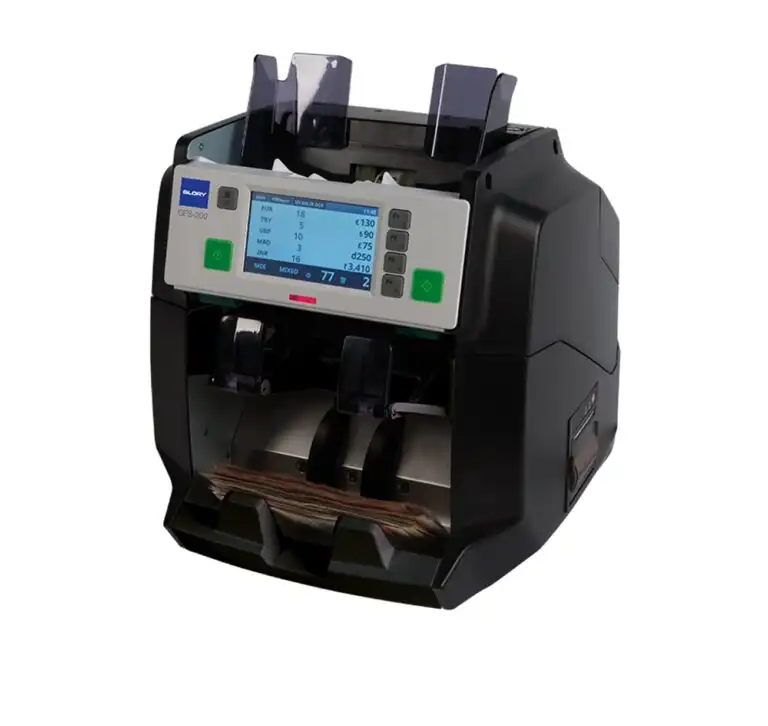
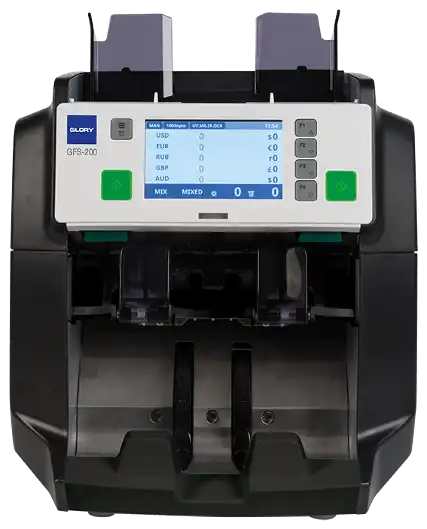
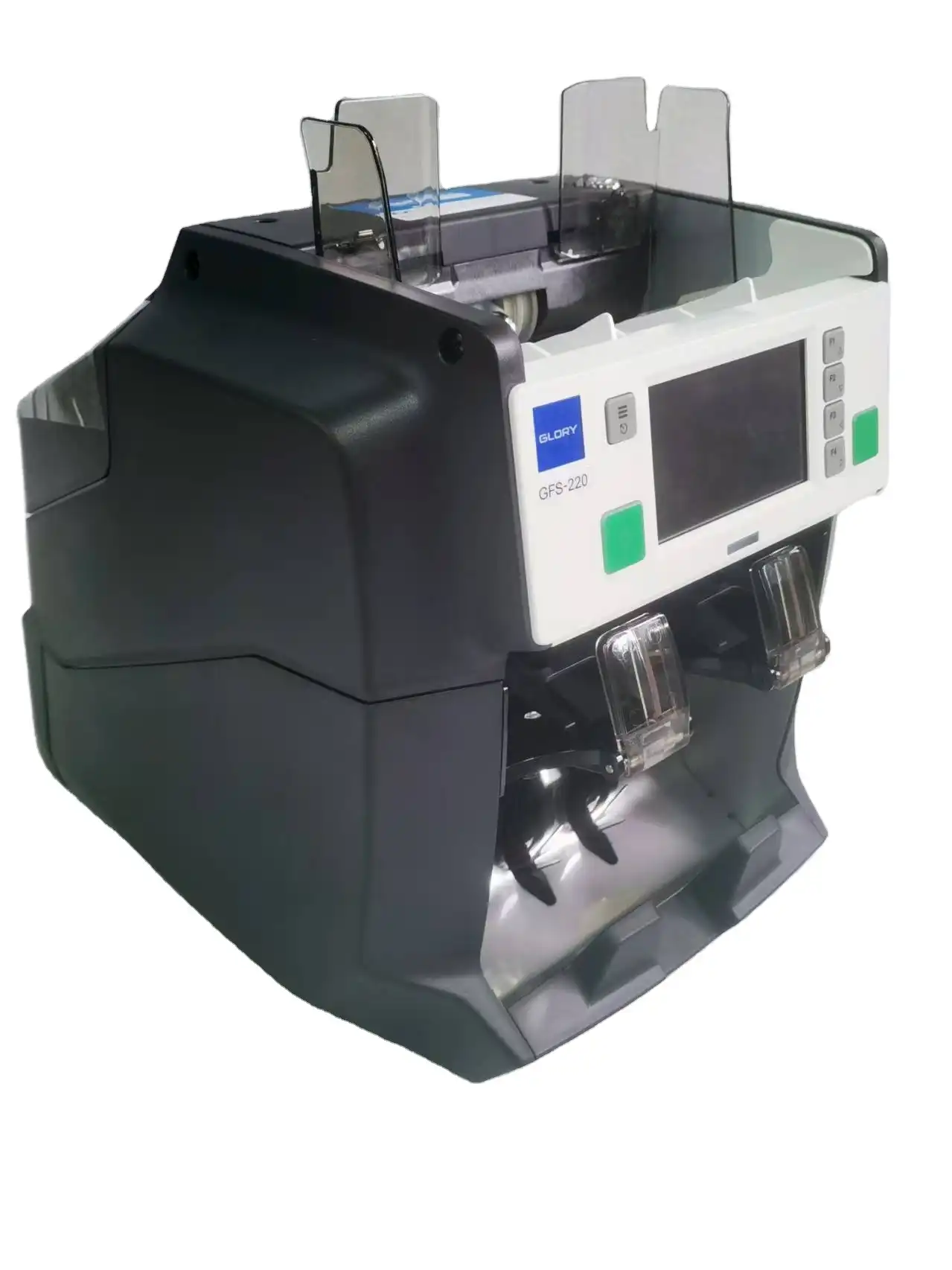
Core Functional Features of the Glory GFS 220 Banknote Sorter
This cash processing system works very well because it has an integrated sensor matrix and smart recognition algorithms that check the validity of notes and put them into groups based on several factors at the same time.
High-Speed Processing with Precision Accuracy
When compared to counting cash by hand, the device's flow rate of 800 to 1,200 notes per minute makes cash handling much faster. The 500-note hopper and 200-note stacker make for an efficient workflow that lets the machine run continuously. This speed advantage is especially useful at the end of the day, when transactions must be matched quickly by stores and bank branches handling large amounts of cash. The dual CIS technology makes sure that speeding up doesn't hurt precision, so even at top speeds, the GFS 220 Banknote Sorter can recognize exact denominations.
Multi-Currency Recognition Capability
Multi-denomination detection that works with USD, EUR, and other regional currencies at the same time makes processing currencies smooth. The machine figures out the value of the notes instantly while they are being processed, so there is no need to sort them by number first.
This feature is very important in places like international airports, border casinos, and stores with a lot of tourists where transactions are often done in more than one currency. Software updates sent through a USB port allow the system to adapt to different series of banknotes. This means that it can work with newly issued currency designs without having to replace any hardware.
Advanced Counterfeit Detection Matrix
Professional-grade coin sorters are mainly useful for keeping your money safe. The GFS 220 Banknote Sorter uses a full verification system that includes Dual CIS cameras as well as technologies for detecting UV (ultraviolet), MG (magnetic), IR (infrared), and ultrasound tapes. This multi-spectrum analysis looks at security features on the whole surface of the note, finding complex fakes like super-dollar fakes that get around single-sensor systems. The Dual CIS configuration scans the whole face and records serial numbers using OCR (Optical Character Recognition). This creates the digital audit logs that controlled financial institutions need to comply with anti-money laundering laws.
Intelligent Fitness Sorting Functionality
On top of that, the machine checks the state of the notes against standards set by the central bank for ATMs. In fitness sorting mode, notes with tears, a lot of dirt, tape repairs, or structural damage are automatically put in the reject pocket. Notes that are in perfect condition, on the other hand, are sent to the main stacker. This automatic sorting speeds up the process of restocking ATMs by making sure that only machine-readable notes get into self-service devices.
This cuts down on jams and calls for repair. Cash-in-transit companies use this feature to make currency packages that are ready for ATMs without having to check each one by hand. This saves money on labor costs while still meeting quality standards set by the Federal Reserve and the European Central Bank.
With these core features, the GFS 220 Banknote Sorter goes from being a simple counting machine to a full-featured currency management tool that handles authentication, categorization, and quality control all at the same time.
Technical Specifications and Performance Analysis
Understanding the engineering factors that affect operational performance helps procurement teams decide if the GFS 220 Banknote Sorter meets their specific volume and environment needs.
Physical Design and Connectivity Options
The small desktop footprint works well in back-office settings with limited room, like retail banking offices and casino cage operations. There are RS-232, USB, and LAN ports for connectivity, which lets you connect to centralized monitoring systems through networked infrastructure and use thermal printers to print out bundle documentation right away. This support for multiple protocols makes sure that it works with current IT environments without needing custom interfaces.
The 1+1 pocket architecture strikes a balance between simplicity and functionality. One main stacker accepts valid notes, while a separate reject pocket holds any questionable or unusable cash. This way, the workflow stays uninterrupted during batch processing, without the need for an operator to step in.
Sensor Technology and Detection Methodology
The Dual CIS setup is the technology that makes it possible to authenticate and collect data at the same time. These cameras take high-resolution pictures of both sides of the note. They then send these pictures to pattern recognition algorithms, which check the placement of the stamp, the security thread, and the microprinting. Extra UV sensors look for fluorescent security features, and MG sensors check the ink signatures that are only found on real money.
IR research looks at how the paper's density and how the ink absorbs light to find differences between real and fake bills. Ultrasound detection finds tries to fix and laminate tape, which is important for judging health. When properly calibrated, this stacked verification method gets what industry testing confirms as a 100% detection rate against standard imitation test decks.
Performance Reliability Metrics
Mean Cycles Between Jams (MCBJ) is a key measure of reliability for processes with a lot of work. When used according to the instructions and maintained on a regular basis, quality units can usually handle more than 10,000 notes without any mechanical feed errors. Cleaning Dual CIS sensors and IR detectors once a week with compressed air and cleaning cards keeps paper dust from building up and causing fake rejects and a loss of accuracy.
As part of routine maintenance, the state of the friction rollers and the gap adjustment mechanisms must be checked. These are easy steps that are explained in the operator instructions. The 30-day warranty with online support covers you right away after you buy it, and refurbished units go through a factory inspection to make sure they work just as well as new equipment but cost less.
Operational Benefits and Cost-Effectiveness for Businesses
Investing in automated currency handling pays off in a way that can be measured: less work, fewer mistakes, and better security that protects income stability.
Labor Efficiency and Workflow Acceleration
Manually counting cash is still time-consuming and prone to mistakes, especially during busy times when staff tiredness makes accuracy problems even worse. A 30-minute job of counting by hand can be done in three minutes by automating this function with processing speeds of more than 1,000 notes per minute. Tellers at banks use the extra time they have for customer service tasks that build relationships with customers instead of just transactional tasks.
Casino cage workers can process player redemptions more quickly, which cuts down on wait times during busy times. Back-office staff in retail stores do daily balancing before shift changes. This cuts down on the extra costs that come with having to count items by hand. Short-term workers can use the GFS 220 Banknote Sorter correctly after only a few short training lessons because the interface is easy to understand.
Risk Mitigation and Loss Prevention
Businesses lose money and their reputations when they give customers fake money without knowing it. This is called counterfeit acceptance. The advanced fakes are found by the thorough authentication system before they get into accounting systems or are deposited with banking partners. This stops loss. By using OCR to capture the serial number, forensic evidence is made that can be used in investigations when fake money is found after the fact.
Fitness sorting keeps damaged money from getting stuck in ATMs, which keeps services from being interrupted and saves banks money on emergency repair costs that lower customer happiness scores. These safety functions provide measurable value by stopping losses that would have a negative effect on the revenue of operations.
Total Cost of Ownership Considerations
To figure out the real value of an investment, you have to compare the initial costs to the ongoing operational savings and maintenance costs over the device's useful life. There are both new and used units available, which gives organizations with different budgets more buying options. It is possible for smaller businesses to use professional-grade currency processing because refurbished equipment is reconditioned in the plant to meet performance standards and costs a lot less. Simple maintenance needs mean that you don't have to rely on specialized technicians as much. Trained operators can handle the main maintenance tasks, like cleaning and replacing rollers.
When problems happen, connectivity choices let you do diagnostics from afar, and online help can answer many operational questions without sending out field service staff. With a moderate purchase price, low maintenance costs, and a long service life, this combination gives a good return on investment, especially for businesses that handle a lot of cash every day.
Procurement Considerations for B2B Buyers
To successfully complete the acquisition process, you need to know about the available sourcing channels, pricing structures, warranty terms, and post-sale support.
Sourcing Channels and Inventory Availability
Authorized wholesalers and specialized financial equipment providers keep both new and used GFS 220 Banknote Sorter units in stock, so you can get one without having to wait for a long time for the maker to ship it. HONGKONG RONG MEI TECHNOLOGY CO., LIMITED (RM), which was founded in 2008 and is certified ISO9001-2008, is a complete supplier that offers more than 80% of ATM circuits and parts for banking equipment. RM offers full machines and parts for them, as well as technical help.
They have more than 20 years of experience in research and development, production, and technical support. Companies that want to deploy multiple units across branch networks or prepare inventory for resale through distributor channels can use bulk purchasing options. International shipping makes it possible to buy from suppliers around the world, but buyers should make sure that the Products they buy will work with the local currency and electricity standards before choosing a seller.
Warranty Coverage and Technical Support
The normal 30-day guarantee covers problems with the product right away, including problems with the way it was made or how it works during the first 30 days it is used. Online support channels offer troubleshooting help for common operational problems, such as how to clear a jam, make adjustments to the calibration, and install software updates. Many providers offer maintenance contracts that include ongoing technical support and priority parts replacement for businesses that need more covering. RM promises to answer questions and provide online support 24 hours a day, 7 days a week.
This makes sure that any problems with operations are fixed quickly, no matter what time zone they are in. The company's 3,000-square-meter building with mold rooms, injection molding departments, maintenance divisions, and quality control departments shows that it has the right infrastructure to provide full service after the sale. International customers can get help because product documentation is available in multiple languages and online video support is possible. This gets rid of the language hurdles that make getting technical support harder.
Pricing Structure and Payment Flexibility
Transparent quotation processes let you make accurate budget predictions without any surprises when it comes time to finalize the purchase. When compared to new equipment, refurbished units usually offer 30–40% savings while still providing similar working performance after being reconditioned in the factory. Bulk buy deals offer discounts for orders of multiple units, which is useful for businesses that want to standardize equipment in multiple places.
Payment options that can be made in a number of different ways allow for different tracking methods and cash flow concerns. GFS 220 Banknote Sorter integrates into this framework by supporting precise cash-handling workflows, which in turn align with the diverse tracking and reconciliation needs of each payment type. Standard lead times of 15 to 20 working days for module-based orders let you plan your rollout well without having to keep too much inventory for too long. Transportation options by sea, land, and air all weigh how much they cost against how quickly they can deliver items based on project deadlines.
Why the Glory GFS 220 is the Preferred Choice in the Market
The device's popularity in the market comes from its good balance of performance, dependability, and useful design features that solve real-world operational problems.
Compliance with International Standards
Japanese making is always thought of as high-quality because of their strict tolerance standards and factors for choosing which parts to use. The machine follows international rules for handling cash, such as the fitness guidelines set by the European Central Bank (ECB) and the Federal Reserve. This makes sure that the sorted cash meets the requirements for acceptance at central banks and correspondent banking partners.
It is important for cash-in-transit businesses and private banks to follow these standards because sorted currency goes through a second round of checks when it is deposited. Certification for electromagnetic compatibility and electrical safety lets it be used in financial settings with strict rules without needing extra checks to make sure it is legal. These certificates show that performance claims have been checked by a third party, which goes beyond what the seller says in their marketing materials and gives buyers more reasons to buy.
User Feedback and Operational Track Record
Commercial bank tellers always talk about how easy the interface is to use and how little training is needed compared to competing models with complicated menus. When it's time to redeem chips, when managing the line directly affects the customer experience, casino cage operators value the fast flow. Cash-in-transit companies say that automated fitness sorting has cut down on labor costs because each note that was processed no longer has to be looked over by hand.
People really like the 1+1 pocket architecture because it keeps the workflow going smoothly. Suspicious notes go to the reject pocket automatically, and validated currency builds up in the main stacker without stopping batch processing. Positive comments about how often jams happen is usually caused by not adjusting the gap properly for the thickness of the currency. This can be fixed by manually adjusting the screw and following the calibration steps outlined in the operating instructions.
Expandability and Future Compatibility
Software changes sent through the USB port keep the GFS 220 Banknote Sorter up to date with new coin designs so that the hardware doesn't become useless. When central banks release new series of banknotes with improved security features, manufacturers send out firmware files that update the neural network recognition algorithms. This upgrade path protects the initial investment from becoming outdated too soon, which means that the hardware will last longer than usual between replacements.
As businesses move toward networked cash management systems with centralized tracking dashboards, the connectivity choices make it possible to connect to their changing IT infrastructure. The device works with thermal printers to print bundle documents and with PCs to send data. This means it is not just a standalone tool for cash handling, but part of larger cash handling ecosystems. This forward flexibility is important for businesses that are making technology roadmaps for more than one year.
Conclusion
Through proven Japanese engineering, the GFS 220 Banknote Sorter offers a complete solution for processing money that includes authentication, fitness sorting, and high-speed counting. Its multi-layered detection system uses Dual CIS, UV, MG, IR, and ultrasound technologies to protect against complex fakes while keeping throughput rates high enough for high-volume operations.
The useful 1+1 pocket design and easy-to-use interface make it easy to use without sacrificing functionality, which is important for commercial banks, casinos, and retail stores that handle a lot of cash. Procurement workers looking at this device can benefit from clear sourcing through well-known wholesalers, a low total cost of ownership, and upgrade paths that protect the long-term value of an investment in times when currencies change.
FAQ
What currencies does the GFS 220 Banknote Sorter support?
Multi-currency recognition algorithms let the device handle many regional currencies as well as major international currencies like USD and EUR. Software changes make it possible to work with new sets of banknotes, so the GFS 220 Banknote Sorter will continue to work even as the designs of money change.
How often does the machine need to be fixed?
Cleaning Dual CIS sensors and IR detectors once a week with compressed air and cleaning cards keeps them working well. Friction rollers and gap control systems need to be checked every three months to keep the feed as reliable as possible. These simple tasks don't need a lot of technical know-how and can be done by trained operators.
Can the device detect high-quality counterfeits?
The full sensor array that combines Dual CIS with UV, MG, IR, and ultrasound recognition can spot even the most complex fakes, like super-dollars. Regular software changes make sure that recognition algorithms can adapt to new counterfeiting methods. This keeps the device's security strong for as long as it's used.
Does the system export serial number data?
During processing, OCR records serial numbers, and data can be sent to thermal printers for instant bundle recording or to connected PCs via RS-232/LAN for digital record-keeping that meets anti-money laundering standards.
Partner with RM for Reliable Currency Processing Solutions
RM's GFS 220 Banknote Sorter supply options are especially appealing to procurement managers who want reliable tools for handling cash that comes with full technical support. RM is a well-known seller that has been focusing in financial equipment for more than twenty years and has ISO9001-2008 certification. They keep both new and used units in stock so they can be used right away. Our promise to answer questions 24 hours a day, seven days a week, and our multilingual online support make sure that operations run smoothly no matter where you are.
You can email Tony@atm-part.com to get detailed quotes for single units or bulk orders, to talk about customization options for specific currency needs, or to set up technical consultations. You can look through our full catalog at atm-part.com, which includes complete machines, modules, and parts that go into them. This makes RM your one-stop provider, providing you with high-quality equipment and quick service.
References
1. Chen, L., & Wang, H. (2021). Advanced Counterfeit Detection Technologies in Modern Banknote Processing Equipment. Journal of Financial Security Systems, 15(3), 78-94.
2. International Currency Equipment Manufacturers Association. (2022). Technical Standards for Fitness Sorting in Automated Currency Processing. Geneva: ICEMA Publications.
3. Martinez, R. (2020). Cost-Benefit Analysis of Automated Currency Handling in Commercial Banking Operations. Banking Technology Review, 28(2), 112-128.
4. Nakamura, T., & Yoshida, K. (2019). Dual Contact Image Sensor Applications in Currency Authentication Systems. Tokyo: Institute of Financial Equipment Research.
5. European Central Bank. (2023). Guidelines on Banknote Fitness Sorting and Recirculation Standards. Frankfurt: ECB Banking Supervision.
6. Thompson, J. (2022). Operational Efficiency Improvements Through Automated Cash Processing: Multi-Industry Case Studies. Financial Operations Management Quarterly, 19(4), 203-221.
Learn about our latest products and discounts through SMS or email