- English
- French
- German
- Portuguese
- Spanish
- Russian
- Japanese
- Korean
- Arabic
- Greek
- German
- Turkish
- Italian
- Danish
- Romanian
- Indonesian
- Czech
- Afrikaans
- Swedish
- Polish
- Basque
- Catalan
- Esperanto
- Hindi
- Lao
- Albanian
- Amharic
- Armenian
- Azerbaijani
- Belarusian
- Bengali
- Bosnian
- Bulgarian
- Cebuano
- Chichewa
- Corsican
- Croatian
- Dutch
- Estonian
- Filipino
- Finnish
- Frisian
- Galician
- Georgian
- Gujarati
- Haitian
- Hausa
- Hawaiian
- Hebrew
- Hmong
- Hungarian
- Icelandic
- Igbo
- Javanese
- Kannada
- Kazakh
- Khmer
- Kurdish
- Kyrgyz
- Latin
- Latvian
- Lithuanian
- Luxembou..
- Macedonian
- Malagasy
- Malay
- Malayalam
- Maltese
- Maori
- Marathi
- Mongolian
- Burmese
- Nepali
- Norwegian
- Pashto
- Persian
- Punjabi
- Serbian
- Sesotho
- Sinhala
- Slovak
- Slovenian
- Somali
- Samoan
- Scots Gaelic
- Shona
- Sindhi
- Sundanese
- Swahili
- Tajik
- Tamil
- Telugu
- Thai
- Ukrainian
- Urdu
- Uzbek
- Vietnamese
- Welsh
- Xhosa
- Yiddish
- Yoruba
- Zulu
SC Advance vs SCL vs SCXL: Key Differences in CPI Series
When looking at CPI's line of bill acceptors, the SC Advance, SCL, and SCXL models are different because they are designed and tested for different types of applications. The SC Advance Banknote Acceptor is the best option. It was made for places that handle a lot of cash and need better note recognition and fewer jams. The SCL, on the other hand, is for older systems that only need simple approval, and the SCXL, which has better security features, connects the two. When procurement teams know about these differences, they can better match the capabilities of devices with the needs of operations. This is especially important when looking for reliable financial equipment for places like banks, casinos, and stores where downtime directly affects revenue.
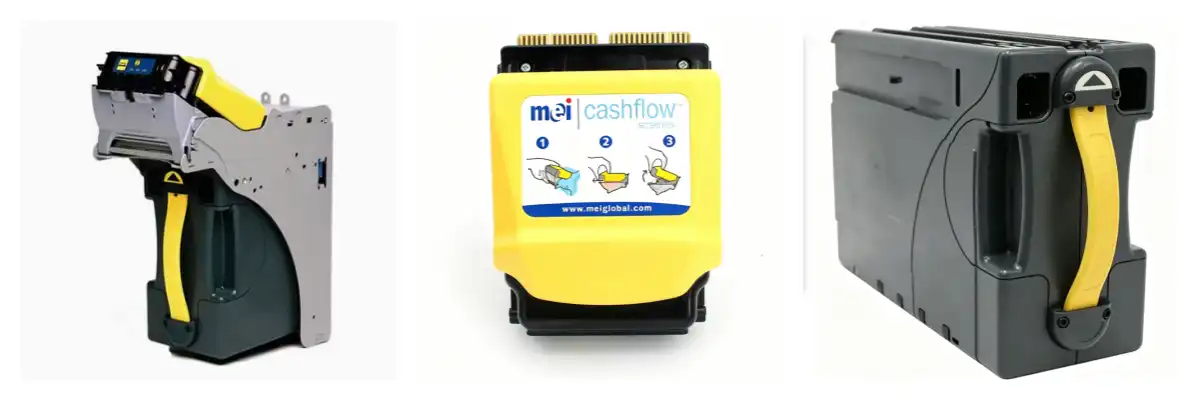
General Overview of CPI Series Banknote Acceptors
Crane Payment Innovations has become a world leader in technology for validating currencies. It works with companies in many fields, from gaming to transportation. The CPI line includes several product groups that are made to deal with different operational and environmental problems.
Engineering Philosophy Behind the CPI Lineup
The main idea behind CPI devices is to get the highest first-pass acceptance rates while keeping the total cost of ownership as low as possible. This series, the MEI SC Advance 600/900/1200/2200, is the result of decades of testing in harsh environments. These validators use full-width spectral scanning technology to look at bills across multiple wavelengths. They find security threads, watermarks, and differences in the paper composition that set real money apart from sophisticated fakes.
The technology solves three major problems that ATM business owners and banks have every day. Older validation systems often get mechanical jams, which costs a lot in service calls and lost deal chances. Customers have to keep putting in real money when the recognition fails, which hurts the user experience and makes operations less efficient. When businesses accept fake goods, they risk losing money and getting extra attention from regulators. Modern CPI validators deal with these problems by using highly precise transport systems, cutting-edge optical sensors, and software that can adapt to new ways of counterfeiting.
Shared Core Capabilities Across Models
All three models—SC Advance, SCL, and SCXL—are compatible with international currency standards and can recognise more than one currency when set up correctly. They work with power levels between 12V and 28V DC, so they can be used in a variety of electricity settings. Interface options include RS232, USB, and opto-isolated links, which make it possible to join to current control systems without having to make a lot of hardware changes.
Software compatibility is still one of the most important parts of the CPI environment. Validators talk to each other using standard protocols that make it easy for them to work with cash recyclers, kiosk control boards, and point-of-sale systems. In many cases, firmware updates can be sent directly, which cuts down on maintenance windows and makes sure that validators are up to date on new security features as coin designs change.
Technical Specifications Comparison: SC Advance vs SCL vs SCXL
Making choices about what to buy depends on knowing how differences in specifications affect performance in the real world. The comparison below shows why some models work better in certain deployment situations.
Performance Metrics That Matter
The SC Advance has an acceptance rate of over 98% on the first try for real bills, even when dealing with street-level bills that are worn, wrinkled, or slightly dirty. Processing speed is an important factor in high-throughput settings where transaction speed drives income. It takes an average of 2.3 seconds per transaction to go from input to stacking. Jam rates stay below 1 event per 30,000 transactions, which means that service calls happen much less often than they did with older systems.
On the other hand, the SCL model is meant for places where there are fewer transactions and note conditions are not as strict. For clean money, it usually accepts between 92 and 95% of it, and it takes about 3.5 seconds to process. While the SC Advance is more expensive than the SCXL, the SCXL is more affordable than the SC Advance and has more security features than the SCL. It has an acceptance rate of about 96% and a working speed of about 2.8 seconds.
Physical Integration Considerations
Dimensional compatibility has different effects on new setups and repair jobs. The SC Advance keeps the same mounting points as older SC chassis, so operators can upgrade validation heads without having to buy new enclosures. This planning thought saves a lot of money on capital costs when the fleet is upgraded.
The size of the cashboxes changes between types to meet the needs of different uses. The SC Advance can be set up in a variety of modular ways to hold anywhere from 600 to 2,500 bills. This means it can be used for both small kiosk installations and large gaming applications. Most of the time, the SCL can hold up to 1,200 notes, while the SCXL can hold up to 1,800 notes. These differences have a direct effect on how often services are provided and how operations are planned for cash-in-transit logistics.
Software Integration and Maintenance Protocols
How easy it is for validators to work with proprietary software platforms depends on how API compatible they are. Through CPI's Support and Test Systems (STS) software, the SC Advance Banknote Acceptor has full diagnostic features. This lets techs directly view detailed error logs, change sensor calibration, and check parameters for detecting counterfeits. This feature is very helpful for operators who are in charge of fleets that are spread out in different parts of the world.
Different firmware update mechanisms are more or less complex. The SC Advance can receive updates over-the-air through secure network connections, while SCL models usually need to be updated by hand using physical media. The SCXL can only be updated remotely for security patches. For big firmware updates, you may need to have help come to your location. These differences affect how long-term maintenance is planned and how the total cost of ownership is calculated, which is used to make decisions about what to buy.
Use Cases and Application Scenarios
Matching validator capabilities to operational environments maximises return on investment and reduces frustration caused by equipment specs that don't match.
SC Advance: High-Stakes, High-Volume Environments
The most difficult place for coin validators to work is on the betting floors of casinos. Every day, thousands of deals happen at slot machines and gaming kiosks, and players often use dirty, worn, or broken notes that they pull out of their pockets and wallets. The SC Advance does very well in this area because its unique transport belt design can handle tricky note situations without getting stuck. It can read 4-way barcodes, which works with TITO (Ticket-In, Ticket-Out) systems that are common in modern gaming.
The SC Advance's ability to find fake money is useful for retail back-office safes that have automated deposit features. Before money gets into the cash-in-transit chain, these applications need to be completely validated to keep stores safe from internal theft and fake acceptance. Accidental spills of drinks could damage internal electronics and stop operations, so the liquid drainage channel design comes in handy in those situations.
SCL and SCXL: Specialized Payment Terminals
The SCL works best in low- to moderate-volume situations where cost is more important than performance at the cutting edge. Small-format SCL devices are often used to pay for parking, change money at laundromats, and sell transit tickets. In these settings, the currency is cleaner and there are fewer transactions, so operators can live with the SCL's lower performance requirements in exchange for lower capital costs.
The SCXL fills in the gaps for operators who need better security but don't need all of the features of the SC Advance. Self-service postal kiosks, automated teller safes in community banks, and bill payment kiosks in stores are all common uses for SCXL. In these situations, better counterfeit spotting than the SCL is needed, but there aren't enough transactions to support the higher price of the SC Advance.
Troubleshooting and Support Network Access
Knowing the most common ways that things go wrong helps procurement teams plan maintenance resources well. The SC Advance has built-in LED diagnostic codes that let you know what's wrong. For example, red flashes mean that the stacker is full, while amber patterns mean that a sensor is blocked or that the calibration has moved. Handheld CPI diagnostic tools are used by professionals to read internal hex codes and do more exact debugging than just looking at LED signs.
Support network access is different for each model and buying channel. When operators buy from authorised distributors like HONGKONG RONG MEI TECHNOLOGY, they can get technical support in multiple languages, video-assisted troubleshooting, and faster access to replacement parts. The company offers support 24 hours a day, seven days a week, and module-level replacements can be sent out in 15 to 20 days. This meets the quick response needs of successful ATM and kiosk operations.
Procurement Considerations for B2B Clients
Strategic buying is more than just the price of the original purchase. It also includes the total costs of ownership and the dependability of the supply chain.
Cost-Effectiveness Analysis
When figuring out how much something costs, unit pricing is just the beginning. The SC Advance Banknote Acceptor costs more than other models, but its better performance and lower maintenance needs make up for it. When operators compare the total cost of ownership of different models, they should look at how often service calls happen, how much it costs for transactions to be interrupted, and the risk of counterfeiting.
Through volume discounts and service level agreements, bulk buy deals let you get more value. Hong Kong RONG MEI TECHNOLOGY sets its prices to encourage long-term partnerships by giving savings that start at 10 units and go up to enterprise-level deployments of more than 100 units. The company's 30-day warranty and online support lowers the risk of new deployments right away.
If owners are willing to accept shorter warranty terms, refurbished units can help them save money. As part of RM's refurbishment process, all sensors are re-calibrated, the transport mechanism is replaced, and the firmware is updated to the latest version. These units are delivered in perfect working order and are especially good for test projects or expanding into new areas with uncertain transaction amounts.
Supply Chain Strategies
Buying from authorised dealers keeps buyers safe from fake parts and makes sure they have access to real CPI parts. Hong Kong Rong Mei Technology keeps a large collection that includes more than 80% of all the ATM circuits and related parts that are on the market. This range makes it possible to buy everything in one place, which makes managing vendors easier and increases buying power.
Reliability in lead time makes or breaks deployment plans. RM's standard lead time of 15 to 20 working days for module-level parts gives procurement teams peace of mind when planning installations. The company's ERP systems let buyers see real-time inventory levels, so they can be sure that goods are in stock before they place their orders. There are different levels of urgency and price limits for sea, land, and air travel.
Customisation options add strategic value on top of standard component supply. RM engineers can change existing modules to meet specific mounting needs, make changes to the firmware to account for differences in regional currencies, or set up their own diagnostic protocols. This versatility is very important when adding validators to custom kiosk designs or changing equipment for new markets with specific working needs.
How to Choose Between SC Advance, SCL, and SCXL?
F-1 Criteria Screening Approach
Set non-negotiable requirements that get rid of options that aren't good right away. The main limit is the expected number of transactions. Environments that handle more than 1,000 transactions per day usually need SC Advance performance levels to keep uptime acceptable. Keep in mind that the secondary filter sets quality expectations. Places that accept worn-out street money need the SC Advance's better handling abilities, while controlled areas with cleaner money can look at SCL or SCXL alternatives.
The third screening factor is the need for security. The SC Advance Banknote Acceptor's full-width spectral analysis and magnetic sensing are needed in high-risk areas where sophisticated counterfeiting operations are likely to happen. The SCXL's security features may be enough for lower-risk uses, while the SCL is better for places where counterfeiting isn't a big problem.
F-2 Demand Matching Framework
Once screening has gotten rid of options that aren't good fits, demand matching lines up the options that are left with practical goals. When operations are focused on reliability, minimising jam rates and first-pass acceptance measures are given the most weight. This is where the SC Advance clearly shines. Businesses that care about costs may put more weight on the initial capital expenditure, which could mean that they choose SCL or refurbished SC Advance units over brand-new premium models.
Another dimension of matching is integration complexity. Operators who already have SC-series setups can get the most out of the SC Advance's backward compatibility, which saves them the cost of replacing the chassis. If you are starting from scratch with a greenfield rollout, you may find that SCXL models offer a better price-to-performance mix without any limitations on retrofitting.
The supply of maintenance resources affects the best pick. Companies with skilled technicians on staff can get the most out of their SC Advances by regularly calibrating and maintaining them. Operators who aren't very technical might like the simpler SCL architecture, which has fewer adjustment points and easier ways to fix problems.
Practical Recommendations by Industry Vertical
Gaming companies should use the SC Advance on all slot floors and cages to keep performance consistent and make training technicians easier. The model's TITO connection and design for liquid drainage make it great for use in casinos.
When retail chains use automated safes, the SC Advance gives them the best protection against counterfeits and standardises service procedures across all of their locations. The device's diagnostic features allow for centralised tracking and planning of preventative upkeep.
Transportation authorities that use ticket vending machines in stations with mild foot traffic find that the SCXL has the best mix of security features and capital cost. Standard transit payment scenarios are handled well by the model, which doesn't over-invest in features that aren't needed.
When adding interactive teller machines, community banks should carefully look at their estimates of the number of transactions. Branch sites with a lot of traffic can afford to buy SC Advance units, while places with less traffic can use SCXL units instead.
Conclusion
The choice between SC Advance, SCL, and SCXL comes down to operational needs and the current state of the environment. The SC Advance Banknote Acceptor has unbeatable performance for difficult tasks where uptime, security, and the ability to handle multiple notes are worth the extra cost. The SCXL meets the needs of the middle market and has a good mix of features, while the SCL is better for deployments on a budget and only needs to meet basic validation standards.
To do procurement right, you need to be honest about how many transactions you expect, what quality standards you have, and your maintenance skills. Working with seasoned distributors like HONGKONG RONG MEI TECHNOLOGY guarantees access to original parts, technical know-how, and a reliable supply chain that turn equipment specs into operational success.
FAQ
Does the SC Advance support recognising more than one currency?
The SC Advance validator has hardware that can recognise more than one cash when set up with the right software. When placing an order or updating firmware, operators must list the types of currencies that are supported. The spectral analysis technology in the device can adapt to different currency security features, but each currency needs its own set of calibration data. Get in touch with your distributor to make sure they can accept your local cash.
What are the differences between these three models when it comes to maintenance?
Every 20,000 to 30,000 rounds, non-abrasive cleaners should be used to clean the sensors on SC Advance units, and they should be calibrated once a year. The SCL needs to be cleaned at the same times, but it can't be diagnosed remotely, so it needs to be serviced on-site. With only average remote troubleshooting help, the SCXL is in the middle of these two extremes. All models benefit from having their transport belts inspected and replaced as recommended by the manufacturer.
Is it possible for me to get these validators through bulk purchasing?
Authorised wholesalers like HONGKONG RONG MEI TECHNOLOGY offer discounts for buying in bulk starting at 10 units. When you buy in bulk, you can get longer warranties, faster access to technical support, and custom service level agreements. The company keeps enough inventory on hand to meet enterprise-level orders within standard lead times. This means that large-scale operators can use fleet deployments.
Partner with RM for Your SC Advance Banknote Acceptor Supply Needs
Every partnership that HONGKONG RONG MEI TECHNOLOGY works on benefits from its more than 20 years of experience in ATM parts and financial equipment. We have a large selection of brand-new and used SC Advance Banknote Acceptor units in stock, all of which come with 30-day guarantees and free online help. We keep lead times of 15 to 20 working days and promise to answer questions 24 hours a day because we know how important it is for you to get things deployed quickly.
As a well-known and certified SC Advance Banknote Acceptor provider under ISO9001-2008, we can tailor our services to meet your exact operating needs, ranging from localising the software to making changes to the mounting. Get in touch with Tony@atm-part.com right away to talk about your validator needs and find out how our one-stop procurement approach can make your supply chain easier and lower your total cost of ownership.
References
1. Crane Payment Innovations. (2021). SC Advance Bill Validator Technical Specification Guide. CPI Product Documentation Series.
2. International Currency Technology Association. (2020). Standards for Bill Validator Performance Metrics in Financial Services. ICTA Technical White Paper.
3. Gaming Standards Association. (2019). TITO Protocol Implementation Guidelines for Currency Validators. GSA Protocol Documentation.
4. Retail Technology Institute. (2022). Total Cost of Ownership Analysis for Automated Cash Handling Equipment. RTI Financial Services Research.
5. Association of Payment Equipment Manufacturers. (2021). Counterfeit Detection Technologies in Modern Currency Validators. APEM Industry Report.
6. Financial Equipment Service Association. (2020). Preventive Maintenance Best Practices for Bill Acceptor Systems. FESA Technical Bulletin.
Learn about our latest products and discounts through SMS or email