- English
- French
- German
- Portuguese
- Spanish
- Russian
- Japanese
- Korean
- Arabic
- Greek
- German
- Turkish
- Italian
- Danish
- Romanian
- Indonesian
- Czech
- Afrikaans
- Swedish
- Polish
- Basque
- Catalan
- Esperanto
- Hindi
- Lao
- Albanian
- Amharic
- Armenian
- Azerbaijani
- Belarusian
- Bengali
- Bosnian
- Bulgarian
- Cebuano
- Chichewa
- Corsican
- Croatian
- Dutch
- Estonian
- Filipino
- Finnish
- Frisian
- Galician
- Georgian
- Gujarati
- Haitian
- Hausa
- Hawaiian
- Hebrew
- Hmong
- Hungarian
- Icelandic
- Igbo
- Javanese
- Kannada
- Kazakh
- Khmer
- Kurdish
- Kyrgyz
- Latin
- Latvian
- Lithuanian
- Luxembou..
- Macedonian
- Malagasy
- Malay
- Malayalam
- Maltese
- Maori
- Marathi
- Mongolian
- Burmese
- Nepali
- Norwegian
- Pashto
- Persian
- Punjabi
- Serbian
- Sesotho
- Sinhala
- Slovak
- Slovenian
- Somali
- Samoan
- Scots Gaelic
- Shona
- Sindhi
- Sundanese
- Swahili
- Tajik
- Tamil
- Telugu
- Thai
- Ukrainian
- Urdu
- Uzbek
- Vietnamese
- Welsh
- Xhosa
- Yiddish
- Yoruba
- Zulu
OEM NMD Reject Cassette Solutions for ATM Service Providers
When an ATM goes offline because the reject bin is full or misfiring, the cost accumulates fast. NMD reject events — where the dispenser module routes notes to the cassette due to thickness errors, sensor faults, or feed failures — are among the most common causes of ATM downtime in third-party service networks. This guide walks through how to identify, reduce, and prevent these issues, and explains why choosing the right OEM reject cassette solution, like the Glory NMD50 series, directly protects your uptime and your bottom line.
Understanding NMD Rejects in ATM Service Context
Before picking out a new cassette, it's helpful to know what causes a reject event and how it's different from other faults that affect cassettes.
What Is an NMD Reject Event?
When the dispenser's transport system finds a problem, like double feeds, twisted notes, thickness variance, or optical sensor misfires, it sends the note to the reject cassette instead of finishing the transaction. This is called an NMD reject. Some error codes that are often linked to reject events on Glory ATM platforms are transport jam errors, double-detect faults, and bin-full alerts.
Root Causes: More Than Just Worn Parts
Usually, after 50,000 to 100,000 transactions, most reject spikes are caused by three things: mechanical wear on the feed tires and rollers; dust or ink powder on the sensor prisms; and software miscalibration when dealing with mixed note quality. All three of these things happen faster when humidity, temperature changes, and flying particles are present.
How Rejects Differ From Other Cassette Faults
A reject cassette fault is not the same as a dispense cassette fault. The dispense cassette holds notes that are ready to be paid out, and the reject cassette holds notes that the machine has marked as being problematic. When the reject bin is full (200–250 notes on NMD50-class machines), the ATM stops working. This means that the reject cassette's capacity and sensor accuracy are directly linked to the operation of the machine.
Troubleshooting and Reducing NMD Reject Rates
A well-organized diagnostic method can cut down on fail rates by a large amount before a part is even replaced.
Start With Error Code Interpretation
Before you open any screens, pull out the diary log. A "Double Detect" fault on a Glory NMD50 system means that the IDD thickness sensor is broken, while a "Skew Error" fault means that the guide rails are worn out or the roller pressure isn't even. Matching the code to the function saves time and keeps you from having to swap out parts that aren't needed.
Preventive Maintenance That Actually Works
According to data from the industry, ATMs that are serviced every three months have about 30% fewer downtimes due to NMD reject than ATMs that are fixed only when they break down. Cleaning optical sensors with compressed air, wiping down friction rollers with isopropyl alcohol, checking guide rail tolerances (keep play below 1.5 mm), and checking belt tension across the transport path are all useful things to do every three months.
When a Case Study Speaks Louder Than a Spec Sheet
A third-party ATM operator in Southeast Asia with 120 Glory machines cut the number of reject cassette swaps they had every month by 40% when they switched from generic aftermarket cassettes to OEM-spec units with calibrated passive input geometry. Consistent bin-presence sensor orientation was the most important thing. This is something that generic cassettes often miss. This is an example of why part number correctness is important at the point of sale.
Evaluating and Choosing OEM NMD Reject Cassette Solutions
Not all reject cassettes perform equally under field conditions. Here is what separates a cassette that holds up from one that creates new problems.
OEM Precision vs. Generic Alternatives
Generic cassettes are priced lower, but the trade-off is tolerance variance. OEM-spec units for the Glory NMD50 platform are manufactured to match the chassis docking rails exactly, ensuring the locking mechanism engages without play. Loose docking causes vibration-induced disconnects during high-traffic cycles — a failure mode that triggers false "bin full" alerts and unnecessary service calls.
The table below compares key performance attributes between OEM-spec and generic reject cassettes:
| Attribute | OEM-Spec Cassette (NMD50) | Generic Aftermarket |
|---|---|---|
| Sensor alignment accuracy | Calibrated to Glory chassis spec | Variable; often ±3–5 mm |
| ISO-12209 physical security | Yes | Rarely certified |
| Part number traceability | Full (e.g., 1038242, A006676) | Often absent |
| Bin-full alert reliability | Consistent | Inconsistent |
| 30-day warranty coverage | Available | Varies by supplier |
Key Technical Features Worth Examining
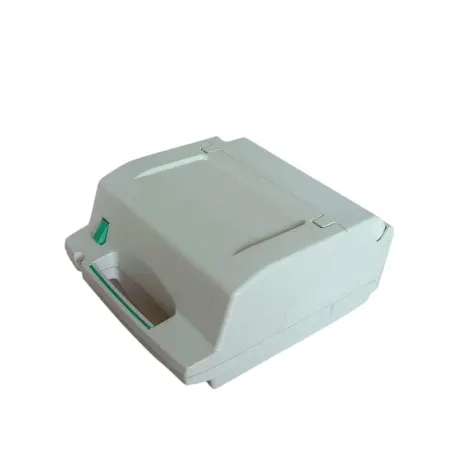
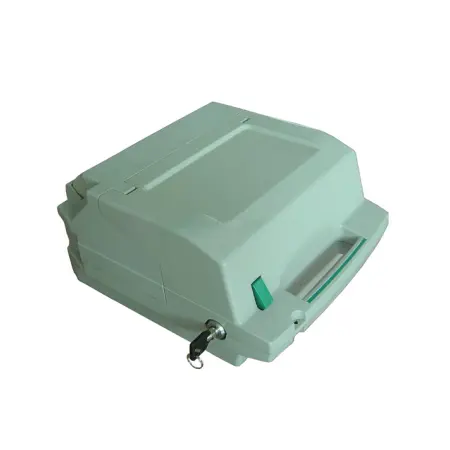
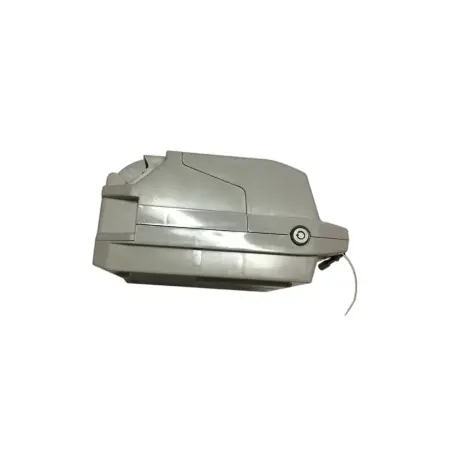
The NMD50 Reject Cassette (main unit part number 1038242, cover plate A006676) from HONGKONG RONG MEI TECHNOLOGY is built with injection-molded high-impact polycarbonate housing. It integrates passive input geometry that interfaces with the ATM's optical sensors to deliver real-time bin-presence and bin-full status. The 200–250 note capacity matches the NMD50 dispenser design spec, and the unit meets ISO-12209 physical security standards — a requirement many bank-managed ATM networks now mandate for third-party parts approval.
Why Part Number Accuracy Is Non-Negotiable?
Field engineers pulling parts from a warehouse need exact SKU matches. Ordering the wrong sub-component — say, a swing arm (A007726) incompatible with the specific NC301 chassis variant — creates installation errors that can damage the dispenser. Verified part-number cross-referencing before shipment is not optional; it is the baseline expectation of any credible supplier.
Supporting Your Procurement Decisions for NMD Reject Solutions
When buying ATM repair parts, there are more factors to consider than just the unit price. The total landed cost and risk exposure are based on the following factors.
Assess Supplier Credibility Through Certifications
Look for companies that are ISO9001-certified and have written quality control procedures for NMD reject parts. HONGKONG RONG MEI TECHNOLOGY was established in 2008 and is based in Shenzhen. It is certified by ISO9001-2008 and has a 3,000-square-meter building with separate offices for mold making, injection molding, maintenance, and quality control. This infrastructure for production ensures consistent batch quality, which is important when you need every cassette in a trial order of 50 to 200 units to work the same.
The parts that make up a full NMD50 reject cassette assembly are shown in the table below:
| Part Number | Component Description |
|---|---|
| 1038242 | NMD50-NC050 Cash Cassette (Main Unit) |
| A006676 | NMD50 Cash Cassette Cover Plate |
| A007490 | NC301 Money Pushing Plate Plastic Part |
| A004184 | NC301 Cash Dispenser Switch Baffle |
| A007726 | NC301 Cash Cassette Swing Arm |
| A006725 | NC301 Cash Cassette Bottom Plate |
| A004366 | NC301 Connecting Arm |
| A007938 / A008360 | NC301 Gate Thick/Thin 14-Tooth Gears |
Pricing Models and ROI Considerations
There are both brand-new cassettes and cassettes that have been properly fixed up. Refurbished units are graded by how well they look and work, and they come with the same 30-day guarantee as new stock. For operators who are building an inventory of different parts, refurbished units can lower the cost per unit while keeping the same level of performance in the field, as long as the supplier grades and tests each unit before sending it out. The normal wait time is 15–20 working days, but for pressing orders, it's usually possible to ship within 7–10 working days, as long as the items are in stock.
MOQ Flexibility and Export Logistics
It's not fair that small and medium-sized businesses have to meet big MOQ requirements in order to get good NMD reject parts. RM takes on smaller test orders, can ship by sea, land, or air, and has experience with export paperwork in the Southeast Asian, Eastern European, and Middle Eastern regions. Within 24 hours of your inquiry, you can get online and video remote support.
Future-Proofing ATM Service With Advanced NMD Reject Technologies
From reactive repair to data-driven prevention, ATM maintenance is changing the way it works.
Predictive Maintenance and AI-Assisted Diagnostics
Machine learning models that have been taught on ATM transaction logs can spot early signs of a change in the reject rate before the machine sends out a trouble code. Several ATM management platforms now connect with dispenser software to keep track of sensor read rates, note-thickness variance trends, and reject frequency per cassette cycle. This lets service managers know right away when they need to go to the location, before it gets too serious.
Data Logging and Performance Analytics
Some of the newest Glory ATM software stacks, like Kalignite and Aptra, can log reject events at the transaction level. By looking at this data across a group of machines, workers can see which ones are wearing out faster and plan to replace the cassettes before they break.
Scalable Parts Strategies for Growing Networks
It gets harder to keep track of parts for ATMs as they get bigger. Setting up a framework agreement with a confirmed reject cassette provider that includes restocking every three to six months, agreed-upon wait times, and written quality control reports cuts down on sourcing problems and gives bank clients the compliance paperwork they need.
Conclusion
When you start with the right parts, managing NMD reject events is a useful problem that can be solved. There are some things that set apart a cassette that keeps machines running from one that causes new service calls. These are accurate part-number matching, ISO-12209 compliance, reliable bin-full sensor performance, and supplier transparency. RM's NMD50 Reject Cassette meets these needs directly. It comes in both new and refurbished stock, can hold 200 to 250 notes, and comes with a 30-day warranty. This is a good place to start for ATM service providers who want to cut down on downtime and build a reliable parts inventory.
FAQ
Q1: What part number identifies the NMD50 Reject Cassette main unit?
A: The main unit carries part number 1038242 (NMD50-NC050 Cash Cassette). The cover plate is A006676. Always verify sub-component numbers against your specific chassis variant before ordering.
Q2: What is the reject cassette capacity on the NMD50?
A: The NMD50 Reject Cassette holds 200–250 notes. When the bin reaches capacity, the ATM stops dispensing. Regular monitoring of reject volumes helps operators schedule cassette servicing before downtime occurs.
Q3: Is a refurbished reject cassette reliable for field deployment?
A: Yes, provided the unit has been tested, graded, and warranted by the supplier. RM's refurbished cassettes are inspected in-house and carry the same 30-day warranty as new stock.
Q4: How long does delivery take?
A: Standard lead time is 15–20 working days. Urgent orders may ship within 7–10 working days depending on current stock levels. RM ships via sea, land, and air freight.
Q5: Does RM provide compliance documentation for bank-managed networks?
A: Yes. RM can provide QC reports and ISO9001-2008 certification documentation to support compliance reviews by bank clients or procurement committees.
Get Your NMD50 Reject Cassette Quote From RM Today
RM has been selling ATM parts around the world for more than 20 years, and the NMD50 Reject Cassette is now in stock. When it comes to NMD reject cassettes, RM is a reliable supplier that offers both new and used options, as well as ISO-12209 compliance, a flexible minimum order quantity, and 24-hour response support. Email Tony at Tony@atm-part.com to get part-number verification, a QC report, or a bulk pricing quote for your network.
References
1. ATM Industry Association (ATMIA). Global ATM Security Guidelines and Best Practices. 2022.
2. Talaris / Glory Global Solutions. NMD50 Series Dispenser Technical Reference Manual. 2018.
3. International Organization for Standardization. ISO 12209: Banking — Physical Security of ATM Modules. 2020.
4. ATMmarketplace. Field Service Trends in Independent ATM Deployment. 2023.
5. International Organization for Standardization. ISO 9001:2008 Quality Management Systems — Requirements. 2008.
6. RBR London. Global ATM Market and Forecasts Report. 2023.
Learn about our latest products and discounts through SMS or email