- English
- French
- German
- Portuguese
- Spanish
- Russian
- Japanese
- Korean
- Arabic
- Greek
- German
- Turkish
- Italian
- Danish
- Romanian
- Indonesian
- Czech
- Afrikaans
- Swedish
- Polish
- Basque
- Catalan
- Esperanto
- Hindi
- Lao
- Albanian
- Amharic
- Armenian
- Azerbaijani
- Belarusian
- Bengali
- Bosnian
- Bulgarian
- Cebuano
- Chichewa
- Corsican
- Croatian
- Dutch
- Estonian
- Filipino
- Finnish
- Frisian
- Galician
- Georgian
- Gujarati
- Haitian
- Hausa
- Hawaiian
- Hebrew
- Hmong
- Hungarian
- Icelandic
- Igbo
- Javanese
- Kannada
- Kazakh
- Khmer
- Kurdish
- Kyrgyz
- Latin
- Latvian
- Lithuanian
- Luxembou..
- Macedonian
- Malagasy
- Malay
- Malayalam
- Maltese
- Maori
- Marathi
- Mongolian
- Burmese
- Nepali
- Norwegian
- Pashto
- Persian
- Punjabi
- Serbian
- Sesotho
- Sinhala
- Slovak
- Slovenian
- Somali
- Samoan
- Scots Gaelic
- Shona
- Sindhi
- Sundanese
- Swahili
- Tajik
- Tamil
- Telugu
- Thai
- Ukrainian
- Urdu
- Uzbek
- Vietnamese
- Welsh
- Xhosa
- Yiddish
- Yoruba
- Zulu
NMD50 Reject Cassette Maintenance Tips for ATM Operators
The best NMD50 reject cassette maintenance routine is simple. Inspect the body, latch, and shutter on a set schedule, clean paper dust from the sensor prism with approved materials, seat the unit until the latch clicks, and log every fault by ATM model and part number. From what we see at RM, most reject bin problems on Glory ATMs start with dust, weak springs, or poor seating, not with a faulty machine. This guide covers checks, cleaning, installation, troubleshooting, compatibility, and sourcing. Each step comes with a short reason, so your field team knows why it matters.
What an NMD50 Reject Cassette Does and Why Maintenance Matters
What Is an NMD50 Reject Cassette?
An NMD50 reject cassette is a slot that can be locked and is made for the Glory (formerly Talaris) NMD50 cash dispenser. The notes it writes down are ones that cannot be checked, like ones that were picked twice, are twisted, or are broken. It also writes down notes that a customer forgets to take before the timer runs out. Unlike other NMD50 reject cassettes, it keeps problem notes separate from good cash so that only authorized staff can see them, balance them, and record them. This difference keeps the shipping road clear of jams and keeps the end-of-day balance safe. RM can hold between 200 and 250 notes, based on how thick and well-kept they are.
How the Cassette Works Inside the ATM
NMD50 reject cassettes are chain links. Notes that fail are sent to the NMD50 reject cassette by the dispenser. After the reroute gate opens an input shutter, a gear-driven entry roller transfers notes into the NMD50 reject cassette. NMD50 reject cassette optical sensors satisfy passive feedback geometry. These sensors tell the ATM whether the bin is empty or full. Because of its design, the machine requires a secure NMD50 reject cassette. Dirty or weak springs in the chain that holds the shutter, gears, and sensor window might cause dispenser defects that appear like larger errors.
Where Maintenance Pays Off
Poor maintenance causes jams, misdetection, extended downtime, and reconciliation issues. Retail ATMs outside shops, self-service booths that accept back lost change, and gaming or casino payout machines commonly use the NMD50 reject cassette. The unit is stressed differently each time. Convenience store machines read folded banknotes. A secure audit box for lost coins is needed at kiosks. Casino floors are grimy, and money moves swiftly. ISO 55001 regulates asset management. It advises planning how to handle tiny pieces before they break and interrupt the operation.
NMD50 Reject Cassette Maintenance Checklist, Cleaning, and Installation
Routine Inspection Checklist
Every so often, NMD50 reject cassettes are checked for problems before they become harder to find. Take a look at the NMD50 reject cassette's body, handle, cover plate, lock, guide bars, ways to find it, and note-taking space. Look for damage that could make it hard to enter or move the note, such as cracks, warping, broken parts, ruined labels, paper dust, or anything else that could get in the way.
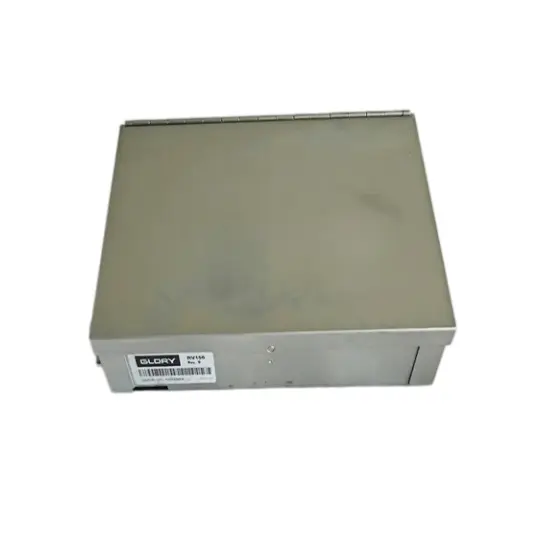
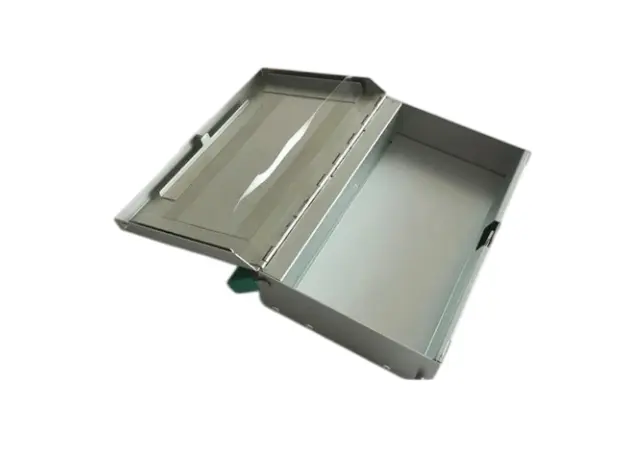

Make sure that the unit fits well, closes securely, sits securely, and works correctly in the ATM. You should write down the model, NMD50 setup, NMD50 reject cassette ID, error history, repair date, and steps taken to fix each ATM in your fleet if you have more than one. ISO 14224 shows that there is an organized way to get information about upkeep. Another good habit that helps you keep good records is writing down things that the provider reviews and guarantee claims.
How to Clean an NMD50 Reject Cassette Safely
It is safe to clean off paper dust because it will not hurt the lock, guides, sensors, or moving parts. Follow the directions that came with the ATM to fix it. Unless you are told otherwise, you should only use lint-free cloths, approved non-abrasive Products, and low-pressure air. Make sure the NMD50 reject cassette is on a clean surface and that the outside is clean after taking it out the right way. Then check the entry and storage places.
A sensor prism that is dirty is often to blame for a "Reject Bin Missing" message. Wipe it down with a lint-free cloth that has been lightly wet with isopropyl alcohol if your process lets you. Do not spray liquid into gaps, locks, or sensors, and do not use metal tools, too much lube, or wet reinstallation. First let the NMD50 reject cassette dry fully, and then check to see if it can be recognized.
Installation and Replacement Steps
Start with the correct ATM, NMD50 setting, direction, lock setup, and interface. Compare the substitute's guides, mounting points, handle location, and cover form to the original. Check the ATM and remove any rubbish after turning it on for authorized users. Line up the elements that help the NMD50 reject cassette fit, then carefully slide it in until the latch clicks. Fix the ATM first. To ensure it can locate, write, and work, test it in a controlled environment. Note the replacement's details for easy finding. Our NMD50 reject cassette's guiding rails and locking latches were precisely sized for the NMD chassis.
NMD50 Reject Cassette Troubleshooting: Errors, Jams, and Detection Failures
Start With Observation, Not Force
Start with careful observation and being alone in a safe place. Many times, more damage is done when parts are pushed into place or moved around for no reason. If you cannot find the NMD50 reject cassette, make sure it is lined up correctly, fully inserted, clean, has ways to be found, the latch is in the right place, and the container is in good shape. Write down the exact message, time, place, and working conditions for those times when things go wrong.
If it is okay with your boss, test how it works with a known good NMD50 reject cassette to tell the difference between an issue with the NMD50 reject cassette and the ATM module. It will save time in the future to take a picture of the broken latch and write down the mistake on the work order. The engineer then comes back with proof, not just a guess.
Common Symptoms, Causes, and First Checks
The table below shows common symptoms along with the first test that should be done and the most likely cause of those symptoms.
| Symptom | Likely Cause | First Check |
|---|---|---|
| Reject Bin Missing | Misalignment or dirty sensor prism | Reseat until latch clicks; clean prism |
| Jam at cassette entry | Shutter lag from debris or weak springs | Dust shutter gears; inspect springs |
| False "bin full" alarm | Cloudy or scratched prism window | Inspect prism clarity |
| Cassette will not seat | Debris or damaged locating feature | Inspect compartment and guides |
Do the first check before you order parts. Did you clean and re-seat the part, but the problem is still there? Now you can move on to inspecting parts.
Jams and Recurring Failures
If you get stuck, you have to go the right way to get out of it. Look for broken or missing notes on both the NMD50 reject cassette and the nearby transport path. Sometimes entry jams happen because of shutter lag. To fix this, clean the shutter gears and make sure that the NMD50 software has set the correct divert gate timing. The history of faults shows what went wrong in the first place. The NMD50 reject cassette, the ATM module, the software, or the way the machine is used could all be to blame. IEC 60812 talks about failure modes and effects analysis. This sorts repeated errors by how bad they are so that the most dangerous ones are fixed first.
NMD50 Reject Cassette Capacity, Compatibility, and Replacement Options
Capacity and Dimensions
Understand "rated capacity" before buying. We can fit 200–250 old banknotes on our NMD50 reject cassette. The number depends on the banknotes' kind, value, folding, orientation, and quality. Size doesn't matter. Fitting requires the proper length, breadth, height, insertion depth, handle space, guides, locating pins, and lock location. Case made of injection-molded high-impact plastic. Repeated usage keeps notes clean. It uses normal cam locks, so you may utilize master set cores. Before placing a large order, get a datasheet, drawings, and a sample.
Part Numbers and Compatibility
Part numbers tell you most of what you need to know about compatibility. How the ATM is marked, the lock, the format of the money, and the software can also change how well it fits. Even though the NMD50 and NMD100 look alike, they have different keying and sensor shutter settings, so make sure you use the right generation of distributor when you cross-fit them. We list the following parts for this NMD50 reject cassette:
| Component | Part Number | Description |
|---|---|---|
| Main Unit | 1038242 | NMD50-NC050 Cash Cassette |
| Cover Plate | A006676 | NMD50 Cash Cassette Cover Plate |
| Pushing Plate | A007490 | NC301 Money Pushing Plate Plastic Part |
| Switch Baffle | A004184 | NC301 Cash Dispenser Switch Baffle |
| Swing Arm | A007726 | NC301 Cash Cassette Swing Arm |
| Bottom Plate | A006725 | NC301 Cash Cassette Bottom Plate Black Sheet |
| Connecting Arm | A004366 | NC301 Connecting Arm |
| Control Rods | A004394/A004393 | NC301 Left/Right Rotation Control Rod |
| Cable Clip | A007387 | NC301 Cable Clip |
| Spring Components | A006869-02/04 | NC301 Spring Cap & Width Adjustment Buckle |
| Gear System | A007938/A008360 | NC301 Gate Thick/Thin 14-Tooth Gears |
| Clutch Assembly | A006902/A004358 | NC301 Clutch Gear 16-Tooth & Clutch |
Compare these numbers to the list of mistakes you made and send them with your question.
OEM, Compatible, New, or Refurbished?
OEM units have been shown to work with the design, but they might cost more and take longer to get to you. When NMD50 reject cassettes are compatible, they need to be checked to make sure they measure, lock, handle notes, and detect correctly. It is easy to tell what kind of shape new NMD50 reject cassettes are in. Replacement programs that do not cost a lot of money can use used units that pass tests, and many owners keep a mix of the two on an extra shelf.
Making sure the sensor prism is clear is important when you have mixed stock. If the window is cloudy, it could send out false "bin full" alarms. No matter which type you choose, make sure you get proof that it has been inspected, information about the guarantee, and confirmation that it fits your needs. We have a 30-day guarantee and sell both new and used units. You can get help online.
Fleet Maintenance Programs and Choosing an NMD50 Reject Cassette Supplier
Building a Fleet Maintenance Program
Make the program work with the ATMs' location, the number of transactions they handle, their security needs, and the services they offer. Extra NMD50 reject cassettes should be kept on hand for sites that get a lot of use, are dusty, outside, or far away. Operators, field technicians, and cash-in-transit teams should be given clear tasks, and checks should happen regularly, on a regular basis, and based on events.
Keep track of how many NMD50 reject cassette errors there are, how many jams there are, how much downtime there is, how long it takes to fix on average, how many times it works the first time, how many warranty returns there are, and the total cost of ownership. Things are more uniform from place to place when NMD50 reject cassette types, locks, methods, and training are all the same. It is agreed upon by ISO 55001 that these measures should be connected to choices about how to spend money.
How to Choose a Dependable Supplier
A dependable NMD50 reject cassette supplier gives you more than just a low price per unit. Check to see how much experience the business has with NMD50 parts, technical papers, production, quality control, tracking, exporting, packing, and customer service after the sale. You should find out if the NMD50 reject cassette is OEM, compatible, new, refurbished, or special. You should also ask the seller to check which ATM settings work with the NMD50 reject cassette.
You should be careful when a product's state, part numbers, or claims of connection aren't clear. The RM company has been making ATM parts for more than 20 years. They have a 3,000-square-meter ISO9001-2008-certified factory in Shenzhen that has departments for making molds, injection molding, maintenance, and quality control. Anyone can give you their ISO 9001 certificate if you want to learn more about quality management.
RFQ and Bulk Order Guidelines
A correct quote is given for a well-written RFQ. Tell us about the ATM and NMD50 module model, the part number, the condition, the capacity, the type of lock, the amount, the yearly demand, the location, the packaging, and any other information we may need. When you compare quotes, don't just look at the unit price. Also look at the total landed cost, which includes freight, customs, samples, guarantee risk, and the cost of replacing the item.
They make it clear who is in charge of what parts of delivery and how much they cost at each stage. Make rules about what kind of model, quantity, packaging, size, fit, locking, detection, cleanliness, and function is okay. ISO 2859-1 gives sampling plans that work well for batch checks and inspections of one lot at a time. In most cases, you will have to wait 15 to 20 business days for a module from us. We also answer all questions within 24 hours.
Conclusion
The only things that keep it in good shape are buying sound and putting an NMD50 reject cassette in it. Most issues can be found quickly if there is a written plan, the correct way to clean the sensor prism and shutter gears, and clear records of faults. To help engineers figure out what's wrong, they should watch first, connect signs to causes, and avoid pushing things in. Before you buy a new unit, make sure you check its volume, size, part number, lock, and software compatibility.
Then, look at the warranty terms and the condition of OEM, compatible, new, and refurbished options side by side. Plans that take into account the environment, having extra parts close by, and keeping track of things like the jam rate and the mean time to fix all help cut down on fleet-level downtime. Checks on the suppliers and detailed RFQs that are scored based on the landed cost and batch acceptance standards finish the picture.
FAQ
How often should I clean an NMD50 reject cassette?
Pick the time frame based on how many transactions there are, the environment, the quality of the notes, the service history, and the manufacturer's maintenance schedule. Periods should be shorter for sites that get a lot of traffic or are not used very often. To change the schedule based on real fault data, keep track of how often you clean.
Why does my ATM report "Reject Bin Missing"?
Most of the time, it is because the sensor prism is dirty or not lined up correctly. Put the NMD50 reject cassette back in until the latch clicks. Then clean the prism the way you normally do such things. Check the compartment to see if the message came back.
Can I swap an NMD50 cassette into an NMD100 dispenser?
The shape is the same, but the settings for the keying and sensor shutter are not the same. Not all programs will work with each other. First, make sure that it fits the type of container and the version of software that it has.
Does the cassette accept custom locks?
Yes. This case works with standard cam locks, so you can use cores that work with your master-key system.
Contact RM for Your NMD50 Reject Cassette Needs
Are you ready to fill up your extra shelf with more things? There is an NMD50 reject cassette in stock at RM. They can sell it new or used. It comes with online help and a guarantee that lasts for 30 days. Want to find a company that will give you NMD50 reject cassettes and get back to you within 24 hours? Send an email to Tony@atm-part.com with the model, part numbers, and number of things you need to see our Glory ATM range. You can also go to atm-part.com. We will send you a price quote and make sure it fits.
References
1. ISO 55001:2014 Asset Management – Management Systems – Requirements, International Organization for Standardization, 2014
2. ISO 14224:2016 Collection and Exchange of Reliability and Maintenance Data for Equipment, International Organization for Standardization, 2016
3. IEC 60812:2018 Failure Modes and Effects Analysis (FMEA and FMECA), International Electrotechnical Commission, 2018
4. ISO 2859-1:1999 Sampling Procedures for Inspection by Attributes – Part 1, International Organization for Standardization, 1999
5. Incoterms 2020 Rules, International Chamber of Commerce, 2020
6. ISO 9001:2015 Quality Management Systems – Requirements, International Organization for Standardization, 2015
Learn about our latest products and discounts through SMS or email