- English
- French
- German
- Portuguese
- Spanish
- Russian
- Japanese
- Korean
- Arabic
- Greek
- German
- Turkish
- Italian
- Danish
- Romanian
- Indonesian
- Czech
- Afrikaans
- Swedish
- Polish
- Basque
- Catalan
- Esperanto
- Hindi
- Lao
- Albanian
- Amharic
- Armenian
- Azerbaijani
- Belarusian
- Bengali
- Bosnian
- Bulgarian
- Cebuano
- Chichewa
- Corsican
- Croatian
- Dutch
- Estonian
- Filipino
- Finnish
- Frisian
- Galician
- Georgian
- Gujarati
- Haitian
- Hausa
- Hawaiian
- Hebrew
- Hmong
- Hungarian
- Icelandic
- Igbo
- Javanese
- Kannada
- Kazakh
- Khmer
- Kurdish
- Kyrgyz
- Latin
- Latvian
- Lithuanian
- Luxembou..
- Macedonian
- Malagasy
- Malay
- Malayalam
- Maltese
- Maori
- Marathi
- Mongolian
- Burmese
- Nepali
- Norwegian
- Pashto
- Persian
- Punjabi
- Serbian
- Sesotho
- Sinhala
- Slovak
- Slovenian
- Somali
- Samoan
- Scots Gaelic
- Shona
- Sindhi
- Sundanese
- Swahili
- Tajik
- Tamil
- Telugu
- Thai
- Ukrainian
- Urdu
- Uzbek
- Vietnamese
- Welsh
- Xhosa
- Yiddish
- Yoruba
- Zulu
NMD050 Import Guide for ATM Parts Distributors
Importing quality ATM dispensers demands precision, especially when sourcing mission-critical components like the NMD050. This modular banknote dispensing system, engineered for Glory ATM platforms, represents a balanced solution for distributors navigating the complex landscape of self-service banking equipment. The NMD 50 Dispenser configuration offers friction-feed reliability combined with compact architecture, addressing the persistent industry challenges of note jamming, integration complexity, and maintenance costs. Understanding its specifications, procurement pathways, and operational characteristics empowers distributors to make strategic decisions that reduce downtime while maintaining cost-effectiveness across diverse market segments.
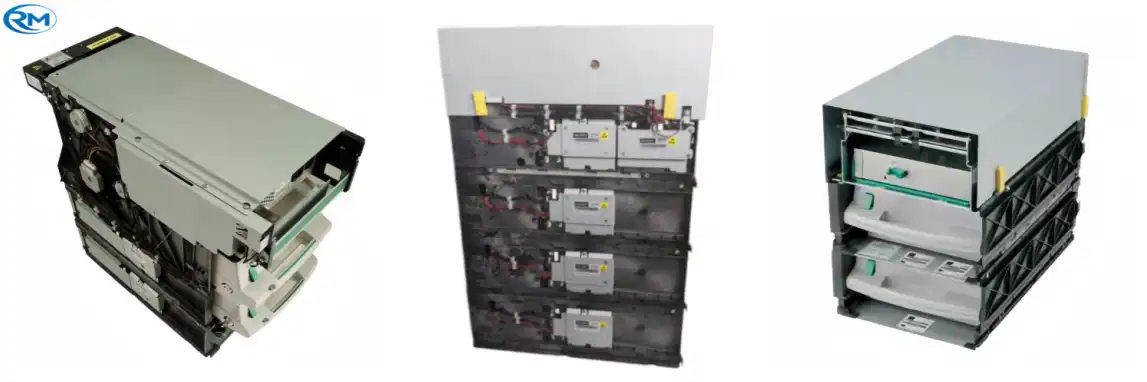
Understanding the NMD050: Specifications, Features, and Applications
The NMD050 Dispenser is a small but strong part of the Glory ATM environment. It's made to handle difficult cash dispensing tasks accurately every time.
Core Technical Architecture
The NMD050-1-VC-SN configuration type has a number of specialised units that all work together. The A011263 NQ300 module separates the notes, and the A011261 NF300 and NT100 modules take care of the logistics of transport. The D022232-01 CMC50 circuit board is at the center of the system. It runs the RS232/USB protocols for communication. This design lets you dispense up to six notes per second, and it can handle note sizes from 60mm x 120mm to 82mm x 175mm in all four denominations at the same time.
The cassette can hold between 800 and 1,000 notes, based on the thickness of the money. It has a narrow diameter of 270 mm. This unit's ability to make good use of space makes it especially useful in kiosks where cabinet space is limited. The Intelligent Double Detection system uses both mechanical and optical sensors to find double feeds, chained notes, and partial tears. It then automatically sends problematic currency to reject bins without stopping the flow of transactions.
Operational Applications Across Market Segments
In addition to standard ATMs, this dispenser helps stores that recover cash by processing high-volume transactions all the time. It's good for supermarket back-office systems because it can handle paper dust buildup, which happens a lot with street-level cash. The friction extraction technology keeps a firm grip on both polymer and paper money, so it works reliably no matter what condition the note is in.
People who use drive-thru ATMs outside can benefit from the unit's ability to resist heat. The polymer gears can handle temperature changes from -5°C to 45°C without any transfer lag, so the time of the extraction stays accurate. The device can handle a wide range of media thicknesses, so it can be used in transit hubs to process everything from thin receipts to sticky tickets. These different uses show that the component can be used in situations other than traditional banking.
Engineering Advantages for Long-Term Reliability
Urethane feed tires that last a long time are an important engineering choice. These parts keep the ideal friction coefficients above 0.6, which stops media tears and ensures good note engagement. Because the modular design allows vertical stacking, distributors can add more cassette modules (usually two to four high) without having to replace the cabinets. This scalability saves the initial investments in technology while allowing for growth.
RoHS compliance and UL/CE certification standards prove the safety standards for electrical activities that can be done by someone else. It's important for legal compliance in many places that the part meets foreign quality standards. These certifications lower the risk of buying things by making sure that the Products are real and meet global standards for financial equipment.
Importing NMD050: Procurement Process and Supplier Selection
To get the best return on investment, strategic procurement of the NMD050 Dispenser needs careful evaluation of suppliers and planning of logistics.
Supplier Vetting Criteria
For reliable sourcing, start with makers who are ISO9001-2008 certified and have well-established quality control systems. Along with ERP integration, HONGKONG RONG MEI TECHNOLOGY CO., LIMITED keeps these licenses up to date. This makes sure that production tracking and inventory management are clear. Distributors should check that suppliers have the right mould rooms, injection moulding departments, maintenance facilities, and dedicated quality control teams. This is the kind of infrastructure that helps with consistent quality control.
In the ATM parts business, brand recognition is very important. RM's 20-year history of operations gives customers a lot of confidence in their technical knowledge and the security of their supply chain. The company has a 3000 square metre building that covers more than 80% of all accessible ATM units. This shows that they have strong ways to get materials and make things. Long-term suppliers lower procurement risk by making sure that parts are always available and that technical support doesn't stop during the lifecycle of a product.
Bulk Purchase Strategies and Pricing Considerations
When you work with makers who offer direct prices, buying in bulk can save you a lot of money. It's especially important for private ATM installers who have to work with smaller profit margins than big banks to find the right mix between quality and price. There are both brand-new and refurbished units in great shape, so there is something for every budget while still meeting operational standards.
For module orders, lead times are usually between 15 and 20 working days, which is a very important planning factor for managing inventory. Distributors who keep smart stock levels can protect themselves against problems in the supply chain and save money by buying in bulk. Having units in stock meets pressing replacement needs and keeps income loss from equipment downtime to a minimum.
International Shipping and Warranty Policies
With global logistics support through sea, land, and air travel, delivery times can be changed based on need and cost. Components from China benefit from well-established freight forwarding networks, but wholesalers should plan their purchases around the times it takes to clear customs. Having the right paperwork, like business bills, packing lists, and certificates of origin, makes the border process go more quickly.
The 30-day guarantee period and online help mean that broken units can be fixed right away. This coverage window is in line with what the industry requires for electronic parts, and the online support system makes it easy to fix problems quickly. Distributors should make sure that customers understand the limitations of the warranty and how to file a claim by making the warranty terms clearer when it comes to installation mistakes versus manufacturing flaws.
Comparing NMD050: Market Position, Competitors, and Alternatives
To put the NMD050 Dispenser in its proper place among its competitors, performance metrics and value propositions need to be looked at objectively.
Performance Benchmarking Against Alternative Solutions
This machine is different from lighter-duty dispensers because it has a friction-feed system. It is also less expensive than high-capacity banking lockers. This positioning is aimed at the middle market segment, which is made up of independent operators who need bank-level reliability without having to invest at an enterprise level. Compared to older vending systems, the unit's Mean Time Between Failures is more than 100,000 notes, which is an important reliability standard for places that don't have easy access to service.
Other versions, such as the NMD040, have lower transfer rates and are better for places with very few transactions. The NMD050 can dispense six notes per second, which is faster than bigger vault systems and better for moderate to high-volume sites that don't need to expand their area. This performance sweet spot is good for distributors who work with a wide range of clients, from small stores to medium-sized banks.
Customer Feedback and Operational Reliability
Field deployment data shows that the devices are good at dealing with damaged money, which is a problem that off-premise ATM networks always have. When compared to single-sensor setups, the Intelligent Double Detection system greatly lowers jam incidents, which has a direct effect on uptime measures. According to the operators, they are especially happy with how well the unit can handle limp or folded notes, which often stops other models.
Technical teams always say good things about how simple integration is. The RS232/USB connection methods get rid of the need for proprietary interfaces that make setting up kiosks harder. This standardisation cuts down on the time needed to set up an ATM and lets techs work on different types without having to go through a lot of training again. These kinds of operational efficiencies lead to lower total costs of ownership after the purchase price.
Strategic Selection Recommendations
Distributors should make sure that the capabilities of the dispensers match the expected number of transactions and the conditions of the surroundings. Coastal areas with a lot of humidity may benefit from the corrosion resistance of the polymer gear construction, while places with very high or very low temperatures need the thermal stability this unit provides. Denomination needs also play a role in the choice. Support for four currencies is enough for most markets, but higher denomination needs might require different setups.
Because of limited funds, the initial purchase costs should be weighed against the expected upkeep costs. The hot-swappable sensor block design lowers the total cost of ownership by letting parts be changed without taking the whole system apart. This serviceability advantage is especially useful for wholesalers who are in charge of ATM networks that are spread out geographically and where service calls cost a lot of money.
Installation, Maintenance, and Troubleshooting of NMD050
Operational success depends on using the right integration steps and planned repair plans that make parts last longer.
Installation Procedures and Integration Requirements
Before putting together the cabinet, the electrical specs must be checked. The unit runs on standard 24V DC bus power, and during extraction cycles, it can draw up to 2.5A at its peak. Mounting points must line up with the narrow 270mm profile to make sure a secure fit without putting stress on the connections on the circuit board. Communication wire routing should avoid sharp turns that could damage the security of data sent through RS232/USB ports.
Setting denomination parameters and cassette capacity limits in the ATM controller firmware is part of software configuration. When installing multiple cassette modules, the vertical stacking mechanism needs to be carefully lined up so that the modules don't get stuck during note transport cycles. To avoid communication protocol problems, distributors should look at model-specific instructions to find out which software versions work with the D022232-01 CMC50 circuit board.
Preventive Maintenance Best Practices
In high-volume settings that handle more than 5,000 deals per month, friction roller inspections should happen once a year. The modular design lets you change the rollers without taking apart the frame, which cuts down on repair time. High-durability urethane materials don't wear out too quickly, but paper dust builds up and lowers the friction coefficients over time. Glazing, which shows when replacement is due, is a clear sign of this.
The main goal of sensor array maintenance is to keep the IR optical interruption parts clean. Cleaning the timing wheel sensor with compressed air every three months keeps it from getting clogged, which causes timing mistakes in the E-14 transport. The anti-static discharge brushes made for handling polymer notes need to be checked on a regular basis to make sure they are still making good contact with the transport paths and keeping the >0.6 friction coefficient that is needed for reliable feeding.
Common Issues and Diagnostic Solutions
Transport time mistakes usually happen because sensors are covered in dust or drive belts lose force. Because optical interruption technology has a reaction time of 5ms, even small amounts of contamination can cause false results. Cleaning the sensor with lint-free cloths and isopropyl alcohol can fix it without having to replace any parts. Adjusting the belt tension according to the manufacturer's instructions keeps the transport speed constant along the note path.
When the IDD system is engaged and there are double-feeds, it's usually because the separation rollers are worn or there is too much static on the polymer currencies. When there is a lot of wear, the adaptive thickness sensor can't adjust the reverse-friction roller pressure any further. Replacement parts are made to the same specs as the original equipment, so they will continue to work with current cassette modules and transport kits.
Maximizing Value: Practical Applications and Future Outlook
Real-life examples of deployment show the real practical benefits and strategic placement for meeting the changing needs of the ATM market.
Performance Verification Through Case Studies
A regional ATM network operator who was in charge of 150 units in seven states said that service calls went down by 23% after switching from older systems to NMD050 Dispensers. The main thing that made a difference was better handling of devalued currency in places with a lot of transactions. The number of jam incidents dropped from 4.2 per 10,000 transactions to 1.1 per 10,000 transactions. This directly improved customer satisfaction measures and cut down on the cost of sending technicians to the scene of the problem.
Industry Trends Validating Component Selection
Self-service banking is continuing to grow in places that aren't usually thought of as banks, like convenience shops, pharmacies, and entertainment centers. These places need small, reliable serving technology that can work in a variety of situations without constant supervision. The NMD050's ability to work with different currencies and handle high temperatures make it perfect for these types of deployments. This puts dealers in a great position to take advantage of market growth beyond traditional bank branch networks.
Long-Term Value Proposition
The flexible design keeps technology from becoming outdated by letting small improvements be made instead of replacing the whole system. When the number of transactions goes up, wholesalers can make cassette setups bigger without having to change the cabinet infrastructure. This scalability increases the return on investment over the lifetime of the equipment while still meeting current safety standards.
RM's dedication to customisation options, such as hardware changes and multilingual settings, makes it easier to enter a wide range of geographic markets. Distributors who work with international clients don't have to worry as much about their work when they have access to remote video support and 24-hour response times. These service parts go well with the dependability of the hardware, making full value propositions that meet the needs of both technical performance and business continuity.
Conclusion
The NMD050 Dispenser is a smart purchase choice for ATM parts dealers who need to balance cost-effectiveness with performance needs. Its friction-feed reliability, small modularity, and ability to work with Glory ATM systems solve some of the biggest problems with handling cash, integrating systems, and keeping up with maintenance costs. The part has been used successfully in shopping, banking, and public transportation, showing that it can be used in a variety of situations beyond standard ATMs.
The NMD050 has measurable uptime improvements and lower total cost of ownership when bought from experienced suppliers that offer ISO certification, customisation options, and quick technical support. Distributors who want to get ahead of the competition should check to see how well this part fits with their client portfolios and service infrastructure.
FAQ
How does the NMD050 handle polymer currency versus traditional paper notes?
How does the NMD050 work with polymer money compared to paper money? There are anti-static discharge brushes and adjusted roller pressure in the dispenser that are designed to work with polymer's smooth surface. High-durability urethane feed tires grip both types of cash the same way without having to be adjusted. This makes sure that effective extraction happens no matter what the note is made of. This dual-compatibility gets rid of the need for configurations that are specific to each currency.
What distinguishes refurbished units from brand new dispensers?
Refurbished NMD050 Dispensers go through a lot of tests and have parts replaced to get them back to working perfect state. During refurbishment, important wear parts like friction rollers and sensor arrays get new parts. There are 30-day warranties on both types, but brand-new units may have longer lifetime benefits in settings that process more than 8,000 transactions per month.
Can distributors customize communication protocols for proprietary ATM systems?
Most kiosk systems can use the normal RS232/USB interfaces without any changes. RM offers customisation services for unique integration needs, such as making changes to firmware and adapting hardware interfaces. These changes usually add 5 to 7 working days to the wait time, but they make it possible to work with older systems or controller designs that aren't open source. Technical consultation is used to figure out if certain customisation requests are possible.
Partner with RM for Reliable NMD050 Supplier Solutions
With 20 years of experience making ATM parts for banks, service companies, and distributors in 40 countries, RM has become a trusted NMD050 manufacturer. Our ISO9001-2008-certified facility keeps the NMD050 Dispenser in stock and ready to ship right away, so you don't have to deal with long wait times that get in the way of your service promises. In addition to having products available, we also offer expert help 24 hours a day, 7 days a week in multiple languages to answer questions about installation, compatibility, and troubleshooting. Contact Tony@atm-part.com to talk about bulk pricing for the NMD050 or to look into customisation options that fit the needs of your local market. Our team is ready to help you reach your procurement goals with clear communication and a track record of on-time delivery.
References
1. Glory Global Solutions. (2019). Modular Dispensing Technology for Self-Service Banking Applications. Technical white paper series on friction-feed mechanisms.
2. ATM Industry Association. (2021). Global Self-Service Banking Equipment Market Analysis 2020-2025. Research report on component reliability trends.
3. International Organization for Standardization. (2015). ISO 9001:2008 Quality Management Systems Requirements. Certification standards for manufacturing operations.
4. Financial Equipment Standards Committee. (2020). Cash Handling Component Compatibility Guidelines. Industry standards for multi-vendor ATM integration.
5. Chen, W., & Roberts, M. (2018). Preventive Maintenance Protocols for Cash Dispensing Mechanisms. Journal of Financial Equipment Technology, 12(3), 45-62.
6. European Committee for Standardization. (2017). CEN/XFS Interface Standards for Self-Service Terminal Devices. Technical specifications for ATM communication protocols.
Learn about our latest products and discounts through SMS or email