- English
- French
- German
- Portuguese
- Spanish
- Russian
- Japanese
- Korean
- Arabic
- Greek
- German
- Turkish
- Italian
- Danish
- Romanian
- Indonesian
- Czech
- Afrikaans
- Swedish
- Polish
- Basque
- Catalan
- Esperanto
- Hindi
- Lao
- Albanian
- Amharic
- Armenian
- Azerbaijani
- Belarusian
- Bengali
- Bosnian
- Bulgarian
- Cebuano
- Chichewa
- Corsican
- Croatian
- Dutch
- Estonian
- Filipino
- Finnish
- Frisian
- Galician
- Georgian
- Gujarati
- Haitian
- Hausa
- Hawaiian
- Hebrew
- Hmong
- Hungarian
- Icelandic
- Igbo
- Javanese
- Kannada
- Kazakh
- Khmer
- Kurdish
- Kyrgyz
- Latin
- Latvian
- Lithuanian
- Luxembou..
- Macedonian
- Malagasy
- Malay
- Malayalam
- Maltese
- Maori
- Marathi
- Mongolian
- Burmese
- Nepali
- Norwegian
- Pashto
- Persian
- Punjabi
- Serbian
- Sesotho
- Sinhala
- Slovak
- Slovenian
- Somali
- Samoan
- Scots Gaelic
- Shona
- Sindhi
- Sundanese
- Swahili
- Tajik
- Tamil
- Telugu
- Thai
- Ukrainian
- Urdu
- Uzbek
- Vietnamese
- Welsh
- Xhosa
- Yiddish
- Yoruba
- Zulu
NMD Reject Cassette Supplier Guide for Bulk Purchasers
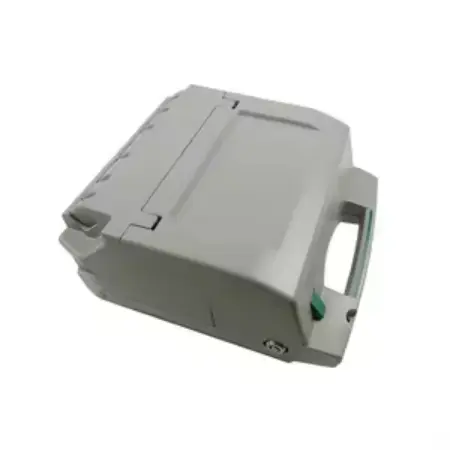
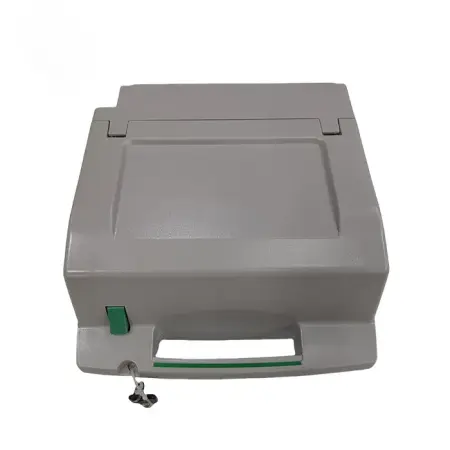
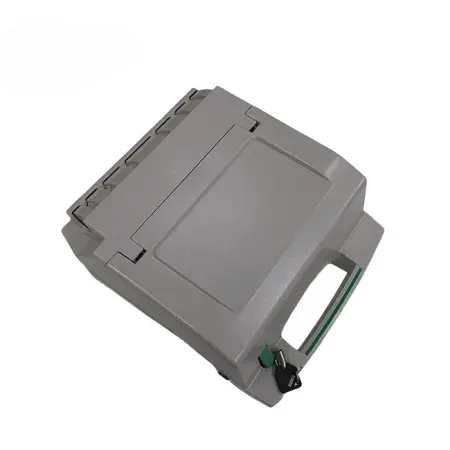
If you manage ATM field operations and need to source Glory NMD reject cassettes at scale, this guide is written for you. An NMD reject cassette is the dedicated module inside a Glory NMD50 ATM that collects notes the machine cannot dispense — damaged, skewed, or uncollected bills. When this component fails or fills up unexpectedly, the entire ATM goes offline. For third-party operators running networks across the Middle East, Eastern Europe, or Southeast Asia, a single day of downtime per machine translates directly into lost revenue and SLA penalties. Getting the right reject cassette, from the right supplier, with verified part numbers, matters more than most buyers initially expect.
Understanding NMD Rejects and Their Impact on ATM Uptime
What an NMD Reject Actually Is?
In every Glory NMD50 dispenser, rejected bills—those that the IDD (Intelligent Double Detection) sensor flags for skew, double-feed, or thickness anomaly—are sent to the reject folder instead of being shown to the user. The NMD50 reject cassette (model number NMD50-NC050, main unit part number 1038242**) can hold around 200 to 250 notes before it sounds a "bin full" alarm.
Why Reject Events Spike?
High reject rates often happen in the field because of three things: worn feed rollers that misalign notes during extraction; optical sensors that are clogged with dust or prisms; and incorrect width-guide calibration inside the cassette itself. A skew tolerance of more than 1.5 mm in the guide rails is enough to make the machine reject many times during busy sessions.
The Real Cost of an Unmanaged Reject Bin
Industry statistics from the ATMIA says that when an ATM is down, it costs owners between $2,000 and $4,000 per day in lost transaction fees and SLA penalties. When the trash can fills up faster than planned service visits, operators have to deal with calls that weren't planned. The fastest way to get uptime back is to carry a correct spare cassette that has already been tested against the Glory chassis.
Best Practices to Reduce and Manage NMD Reject Rates
Distinguish Between a Cassette Problem and a Dispenser Problem
Not every reject event points to the NMD reject cassette itself. If the machine logs consistent "double detect" errors, the issue likely sits in the NMD50 dispenser's friction rollers or IDD firmware calibration — not in the reject bin. Operators should cross-reference error codes with the component-level part map before ordering replacement cassettes.
| Error Code | Likely Root Cause | Recommended Action |
|---|---|---|
| Bin Full (false positive) | Sensor prism contamination | Clean optical sensor; inspect cover plate A006676 |
| Skew Error (recurring) | Guide rail misalignment | Check width-adjustment buckle A006869-02/04 |
| Cassette Not Detected | Locking rail misfit | Inspect swing arm A007726 and connecting arm A004366 |
| Note Jam at Transport Exit | Worn gate gear | Replace gate gear A007938 or A008360 |
Matching the error code to the sub-component part number before placing an order saves operators from purchasing the wrong SKU.
Preventive Maintenance Intervals That Work
For networks running 1,500 to 3,000 transactions per month per machine, quarterly cassette inspection is the practical standard. During each visit, the field engineer should wipe the sensor prism inside the cassette housing with isopropyl alcohol, verify that the clutch assembly (A006902 / A004358) engages cleanly, and confirm that the spring cap A006869-02 maintains proper tension on the note stack.
New vs. Refurbished: A Practical Decision Framework
Refurbished NMD50 reject cassettes make economic sense for machines with moderate transaction volumes, provided the unit has passed a documented QC process with a graded cosmetic rating. New units are preferable when deploying into high-volume casino cash-recycling environments or when a bank client requires a clean audit trail. Mixing both grades across a network is acceptable — as long as each unit carries a traceable part number and warranty record.
How to Choose the Right NMD Reject Cassette Supplier?
Part Number Accuracy Is Non-Negotiable
Any supplier that cannot confirm the exact SKU mapping for the NMD reject — main unit 1038242, cover plate A006676, pushing plate A007490, switch baffle A004184 — should not receive your purchase order. Incorrect sub-components installed in a Glory NMD50 chassis create sensor mismatch faults that are difficult to diagnose remotely and expensive to reverse.
Certifications and Quality Standards
ISO-12209 physical security compliance is the baseline standard for ATM cassette construction. Suppliers should also carry ISO 9001 manufacturing certification, which confirms that their production and inspection processes meet documented quality controls. HONGKONG RONG MEI TECHNOLOGY CO., LIMITED (RM), founded in 2008 and operating from Shenzhen, China, holds ISO9001-2008 certification and has produced ATM components for more than 20 years. RM stocks both brand-new and refurbished NMD50 reject cassettes and provides a 30-day warranty with 24-hour online support response.
Warranty Coverage and Post-Sale Support
A 30-day warranty period is the market standard for this category. What separates good suppliers from marginal ones is what happens during that 30 days. RM provides video-based remote diagnostic support, which means a field engineer encountering a "bin presence" fault at a site in the Philippines or Romania can get guided troubleshooting without waiting for a local technician. That kind of post-sale infrastructure reduces total cost of ownership beyond the unit price alone.
Procurement Strategies for Purchasing NMD Reject Cassettes in Bulk
Building a Mixed-Grade Spare Parts Inventory
Smart operators do not stock only one grade. A practical framework is to keep three to five new NMD50 reject cassettes per 50 machines for emergency swap-outs, and maintain a larger buffer of certified refurbished units for scheduled replacements. This structure keeps landed cost per unit lower while preserving the ability to respond to urgent outages without waiting on ocean freight.
Here are the core sourcing criteria experienced operators apply when evaluating a new supplier:
- Part number verification: The supplier must provide a documented cross-reference between sub-component SKUs (e.g., A006676, A007490, A004184) and the Glory NMD50 chassis model.
- In-stock confirmation: Lead times of 15 to 20 working days apply to standard orders; emergency orders should be fulfillable within 7 to 10 business days from confirmed stock.
- MOQ flexibility: Operators with smaller networks need the option to start with 50 to 100 units before committing to a quarterly framework agreement.
- Export documentation: The supplier must have direct experience with customs clearance to Middle East, Eastern European, and Southeast Asian destinations.
These criteria form the foundation of a low-risk, repeatable procurement relationship for the NMD reject. Once a supplier passes a trial order and 30-to-60-day field verification, the relationship can move to a semi-annual framework contract, which typically yields better per-unit pricing.
Price, Lead Time, and Risk Benchmarks
| Procurement Type | Typical Lead Time | MOQ | Best Suited For |
|---|---|---|---|
| New cassette (standard) | 15–20 working days | 50 units | High-volume retail or casino ATMs |
| Refurbished cassette | 10–15 working days | 20 units | Mid-volume retail, cost-sensitive networks |
| Emergency order (in-stock) | 7–10 business days | 10 units | Critical downtime situations |
| Framework agreement | Per schedule | 200+ units/quarter | Established operator networks |
Enhancing Supply Chain Efficiency Through Reject Analysis
Track Reject Rates by Machine, Not Just by Network
Most field service platforms can log reject event frequency per terminal ID. When one machine generates disproportionate reject events — say, more than 30 rejects per 1,000 transactions — that terminal likely needs dispenser-level maintenance, not just a cassette swap. Tracking at the machine level prevents over-ordering cassettes while masking a deeper dispenser fault.
Use QC Reports as Bank-Facing Compliance Documentation
For operators serving bank clients, a certified QC inspection report for each cassette batch is the document that justifies using third-party parts. RM provides this documentation as a standard part of the order process, which supports operators who need to demonstrate parts compliance to bank audit teams.
Data-Driven Reorder Triggers
Rather than ordering on a fixed calendar schedule, experienced procurement managers set reorder triggers based on actual reject-event data. When a machine's monthly reject count rises above a preset threshold, it generates an automatic parts request. This method cuts dead stock and ensures replacement cassettes arrive before, not after, an ATM goes offline.
Conclusion
Finding Glory NMD50 reject cassettes, the NMD reject, for a field operation is a choice that affects cost, uptime, and compliance all at the same time. There are three things that set apart a reliable supply relationship from an expensive one: part number accuracy, availability in stock, and documented quality controls. Having a verified provider with a 30-day warranty and same-day answer to questions gives your team a big operating edge, whether you run 20 ATMs or 200.
FAQ
Q1: What part number corresponds to the NMD50 reject cassette main unit?
A: Part number 1038242 and model number NMD50-NC050 are on the main unit.
Q2: Can refurbished NMD50 reject cassettes cause "bin full" false errors?
A: Yes, if the sensor prism inside the cassette case isn't cleaned properly when it's being fixed up. A trustworthy supplier will keep records of how they clean and calibrate their equipment. Ask for the record of the check for any batch that has been fixed up.
Q3: What is the standard warranty for third-party NMD reject cassettes?
A: 30 days is what the market norm is. There is 24-hour online support and a 30-day warranty on both new and used units at RM.
Q4: How do I verify that a cassette is compatible with my Glory ATM model?
A: Check the sub-component part numbers, like A006676 for the cover plate and A007726 for the swing arm, against the engineering documentation for your ATM. A part-number-to-chassis compatibility chart can be given by a qualified supplier.
Q5: What is the minimum order quantity for a trial shipment?
A: RM will take trial orders of 20 to 50 units, based on the type of tape and where it is going. Email the team at Tony@atm-part.com to find out what's in stock and what the minimum order quantity is for your area.
Partner With RM for Your NMD Reject Cassette Supply
RM (HONGKONG RONG MEI TECHNOLOGY CO., LIMITED) has verified NMD50 reject cassettes in both new and used condition. They come with a 30-day warranty and can be reached 24 hours a day. RM ships to operators in the Middle East, Eastern Europe, and Southeast Asia. They are a trusted NMD reject cassette supplier with ISO9001-2008 certification and more than 20 years of experience making ATM parts. To get a quote right away, send a list of your part numbers and the number you need to Tony@atm-part.com.
References
1. ATM Industry Association (ATMIA). ATM Downtime and Operational Cost Report. ATMIA, 2022.
2. Glory Global Solutions. NMD50 Cash Dispenser Service Manual. Glory Global Solutions, 2019.
3. International Organization for Standardization. ISO 12209: Banking — Secure Cryptographic Devices (Retail). ISO, 2016.
4. Retail Banking Research (RBR). Global ATM Market and Forecasts to 2028. RBR, 2023.
5. ATMmarketplace Editorial Staff. Best Practices for Third-Party ATM Parts Procurement. Networld Media Group, 2021.
6. International Organization for Standardization. ISO 9001:2008 Quality Management Systems — Requirements. ISO, 2008.
Learn about our latest products and discounts through SMS or email