- English
- French
- German
- Portuguese
- Spanish
- Russian
- Japanese
- Korean
- Arabic
- Greek
- German
- Turkish
- Italian
- Danish
- Romanian
- Indonesian
- Czech
- Afrikaans
- Swedish
- Polish
- Basque
- Catalan
- Esperanto
- Hindi
- Lao
- Albanian
- Amharic
- Armenian
- Azerbaijani
- Belarusian
- Bengali
- Bosnian
- Bulgarian
- Cebuano
- Chichewa
- Corsican
- Croatian
- Dutch
- Estonian
- Filipino
- Finnish
- Frisian
- Galician
- Georgian
- Gujarati
- Haitian
- Hausa
- Hawaiian
- Hebrew
- Hmong
- Hungarian
- Icelandic
- Igbo
- Javanese
- Kannada
- Kazakh
- Khmer
- Kurdish
- Kyrgyz
- Latin
- Latvian
- Lithuanian
- Luxembou..
- Macedonian
- Malagasy
- Malay
- Malayalam
- Maltese
- Maori
- Marathi
- Mongolian
- Burmese
- Nepali
- Norwegian
- Pashto
- Persian
- Punjabi
- Serbian
- Sesotho
- Sinhala
- Slovak
- Slovenian
- Somali
- Samoan
- Scots Gaelic
- Shona
- Sindhi
- Sundanese
- Swahili
- Tajik
- Tamil
- Telugu
- Thai
- Ukrainian
- Urdu
- Uzbek
- Vietnamese
- Welsh
- Xhosa
- Yiddish
- Yoruba
- Zulu
MRX Recycler vs Traditional Cash Handling Systems: Key Differences
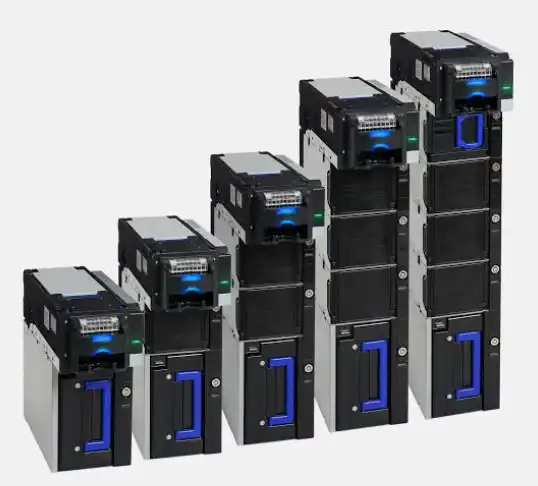
The JCM MRX Recycler represents a significant step forward in automated banknote management. Unlike traditional cash handling systems that depend on manual counting, basic drawers, and limited validation, the MRX recycler uses roller-type technology with multi-pass banknote validation to accept, sort, and dispense cash automatically. For banks, casinos, hotels, and financial institutions processing high transaction volumes, the performance gap between these two approaches is measurable in labor cost, error rates, and operational uptime.
Understanding Traditional Cash Handling Systems
Traditional ways of dealing cash have been useful for businesses for decades, but when things get tough, they become clear. Standard cash drawers, manual counting, and POS-connected bank boxes all need to be watched over by a person all the time. When there are a lot of people, like in casinos or store checkout lines, relying on staff makes things less efficient.
Manual Counting and Human Error
Studies have shown over and over that counting cash by hand has mistake rates of 1% to 2%. This may not seem like a big deal, but it adds up to big problems when you consider the thousands of deals that happen every day. In controlled areas like casinos or banks, even small mistakes in counting can lead to compliance reviews.
Limited Security Controls
Traditional methods don't do much to stop scams. It's possible for fake bills to get into circulation because bills only go through one validation check at most. Since there is no automatic audit trail, reconciling cash has to be done by hand, which takes time.
High Operational and Labor Costs
One of the biggest costs in budgets for financial operations is still hiring people to handle cash by hand. A study from 2022 by Retail Banking Research said that 30–40% of all cash management costs in mid-size financial institutions go to cash-in-transit (CIT) services and manual accounting.
Introduction to JCM MRX Recycler Technology
The JCM MRX recycler is a modular banknote recycling module made in Japan that can be bought both brand new and used. It is designed to be installed in ATMs, kiosks, self-checkout stations, and game machines. It can load both single and multiple bills at once, which makes usage flexible in a range of operating settings.
Roller-Type Collection Mechanism
When compared to friction-feed systems found in older cash acceptors, the MRX module's roller-type transport technology greatly lowers the number of mechanical jams. This architecture keeps uptime high in environments where it's used 24 hours a day, like casino floors and hotel lobby kiosks.
Multi-Pass Banknote Validation
Before being accepted, each bill goes through several checks to make sure it is real. At the same time, the system checks the actual size, magnetic properties, and infrared patterns. This process rejects fakes at a rate that is much higher than manual inspection in a single pass.
Modular Architecture for Easy Servicing
The validator, the delivery track, and the recycling box can all be replaced separately. A worker can replace just one part of an appliance without having to turn the whole thing off. This modular design directly cuts down on the mean time to fix (MTTR) for developers who are in charge of teams of ATMs or self-service kiosks.
Comparative Analysis: MRX Recycler vs Traditional Systems
Putting automated paper recycling and standard cash handling next to each other shows a big difference in how well they work. The JCM MRX module fixes the main problems with everyday systems when it comes to speed, accuracy, and total cost of ownership.
Here are the main ways that the two methods vary in how well they work:
- Processing Speed: The MRX recycler processes banknotes at rates suited for high-volume deployment, whereas manual counting creates bottlenecks during peak transaction periods. ATM and kiosk operators report transaction throughput improvements of up to 40% after switching to automated cash recycling modules.
- Accuracy and Compliance: Multi-pass validation in the MRX module virtually eliminates counterfeit acceptance errors. Traditional systems relying on single-sensor checkers or human review cannot match this standard, particularly in gaming environments where GLI and PCI audit requirements demand documented cash trail evidence.
- Total Cost of Ownership: The initial capital investment for an MRX recycler unit is higher than a basic cash drawer or single-pass acceptor. However, reduced CIT frequency (typically 30–50% fewer replenishment cycles), lower labor costs, and fewer error-related losses generate measurable ROI within 12–18 months of deployment.
Environmental and Operational Impact
The switch from traditional cash handling to modular recycling technology has real operational and environmental benefits that procurement teams often miss when they do their first cost analyzes.
Fewer CIT Trips, Lower Logistics Costs
The MRX module lowers the amount of cash that needs to be replenished by recycling accepted bills directly back into the dispense pool. Less frequent visits by armored vehicles to each location means lower fuel costs and lower logistics costs for a network of deployed units.
Simplified Maintenance Protocols
Because each module works on its own, planned repair only works on the part that needs it. Unlike traditional all-in-one cash boxes, which often need to be replaced or shut down completely after a single failure, this one doesn't.
Regulatory Compliance Support
The MRX recycler makes transaction logs that can be tracked and meet the audit requirements of regulatory bodies for casinos and gaming operators. This built-in responsibility is missing from processes that handle cash by hand, and it's hard to add to older cash acceptor designs.
Practical Guidance for Procurement Managers
Depending on the deployment setting, transaction volume, and compliance needs, you can choose between a standard cash handling setup and a flexible recycling option. Before making a procurement decision, here are some things to think about.
Match the Module to the Deployment Scenario
The JCM MRX recycler works especially well in banks, hotel lobby kiosks, casino game floors, supermarket self-checkout lanes, and automated bank tellers. Single-note loading is good for places with low traffic, while bulk loading is best for places with a lot of traffic that process a lot of cash each shift.
Evaluate Integration Requirements Early
The MRX module can be integrated using an SDK, which speeds up the process of connecting to host software on standard ATM platforms. To avoid delays in trial rollout, procurement teams should make sure that the solution is compatible with the protocol during the solution design phase.
Factor in Warranty and Support Coverage
You can get help with the JCM MRX recycler online and get a 30-day guarantee. RM has been selling ATM parts and other financial tools for more than 20 years. They offer answer times of 24 hours and normal delivery times of 15–20 working days. There are both brand-new and used units available, which gives buying managers a choice of how to balance CAPEX costs with performance goals.
Conclusion
Traditional ways of handling cash have flaws that make them less accurate, less safe, and more expensive, and they get harder to manage as they get bigger. The JCM MRX recycler directly fills in these gaps with its modular design, roller-type transport, and multiple validation passes. There is a clear and measured difference between the two methods for system designers and procurement managers who are putting cash-handling technology into banks, casinos, hotels, or stores. Putting money into automated banknote recycling isn't just an upgrade in technology; it's a choice that will affect how well you do in audits, how much you spend on staff, and how reliable your business is in the long run.
FAQ
What is the main functional difference between the MRX recycler and a standard cash acceptor?
A normal cash acceptor checks bills only once and stores them without recycling them. The JCM MRX recycler checks each bill several times and sends accepted bills back into the give pool. This cuts down on the number of times that cash needs to be refilled and increases the amount of cash that can be distributed.
Is the JCM MRX module compatible with existing ATM host platforms?
Yes. The MRX module lets you integrate protocols based on an SDK, which works with most ATM operating systems. During the design phase, solution architects should check specific interface requirements to make sure they work with the host platform.
What loading options does the JCM MRX Recycler support?
The machine can handle both single and bulk banknote loading, so it can be used in a variety of settings and with a range of transaction rates, from low-traffic hotel booths to high-traffic gambling cash handling stations.
Can refurbished JCM MRX units meet commercial deployment standards?
Yes, RM's refurbished units are checked to make sure they work properly before they are sent out. As with new units, they come with a 30-day guarantee and online help. RM's quality control process is in line with ISO 9001 standards.
How does the MRX module help with regulatory compliance in gaming environments?
The module keeps detailed records of all transactions, which can be used as proof for every cash cycle. This paperwork meets the requirements for cash responsibility that gaming officials and compliance officers look for in casinos and gaming machine deployments.
Get JCM MRX Recycler Pricing from RM — Trusted Supplier for ATM Parts
For more than 20 years, RM has been a supplier of ATM modules and parts for banking equipment. They have a 3,000-square-meter plant in Shenzhen, China, that is ISO 9001-certified and can make everything themselves. RM is a reliable JCM MRX recycler supplier, so they keep both new and used MRX units ready to go. If you want to buy something for a test project or a full-scale rollout, RM will get back to you within 24 hours. You can email Tony immediately at Tony@atm-part.com to get a price and technical details.
References
1. Retail Banking Research. Global ATM Market and Forecasts. 2022.
2. Journal of Financial Crime. Counterfeit Currency Detection in Automated Teller Machines. 2021.
3. IEEE Transactions on Industrial Electronics. Modular Design Principles for Banknote Processing Systems. 2020.
4. Cash Essentials. The True Cost of Cash: A Global Perspective. 2023.
5. Association of Gaming Equipment Manufacturers (AGEM). Technical Standards for Cash Handling in Gaming Environments. 2022.
6. International Journal of Production Economics. Total Cost of Ownership Models for Self-Service Financial Equipment. 2021.
Learn about our latest products and discounts through SMS or email