- English
- French
- German
- Portuguese
- Spanish
- Russian
- Japanese
- Korean
- Arabic
- Greek
- German
- Turkish
- Italian
- Danish
- Romanian
- Indonesian
- Czech
- Afrikaans
- Swedish
- Polish
- Basque
- Catalan
- Esperanto
- Hindi
- Lao
- Albanian
- Amharic
- Armenian
- Azerbaijani
- Belarusian
- Bengali
- Bosnian
- Bulgarian
- Cebuano
- Chichewa
- Corsican
- Croatian
- Dutch
- Estonian
- Filipino
- Finnish
- Frisian
- Galician
- Georgian
- Gujarati
- Haitian
- Hausa
- Hawaiian
- Hebrew
- Hmong
- Hungarian
- Icelandic
- Igbo
- Javanese
- Kannada
- Kazakh
- Khmer
- Kurdish
- Kyrgyz
- Latin
- Latvian
- Lithuanian
- Luxembou..
- Macedonian
- Malagasy
- Malay
- Malayalam
- Maltese
- Maori
- Marathi
- Mongolian
- Burmese
- Nepali
- Norwegian
- Pashto
- Persian
- Punjabi
- Serbian
- Sesotho
- Sinhala
- Slovak
- Slovenian
- Somali
- Samoan
- Scots Gaelic
- Shona
- Sindhi
- Sundanese
- Swahili
- Tajik
- Tamil
- Telugu
- Thai
- Ukrainian
- Urdu
- Uzbek
- Vietnamese
- Welsh
- Xhosa
- Yiddish
- Yoruba
- Zulu
How Reject Vault Improves ATM Cash Security and Reliability
A reject vault is a physically secured storage module inside an ATM that captures notes the machine cannot dispense — flagged for being skewed, double-fed, mutilated, or suspected counterfeit. When this component fails or reaches capacity without warning, the entire machine goes offline. That single point of failure costs operators real money in downtime, service calls, and compliance exposure. Understanding how a properly engineered reject vault works — and where to source a reliable one — is what this guide is about.
Understanding the Core Challenges in ATM Cash Security
The pressure to keep ATMs running is the same for people who work in retail, gaming, and self-service settings. A problem with the reject locker that wasn't caught in time is to blame for many service failures.
Physical Vulnerabilities in Traditional Vault Designs
When you put in and take out cassettes over and over, the housings of older cassettes, especially those made of cheap plastics, crack. When the case breaks, the latch mechanisms don't line up right, and the ATM says "cassette missing" even though the unit is actually in place. Field experts lose hours trying to figure out what is basically a problem with the quality of the parts.
Sensor Failures and False "Bin Full" Alerts
One of the most likely parts of a cash dispenser module to break is the optical prism that lets you know when the reject bin is full. When dust builds up on the sensor surface, it gives fake "bin full" mistakes long before the cassette actually fills up. Service data from the ATM Industry Association shows that sensor-related fake alarms cause a lot of avoidable ATM breakdowns across independent deployer networks.
Compliance and Audit Gaps
If the reject vault isn't working right, there is no way to match up the counts in the computer journal and the actual notes. Separated reject and retract notes get mixed up, which leads to audit inconsistencies that banks and CIT providers see as fails to comply. This risk grows with each machine for third-party operators who are in charge of fleets in more than one place.
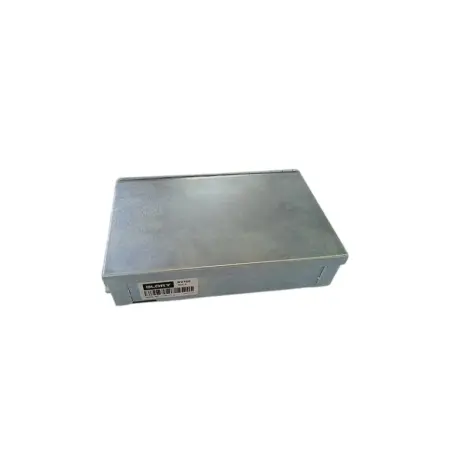
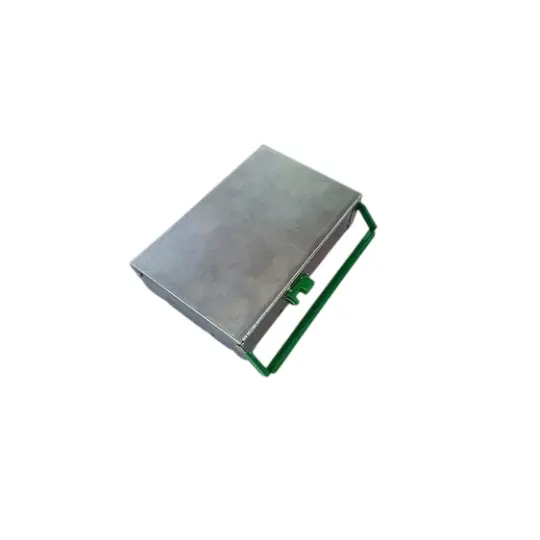
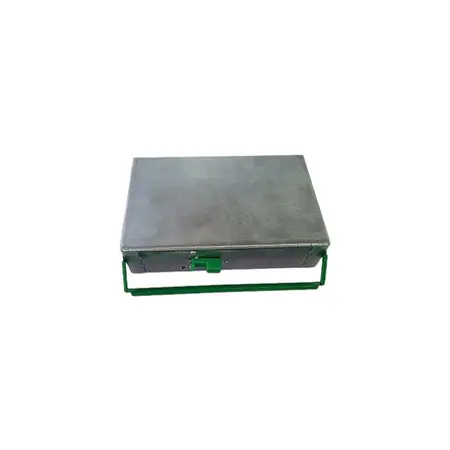
How the NMD50 Reject Cassette Addresses These Issues?
The NMD50 Reject Cassette, which you can get from RM (HONGKONG RONG MEI TECHNOLOGY CO., LIMITED), is designed to work with Glory ATMs and fixes all of the problems we've already talked about.
Precision-Fit Integration with the Glory NMD50 Dispenser
The cassette has precision-laid guide rails and a locking system that makes sure it fits correctly on NMD50 chassis frames. Part number 1038242 (NMD50-NC050 Cash Cassette) is on the main unit. The A006676 Cover Plate, A007490 Pushing Plate, A007726 Swing Arm, A006725 Bottom Plate, and A004366 Connecting Arm are all supporting parts. Each part number is directly linked to an internal Glory machine. This is useful for field engineers who need to make sure that two machines are compatible before they come to fix a problem.
ISO-12209-Compliant Physical Security
The tape case is made from high-impact polycarbonate that was injected into it, and it meets ISO-12209 physical security standards. Tamper-evident design features keep saved notes safe from dirt and people who shouldn't have access to them. The unit can hold 200 to 250 bills, so it can handle real-life street-level cash amounts, not just new bills in a lab setting.
Smart Sensor Geometry for Accurate Bin Monitoring
The cassette's passive input geometry works directly with the ATM's optical sensors to show the "bin presence" and "bin full" status in real time. This stops the machine from running without a properly placed cassette and greatly lowers the number of false alarms that happen with cheaper options. The gear system includes parts A007938 and A008360 (Gate Thick/Thin 14-Tooth Gears) and the clutch unit includes parts A006902 and A004358 (16-Tooth Clutch Gear) to keep the note diversion working the same way over long service cycles.
Comparing the NMD50 Reject Cassette Against Generic Alternatives
A lot of the time, purchasing managers want to know if a generic or cross-brand cassette can be used instead of a model-specific unit. The answer is important for operations as well as finances.
Part-Number Accuracy vs. General Fit
Even though generic cassettes may look the same in size, they don't always have the same keying and sensor shutter setups as the reject vault NMD50 dispenser generation. Cross-compatibility needs to be checked against both the model of the dispenser and the version of the firmware. If there is a difference at the sensor shutter level, "Reject Bin Missing" errors will keep happening. These errors look like software errors but are actually hardware shape issues.
New vs. Refurbished: A Practical Decision Framework
RM sells both brand-new and used NMD50 Reject Cassettes that are in great shape. These are the main things that most people use to decide between the two:
- New cassettes are the right call for high-volume deployments where note throughput is heavy and downtime risk is highest — such as casino cash recycling or busy retail ATM networks.
- Refurbished cassettes offer a cost-effective option for backup inventory or lower-traffic self-service kiosks, provided the supplier can document grading criteria and sensor testing results.
- Mixed fleet strategies — combining new and refurbished units — are common among independent operators managing 50+ machines. The key is verifying that refurbished units pass optical sensor alignment checks before deployment.
Both of RM's options come with a 30-day warranty and online technical support. This gives purchasing teams a clear quality standard to work from when they're putting together an inventory of different spare parts.
Total Cost of Ownership Beyond Unit Price
The buying price is not the only thing that makes up the landing cost of a reject cassette. When operators stock the wrong part number, they have to pay twice as much for shipping, emergency service, and downtime, which more than makes up for any savings they made on the first order. RM's normal lead time is 15–20 working days, but they aim for 7–10 days for pressing orders and respond to inquiries within 24 hours.
Optimizing Your Procurement Decision
A good way to practice managing risks is to make sure that the process of buying ATM extra parts works well.
Verify Sub-Component Part Numbers Before Ordering
Before sending in an order, field engineers should check the fault code against the reject vault cassette part number. Certain parts are used in the NMD50 series. These include control rods A004394 and A004393 (Left/Right Rotation Control Rods), spring parts A006869-02/04, and a cable clip A007387. By comparing these numbers to the machine's fault log, you can avoid guessing and the cost of bringing the machine back.
Request QC Documentation for Compliance
Third-party service providers that work with banks must show that parts can be tracked. RM is certified to ISO9001:2008 and can provide quality control paperwork to back up compliance reports. This is especially important for businesses in places where banks need written proof that non-OEM parts meet physical security standards.
Build a Buffer Stock, Not a Just-in-Time Inventory
With a 30-day warranty window, there is a real chance of downtime if spare parts run out. People who are in charge of 20 or more Glory ATMs should keep at least two weeks' worth of reject tapes on hand. RM has an adjustable MOQ, which means that small trial orders are welcome. This makes it possible to build up extra stock without having to commit to large minimum amounts right away.
Conclusion
It is very important that the reject vault works properly because it directly affects whether an ATM stays live or goes dark. The NMD50 Reject Cassette meets the specific mechanical, sensor, and compliance needs of Glory ATM systems. It has a 200–250 note capacity that works well in real-life situations and is built in a way that is compatible with ISO-12209. You should buy from a supplier with clear quality control procedures and quick technical support whether your fleet needs new units, used stock, or a mix of the two. This will lower both cost and risk. For more than 20 years, RM has been a supplier of ATM parts, and those parts show their operational history.
FAQs
What does a reject vault actually do inside an ATM?
It stores notes the machine cannot safely dispense — including double-picked, skewed, or suspected counterfeit bills — as well as cash customers leave uncollected. Physically isolating these notes keeps the transport path clear and allows accurate end-of-day reconciliation between the electronic journal and physical cash counts.
Why do I keep seeing "Reject Bin Full" errors when the cassette looks empty?
The most common cause is dust on the optical prism sensor. Clean the reflective prism area with isopropyl alcohol and confirm the cassette latches fully when seated. If the error persists, check spring components A006869-02/04 for tension loss, which can cause the plunger plate to misread fill level.
Is the NMD50 Reject Cassette interchangeable with NMD100 units?
The form factors share similarities, but sensor shutter configurations and keying differ between series. Always verify compatibility against the specific dispenser generation and firmware version before substituting cassettes across NMD series.
What warranty and support does RM provide?
Every NMD50 Reject Cassette from RM carries a 30-day warranty. Online technical support is included, with inquiry responses within 24 hours. RM also provides multilingual product documentation in select cases.
Can RM handle urgent orders for field emergencies?
Standard lead time is 15–20 working days. For urgent situations, RM targets a 7–10 day turnaround. Contact Tony@atm-part.com directly with your part number list and required quantity for an expedited quote.
Source Your NMD50 Reject Cassette Through RM
RM has the NMD50 Reject Cassette, which comes from a verified reject vault supplier with over 20 years of experience in ATM parts, ISO9001-2008 certification, and both new and used units in stock. To get a price, make sure the part will work, or talk about group pricing, email Tony@atm-part.com. The current stock can be ordered right away.
References
1. ATM Industry Association (ATMIA). ATM Security Best Practices Guidelines. 2023.
2. International Organization for Standardization. ISO 12209: Banking — Mechanical Security of ATM Cabinets. 2010.
3. Dove Consulting / Fiserv. ATM Deployer Study: Operational Costs and Downtime Analysis. 2022.
4. ATM Marketplace. Field Service Trends in Independent ATM Deployment. 2023.
5. International Organization for Standardization. ISO 9001:2008 Quality Management Systems — Requirements. 2008.
6. RBR London. Global ATM Market and Forecasts Report. 2023.
Learn about our latest products and discounts through SMS or email