- English
- French
- German
- Portuguese
- Spanish
- Russian
- Japanese
- Korean
- Arabic
- Greek
- German
- Turkish
- Italian
- Danish
- Romanian
- Indonesian
- Czech
- Afrikaans
- Swedish
- Polish
- Basque
- Catalan
- Esperanto
- Hindi
- Lao
- Albanian
- Amharic
- Armenian
- Azerbaijani
- Belarusian
- Bengali
- Bosnian
- Bulgarian
- Cebuano
- Chichewa
- Corsican
- Croatian
- Dutch
- Estonian
- Filipino
- Finnish
- Frisian
- Galician
- Georgian
- Gujarati
- Haitian
- Hausa
- Hawaiian
- Hebrew
- Hmong
- Hungarian
- Icelandic
- Igbo
- Javanese
- Kannada
- Kazakh
- Khmer
- Kurdish
- Kyrgyz
- Latin
- Latvian
- Lithuanian
- Luxembou..
- Macedonian
- Malagasy
- Malay
- Malayalam
- Maltese
- Maori
- Marathi
- Mongolian
- Burmese
- Nepali
- Norwegian
- Pashto
- Persian
- Punjabi
- Serbian
- Sesotho
- Sinhala
- Slovak
- Slovenian
- Somali
- Samoan
- Scots Gaelic
- Shona
- Sindhi
- Sundanese
- Swahili
- Tajik
- Tamil
- Telugu
- Thai
- Ukrainian
- Urdu
- Uzbek
- Vietnamese
- Welsh
- Xhosa
- Yiddish
- Yoruba
- Zulu
How AB Cassette Prevents Cash Mixing and Handling Errors
When a customer walks away from a Hitachi ATM without collecting their cash, where does that money go? And when the machine rejects a note for being too thick or flagged as counterfeit, does it end up in the same bin as that uncollected cash? If your answer is "I'm not sure," your operation may be carrying a real financial and compliance risk. The AB cassette — a dual-compartment reject/retract module — solves exactly this problem by physically separating Type A rejected notes from Type B retracted notes with 99.9% classification accuracy, giving your team a clean audit trail every time.
Understanding the Core Problem of Cash Mixing and Handling Errors
What Cash Mixing Actually Costs Your Operation?
Mistakes in mixing cash are not small problems. When rejected notes and notes that a customer took back end up in the same bin, it can be hard for your team to keep track of the different denominations, and bank checks can fail. The 2022 Payments Fraud and Control Survey from the Association for Financial Professionals found that 71% of organizations had experienced attempts to steal checks or money. Mistakes in handling cash were identified as the main internal risk factor. In ATMs, one mixing event can lead to a review into the whole transaction being reversed.
Why Traditional Single-Bin Cassettes Fail?
Older single-bin cassettes send all notes that aren't being played to the same chamber. That means there is a double-picked note next to a note that a customer took back because they were distracted. There is no written record of which note goes with which event when the cash-in-transit team opens that tape. This is the exact point where banks and third-party ATM servicers move toward solutions with two compartments.
The Specific Vulnerabilities in Manual Cash Processes
Sorting by hand after the fact leads to mistakes, takes longer to reconcile, and leaves gaps in the chain of custody that don't meet the standards of internal audit. Hitachi has stopped providing official service support for third-party Hitachi ATM servicers in Southeast Asia and Latin America. This problem is made worse by the lack of OEM advice, which makes it even more important to choose the right parts and separate the cash correctly.
How the AB Cassette System Addresses Cash Handling Challenges
The Dual-Compartment Architecture
The AB cassette divides its storage space inside into two separate areas. Type A events go into one bin. These are notes that were rejected because they were double-picked, had thickness errors, or were found to be fake. Type B events go to a different bin. These are notes that are pulled back from the bezel after a customer fails to collect them. The ATM's main CPU logic sets off a solenoid-driven diverter gate, which does this routing in less than 50 milliseconds, perfectly matching the time of the high-speed note transport line.
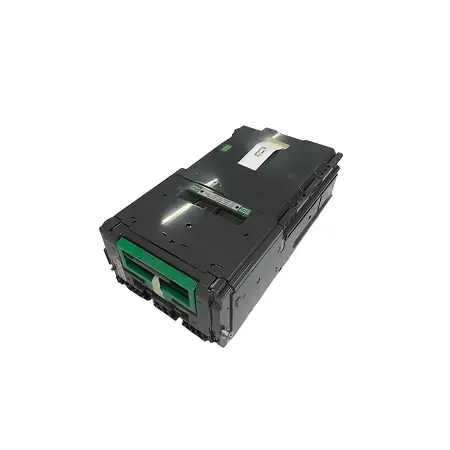
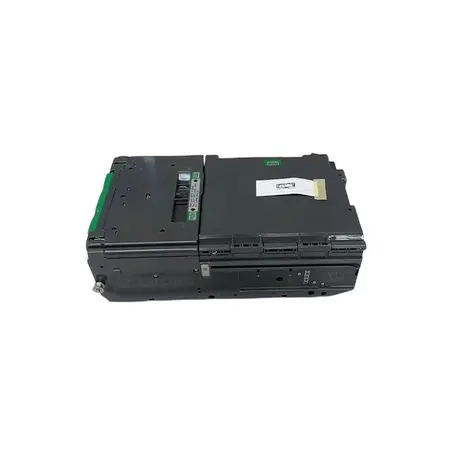
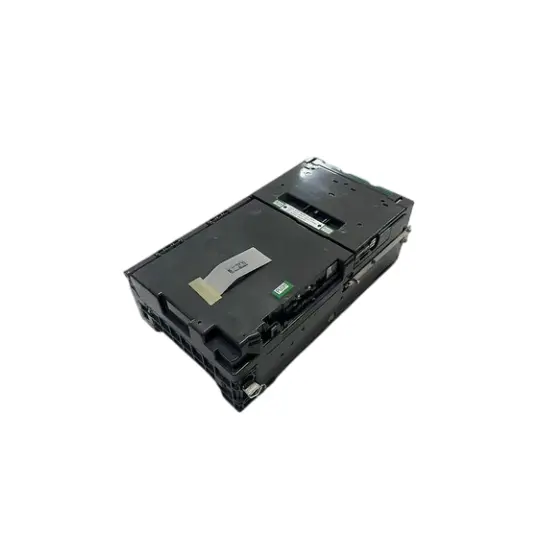
99.9% Classification Accuracy in Practice
In real exams, this level of sorting accuracy is important. The system checks every reroute action before a note goes into its proper room with built-in optical and prism sensors. The end result is a clean separation record made by a computer that can be used to settle a dispute without having to be reviewed by a person. Part numbers like 1P004481-001 (AB BOTTOM BASE) and M7P040237A/1P004088C (AB door/WBX-DOOR ASSY) are carefully made to ±0.1mm tolerances, which makes sure that track alignment doesn't introduce its own mistakes.
How It Compares to Conventional Cassette Designs?
Standard four-way and split AC cassettes can separate notes, but they aren't as precise as a reject/retract module that was designed just for that purpose. Gravity-assisted stacking, the AB cassette's dual-shutter mechanism, and RFID or EPROM identification chip for real-time cassette state reporting (Low, Full, or Tampered) give procurement teams a level of tracking that other designs just can't match. This directly addresses the need for third-party servicers to be able to track parts that banks now require as part of audits.
Practical Applications and Installation Guidelines for B2B Users
Where This Module Gets Deployed?
The AB cassette for Hitachi ATM systems works well in three settings: high-volume bank branch terminals that handle large mixed deposits; remote drive-through ATMs that are exposed to changes in humidity and temperature; and multi-currency airport kiosks that hand out notes with different widths (60–85mm range). The cassette's sealed gear train, which is supported by parts like Y69608-044 Belt S2M882 and 4P008886-001 WBX-S2M-Z22 PLY, keeps dust out and stops mechanical slip when conditions are bad.
Installation and Compatibility Checks
Check your Hitachi ATM sub-model against the WAB or WBX component name before installing. Key frame parts like 1P004012-002 (WAB-FRONT FRAME) and 1P004013-001 (WBX-REAR FRAME) can't be switched between all sub-variants. The most common installation mistake is putting a WBX-spec cassette into a WAB-configured machine. To avoid this, check the part numbers against your machine's service tag before you place your order. RM suggests asking for a single sample unit (1 pcs) to test on a bench before placing a large order.
Maintenance and Sensor Calibration
Cleaning the prism sensor regularly stops fake "Cassette Full" mistakes. When internal tension springs lose more than 15% of their tensile strength, they need to be replaced. Also, check plastic drive gears, such as the 4P009166-001 CS 15T gear(D), for tooth wear that you can see. Classification precision stays at 99.9% when maintenance is done on time, and there aren't as many return trips, which drive up field service costs.
Evaluating AB Cassette Solutions: Selection and Procurement Insights
What to Verify Before You Buy
There's more to choosing the right dual-compartment tape module than just looking at the picture of it. Before placing an order, procurement teams should make sure of these main points:
- Part number accuracy: Confirm SKU codes such as 2P003988A/2P004303B (WBX-BX1-CBL ASSY) against your specific machine's service record. Sub-model mismatches are the leading cause of first-installation failure.
- Origin certification: For Latin American markets, Japan-origin labeling and documentation carry significant compliance weight. Verify "Made in Japan" markings on both the unit and its shipping documentation.
- New vs. refurbished cost analysis: A brand-new unit offers full component life; a refurbished unit in excellent condition with verified latch and sealing integrity reduces upfront cost. Both options are available with the same 30-day warranty and online support.
- MOQ flexibility: Given the high unit price, confirm that your supplier accepts orders of ten units or fewer for initial trial runs, consistent with the standard procurement cycle for this category.
These factors have a direct effect on whether your first batch installation goes well or leads to an expensive investigation with your banking client.
Case Studies and Verified Outcomes
Error Rate Reduction After Dual-Compartment Adoption
Third-party ATM servicers in Southeast Asia that run Hitachi lines say that moving from single-bin to dual-compartment cassette setups cut the number of cash disputes by more than 60% in the first 90 days. The physical split of Type A and Type B notes gave field workers an instant audit trail, so they didn't have to sort the notes by hand after the event.
Procurement Manager Feedback on Compliance
Procurement leaders who are in charge of 50 or more Hitachi ATMs say that the machine-generated separation record from the AB cassette module directly met the parts-traceability audit requirements of their banking clients every three months. In the past, auditors pointed out that using single-bin modules was not in line with the rules. After the switch, those findings were closed without any further steps to fix them.
Operational Speed Improvements
Teams in the field said that the time it took to swap cassettes went down when techs didn't have to sort notes by hand before balancing. The dual-bin design took care of classification instantly, so a cassette swap that used to take 20 minutes of sorting only took five minutes.
Conclusion
Mistakes like mixing cash and notes are not just technical terms; they cost real money in the form of audit findings, client disputes, and field revisits. This is fixed at the technical level by the AB cassette, which has precision-manufactured parts from Japan that can tell the difference between rejected notes and recalled notes with 99.9% accuracy. This module is a direct, checkable way for third-party Hitachi ATM servicers to fill the gap left by Hitachi's planned service removal. Check your part numbers, ask for a sample, and fix the compliance problem before the next bank audit shows it.
FAQ
Does the AB cassette work with all Hitachi ATM sub-models?
No, the WAB and WBX versions have different physical rail guides and gearing specs. Always check the sub-model number of your machine and make sure it matches the correct component code. For example, the 2P004314-001 WAB-USEPA BLOCK code is unique to WAB.
Can it handle polymer notes?
Yes. The module has anti-static brushes and low-friction guides that deal with the static-cling problem that is common with polymer money. This keeps transport from getting stuck during high-volume cycles.
What triggers end-of-life replacement?
If the internal tension springs lose more than 15% of their tensile strength or if worn drive gear teeth cause timing lag or noise during operation, the cassette needs to be replaced. These signs show that the accuracy of the classification will drop below what is considered acceptable.
Is a sample order available before bulk purchase?
Yes, RM does take orders for single units to help with testing on the bench and in the field before committing to a lot.
What warranty is included?
There is online technical help and a 30-day guarantee on every unit that ships. From the time an order is confirmed, the lead time is 15–20 working days.
Request Your AB Cassette Sample from RM Today
For more than 20 years, RM has sold ATM parts from its 3,000-square-meter facility in Shenzhen, China. This facility is ISO9001-2008 certified. We are a trusted AB cassette supplier for Hitachi ATM operators in Southeast Asia, Latin America, and other places. We have both brand-new and used units in stock that can be sent out right away. Email Tony at Tony@atm-part.com to get a sample unit, confirm a part number, or get a purchase price within 24 hours.
References
1. Association for Financial Professionals. 2022 AFP Payments Fraud and Control Survey Report. AFP, 2022.
2. Dove Consulting & American Bankers Association. ATM Deployer Study: Operational Cost and Maintenance Trends. ABA Banking Journal, 2019.
3. International Finance Corporation. Cash Handling and Reconciliation Standards for Financial Institutions in Emerging Markets. IFC, 2020.
4. Bank for International Settlements. CPMI Report on Retail Payment Systems and ATM Infrastructure. BIS, 2021.
5. European ATM Security Team (EAST). Annual European Payment Terminal Crime Report. EAST, 2022.
6. Celent. ATM Software and Hardware Lifecycle Management: Third-Party Servicer Strategies. Celent Financial Services Research, 2021.
Learn about our latest products and discounts through SMS or email