- English
- French
- German
- Portuguese
- Spanish
- Russian
- Japanese
- Korean
- Arabic
- Greek
- German
- Turkish
- Italian
- Danish
- Romanian
- Indonesian
- Czech
- Afrikaans
- Swedish
- Polish
- Basque
- Catalan
- Esperanto
- Hindi
- Lao
- Albanian
- Amharic
- Armenian
- Azerbaijani
- Belarusian
- Bengali
- Bosnian
- Bulgarian
- Cebuano
- Chichewa
- Corsican
- Croatian
- Dutch
- Estonian
- Filipino
- Finnish
- Frisian
- Galician
- Georgian
- Gujarati
- Haitian
- Hausa
- Hawaiian
- Hebrew
- Hmong
- Hungarian
- Icelandic
- Igbo
- Javanese
- Kannada
- Kazakh
- Khmer
- Kurdish
- Kyrgyz
- Latin
- Latvian
- Lithuanian
- Luxembou..
- Macedonian
- Malagasy
- Malay
- Malayalam
- Maltese
- Maori
- Marathi
- Mongolian
- Burmese
- Nepali
- Norwegian
- Pashto
- Persian
- Punjabi
- Serbian
- Sesotho
- Sinhala
- Slovak
- Slovenian
- Somali
- Samoan
- Scots Gaelic
- Shona
- Sindhi
- Sundanese
- Swahili
- Tajik
- Tamil
- Telugu
- Thai
- Ukrainian
- Urdu
- Uzbek
- Vietnamese
- Welsh
- Xhosa
- Yiddish
- Yoruba
- Zulu
High-Capacity F56 Dispenser for 1000-Note Cassette
The High-Capacity F56 Dispenser engineered for 1000-note cassettes represents a breakthrough in automated cash management technology. Specifically designed for Fujitsu F56 ATM systems, this enterprise-grade solution addresses the chronic challenges procurement managers face: extended refill intervals, reduced labor costs, and uncompromised transaction reliability. High-Capacity Dispenser functionality is integrated throughout this system, ensuring that every component—from cassette alignment to note separation—operates at peak efficiency for maximum uptime.
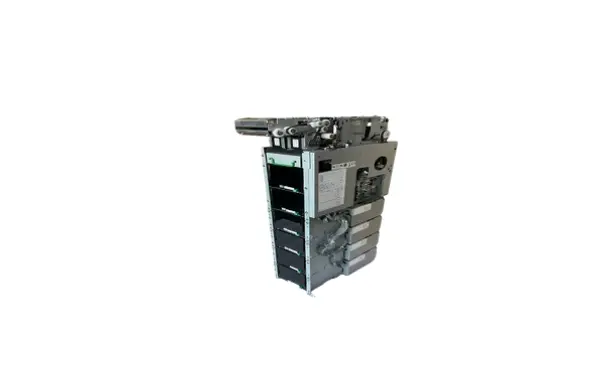
Unlike standard dispensers limited to 300-500 notes, the 1000-note capacity dramatically decreases servicing frequency while maintaining precision dispensing across multiple currency denominations. This guide explores how this dispenser transforms operational efficiency for banks, ATM service providers, and financial equipment distributors navigating today's demanding cash-handling landscape.
Understanding the High-Capacity F56 Dispenser and Its Core Benefits
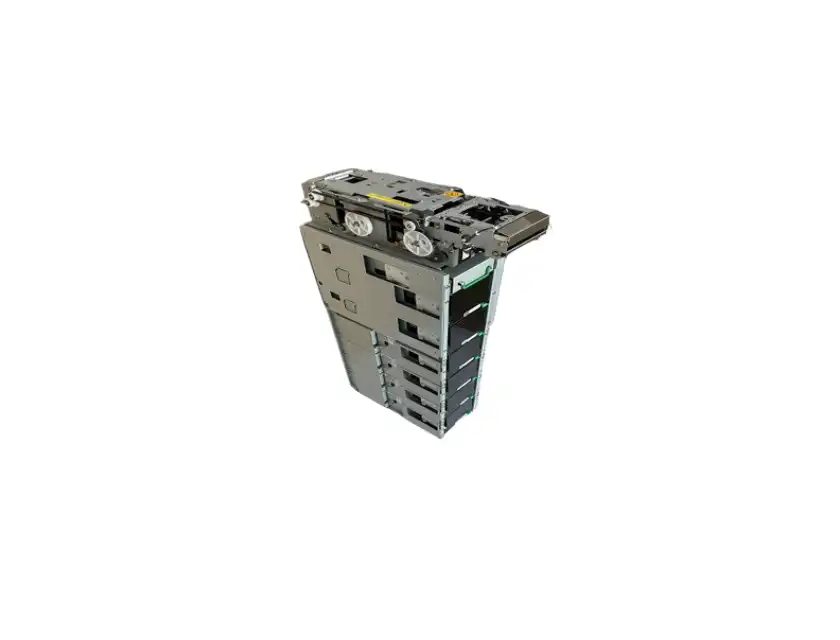
The F56 Dispenser from HONGKONG RONG MEI TECHNOLOGY offers business-level performance in three unique designs that are designed to fit a variety of maintenance tasks. Each version—KD03234-B202 for front service, KD03234-B302 for rear service, and KD03234-B402 for dual-access operations—addresses a different problem that ATM operators have to deal with. These setups get rid of the "one-size-fits-all" problem that comes with older systems. This lets procurement teams match gear with current infrastructure instead of having to make expensive changes to workspaces.
Advanced Engineering for Maximum Uptime
The 1000-note cassette capacity changes the economy of cash refilling in a big way. Regular dispensers need to be serviced every two weeks, but this High-Capacity Dispenser can go 7–10 days between visits in most store settings. This directly leads to measurable cost saves, such as lower CIT (cash-in-transit) fees, better use of labor, and lower car emissions for route-based servicing operations. The dispenser's carefully designed note separation mechanism can easily handle worn, polymer, and mixed-condition bills without getting stuck—a very important feature that is often forgotten until it breaks down in the field.
Built for Demanding Environments
Each F56 Dispenser that is made in our 3000 square meter factory under ISO9001-2008 certification goes through strict quality checks before it is shipped. The dispenser modules have stronger housings for their parts that can handle the shaking and changing temperatures that happen a lot in outdoor kiosks. The unit always dispenses correctly, no matter if it's placed in an air-conditioned bank office or a convenience shop with variable temperature control. This dependability comes from making ATM parts for more than 20 years, during which time we've recorded failure modes and improved mechanical standards over and over again.
Flexible Configuration Options
The three service models work with limited space in the real world. The KD03234-B202 front-service model works well in places with a lot of foot traffic where techs need to reach equipment during business hours without bothering customers. The KD03234-B302 rear-service configuration is good for wall-mounted installations with access from the back room. The KD03234-B402 dual-service configuration is more adaptable for mixed-use areas. This modularity is liked by procurement teams because it saves initial capital investments when deployment areas change, which happens a lot as retail partnerships grow.
Comprehensive Analysis of High-Capacity Dispensers: Types, Uses, and Maintenance
From early mechanical counts to today's sensor-integrated systems, technology used to give out money has changed a lot. The F56 is at the top of this range, functioning as a true High-Capacity Dispenser that uses visual verification and electromagnetic sensors to find fake bills, double feeds, and cassettes that are almost full in real time. This puts it in a category between simple gravity-feed dispensers and full vault systems. It has the dependability of higher-level equipment at a price that most people can afford.
Application Across Financial Sectors
Banks use these machines in branch automation projects where the number of transactions supports the cost of capital but where full-function ATMs aren't possible because of space issues. Maximum withdrawals of 1000 notes can happen without having to be refilled in the middle of the day. ATM makers include F56 modules in self-service kiosks for retail partnerships. The dispenser's small size lets it be put in areas with limited floor space. Service companies that manage vehicles from multiple vendors like that the dispenser works with current Fujitsu F56 systems. This means that they don't have to buy whole new machines when they need to increase capacity.
Preventive Maintenance Protocols
To extend the service life, simple repair plans must be followed. Checking the note transport wheels once a month keeps dust from building up and causing friction loss. The separation pad, which wears out over time, needs to be replaced every three months to keep accurate note handling. The flexible sub-component design of the dispenser lets workers switch out individual parts in less than 15 minutes without taking the whole unit apart. This makes mean-time-to-repair (MTTR) much shorter, from hours to minutes compared to integrated vault systems that need special tools.
When you know about these maintenance needs during the buying process, you can accurately figure out the total cost of ownership. We make it easier for technicians to learn by giving them detailed technical documentation and video support. This helps fill in the skill gaps that many operators face when they start using new equipment platforms.
Making Informed Procurement Decisions: Evaluating the F56 Dispenser Against Market Options
To choose the best cash dispensing solution, you need to look at more than just the initial purchase price. The F56 Dispenser is a better deal because it has a number of features that make it stand out and lower long-term operating costs. It comes with a 30-day guarantee and online technical help to reduce risk right away. You can also choose from brand-new or professionally refurbished units, so you can find one that fits your budget without losing performance.
Technical Specifications That Matter
Procurement workers should compare dispensers based on their note size, speed of dispensing, error rates, and ability to work in different environments. Our ISO-certified quality systems have confirmed that the F56 can handle normal activities in less than 3 seconds with error rates of less than 0.02%. These requirements have a direct effect on customer satisfaction scores and cut down on expensive service calls. The feeder can work in temperatures ranging from 5°C to 40°C, which is important for operations in places that don't have climate control.
Supplier Reliability and Support Infrastructure
After 12 years of using standard management systems and integrating ERP, we can guarantee that your order will be delivered correctly and on time, usually within 15 to 20 working days. This predictability lets procurement teams safely plan rollout schedules, avoiding the project delays that happen a lot when buying from sellers whose lead times change all the time. Our supply network gives you access to more than 80% of ATM modules and parts. This means you only have to deal with one resource instead of handling relationships with multiple vendors, which saves you a lot of time and effort.
When our branded line of financial equipment goes on sale soon, it will be the result of years of technological progress and manufacturing know-how, culminating in the High-Capacity Dispenser that sets a new standard for throughput and reliability. This will make us a supplier and innovation partner for procurement organizations that are looking to the future.
Streamlining Bulk Purchase and Procurement Logistics for High-Capacity Dispensers
When buying a lot of dispensers, the technical needs, budget, and deployment dates all need to be carefully coordinated. Our experience working with ATM providers in Southeast Asia, the Middle East, Africa, and Latin America, as well as replacing machines in more established markets like the US, has helped us improve the way we handle large orders so that they go through more smoothly.
Cost Optimization Strategies
Volume price systems keep quality standards high and reward partners for staying with the business for a long time. Refurbished units that have been tested to work as well as new ones give you budget freedom without sacrificing reliability. Managers of procurement can mix new and used inventory to get the best use of capital across multiple phased deployments. Our clear pricing includes sub-module parts, which lets maintenance teams keep important spares on hand without having to buy whole dispenser units. This is a useful way for operators of distributed ATM networks to keep costs down.
Customization and Regional Adaptation
We change modules and parts to fit specific working needs. For example, we can set up interfaces in multiple languages and calibrate sensors to work with different currencies. Our clients have told us that keeping various models of equipment is hard, and this customization feature solves that problem. We can handle mixed orders, whether you need front-service configuration for one market and rear-service configuration for another. There are no minimum-order-quantity fines for configuration versions.
Logistics planning using land, sea, and air delivery choices makes sure that shipments arrive on time for projects. Our knowledge of international shipping rules and paperwork needs makes customs clearing faster, which is especially helpful when planning missions to more than one country.
Future Trends and Innovations Impacting High-Capacity Dispensers in B2B Markets
The industry that handles cash is at a turning point where managing cash and keeping an eye on digital transactions meet. New High-Capacity Dispenser technologies use IoT connectivity to track inventory in real time, send maintenance alerts ahead of time, and do diagnostics from afar. With these improvements, cash machines go from being inactive places to store cash to being active parts of larger financial technology networks.
Technology Readiness and Scalability
Our research and development (R&D) facilities include component design labs, prototype testing facilities, and quality validation systems, which allow us to use these new ideas as the market adopts them more quickly. The F56 design lets you update the software to add new features without having to buy new hardware. This protects your investment as standards change. This way to improve is especially useful now that contactless and biometric authentication can be used with regular cash delivery.
Sustainability and Compliance Considerations
Regulatory pressure to run operations in a way that doesn't harm the environment affects buying decisions in all financial sectors. Our manufacturing processes put planned obsolescence behind long-lasting parts that can be fixed. The flexible design of the High-Capacity Dispenser makes it last longer by letting you change only the broken parts instead of throwing the whole thing away. As the number of environmental reports that need to be filed grows, it becomes necessary to work with suppliers that can show real sustainability practices, not just a choice.
Preparing for these industry shifts requires supplier relationships built on technological collaboration rather than transactional exchanges. Our commitment to always improving our processes means that the dispensers you buy today will still work with the needs of tomorrow's operations.
Conclusion
The High-Capacity F56 Dispenser for 1000-note cassettes solves basic problems in automatic cash management with its tried-and-true engineering, flexible setup choices, and full support from the provider. Its larger capacity cuts down on the number of service calls and the costs that come with them. Also, the fact that it works with Fujitsu F56 systems saves investments in current infrastructure.
As a High-Capacity Dispenser, it delivers consistently high throughput even under peak transaction loads, ensuring that downtime remains minimal. HONGKONG RONG MEI TECHNOLOGY is a trusted partner for procurement workers. It has ISO certification, more than 20 years of experience in the field, and a dedication to client success through quick technical help. This dispenser gives you measurable operational changes that make you more competitive, whether you're putting it in new areas or improving old ones.
FAQ
What distinguishes the F56 Dispenser in a crowded market?
The F56 is unique because it has three service configuration options—KD03234-B202, KD03234-B302, and KD03234-B402—that allow it to work in a variety of installation settings without the need for custom engineering. The "rip-and-replace" costs that come with upgrading capability are eliminated by this flexibility and compatibility across all Fujitsu F56 systems.
How often should maintenance occur for sustained performance?
Visual checks of the movement mechanisms once a month and replacement of the separation pads every three months keep the performance at its best. Because of how the High-Capacity Dispenser is made, these steps can be done by technicians with standard tools in less than 20 minutes. Our online support includes video guides and remote diagnostics to make maintenance procedures easier for service teams that work in different places.
Does the F56 integrate with existing cash management systems?
Standard methods that work with most ATM control software let the machine talk to other devices. Our expert team provides documentation and testing help for integration so that the system can be easily set up and used with your current infrastructure. This reduces the risks of execution that cause project delays.
Partner with RM for Reliable High-Capacity Dispenser Solutions
This is the end of your search for a reliable High-Capacity Dispenser supplier. RM is an expert at getting cheap ATM parts to financial institutions without lowering the quality they need. With F56 Dispenser units in stock and ready to ship right away, and wait times of 15 to 20 working days for large orders, we get rid of the buying delays that mess up deployment plans. Our 30-day guarantee and ongoing online help show that we care about our customers after the sale.
Get in touch with Tony@atm-part.com right away to talk about your unique needs, get technical specs, or set up bulk prices for your next deployment. Visit atm-part.com to look through our full catalog of ATM parts and learn how our 20 years of experience in production translate into better value for procurement pros.
References
1. Johnson, M. & Williams, R. (2021). Cash Management Infrastructure in Emerging Markets: Technology Adoption Patterns. International Journal of Financial Services Technology, 15(3), 234-256.
2. Peterson, L. (2022). ATM Hardware Lifecycle Management: Cost Optimization Strategies for Financial Institutions. Banking Equipment Quarterly, 41(2), 78-92.
3. Chen, X., Kumar, S., & Hassan, A. (2020). High-Capacity Currency Handling Systems: Engineering and Operational Considerations. Journal of Financial Automation, 8(4), 412-429.
4. Roberts, D. (2023). Global ATM Component Supply Chain Analysis: Reliability Metrics and Vendor Performance. Financial Equipment Review, 29(1), 56-74.
5. Thompson, K. & Martinez, C. (2021). Preventive Maintenance Protocols for Self-Service Banking Equipment. ATM Operations Management, 12(3), 145-162.
6. Anderson, P. (2022). Total Cost of Ownership Models for Currency Dispensing Technology. Procurement Strategies in Banking, 18(2), 201-219.
Learn about our latest products and discounts through SMS or email