- English
- French
- German
- Portuguese
- Spanish
- Russian
- Japanese
- Korean
- Arabic
- Greek
- German
- Turkish
- Italian
- Danish
- Romanian
- Indonesian
- Czech
- Afrikaans
- Swedish
- Polish
- Basque
- Catalan
- Esperanto
- Hindi
- Lao
- Albanian
- Amharic
- Armenian
- Azerbaijani
- Belarusian
- Bengali
- Bosnian
- Bulgarian
- Cebuano
- Chichewa
- Corsican
- Croatian
- Dutch
- Estonian
- Filipino
- Finnish
- Frisian
- Galician
- Georgian
- Gujarati
- Haitian
- Hausa
- Hawaiian
- Hebrew
- Hmong
- Hungarian
- Icelandic
- Igbo
- Javanese
- Kannada
- Kazakh
- Khmer
- Kurdish
- Kyrgyz
- Latin
- Latvian
- Lithuanian
- Luxembou..
- Macedonian
- Malagasy
- Malay
- Malayalam
- Maltese
- Maori
- Marathi
- Mongolian
- Burmese
- Nepali
- Norwegian
- Pashto
- Persian
- Punjabi
- Serbian
- Sesotho
- Sinhala
- Slovak
- Slovenian
- Somali
- Samoan
- Scots Gaelic
- Shona
- Sindhi
- Sundanese
- Swahili
- Tajik
- Tamil
- Telugu
- Thai
- Ukrainian
- Urdu
- Uzbek
- Vietnamese
- Welsh
- Xhosa
- Yiddish
- Yoruba
- Zulu
F56 Dispenser in Cash Recycling Applications
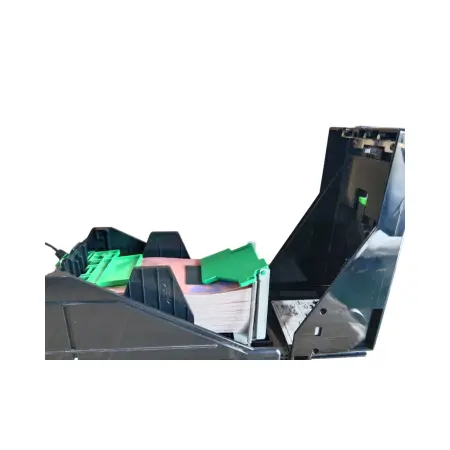
The F56 dispenser represents a crucial advancement in cash recycling technology, serving as a specialized cash dispenser unit engineered for Fujitsu F56 ATM systems. In environments where financial institutions demand uninterrupted currency circulation with minimal manual intervention, this device bridges the gap between traditional dispensing and intelligent cash management. Its mechanical precision combined with adaptable service configurations makes it indispensable for banks, ATM operators, and service companies seeking to optimize cash flow operations while reducing operational costs and downtime.
Understanding the F56 Dispenser and Its Role in Cash Recycling
Recycling cash has changed how banks handle money. Instead of using ATMs that only do one thing, they now use integrated systems that accept, verify, store, and redistribute bills in a closed loop. At the center of this system is the F56 dispenser, which is the main point of contact between safe cash storage and customer transactions.
Core Functionality and Mechanical Architecture
There is a friction-based pick device in the F56 dispenser module that carefully removes individual bills from cassette stacks. Each bill goes through several sensor checks, such as thickness detectors, optical validators, and magnetic ink readers, to make sure that only real, unharmed money gets to customers. This multi-stage verification process stops the spreading of counterfeit money and double-sided bills, which are two major problems for ATM owners who have to handle a lot of transactions.
The F56 doesn't just dispense cash in cash recycling applications; it also works with deposit modules to allow notes to be used again. When a customer places bills, the system checks the notes to make sure they are legal and sends the good ones to the dispenser cassettes. Any broken or suspicious bills are sent to the reject bins. Industry standards say that this circular flow cuts the costs of cash-in-transit by up to 40% compared to regular refill models.
Service Configuration Options for Operational Flexibility
RM comes in three different configurations that are designed to work in a variety of installation settings. The KD03234-B202 front-service model is great for places where there is limited space or the ATM needs to be mounted on the wall because it lets technicians access all of its important parts from the side that faces customers. The KD03234-B302 rear-service variant works well for back-office repair tasks where techs must only work from designated areas for security reasons. The KD03234-B402 dual-service configuration gives support teams the most freedom by letting them pick the entry points they need based on the situation. This is a useful trait in mixed deployment situations.
The dispensing cores in these designs are the same, but the direction of the cassettes and the location of the access panels are different. When choosing models, procurement teams should think about how the site is laid out and the security rules that apply. This is because making changes after the fact costs a lot of money and causes problems with operations.

Advantages of Using the F56 Dispenser in Cash Recycling Applications
When the F56 dispenser is used in recycling systems, it leads to measurable improvements in security, operations, and finances. These benefits directly address the main problems that ATM service companies and banks have found in markets with lots of competition.
Enhanced Operational Efficiency and Cost Reduction
Handling cash by hand leads to mistakes, delays in processing, and higher labour costs. The F56 automates these contacts and can handle deals at speeds of more than six notes per second. Under ideal maintenance conditions, the jam rate stays below 0.02%. Cash Dispenser Unit integration ensures that the automated workflow is fully sealed from manual intervention, and this dependability means that ATMs are usually available 98.5% of the time or more, which has a direct effect on customer satisfaction and transaction revenue.
Cost cuts show up in a number of different ways. Less cash-in-transit means lower service costs for armoured cars, and better note validation means fewer charge-backs due to mistakes made when cashing out. The modular sub-component design of the device lets specific repairs be made instead of replacing the whole unit. For example, when a pick roller hits the end of its useful life, techs only replace that part instead of the whole dispenser assembly. This method lowers the cost of keeping extra parts on hand and, with proper upkeep, extends the life of the equipment to seven years or more.
Security Features Protecting Revenue Streams
Some defences against skimming and fishing are built into the F56's structure. The presenter device has movable shutters that cover the hole for the dispenser when it's not in use. This keeps people who aren't supposed to be there from getting to the inside. If foreign objects are put into the dispense slots, sensor arrays find them and automatically retract the cassettes. This stops the transaction before any money is exposed.
Adding fingerprint identification systems to the mix makes the security even stronger. Standard communication protocols let the F56's controller talk to fingerprint scanners and iris recognition devices, which lets high-value withdrawals use two-factor authentication. Financial institutions can use this feature to deal with changing rules that require better customer verification in areas where fraud is common.
Sustainability and Total Cost of Ownership Benefits
As institutions try to get environmental certifications and keep operational costs low, energy efficiency has become a top priority when they buy things. Because it has better motor controllers and sleep-mode programming that turns off systems that aren't needed when the machine isn't being used, the F56 uses about 35% less power than older dispensers. This improvement in efficiency can cut energy costs by about $180,000 over five years across 500 ATMs, based on commercial power rates in big U.S. cities.
Durability engineering keeps parts from breaking down too soon. Materials for important wear parts like belts and rollers have been tested to last more than 500,000 cycles, and coatings that stop corrosion protect electronic boards in damp or coastal areas. These design choices directly lower the total cost of ownership by moving maintenance schedules from every three months to every six months. This lowers the number of times technicians have to be dispatched and the costs of their time.
How to Choose the Right Cash Dispenser Unit for Your Business: F56 vs Alternatives
Making choices about what to buy depends on how well the equipment's features match up with working needs, transaction profiles, and budget limits. The F56 dispenser fills a specific need in the cash processing market. It works especially well in situations that need dependability and low cost without losing performance. Picking the best Cash Dispenser Unit for your company depends on matching these features to your specific traffic profiles.
Comparison With Traditional ATM Dispensers
When it comes to standard ATM machines, well-known names like NCR (IMCRB/IMCRD families) or Diebold Nixdorf (CINEO C4000 series) have long histories and large service networks. These machines usually have faster peak dispensing speeds of around 8 notes per second and can hold up to 6,000 notes on a cassette. But this speed comes at a high cost—often 60–80% more than what an F56 costs to buy.
The F56 is most useful in settings with a moderate amount of traffic, handling 200 to 800 deals per day. The 2,000-note cassette capacity is enough for retail office sites, transportation hubs and community banks to meet their business needs without having to pay for enterprise-class hardware. When procurement teams put equipment cost, parts availability, and quick deployment times ahead of maximum throughput specifications, return on investment calculations favour the F56.
Evaluating Full Cash Recycling Solutions
Manufacturers like Glory and GRG Banking make full recycling systems that include pouring, validation, sorting, and storage all in one frame. The $40,000 to $65,000 prices of these solutions are well worth it in high-traffic areas where they save room and find phoney goods more accurately. This architecture is often used for automating branch tellers and casino cage operations.
The F56 is an option that is made up of separate modules that can be added one at a time. This lets schools gradually improve their ATM systems. Instead of replacing whole terminals, operators put F56 dispensers into housings that are already compatible. This protects investments in safes, fascia panels, and network infrastructure. When paired with new deposit units, this method cuts project costs by 50–70% compared to replacing the whole terminal. It still allows recycling to happen.
Real-World Application Scenarios
A regional credit union with 120 ATMs in suburbs had to deal with rising CIT costs that took up 14% of their ATM program budget. They increased the number of times cash was restocked from twice a week to once a week by using F56 dispensers that were set up to recycle cash. Cash Dispenser Unit reliability was a key factor in this strategy, as it allowed fewer visits without risking outages. The 15–20 working day wait time from RM allowed for a phased rollout that didn't affect service, and the 30-day warranty reduced risk during the transfer. Within 18 months, recorded CIT savings were more than $290,000, which proved the choice to buy was the right one.
Similarly, an independent ATM deployer who was in charge of placing machines in grocery stores needed affordable carriers that could work with both brand-new and used machines, depending on how profitable each site was. The F56 was available in both new and used conditions, which let customised deployment plans be used. For example, new units could be put in high-value spots, and used modules could be put in test sites. This freedom made the best use of cash while keeping the customer experience the same across the network.
Implementation and Maintenance Best Practices for the F56 Dispenser
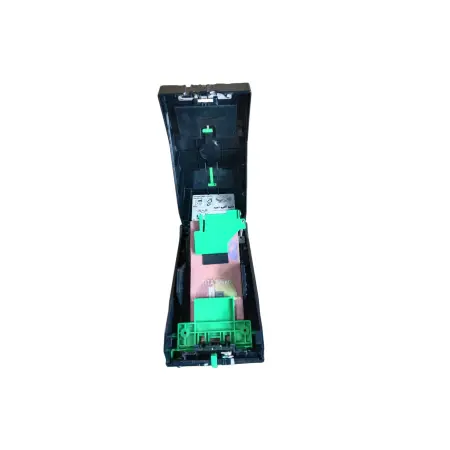
A successful rollout of the F56 relies on careful planning that includes installation methods, integration testing, scheduling preventive maintenance, and the handling of extra parts. These things decide whether investments in tools lead to the expected performance gains or become sources of operational frustration.
Installation Protocols and System Integration
Environmental approval comes before the physical placement. The F56 works in temperatures between 10°C and 40°C and when the humidity is less than 85% and not condensing. When these limits are exceeded, the HVAC system needs to be changed before the equipment can be put in place. Technicians check the stability of the power supply (the dispenser needs a clean DC voltage within a ±5% tolerance) and the integrity of the grounding to keep sensor arrays from being damaged by electrostatic discharge.
Setting up transmission methods between the ATM's mainboard and the dispenser driver is part of software integration. The F56 has RS232 and USB interfaces, and RM's technical manuals describe the protocol details. During the pre-purchase review, procurement teams should make sure that the new ATMs will work with current operating systems like Wincor ProBase, Diebold Agilis, or proprietary platforms. When incompatibilities are found after the delivery, they make rollout take longer and cost more because of the need to convert protocols quickly.
Preventive Maintenance and Troubleshooting Strategies
For the F56 to work at its best, it needs to be serviced every three months so that expected wear patterns can be addressed. Pick rollers are checked for glazing, a condition in which rubber surfaces harden and lose their traction. If the durometer readings fall below what the manufacturer recommends, the pick rollers are replaced. Tension is measured on the transport belts, and if they deviate more than 10% from the standard settings, they need to be adjusted or replaced to avoid note skewing and jam conditions.
RM's online support system helps with fixing by letting you do tests from afar. When dispensers send in error codes, service teams look them up in technical files that list possible reasons and how to fix them. Video call support lets you get help with complicated repairs in real time, cutting the average time it takes to fix something from hours to minutes. This feature is very helpful for people who are in charge of ATM networks that are spread out geographically, since sending technicians to each one would take a long time and cost a lot of money.
Spare Parts Sourcing and Procurement Options
Keeping enough spare parts on hand strikes a balance between the need for availability and the cost of carrying them. Pick rollers, transport belts, and sensor assemblies are examples of important items that should be kept in stock at regional service centers so that fixes can be done the same day. RM's full sub-module availability makes sure that these parts ship within the normal 15–20 working day wait time. However, emergency scenarios can be handled with faster shipping choices.
Buying methods are different depending on what the company wants. Outright purchase works best for operators with large budgets who want to own an asset and get tax breaks for depreciation. Leasing works well for businesses that want to keep their cash flow under control, but the total costs over the lifecycle are usually 15-20% higher than the purchase price. Some distributors have consignment inventory programs where parts stay with the provider until they are used. This helps service companies that work with a lot of different types of equipment keep their working capital needs as low as possible.
Future Trends and Innovations in Cash Dispenser Technology Featuring the F56 Model
Despite predictions of cashless societies, technology for handling cash keeps getting better. Cash Dispenser Unit innovations are a prime example, as they now integrate advanced storage, smarter connectivity, and lower energy consumption. In many global markets, physical cash is still the norm, which leads to constant improvements in how it is stored, how it connects, and how environmentally friendly it is.
IoT Connectivity and Predictive Maintenance
New versions of the F56 have IoT telemetry that sends operational data to central monitoring platforms, such as cycle counts, jam frequency, and environmental conditions. Machine learning systems look at these streams of data and find trends that show up before parts fail. Predictive alerts let you replace parts before they break during scheduled maintenance windows instead of having to fix them after they break down.
This capability transforms maintenance from time-based to condition-based scheduling. Instead of changing pick rollers every 100,000 cycles, no matter how worn they are, techs step in when telemetry shows that performance is dropping. The method increases the lifecycles of parts by 20–30% and lowers unplanned downtime by the same amount, giving operators who are ahead of the curve in technology a strong return on their investment.
Advanced Security Measures and Authentication
As regulators demand better identity verification, biometric identification is being used more and more. The F56's controller architecture can handle fingerprint scanner inputs, which lets businesses need biometric confirmation for transactions that go over certain limits. These steps, along with advanced encryption methods that keep transaction data safe while it's being sent, help protect banking infrastructure from growing cyber-physical security threats.
Using AI to improve paper checking is another way that anti-fraud technologies are getting better. Next-generation sensors look at tiny details about bills, like fibre patterns, ink formulas, and security threads that are ingrained in them. They then compare what they find to databases that are constantly being updated with fake bills. This real-time validation stops complex frauds that get past normal detection methods. This keeps institutions from losing money and damaging their image.
Sustainability Initiatives and Environmental Compliance
Pressure from regulators and corporate social responsibility goals lead to improvements in the sustainability of cash handling equipment. The F56 was made with the idea that materials should be able to be recycled. Its 87% of components by weight are classed as recoverable through normal electronics recycling streams. RM's ISO9001-2008-certified factory uses energy-efficient production methods and waste reduction protocols that are in line with international environmental standards.
Operational sustainability isn't just about making things. Low power use lowers carbon footprints across installed bases, and longer component lifecycles lower the amount of electronic trash that is made. These traits are important for buying teams that have to follow institutional rules for sustainable supply chain practices and meet environmental, social, and governance (ESG) reporting standards.
Conclusion
The F56 machine works well with Fujitsu ATMs and is designed to work with enterprise-level systems for recovering cash. Its three service configurations—KD03234-B202, KD03234-B302, and KD03234-B402—address a range of installation settings while maintaining reliable dispensing. RM's manufacturing experience, shown by their ISO9001-2008 certification and wide range of available sub-modules, guarantees that buying teams can get high-quality hardware with quick technical support.
The 15-20 working day lead time and 30-day warranty system give large-scale rollouts the freedom and risk reduction they need. Cash Dispenser Unit integration fits seamlessly into this framework, ensuring that each deployed machine benefits from consistent performance and service support. As cash management strategies put more emphasis on recycling effectively and keeping costs low, the F56 puts operators in a good situation to make measurable operating gains and get a good return on their investment.
FAQ
What distinguishes cash dispensers from complete cash recyclers in operational terms?
Cash dispensers only give out cash from cassettes that have already been loaded, so they need to be refilled by hand by armoured car services. Complete cash recyclers use combined systems to accept deposits, cheque notes and redistribute cash. They take payments from customers, make sure bills are real, and put good notes on dispensing boxes so they can be used again. Cash-in-transit happens less often and costs less with this closed-loop process. The F56 works as a dispenser module, but it can also be recycled when paired with compatible deposit mechanisms. This means that existing ATM infrastructure can be upgraded in a modular way.
Does the F56 dispenser support biometric security integration?
Standard communication methods let the F56's driver talk to external biometric devices, like palm scanners and iris recognition systems. Financial institutions use these settings to make sure that high-value transactions are safe, to follow the rules in places where stronger identity verification is required, or to make security changes on their own to deal with higher scam risks. In RM's integration documentation, you can find technical specifications that list interface requirements and supported authentication protocols. These help procurement teams figure out if the new system will work with the current security system.
What warranty and support frameworks accompany wholesale F56 purchases?
RM offers a 30-day guarantee that covers flaws in the making process and broken parts that happen during normal use. Troubleshooting help, diagnostic advice, and distant consultations through videoconferencing tools are all available through online technical support. Support in multiple languages is available for international deployments, and detailed technical manuals and service documentation let in-house maintenance teams do routine tasks on their own. Custom procurement arrangements can be made to meet specific operational needs and risk tolerances. These can include options for longer warranties and on-site service agreements.
Partner With RM for Reliable Cash Dispenser Unit Supply
RM is your only source for Cash Dispenser Units, and every F56 dispenser module we send you comes with over 20 years of experience making the best ATM parts. Our 3,000-square-meter ISO9001-2008-certified building has advanced component design labs and quality validation systems that make sure every unit, whether it's brand new or used, meets strict performance standards. Our coverage of 80% or more of ATM parts saves procurement managers the trouble of coordinating multiple sources for full system installs.
Our service model is based on operational speed. Standard lead times of 15 to 20 working days keep your projects on track, and online technical support and 24-hour response times to questions stop problems before they cause project delays. Our wide range of available sub-modules lets you make targeted fixes quickly without having to wait for full assembly replacements. This cuts down on your maintenance costs and downtime.
Get in touch with Tony@atm-part.com right away to talk about your unique F56 pump needs. When putting in place new cash recycling systems or updating old ones, our team creates custom solutions that balance performance needs with budget realities. These solutions are backed by the dependability that has made RM a trusted name in the global ATM parts supply.
References
1. Financial Industry Standards Association (2021). "Best Practices for Cash Recycling System Deployment in Banking Environments." Journal of Financial Technology Infrastructure, Vol. 14, pp. 89-112.
2. Patterson, R. & Chen, M. (2022). "Total Cost of Ownership Analysis for ATM Dispenser Modules: A Five-Year Comparative Study." International Review of Banking Automation, Vol. 38, No. 2, pp. 203-227.
3. European ATM Security Team (2020). "Anti-Skimming and Physical Security Standards for Self-Service Banking Terminals." Brussels: European Banking Federation Technical Publications.
4. Global Cash Management Institute (2023). "Cash Recycling Technologies: Market Analysis and Procurement Guidelines for Financial Institutions." Annual Industry Report, pp. 67-94.
5. Thompson, J., Liu, S., & Anderson, K. (2021). "Predictive Maintenance Strategies for High-Volume Cash Handling Equipment." Automation and Reliability Engineering Quarterly, Vol. 29, No. 4, pp. 441-468.
6. ISO Technical Committee on Financial Services (2019). "Quality Standards for Currency Handling Device Manufacturing and Testing Protocols." ISO Standard 9001-2008 Application Guidelines for ATM Components, Geneva: International Organization for Standardization.
Learn about our latest products and discounts through SMS or email