- English
- French
- German
- Portuguese
- Spanish
- Russian
- Japanese
- Korean
- Arabic
- Greek
- German
- Turkish
- Italian
- Danish
- Romanian
- Indonesian
- Czech
- Afrikaans
- Swedish
- Polish
- Basque
- Catalan
- Esperanto
- Hindi
- Lao
- Albanian
- Amharic
- Armenian
- Azerbaijani
- Belarusian
- Bengali
- Bosnian
- Bulgarian
- Cebuano
- Chichewa
- Corsican
- Croatian
- Dutch
- Estonian
- Filipino
- Finnish
- Frisian
- Galician
- Georgian
- Gujarati
- Haitian
- Hausa
- Hawaiian
- Hebrew
- Hmong
- Hungarian
- Icelandic
- Igbo
- Javanese
- Kannada
- Kazakh
- Khmer
- Kurdish
- Kyrgyz
- Latin
- Latvian
- Lithuanian
- Luxembou..
- Macedonian
- Malagasy
- Malay
- Malayalam
- Maltese
- Maori
- Marathi
- Mongolian
- Burmese
- Nepali
- Norwegian
- Pashto
- Persian
- Punjabi
- Serbian
- Sesotho
- Sinhala
- Slovak
- Slovenian
- Somali
- Samoan
- Scots Gaelic
- Shona
- Sindhi
- Sundanese
- Swahili
- Tajik
- Tamil
- Telugu
- Thai
- Ukrainian
- Urdu
- Uzbek
- Vietnamese
- Welsh
- Xhosa
- Yiddish
- Yoruba
- Zulu
EPP vs ATM Keypad: Understanding Secure PIN Entry Modules
One question that comes up a lot when managing ATM networks is what makes an Encrypting PIN Pad (EPP) different from a regular ATM Keypad. Both work as secure PIN entry modules, but they have very different security architectures. An EPP meets strict PCI-PTS standards by encrypting cardholder PINs in the hardware before the data leaves the device. Traditional ATM Keypads, on the other hand, send PIN information to the main processor of the ATM to be encrypted. This makes it easier for hackers to get in. It is very important for procurement managers to understand these differences because they protect financial transactions, keep costs low, and make sure operations keep running smoothly in a variety of deployment environments.
Introduction to Secure PIN Entry Modules: EPP and ATM Keypads
In automated banking systems, secure PIN entry devices are the first line of defense against transaction fraud. EPPs and ATM Keypads both record customers' PINs, but the ways they protect themselves internally are very different. The EPP's housing is designed to be tamper-proof and includes encryption built right in. It handles sensitive data without using the host ATM. Malware on the main computer can't read plaintext PINs with this isolated method.
It is still necessary for financial institutions to follow PCI-PTS (Payment Card Industry PIN Transaction Security) standards for ATM Keypad. These rules say that certain tamper-response systems, physical security features, and encryption protocols must be used. EPPs usually get higher certification levels because they have dedicated security processors and advanced anti-tampering sensors that erase cryptographic keys right away when they sense physical attacks.
When procurement professionals are in charge of ATM fleets in both new and established markets, they have to choose the right PIN entry technology while keeping regulatory compliance, total cost of ownership, and supplier reliability in mind. The choice affects not only the security right now, but also the cost of maintenance in the long run and customer trust.
Technical Comparison: EPP vs ATM Keypads

Design Architecture and Security Features
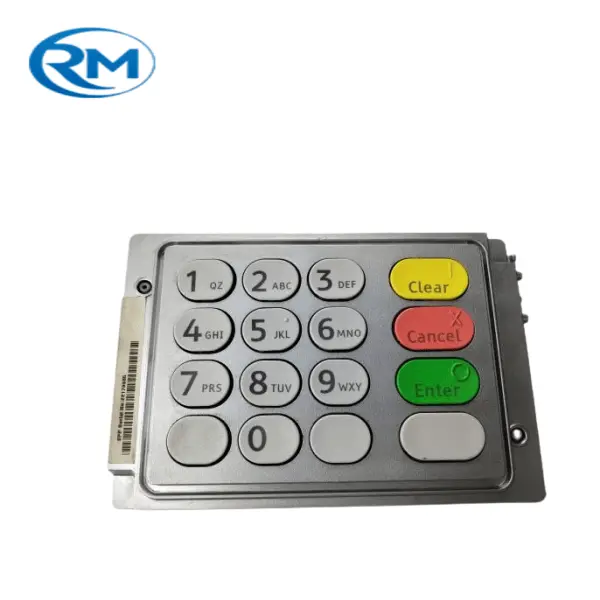
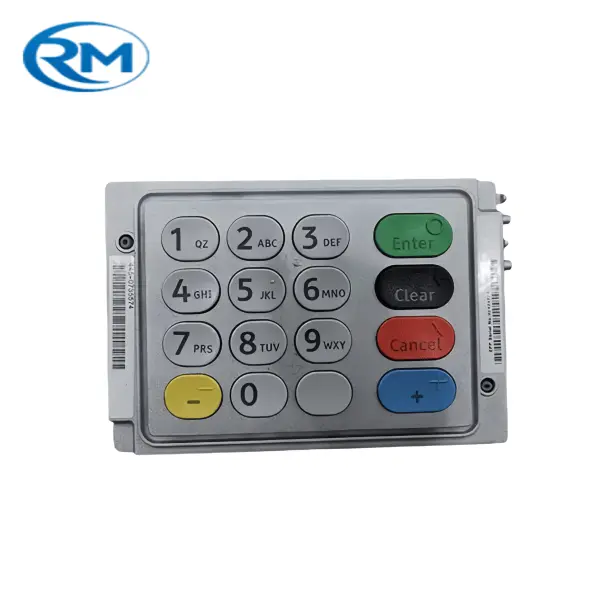
The main difference between EPPs and regular keypads in terms of architecture is where the encryption is executed. EPPs have special security microprocessors inside them that do cryptographic work inside a secure area. This design keeps sensitive functions away from host systems that could be hacked. Standard ATM Keypads are used as input devices, and the main processor of the ATM handles encryption. This makes the communication path more vulnerable to sophisticated attacks.
Different types of devices have very different physical builds. EPPs have multiple layers of tamper detection systems, such as pressure sensors, motion detectors, and mesh screens. Any attempt to get in without permission erases the key right away, making the device useless to attackers. Standard keypads might have some basic physical security features, but they don't have all the safety features that are found in certified EPPs.
Encryption Standards and Compatibility
Modern EPPs work with many encryption algorithms, like 3DES, RSA-2048, and AES-256, so they can connect to a number of banking networks and international security protocols. This is shown by the fact that the Electronic PIN Pads 3 (EPP3) we sell for NCR Selfserv ATMs can work with both polycarbon and steel key configurations while still meeting SRED (Secure Reading and Exchange of Data) standards. These units, which are made in Hungary and India, use hardware-level encryption to process PINs before they are sent, so plaintext is never seen.
Our EPP3 modules can handle more than 2 million pressings of a key, which is a durability level that is necessary for places with a lot of foot traffic. The ATM Keypad integrated with these modules benefits from the same robust design: the 304/316L grade stainless steel construction keeps it from rusting in coastal and industrial settings, and the IP65 water and dust protection makes sure it works well in all kinds of weather. This level of environmental resistance is especially useful for people who run ATMs in Southeast Asia, the Middle East, and Latin America, where the equipment has to deal with high temperatures and high humidity.
Physical interfaces are also compatible, not just encryption standards. The EPP3 can connect via USB (HID/Generic) and RS232, which makes it easy to use with both old and new ATM platforms. This flexibility makes it easier to upgrade mixed-generation ATM fleets, which is a common problem for financial institutions that have to handle infrastructure changes.
Performance and Reliability in Commercial Use
Durability Under Real-World Conditions
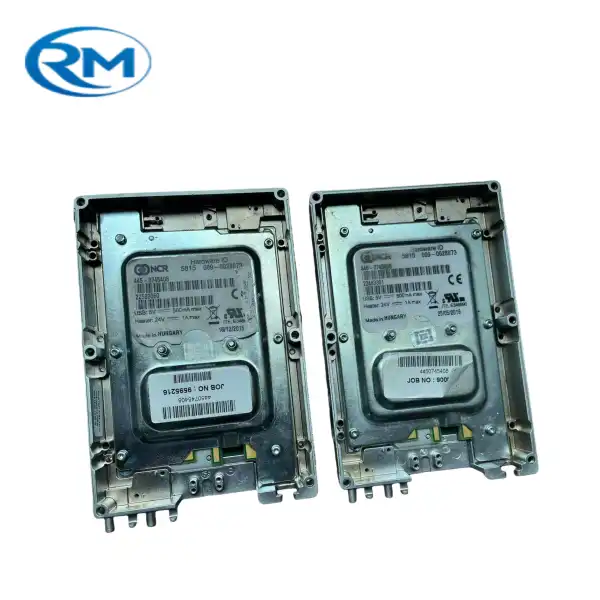
The keypads in ATMs often break because they are exposed to the elements and wear and tear on the parts. Since we've been selling ATM parts for more than 20 years, we know that choosing the right key material and making sure the seal stays intact is directly related to how long something lasts. In high-traffic areas, steel keys last longer than polycarbon alternatives. However, polycarbon is better in temperature-sensitive areas because it is a better thermal insulator.
We put the EPP3 units we sell through a lot of environmental stress tests, such as thermal cycling between -25°C and +65°C, to make sure they work well in both desert and arctic environments. IK08 impact protection can withstand hammer blows and attempts to pry open doors, which is very important for ATMs in cities that face the street. Testing for water and dust entry confirms the integrity of the IP65 seal, which stops moisture damage that leads to early failure in humid areas.
Maintenance Considerations and Technical Support
When it comes to maintenance, EPPs, standard keypads, and ATM Keypad are very different. Because EPPs are tamper-responsive, any attempt to repair them invasively makes the device useless, so a whole module replacement is needed instead of just fixing individual parts. This feature actually makes field service logistics easier, since technicians can just swap out whole units instead of trying to figure out complicated internal problems.
We understand the operational challenges that ATM service companies face when they have to manage fleets from more than one vendor. Because of this, our technical support team answers troubleshooting questions 24 hours a day, 7 days a week, through channels that are available in multiple languages to serve our customers all over the world. We have production facilities that cover 3,000 square meters and include mold rooms, injection molding departments, and quality control labs. Our inventory is always available, and standard configurations have lead times of 15 to 20 working days.
Before they are sent out, both brand-new and used EPP3 units go through the same quality control steps. Tamper reaction testing confirms that keys are erased right away when they are compromised. Testing the sensitivity of each key makes sure that the tactile feedback is the same across the whole number layout. This stops users from making mistakes that slow down transactions. Checks for firmware integrity stop the injection of malicious code, which protects against attacks on the supply chain.
Procurement Guide: Selecting the Right Secure PIN Entry Module
Evaluating Security Requirements and Certification Levels
Decisions about purchases must be in line with security policies and rules set by the institution. To legally process card transactions, banks that run international ATM networks need to be PCI-PTS certified. This certification means that the EPP3 modules we sell meet strict hardware security module standards that are checked by independent labs using destructive testing and cryptographic validation.
In addition to basic compliance, companies should also look at threat models that are specific to deployment environments. Skimming and physical attacks are more likely to happen at ATMs that are not being watched, which is why EPPs with advanced anti-tampering features should be bought. On the other hand, branch lobby ATMs that are being watched by cameras may work fine with regular keypads if encryption happens quickly inside the protected ATM chassis.
Cost Analysis and Total Ownership Considerations
The initial purchase price is only one part of the real costs of owning a home. Our refurbished EPP3 units offer the same level of security as new ones, but they cost less to buy. This is helpful for procurement managers who are watching their budgets who need to replace failed modules across large ATM fleets. Our ISO9001-2008-certified quality management systems back up the 30-day warranty we offer on both new and used units.
Over the life of a device, technician calls, spare parts inventory, and transaction downtime add up to maintenance costs. Lower-quality alternatives break after 500,000 uses, but EPP3 keys last 2 million cycles or more, so they don't need to be replaced as often. Because they last longer, they don't need to be serviced as often, which saves money on labor costs and raises customer satisfaction directly.
Operators of hundreds or thousands of ATMs can save a lot of money by signing bulk purchasing agreements. We set our prices in a way that rewards customers who commit to buying a lot, and we keep enough inventory on hand so that we can quickly restock. Delivery options include sea, land, and air freight, which gives procurement teams the freedom to weigh cost and urgency when making routine replacements or emergency repairs.
Supplier Reliability and Post-Sale Support
When choosing a supplier, you need to look at their production capacity, quality systems, and infrastructure for support. RM's operations include service, research and development, production, and management all under one roof. This vertical integration makes sure that quality control is always the same and lets you make changes that meet the specific needs of each market, such as customizing the ATM Keypad layout to fit regional preferences or configuring firmware to work with certain banking protocols.
In addition to standard product variations, our customization services include full OEM development for clients who need their own solutions. Our production complex has a mold room and injection molding facilities that allow for quick prototyping and tooling changes. This shortens the development cycles that often cause product launches to be delayed with overseas suppliers.
After the sale, support includes technical help, managing the warranty, and getting spare parts. We keep an inventory of parts that covers more than 80% of all ATM modules in use around the world. This makes sure that they work with NCR, Diebold, Wincor Nixdorf, and other major platforms. This variety makes buying easier in situations with more than one vendor; sticking to a single parts supplier simplifies the buying process and brings together relationships with vendors.
Future Trends and Innovations in Secure PIN Entry
Biometric Integration and Hybrid Authentication
Multi-factor authentication systems that combine PIN entry with biometric verification are becoming more popular in the financial technology world. Next-generation secure modules have fingerprint or palm-vein scanners built right into the keypad assemblies. This makes dual-factor authentication seamless and doesn't need any extra hardware. This integration makes the ATM smaller and safer in ways other than knowledge-based authentication.
Another new type is touchscreen hybrids, which replace mechanical keys with capacitive surfaces that show virtual keypads. These designs get rid of moving parts that could break, and they also let the interface be changed on the fly for features like accessibility or support for multiple languages. But touchscreens have different ways of breaking down, such as screen scratches, calibration drift, and less tactile feedback, which can be confusing for some users.
Enhanced Encryption and Tamper Detection
Cryptographic standards keep getting better to protect against attacks that are getting smarter. Quantum-resistant encryption algorithms are now being tested in order to get ready for the possible threats that quantum computing could pose to current RSA and ECC cryptosystems in the future. Forward-thinking procurement strategies for ATM Keypad should choose PIN entry devices with upgrade paths in mind, making sure that the hardware supports firmware updates that add new encryption standards without having to replace the whole device.
Technology for finding tampering is getting better thanks to sensor fusion methods that connect different signs of physical compromise. Advanced EPPs listen for changes in temperature, electromagnetic emissions, voltage irregularities, and acoustic signatures all at the same time. This lets them find attack methods that single-sensor systems miss. These multi-factor tamper responses make it harder for people who want to attack while also cutting down on false positives that turn off real devices without a reason.
Strategic Recommendations for Procurement Alignment
Organizations should make technology roadmaps that plan for changes in regulations and improvements in security over the course of an average ATM's 7–10-year lifecycle. Working with suppliers who can come up with new ideas and are committed to the market for a long time lowers the chance that Products will be left alone and not get any help. RM's investment in new branding and logo registration shows our dedication to building a strong brand and maintaining a market presence that procurement managers can count on for ongoing technical support and parts availability.
To avoid problems in the supply chain, procurement policies stress regional sourcing and a wide range of suppliers more and more. We have two factories, one in Hungary and one in India. Having two factories in two different places protects us from localized problems and gives us more logistics options for both European and Asian markets. This model for distributed production is in line with best practices for risk management that more and more sophisticated procurement organizations are adopting.
Conclusion
When deciding between EPPs and regular ATM Keypads, you need to think about how secure you need to be, how the environment is, and the total cost of ownership. EPPs offer better security thanks to their dedicated encryption processors and advanced tamper detection, which is why they should be used in high-risk situations. Standard keypads might work fine in supervised areas where cost is the main factor in buying decisions. The Electronic PIN Pads 3 (EPP3) we sell have the best secure PIN entry technology available. They are PCI-PTS certified, have been used over 2 million times, and are completely safe for the environment.
We've been specializing in ATM parts for over 20 years and keep an inventory that includes more than 80% of market modules, so we know what procurement managers have to deal with in the real world. To balance short-term budget concerns with long-term security requirements, you need to build partnerships with suppliers that are based on technical know-how, consistent quality, and quick support.
FAQ
1. What defines the main difference between EPPs and ATM keypads?
EPPs protect PINs before they are sent by encrypting them internally using special security processors inside housings that can't be opened. Standard ATM Keypads send data about key presses to the host ATM so that it can be encrypted. This leaves gaps in security where malware could intercept plaintext data. Because of this difference in architecture, EPPs are naturally safer for high-risk deployments.
2. How do encryption methods in EPPs enhance security?
In EPPs, hardware-level encryption keeps PINs safe within separate security boundaries that stop software-based attacks. Malware that gets into the ATM's operating system can't get to the encrypted PIN blocks sent from the EPP. The EPP3 units we sell use 3DES, RSA-2048, and AES encryption standards. This makes them compatible with international banking networks and meets the requirements for PCI-PTS certification.
3. Can ATM keypads be customized for specific hardware requirements?
You can choose the key material (polycarbon vs. steel), the interface type (USB or RS232), and the firmware settings for different ATM platforms. We can set up NCR Selfserv ATMs in standard EPP3 ways, or we can do custom development for specific needs. Our in-house mold room and injection molding capabilities let us make changes to the physical parts of the products. Our engineering teams are in charge of changing the firmware to work with different banking protocols or language preferences.
Secure Your ATM Network with Trusted PIN Entry Solutions from RM
RM has a huge catalog of certified PIN entry modules that procurement managers looking for a reliable ATM Keypad supplier can use to find all the solutions they need. Our Electronic PIN Pads 3 (EPP3) provide enterprise-level security for NCR Selfserv platforms. They are PCI-PTS certified and have been through strict quality testing. With factories in both Hungary and India, we can keep our inventory always on hand and give standard orders a lead time of 15 to 20 days.
In addition to selling products, we offer technical support 24 hours a day, help in multiple languages, and customization services that are made to fit your specific deployment needs. You can email our procurement specialists at Tang@atm-part.com to talk about bulk pricing for ATM Keypad modules that we have for sale, get technical specs, or set up sample evaluations that show how committed we are to quality and service excellence.
References
1. Payment Card Industry Security Standards Council (2019). PCI PIN Transaction Security (PTS) Point of Interaction (POI) Modular Derived Test Requirements. PCI Security Standards Council.
2. Anderson, R. (2020). Security Engineering: A Guide to Building Dependable Distributed Systems (3rd ed.). Wiley Publishing.
3. European ATM Security Team (2018). Physical Attacks on ATMs: Methods and Mitigation Strategies. European Association for Secure Transactions.
4. National Institute of Standards and Technology (2021). FIPS 140-3: Security Requirements for Cryptographic Modules. U.S. Department of Commerce.
5. Murdoch, S. J., Drimer, S., Anderson, R., & Bond, M. (2010). Chip and PIN is Broken. Proceedings of the 2010 IEEE Symposium on Security and Privacy, IEEE Computer Society.
6. International Organization for Standardization (2017). ISO 9564-1:2017 Financial Services — Personal Identification Number (PIN) Management and Security. ISO Publications.
Learn about our latest products and discounts through SMS or email