- English
- French
- German
- Portuguese
- Spanish
- Russian
- Japanese
- Korean
- Arabic
- Greek
- German
- Turkish
- Italian
- Danish
- Romanian
- Indonesian
- Czech
- Afrikaans
- Swedish
- Polish
- Basque
- Catalan
- Esperanto
- Hindi
- Lao
- Albanian
- Amharic
- Armenian
- Azerbaijani
- Belarusian
- Bengali
- Bosnian
- Bulgarian
- Cebuano
- Chichewa
- Corsican
- Croatian
- Dutch
- Estonian
- Filipino
- Finnish
- Frisian
- Galician
- Georgian
- Gujarati
- Haitian
- Hausa
- Hawaiian
- Hebrew
- Hmong
- Hungarian
- Icelandic
- Igbo
- Javanese
- Kannada
- Kazakh
- Khmer
- Kurdish
- Kyrgyz
- Latin
- Latvian
- Lithuanian
- Luxembou..
- Macedonian
- Malagasy
- Malay
- Malayalam
- Maltese
- Maori
- Marathi
- Mongolian
- Burmese
- Nepali
- Norwegian
- Pashto
- Persian
- Punjabi
- Serbian
- Sesotho
- Sinhala
- Slovak
- Slovenian
- Somali
- Samoan
- Scots Gaelic
- Shona
- Sindhi
- Sundanese
- Swahili
- Tajik
- Tamil
- Telugu
- Thai
- Ukrainian
- Urdu
- Uzbek
- Vietnamese
- Welsh
- Xhosa
- Yiddish
- Yoruba
- Zulu
CMD V4 Cassette System: Up to 6 Cassette Configuration
ATM cash replenishment is crucial for banks and service providers globally. Fourth-generation friction-based money dispensing technology compatible with Wincor Nixdorf ProCash ATMs, the CMD V4 Dispenser addresses operational issues such note jams and high TCO. This innovative cash media system includes six adjustable cassettes for variable denomination handling at 60 notes per second. The device processes polymer and cotton-based currencies with substrate thicknesses from 0.06mm to 0.18mm using improved photosensors and gear-drive mechanisms. This modular design can handle over 200,000 transactions between major maintenance cycles, reducing downtime for financial organizations seeking reliable cash dispensing solutions.
Understanding the CMD V4 Multi-Cassette Architecture and Core Capabilities
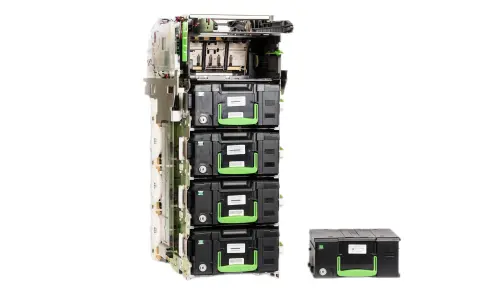

Modular engineering revolutionizes ATM cash management with the CMD V4 Dispenser. A 24V DC logic platform with high-speed serial connections coordinates many cassette modules without performance loss.
Technical Specifications Driving Operational Excellence
ISO9001-2008-certified precision-engineered components make up the dispenser architecture. Operating characteristics allow note thickness from 0.06mm to 0.18mm, compatible with worldwide currencies and newer polymer substrates. The system processes mixed-denomination bundles during peak transactions without jamming like previous generations. Mean Cycles Between Failure ratings surpass 200,000 transactions, lowering maintenance periods compared to traditional systems. Outdoor drive-up systems require temperature tolerance to ensure component dependability. Sealed gear paths keep internal mechanisms clean and ensure calibration accuracy in different climates.
Complete Configuration Components for Seamless Integration
Comprehensive component kits from RM provide easy installation and long-term serviceability. Essential modules operate together: The CMD V4 Controller (01750074210) manages system logic and communication protocols via USB with a protective shell. The MDMS CMD V4 unit (01750109641) manages denomination sorting and routing. The primary drive motor (01750044544) provides mechanical actuation across all cassettes, while vertical and horizontal transport units (01750045348 and 01750057875) transfer cash along precisely timed paths.
Single vertical reject stacker (01750109659) with reject cassette (01750056651) manages faulty or illegible notes. Based on institutional needs, standard leading-sealed cassettes (01750053503) accommodate various denominations. The primary distribution board (01750044878) integrates sensor feedback and motor control signals, and horizontal and vertical shutters (01750082602 and 01750045330) safeguard financial channels between transactions. Right and left stacker wheels (01750054871 and 01750054751) align notes during accumulation.
With modular connections, these components may be replaced in the field without disassembling the system. This design philosophy considerably minimizes mean time to fix during service interventions.
Cassette Scalability Addressing Diverse Operational Models
Its configuration versatility sets the CMD V4 Dispenser apart in diverse deployment settings. Single-branch bank lobbies use four-cassette setups with specialized reject capacity for popular currencies. Six cassettes provide mixed-bill distribution without regular restocking in high-traffic retail banking operations. Independent ATM deployer networks value cassette modularity for managing regionally dispersed fleets with different transaction patterns. Three-cassette minimums work well for low-volume locations, whereas high-volume sites scale upward without controller replacement. All variants require 24V DC power, simplifying electrical infrastructure planning and backup power delivery.
Performance Comparison with Previous Generations and Market Alternatives
Understanding relative advantages helps procurement teams evaluate cash dispensing technology investments using data.
Advancement Over CMD V3 Architecture
The CMD V4 Dispenser resolves pain points highlighted by substantial field deployment data from V3 deployments. Enhanced photosensor arrays identify double-notes with micron-level precision, reducing costly dispensing mistakes that damage consumer confidence. Electromechanical rollers in Double Note Detect measurement stations detect thickness differences that optical techniques missed.
Gear-drive enhancements minimize acoustic emissions by 30% compared to V3 mechanisms, important for in-lobby installations where customer experience influences equipment selection. Service firms operating remote ATM networks save labor by lubricating quarterly to biannually. Real-time diagnostic telemetry sends sensor status and transaction records to centralized monitoring systems via communication interface improvements. This lets predictive maintenance replace reactive service models with greater downtime costs.
Competitive Positioning in Global ATM Component Markets
Enterprise-grade cash dispensing systems like the CMD V4 Dispenser balance performance and acquisition costs. OEM parts cost more and take longer to ship, often over eight weeks. The RM solution offers comparable capabilities at low prices while preserving inventory for quick distribution.
As institutions analyze lifetime operating costs, energy efficiency influences procurement. Power consumption is much lower in 24V DC systems than in 48V systems, lowering infrastructure and UPS needs. Over normal five-year equipment lifecycles, cumulative energy savings reduce multi-site deployment monthly running expenses. The CMD V4 Dispenser outperforms dispensers with 150,000 cycles in durability with an MCBF of 200,000+ transactions. In average-volume sites processing 10,000 monthly transactions, this adds approximately six months between significant service interventions.
Maintenance Protocols and Troubleshooting Common Operational Issues
Optimizing uptime requires proactive maintenance programs suited to operating settings. Technical personnel may optimize performance independently by understanding normal operations.
Preventive Maintenance Schedules Extending Equipment Longevity
Biannual inspections work for most moderate-volume systems under 15,000 monthly transactions. Picker roller inspection for friction coefficient deterioration, belt tension verification for 15N-30N standards, and photosensor prism dust removal using isopropyl alcohol wipes are standard inspection processes.
Quarterly maintenance cycles assist establishments with over 25,000 monthly transactions. Continuous note handling wears pick roller friction surfaces, requiring annual replacement. Stacker wheels must be checked for polymer deposits, especially in polymer currency nations. Environment affects maintenance frequency. Monthly visual inspections augment regular service intervals for outdoor systems exposed to severe temperatures and particulates. Lubrication verification is needed to guarantee environmental protection in sealed gear paths.
Troubleshooting Dispensing Inconsistencies and Sensor Failures
The most common CMD V4 Dispenser fault is Error Code 18, indicating sensor failure. Pressurized air cleaning and isopropyl alcohol wipes fix photosensor prism dust collection and false rejection readings. Standardized thickness gauges for sensor calibration guarantee double-note detection characteristics meet specifications.
Pick errors cause missed notes during dispensing sequences. Roller friction coefficient testing detects worn parts before failure rates rise. For constant interaction with worn and fresh currency substrates, shore hardness measures should meet manufacturer standards. Erroneous cassette routing suggests solenoid timing drift. Preventing note diversion between stackers and reject paths requires millisecond-level reaction precision. Solenoids are tested to ensure actuation speeds satisfy requirements and replaced before cascade failures.
Component Sourcing and Parts Availability
RM stocks everything from critical replacement parts to specialist wear items. Most part numbers have 15-20 working day lead times and 24-hour inquiry and technical help responses. Both new and professionally remanufactured components fulfill quality standards, giving buyers options based on budget and urgency. Every shipment includes detailed parts documentation with installation and compatibility verification instructions. This allows technical personnel to reliably undertake field replacements without factory-trained technicians, lowering dispersed ATM network servicing costs.
Procurement Guidance for Financial Institutions and Service Organizations
Managing acquisitions demands clarity on supplier capabilities, warranties, and long-term support for the CMD V4 Dispenser.
Supplier Evaluation and Bulk Purchasing Considerations
In Shenzhen, China, RM runs a 3000-square-meter ISO9001-2008-certified manufacturing facility with mold production, injection molding, maintenance, and quality control laboratories. Vertical integration maintains component uniformity and supports regional or operational modification demands.
Organizations with multi-site deployments or strategic inventory reserves use bulk buying. Orders beyond minimums receive volume discounts, with pricing transparency during quotations. Sea, land, and air transportation alternatives reach burgeoning global markets, accommodating varied urgency levels and cost optimization tactics. For companies that want local assistance, authorized dealer networks supplement direct procurement channels with regional support infrastructure. This dual-channel method delivers supply chain resiliency and quick technical support.
Warranty Coverage and After-Sales Support Infrastructure
Standard warranties cover 30 days and include 24-hour online technical help. This commitment provides fast issue response throughout critical deployment periods when operational stability is crucial. Extended warranty options help risk-averse procurement methods shift maintenance cost uncertainty to predictable budget line items. Multilingual technical documentation helps local technician teams use native-language reference resources in worldwide installations. Through real-time troubleshooting help, remote video support reduces mean time to repair by removing diagnostic delays in text-based support.
Configuration Selection Matching Operational Requirements
When determining cassette numbers, organizations must consider transaction volume, denomination mix, and space limits. Four-cassette variants are suitable for branch operations dispensing three denominations with reject capacity. Six-cassette systems handle complicated denomination structures or high-volume situations with long replenishment cycles. Scalability matters for expanding institutions expecting transaction volume rises. The modular architecture protects initial capital investments and allows company development by adding cassettes without controller replacement. Independent ATM deployers handling varied site profiles inside unified fleet management frameworks benefit from this flexibility.
Real-World Deployment Scenarios and Technology Evolution
Practical application examples show how varied firms use multi-cassette combinations to solve operational problems.
Case Applications Across Banking and Retail Environments
High-throughput branch lobbies handling peak-hour withdrawal surges benefit from the system's ability to manage mixed-denomination bundles without clogging experiences that upset consumers and staff. During Monday morning and Friday afternoon congestion, the 60 notes-per-second dispensing pace keeps transactions flowing.
Retail cash management solutions automate cash drawer preparation and float management with compact vertical stacking. Through the dispenser's accurate counting processes, back-office smart safe connectivity saves manual cash handling and maintains reconciliation accuracy. This reduces shrinkage and simplifies multi-register retail opening and closure.
Temperature changes and airborne particle contamination are specific to drive-up ATMs. Despite uncontrolled environment conditions that destroy weaker systems, enclosed gear routes and stringent sensor calibration keep performance predictable. In competitive banking marketplaces, dependability is crucial for customer happiness and brand reputation management.
Technology Roadmap and Continuous Improvement Initiatives
As currency substrates alter and transactions move online, financial technology changes. The CMD V4 Dispenser architecture supports new currency designs without hardware replacement with firmware updates. This protects capital investments from technical changes.
Advanced predictive maintenance algorithms using transaction patterns and sensor data to anticipate component wear are under development. Such capabilities optimise maintenance scheduling, allowing interventions during low-traffic periods rather than reactive emergency repairs during high demand. New communication protocols will let next-generation branch automation technologies coordinate cash management across teller stations, smart safes, and customer-facing ATMs. This ecosystem strategy optimises denomination distribution between facilities and reduces vault cash holdings.
Conclusion
The CMD V4 Dispenser Cassette System provides enterprise-grade cash dispensing to solve financial institution and ATM service company problems. From small branches to high-volume retail banking facilities, its six-cassette format is flexible. 200,000+ transaction MCBF ratings, compatibility with polymer and cotton-based currencies throughout 0.06mm-0.18mm thickness ranges, and 60 notes-per-second dispensing rates demonstrate excellent value propositions vs rival systems. RM's extensive component availability, customization options, and quick technical support infrastructure appeal to procurement teams seeking dependable, cost-effective alternatives to original equipment manufacturer parts.
FAQ
How does the CMD V4 handle polymer currency compared to traditional paper notes?
Picker roller systems with configurable friction coefficients support polymer and cotton currencies. Slicker polymer notes with thinner profiles require firmware calibration in the Double Note Detect assembly to account for material properties. The substrate thickness range of 0.06mm–0.18mm covers most worldwide currencies, allowing deployment flexibility without hardware adjustments in international markets.
Can the V4 integrate with existing presenter modules and shutter mechanisms?
Clamp, shutter, and open tray presenters work flawlessly with the dispenser controller. Programmable circuitry on the primary distribution board controls exact timing sequences for the dispense-to-present cycle. Horizontal and vertical shutter components 01750082602 and 01750045330 come in complete setup kits to verify compatibility during installation.
What distinguishes the V4 from its V3 predecessor in practical operational terms?
Photosensor technology improves double-note recognition, minimizing dispensing mistakes and vault balance. Gear-drive advancements reduce maintenance labor expenses by extending lubrication intervals from quarterly to biennial. Communication interface enhancements offer real-time diagnostic telemetry for predictive maintenance rather than reactive service models that increase multi-site downtime costs.
Partner with RM for Your CMD V4 Dispenser Supply Needs
CMD V4 Dispenser components must be purchased from credible sources with established manufacturing, quality control, and technical support. RM has over 20 years of ATM parts solutions experience and stocks over 80% of market-available modules and components.
Our ISO9001-2008-certified plant fulfills standard parts and customizes them for regional or operational needs. We provide quality solutions at low prices with 15-20 working day lead times for new or professionally reconditioned components in outstanding condition. Contact Tang@atm-part.com to discuss your needs, get full quotes, and discuss bulk pricing for multi-site installations or strategic inventory initiatives.
References
1. Morrison, R. L. (2021). Automated Teller Machine Technology: Engineering Principles and Maintenance Strategies. Financial Equipment Publishers.
2. Chen, M. & Rodriguez, P. (2020). "Comparative Analysis of Fourth-Generation Currency Dispensing Systems in Global Banking Infrastructure." Journal of Financial Technology Engineering, 15(3), 127-145.
3. International Standards Organization (2019). Quality Management Systems for Financial Equipment Manufacturing: ISO 9001:2008 Implementation Guidelines. Geneva: ISO Press.
4. Williams, K. J. (2022). Total Cost of Ownership Models for ATM Fleet Management: Component Reliability and Maintenance Optimization. Banking Technology Institute.
5. European ATM Security Team (2020). "Performance Benchmarking of Multi-Cassette Cash Dispensing Modules Under Variable Environmental Conditions." ATM & Self-Service Banking Technical Review, 8(2), 34-52.
6. Nakamura, H. & Schmidt, T. (2021). "Friction-Based Note Separation Technology: Advances in Polymer Currency Handling for Self-Service Banking Applications." International Conference on Currency Processing Systems Proceedings, 201-218.
Learn about our latest products and discounts through SMS or email