- English
- French
- German
- Portuguese
- Spanish
- Russian
- Japanese
- Korean
- Arabic
- Greek
- German
- Turkish
- Italian
- Danish
- Romanian
- Indonesian
- Czech
- Afrikaans
- Swedish
- Polish
- Basque
- Catalan
- Esperanto
- Hindi
- Lao
- Albanian
- Amharic
- Armenian
- Azerbaijani
- Belarusian
- Bengali
- Bosnian
- Bulgarian
- Cebuano
- Chichewa
- Corsican
- Croatian
- Dutch
- Estonian
- Filipino
- Finnish
- Frisian
- Galician
- Georgian
- Gujarati
- Haitian
- Hausa
- Hawaiian
- Hebrew
- Hmong
- Hungarian
- Icelandic
- Igbo
- Javanese
- Kannada
- Kazakh
- Khmer
- Kurdish
- Kyrgyz
- Latin
- Latvian
- Lithuanian
- Luxembou..
- Macedonian
- Malagasy
- Malay
- Malayalam
- Maltese
- Maori
- Marathi
- Mongolian
- Burmese
- Nepali
- Norwegian
- Pashto
- Persian
- Punjabi
- Serbian
- Sesotho
- Sinhala
- Slovak
- Slovenian
- Somali
- Samoan
- Scots Gaelic
- Shona
- Sindhi
- Sundanese
- Swahili
- Tajik
- Tamil
- Telugu
- Thai
- Ukrainian
- Urdu
- Uzbek
- Vietnamese
- Welsh
- Xhosa
- Yiddish
- Yoruba
- Zulu
ATM AB Cassette Replacement Guide for Hitachi ATM Operators
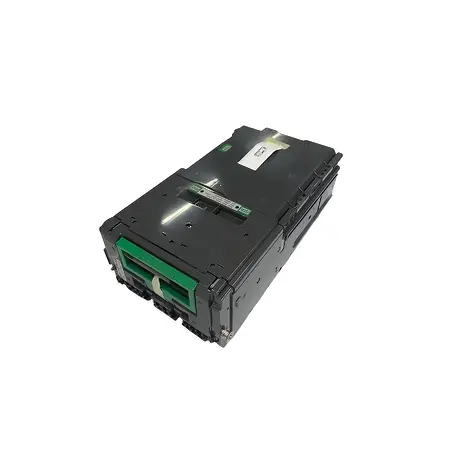
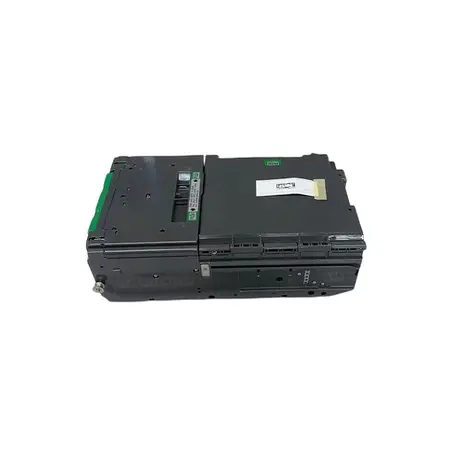
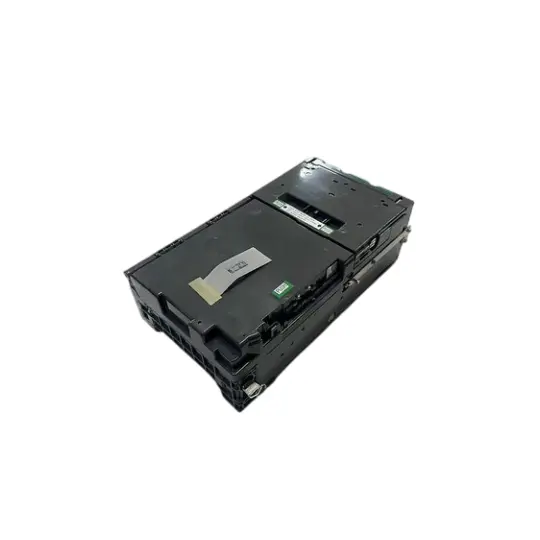
If you manage or service Hitachi ATMs, you already know that the AB cassette is not just another spare part — it is the mechanical arbiter that separates cash dispute evidence from circulating currency. This guide walks through everything a procurement manager or field technician needs to know about the Hitachi dual-compartment reject/retract cassette: how it works, when to replace it, what part numbers to specify, and how to source a verified unit without unnecessary risk. Whether you are extending the life of a WAB or WBX-series machine, the right AB cassette decision protects both your uptime and your audit trail.
Understanding ATM AB Cassettes in Hitachi Machines
What the Dual-Compartment Design Actually Does?
The AB cassette is a special module for keeping cash safe. It is made up of two separate bins. Type A holds notes that were turned down by the ATM's validation logic because they were marked for double-picks, thickness mistakes, or phony signals. Type B holds notes that are pulled back from the bezel when a customer leaves. When a bank's compliance team asks for transaction-level evidence during a customer dispute, keeping these two groups physically separate is very important. Cross-contamination between bins makes it impossible to track.
Core Components and Part Numbers
The internal architecture depends on solenoid-driven diverter gates that are precisely timed, structural frames made of reinforced polycarbonate and ABS, and sensor-verified bin-full detection. The main parts used in WAB and WBX versions are shown below in a table:
| Component Code | Description |
|---|---|
| 2P003988A / 2P004303B | WBX-BX1-CBL ASSY |
| 1P004481-001 | AB BOTTOM BASE (RoHS compliant) |
| M7P040237A / 1P004088C | AB door / WBX-DOOR ASSY |
| 1P004013-001 | WBX-REAR FRAME |
| 1P004012-002 | WAB-FRONT FRAME |
| 1P003744-001 | WBX-MID BASE |
| Y69608-044 | Belt S2M882 |
| 4P008886-001 | WBX-S2M-Z22 PLY |
Knowing these codes before calling a supplier is the fastest way to make sure that the Products will actually work together and avoid the frustration of getting the wrong SKU, which slows down installation.
Common Indicators That Replacement Is Overdue
Problems most often mentioned for the AB cassette are worn drive gears (part 4P009166-001, CS 15T gear(D)), broken latch seals on the door assembly, and dirt on the prism sensor. The unit has reached the end of its useful life when the WBX-DOOR ASSY (M7P040237A) doesn't close all the way or the belt S2M882 (Y69608-044) starts to crack. If you wait past these signs, you might get stuck in the middle of your shift during busy times.
Step-by-Step ATM AB Cassette Replacement Process for Hitachi Operators
Preparation and Safety Protocol
Before you touch any cassette, turn off the dispense module, record the state of the cassette in your maintenance system, and take a picture of what's in the bin as proof of ownership. Wear anti-static wrist straps because electrostatic discharge can damage the EPROM identification chip that is built into modern cassettes. Before you open the ATM door, make sure that the part number of the replacement unit matches the sub-model WAB or WBX of your machine.
Removal and Installation
Let go of the front-frame latch (part number 1P004012-002, WAB-FRONT FRAME), and then slide the cassette along the guide rail. Before putting in the new, check the WAB-ENTGUIDE ASSY (2P005409A) for any debris. Place the new unit in place until you hear a click, and then make sure the WBX-MID BASE (1P003744-001) alignment tab is fully engaged. Most first-cycle transport errors after replacement are caused by a base that is not lined up correctly.
Post-Installation Verification
Do at least 20 test transactions that cover both rejecting and retracting. Check that the monitor that tells you when the bin is full gives you correct levels of fill and that the diverter gate cycles with a response time of less than 50ms. Record the new cassette's serial number right away in your asset management system. Banks are asking for this information more and more often during regular audits.
Purchasing and Procuring AB Cassettes for Hitachi ATMs
Evaluating New vs. Refurbished Units
There are two things that determine whether to buy a brand-new or secondhand Hitachi reject/retract cassette: the budget cycle and how quickly the rollout needs to happen. New units don't have any wear on them, but they cost more each. Professionally refurbished units from a trusted source can work just as well as new stock at a lower price. They can have their seals replaced, their sensors re-calibrated, and their latch mechanisms tested.
The main criteria for buying RM's Japan-origin AB cassette are shown in the table below:
The product is an AB cassette, it comes from Japan, and it works with Hitachi ATM (WAB/WBX series) systems. It can be brand new or refurbished, and the warranty lasts for 30 days with online support. The lead time is 15–20 working days, and the minimum order quantity is flexible. A single-unit sample is available, and the response time is within 24 hours.
| Parameter | Details |
|---|---|
| Product Name | AB Cassette |
| Origin | Japan |
| Compatible Systems | Hitachi ATM (WAB / WBX series) |
| Condition | Brand New or Refurbished |
| Warranty | 30 days with online support |
| Lead Time | 15–20 working days |
| MOQ | Flexible; single-unit sample available |
| Response Time | Within 24 hours |
Verifying OEM-Level Compatibility
Hitachi has been slowly pulling out of making ATMs since the late 2010s, leaving a known gap in spare parts. That gap is filled by third-party sellers who carry original parts made in Japan, but buyers must make sure that the part number on the tape matches their specific sub-model. Asking for a WAB/WBX component cross-reference sheet before placing an order is a normal and common thing to do as part of your due diligence. It will be given by any reliable seller.
MOQ Flexibility and Sample Testing
Most third-party maintenance companies would rather try out a single dual-compartment cassette before committing to a batch of them because they cost more per unit than standard dispense cassettes. If a seller says no to sample sales, that's a bad sign. For hardware made in Japan, the normal wait time is 15 to 20 working days for a single verification piece.
Maintenance Tips and Troubleshooting for Long-Term Performance
Proper Storage and Handling
Put cassettes away in a cool (15–30°C) place that is out of direct sunlight and away from moisture. Stack no more than three units vertically to keep the bottom base from warping (1P004481-001). As much as possible, move units in their original anti-static packaging.
Routine Cleaning
Every 90 days or after 50,000 cycles, whichever comes first, clean the internal guide plates with rubbing alcohol and a lint-free brush. This is especially important for the WAB-PP GUIDE A PLT (2P005447-001) and the WAB-USEPA BLOCK (2P004314-001). A lot of false "Cassette Full" errors are caused by dust on the prism sensor. This can be fixed on-site in less than five minutes.
When to Escalate vs. Replace
If you can see tooth wear on the WZ-Z20.IDL G (4P009174-001) drive gear or if the solenoid gate doesn't respond within the 50ms window while testing the AB cassette, it's not worth the money to fix it locally. These are problems at the component level that need a full cassette swap instead of field adjustment.
Optimizing AB Cassette Usage for Hitachi ATM Operators
Integrating Replacement Into Scheduled Maintenance
Waiting for a failure alert before replacing something costs more in labor and downtime than replacing something on a schedule after 500,000 cycles. When operators schedule cassette swaps for times when there isn't a lot of traffic, like early in the morning on weekdays, they get a lot fewer unplanned service calls.
Managing the Audit Trail
Southeast Asian and Latin American banks are asking for part-level traceability for ATM parts more and more. Keeping a log with the part number, location, installation date, and run count of each cassette gives inspectors the paper trail they need. Markings from Japan on the cassette body help with compliance paperwork in places where officials care about where the goods came from.
Cost Modeling for Multi-Unit Fleets
Considering a group of fifty Hitachi WAB/WBX machines, replacing each one every 24 months versus every 36 months makes a big difference in both total costs and unplanned downtime. When you look at how much an emergency service call usually costs, the shorter cycle makes more sense. Your finance team will have a number they can use to defend this estimate before your next round of buying.
Conclusion
Finding parts that exactly match the original engineering specification is needed to keep Hitachi ATMs working after the company stops providing official service. When it comes to the AB cassette, which includes the solenoid diverter gate, the WAB-FRONT FRAME, and the drive gear assembly, getting the part number wrong can cause problems that cost a lot more than the cassette itself. Three things should help you decide what to buy: verified Japan-origin stock, an open MOQ, and a clear audit record. RM gives you all three.
FAQ
Q1: How often should a Hitachi AB cassette be replaced?
A: Most field engineers say that the equipment should be replaced after 500,000 cycles or every 24 months, whichever comes first. Sites that handle more than 300 transactions per day might reach that number of cycles in 18 months. Use your asset management system to keep track of cycle data so you don't have to guess.
Q2: Will a third-party cassette void the bank's compliance requirements?
A: It depends on the terms of the bank's deal, not just where the cassette came from. Most bank checks will accept units made in Japan that have part numbers that can be checked and test results that can be shown. Before installing, you should always ask for a test certificate and make sure the part number fits your WAB or WBX sub-model.
Q3: What causes repeated "Cassette Full" errors on an empty unit?
A: It's most often caused by dust on the prism sensor or an actuator arm that doesn't reset the pusher plate. First, clean the sensor. If the problem still happens, the actuator unit needs to be looked at.
Q4: Can I order a single unit as a sample before committing to bulk?
A: Yes, RM does allow orders for a single unit to be used for field proof. For stock that comes from Japan, the standard lead time is 15–20 working days.
Q5: What is the difference between WAB and WBX configurations?
A: In the Hitachi AB cassette product family, WAB and WBX are different sub-model frames. Some important structural parts are different, like 1P004012-002 (WAB-FRONT FRAME) and 1P004013-001 (WBX-REAR FRAME). When you order, you should always say what sub-model you want to make sure the dimensions are compatible.
Source Your Next AB Cassette Directly From RM
RM (HONGKONG RONG MEI TECHNOLOGY CO., LIMITED) has been selling ATM parts from its ISO9001-certified factory in Shenzhen for more than 20 years. RM is a reliable source for AB cassettes, and they keep new and used Hitachi dual-compartment cassettes from Japan in stock. These cassettes come with a 30-day warranty and 24-hour technical support. You can get samples of a single unit. To get a part-number cross-reference and quote, email Tony at Tony@atm-part.com.
References
1. Hitachi-Omron Terminal Solutions. ATM Service and Maintenance Technical Bulletin. 2019.
2. European ATM Security Team (EAST). ATM Fraud and Security Annual Report. 2022.
3. ATM Industry Association (ATMIA). Global ATM Market and Forecasts Report. 2023.
4. International Organization for Standardization. ISO 9001:2015 Quality Management Systems — Requirements. 2015.
5. Robins, G. ATM Deployment and Maintenance in Emerging Markets. Journal of Financial Technology Operations, 2021.
6. Bank for International Settlements (BIS). Retail Payment Statistics and ATM Infrastructure. 2022.
Learn about our latest products and discounts through SMS or email