- English
- French
- German
- Portuguese
- Spanish
- Russian
- Japanese
- Korean
- Arabic
- Greek
- German
- Turkish
- Italian
- Danish
- Romanian
- Indonesian
- Czech
- Afrikaans
- Swedish
- Polish
- Basque
- Catalan
- Esperanto
- Hindi
- Lao
- Albanian
- Amharic
- Armenian
- Azerbaijani
- Belarusian
- Bengali
- Bosnian
- Bulgarian
- Cebuano
- Chichewa
- Corsican
- Croatian
- Dutch
- Estonian
- Filipino
- Finnish
- Frisian
- Galician
- Georgian
- Gujarati
- Haitian
- Hausa
- Hawaiian
- Hebrew
- Hmong
- Hungarian
- Icelandic
- Igbo
- Javanese
- Kannada
- Kazakh
- Khmer
- Kurdish
- Kyrgyz
- Latin
- Latvian
- Lithuanian
- Luxembou..
- Macedonian
- Malagasy
- Malay
- Malayalam
- Maltese
- Maori
- Marathi
- Mongolian
- Burmese
- Nepali
- Norwegian
- Pashto
- Persian
- Punjabi
- Serbian
- Sesotho
- Sinhala
- Slovak
- Slovenian
- Somali
- Samoan
- Scots Gaelic
- Shona
- Sindhi
- Sundanese
- Swahili
- Tajik
- Tamil
- Telugu
- Thai
- Ukrainian
- Urdu
- Uzbek
- Vietnamese
- Welsh
- Xhosa
- Yiddish
- Yoruba
- Zulu
24V DC Output ATM Power Supply for High Volume Banking
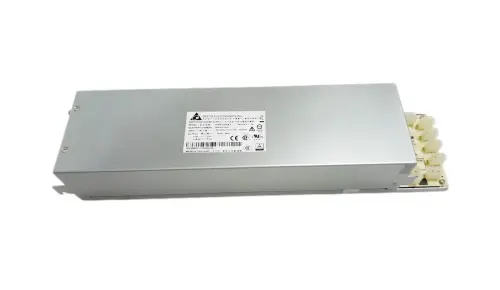
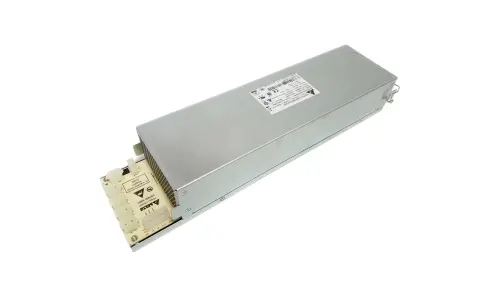
Power dependability is a must when your ATM network handles thousands of transactions every day. A 24V DC output ATM power supply is a crucial part that transforms unstable AC power from the grid into stable, clean direct current that keeps cash registers, card readers, and security units operating continuously. These switch-mode power supplies provide accurate voltage control that is needed for NCR SelfServ units and other related platforms used in banks. Your service rates and repair budgets will be affected directly by how well you understand how these units work, what specs matter, and how to find reliable solutions.
Understanding 24V DC Output ATM Power Supply: Working Principles and Specifications
Core Electrical Parameters That Define Performance
Modern 24V DC output ATM power supplies can take in any type of AC voltage between 90V and 264V and output a controlled 24V direct current. This large input range can handle the different voltages that are common in different parts of the world, keeping sensitive electrical parts safe from unstable power grids. Our 600W switch-mode unit is a great example of this because it has active Power Factor Correction (PFC) levels above 0.95, which means less lost energy and less stress on the building's electrical systems.
How many peripheral devices your ATM can handle at the same time is based on its amperage ability. A 600-watt power source that delivers 24V DC gives off about 25 amps, which is enough current to run cash registers, receipt printers, anti-skimming devices, and security cameras all at the same time. It doesn't matter what kind of voltage ripple it is; too much ripple causes electrical noise that messes up data transfer between modules, leading to transaction mistakes that annoy customers and cost a lot of money in service calls.
Safety Standards and Compliance Requirements
The tools used for banking is in public places where safety can't be compromised. Power sources that are of good quality have been certified by UL 60950-1 for IT equipment, by CE marking for the European market, and by RoHS regulations that limit the use of hazardous materials. These certificates show that the thermal management, short-circuit protection, and overvoltage protection work efficiently when the system is under a lot of stress. If the Mean Time Between Failures (MTBF) is more than 100,000 hours at 25°C, the building is industrial-grade. This measurement means that the device will work continuously for over 11 years in a controlled setting. However, in the real world, where temperatures change often, the device will only last 5 to 7 years. Commercial-grade units are different from industrial-grade units that are perfect for high-volume banking deployments where continuous running is expected.
How Switch-Mode Conversion Delivers Efficiency?
Linear power sources from the past waste energy as heat, so they can't be used in ATM machines. Pulse-width modulation controls the output voltage while switch-mode technology quickly turns transistors on and off. This method gets efficiency levels above 85%, which lowers the need for cooling and increases the lifespan of components. Because switch-mode versions are small, they can also fit in through-the-wall banking units that don't have a lot of room.
Troubleshooting and Maintenance of 24V DC Output ATM Power Supplies
Common Issues That Compromise ATM Availability
Drops in voltage show up as failed transactions or partial cash dispensing processes. Checking the output voltage while the load is on shows if the source keeps control within a ±5% range. For a 24V DC output ATM power supply, changes outside of this range mean that the capacitors or voltage control circuits are getting old. Environmental factors play a big role. For example, dust building up on cooling fins blocks airflow, which leads to thermal shutdown during busy transaction times. Electrical noise from bad input filtering messes up the data sent between the power source and modules that are attached to it. Testing with an oscilloscope shows that the voltage noise is too high. This is usually because the filter capacitors are broken and only rated at 85°C instead of the industrial-grade 105°C parts. Overheating usually happens when airflow is stopped or when the temperature outside is higher than 40°C, which happens a lot when kiosks are set up outside without climate control.
Step-by-Step Diagnostic Procedures
The first part of testing is looking for swollen capacitors, circuit boards that aren't the right color, or burn marks that mean a part has failed. Check the output voltage with a digital voltmeter both when there is no load and when the power supply is fully loaded with 600W. Note any big changes in the voltage. Thermal imaging shows hot spots that are outside of normal working areas. This helps find parts that are failing before they break completely. Checking the integrity of the fuses keeps you from making the wrong diagnosis. Our units use part number 009-0023731 time-lag fuses (5X20mm) that are made to handle power-on surge currents without tripping for no reason. Changing the fuse in the field is easier with the 009-0023431 screwdriver bayonet cap fuse holder. The AC switch latch component 445-0710941 needs to be checked to make sure it is properly connected and to stop power from going out sometimes.
Preventive Maintenance Extending Service Life
Cleaning the cooling parts every six months gets rid of the dust that builds up on them. Applying compressed air from different directions moves built-up trash around without having to take things apart. Putting thermal paste on heat sinks again every 24 months keeps the heat transfer from power transistors working well. Replacing capacitors every five years stops them from breaking down due to age, especially in places with temperatures that are higher than what the maker recommends. When compared to reactive repair methods, case studies from our service records show that proactive maintenance cuts unexpected downtime by 62%. One bank with 150 NCR SelfServ 6634 units started inspecting them every three months. This increased the average power source lifespan from 4.2 years to 6.8 years and cut the number of calls to emergency services in half.
Choosing the Best 24V DC ATM Power Supply for Your Banking Deployment
Critical Selection Criteria for Procurement Teams
The standards for voltage and amperage guide the choosing process. A 600-watt capacity can handle normal ATM setups plus an extra 20 to 30 percent for possible peripheral additions. In bank halls where units work near customer service areas, noise levels must be below 50dB to follow working rules. Certification marks show that a building meets local electricity code requirements. This is important proof for when regulatory officials check the building. Warranty terms show how confident the maker is in the product's longevity. For the first deployment, our 30-day guarantee with online support gives you instant help. For group deployments, established providers offer choices with longer coverage. Project timelines are affected by lead times. Our 15-20 working day shipping schedule from China lets you plan for realistic installation times without having to pay too much for inventory.
Comparing 24V Versus 12V Power Supply Architectures
A lot of ATM makers stuck to 24-volt designs because higher voltage means less current draw, which lowers resistive losses in wire harnesses and connection contacts. At 24V, a 600-watt load needs 25 amps, but at 12V, it needs 50 amps. This means that less copper is needed and the cost of wire diameter is lower. It's easier for voltage drop to happen across links, which makes modular designs more reliable where there are many connections. In high-power situations, 24V DC output ATM power supplies are better because they are more efficient. Switching losses in voltage regulators go down as current goes down, which makes the whole system 3–5% more efficient. Thermal management is easier when parts are running at lower current levels, which means that cooling fans aren't needed as much and there is less noise in places where customers can hear them.
Trusted Manufacturers and Quality Indicators
Mean Well power supplies have a history of dependability in industrial technology. Their RSP-500-24 model is used in ATMs around the world. Siemens SITOP power sources are very expensive, but they are very stable and can be used in mission-critical situations. Delta Electronics uses its large-scale production of household goods to offer reasonable prices while still keeping the certifications needed for banking equipment.
When looking at different providers, important things to look for are ISO9001 certification, which verifies quality management systems, ERP system integration, which makes sure that production can be tracked, and full recording of all tests. Suppliers who let you change the mounting arrangements, connector types, or output voltages show that they have the technical means to meet a wide range of placement needs. Automatic load tracking and other energy-saving features cut down on idle power use when there aren't many transactions. Some more advanced units have remote tracking interfaces that work with centralized building management systems. This lets you plan repair ahead of time based on trends in working temperature and input power quality measures.
Procurement and Supply Chain Considerations for 24V DC ATM Power Supplies
Sourcing Strategies for B2B Buyers
To find verified sources, you have to look at more than just marketing claims about their production skills. The 3,000-square-meter building that HONGKONG RONG MEI TECHNOLOGY CO., LIMITED uses has mold rooms, injection molding offices, repair centers, and quality control laboratories. This vertical merger lets the company control the quality of its parts instead of relying on middlemen whose standards might be different. The choice of buying platform varies on the number of orders and how quickly they need to be filled. Direct connections with manufacturers are best for fleet deployments of more than 50 units because they offer bulk price that cuts the cost per unit by 18–25% compared to distributor channels. Established sellers keep extra supplies of popular part numbers like 009-0028273 on hand so that service operations can quickly replace broken units.
Pricing Dynamics and Cost Optimization
Pricing for bulk sales is based on levels. sales of 20 or more units usually get discounts of 12 to 15 percent, and orders of 100 or more units justify special production runs with the best component choices. Refurbished units are 40–50% cheaper than brand-new ones, making them a good choice for deployments that aren't very important or for service companies that keep extra parts on hand in case of emergencies. The total cost of ownership is more than just the price of the unit. When you add up the costs of service calls, lost transactions, and lower customer happiness, a solid unit that costs 20% more but lasts 30% longer is a much better deal over the course of its life. According to data from the industry, every hour that an ATM isn't working costs banks $150 to $400 in lost transaction fees and damage to their image.
Logistics and Warranty Service Considerations
Choosing a method of transportation strikes a balance between need and cost. It takes 28–35 days for sea freight to get from China to US ports, but it costs 60% less than air freight, which can get there in 5–7 days. Hybrid methods that use air freight for the first important inventory and sea freight for ongoing restocking are the best way to get things to the right place on time. To keep shipments from being held up at entry ports, customs processing paperwork must include CE and UL licenses.
How well warranty service is done affects how reliable something is in the real world. 40% of problems can be fixed remotely with video help, which is very important for ATM networks that are spread out physically. Multilingual technical help works with a wide range of deployment areas and speeds up problem-solving times when language hurdles get in the way. For a 24V DC output ATM power supply, having all submodules in stock—such as new fuses, AC switch latches, and cooling fans—cuts down on the time it takes to get parts for repairs. Building partnerships with suppliers has long-term benefits that go beyond transactional pricing. When there aren't enough parts on the market, volume agreements guarantee priority production slots. This keeps the supply going even when spot market access drops. Technical teamwork lets you change the types of connectors, mounting brackets, and wire lengths, which makes installation easier and cuts down on the work needed to make changes in the field.
Future Trends and Innovations in 24V DC ATM Power Supplies for Banking
Advanced Power Management Technologies
Instead of analog regulation circuits, digital power control uses microcontroller-based systems that change switching frequencies on the fly based on load conditions. This improvement makes the whole load range more efficient, not just the design center. This cuts down on lost energy during times when ATMs aren't processing many transactions, or when they're not at full capacity. The adaptive cooling algorithms connect the fan speed to the temperature being recorded. This makes the fans last longer and make less noise. Better feedback loop design makes the voltage more stable and lowers the output ripple to less than 100mV peak-to-peak. This keeps sensitive processors safe from electrical noise that messes up communication protocols. Wide-bandgap semiconductors, like silicon carbide transistors, allow for higher switching frequencies. This means that the size of the transformer and the total unit can be cut by 15–20% compared to designs built on silicon.
Integration with Smart ATM Ecosystems
Through SNMP protocols or RESTful APIs, industrial IoT connection lets 24V DC output ATM power supplies report operating data like the quality of the input voltage, the amount of current drawn from the output, and the internal temperature. Centralized tracking platforms use this data to connect strange power patterns with transaction mistakes. This helps find units that aren't working right before they completely stop working and interrupt service. Predictive maintenance algorithms look at how things are used and plan replacements ahead of time when degradation trends show that something will break in 30 to 60 days. Energy management features work with building control systems to change how ATMs work based on how many transactions are expected. Units can go into low-power sleep mode during expected slow times, like overnight at retail sites. This cuts energy use by 40% without affecting service during staffed hours, when customers need to get in.
Sustainability and Total Cost of Ownership
Banking institutions are putting more emphasis on energy economy, which is in line with their pledges to being environmentally friendly. 24V DC output ATM power supplies that are 90% efficient use 120 kWh less energy per ATM each year than their 80% efficient models. This saves $15 to $20 a year and cuts carbon emissions by 85 kg per unit. These changes have a measured effect on the environment and lower running costs across networks that run thousands of ATMs. Choosing better components and managing heat better can make electronics last longer, which lowers the amount of trash they produce. Units with a 100,000-hour MTBF and building that can be serviced in the field allow for repairs to individual parts instead of replacing the whole thing. This means that materials stay in use longer and less waste is thrown away. Manufacturers that offer trade-in programs for old units recover valuable metals and reusable parts, which supports the circular economy principles that are becoming more important to corporate buying policies.
Conclusion
To choose the right 24V DC output ATM power supply for large ATM deployments, you have to weigh technical specs, details of purchase, and costs over the product's lifetime. Switch-mode units that give 600 watts and accept all types of inputs protect against changes in the power grid and allow for growth in the outer areas. Proactive maintenance that extends the service life and partnerships with makers that offer full support make sure that transactions can continue without interruption, which has a direct effect on how happy customers are and how much money is made. As banking infrastructure changes into more linked ecosystems with predictive tracking tools, choosing a power source becomes more strategic than just tactical. This has an impact on the long-term sustainability and working efficiency of the bank.
FAQ
Q1: Why choose 24V DC power supplies over 12V alternatives for ATM applications?
A: When the voltage is higher, the current needs to be lower, which lowers the resistive losses in the wires and connections. At 24V, a 600-watt load draws 25 amps, but at 12V, it draws 50 amps. This means that smaller gauge wiring is possible, which increases efficiency by 3–5% and makes heat control easier. To get the most out of these electricity benefits, NCR SelfServ platforms and other similar systems all use 24V.
Q2: How can I verify power supply functionality before installation?
A: Using a calibrated multimeter, check the output voltage when there is no load and when there is a lot of load to make sure that control is within ±5% of standard 24V. Use an oscilloscope to check the ripple voltage and make sure the peak-to-peak change stays below 200mV. Thermal imaging during long-term operation finds cooling problems before they are sent to the field, where they could cause service interruptions.
Q3: Which manufacturers provide reliable ATM power supplies?
A: In the industrial power market, Mean Well, Siemens SITOP, and Delta Electronics all have good names. HONGKONG RONG MEI TECHNOLOGY CO., LIMITED sells more than 80% of the available ATM modules that are certified by ISO9001-2008. They offer both brand-new and refurbished choices, as well as expert help and a wide range of sub-modules for part number 009-0028273 and related parts.
Partner with a Trusted 24V DC Output ATM Power Supply Supplier
RM has been making reliable power solutions for banking tools around the world for more than 20 years. Our switch-mode 600W units have been used successfully in NCR SelfServ deployments and come with 24-hour expert help in multiple languages. We keep items in stock that can be shipped right away. Lead times are between 15 and 20 working days, and we offer various shipping choices by sea, land, or air to fit your project's needs. We are a vertically integrated producer, which means that we control quality at every stage, from making the molds to putting them together. We can also make changes to meet specific deployment needs. Get in touch with Tang@atm-part.com to talk about your ATM power source needs and get specific information that fits your bank's system.
References
1. Institute of Electrical and Electronics Engineers. (2020). Industrial Power Supply Design Standards and Best Practices. IEEE Power Electronics Society Technical Review.
2. Financial Equipment Manufacturers Association. (2019). ATM Reliability Metrics and Maintenance Protocols for High-Volume Banking Operations. FEMA Technical Bulletin Series.
3. National Institute of Standards and Technology. (2021). Power Quality Requirements for Electronic Banking Equipment. NIST Special Publication on Critical Infrastructure.
4. International Electrotechnical Commission. (2018). Safety Requirements for Information Technology Equipment Including Electrical Business Equipment. IEC 60950-1 Standard Documentation.
5. ATM Industry Association. (2022). Global ATM Power Consumption Study and Energy Efficiency Recommendations. ATMIA Research Report on Operational Optimization.
6. Society of Maintenance and Reliability Professionals. (2020). Predictive Maintenance Strategies for Financial Services Equipment. SMRP Best Practices in Asset Management.
Learn about our latest products and discounts through SMS or email